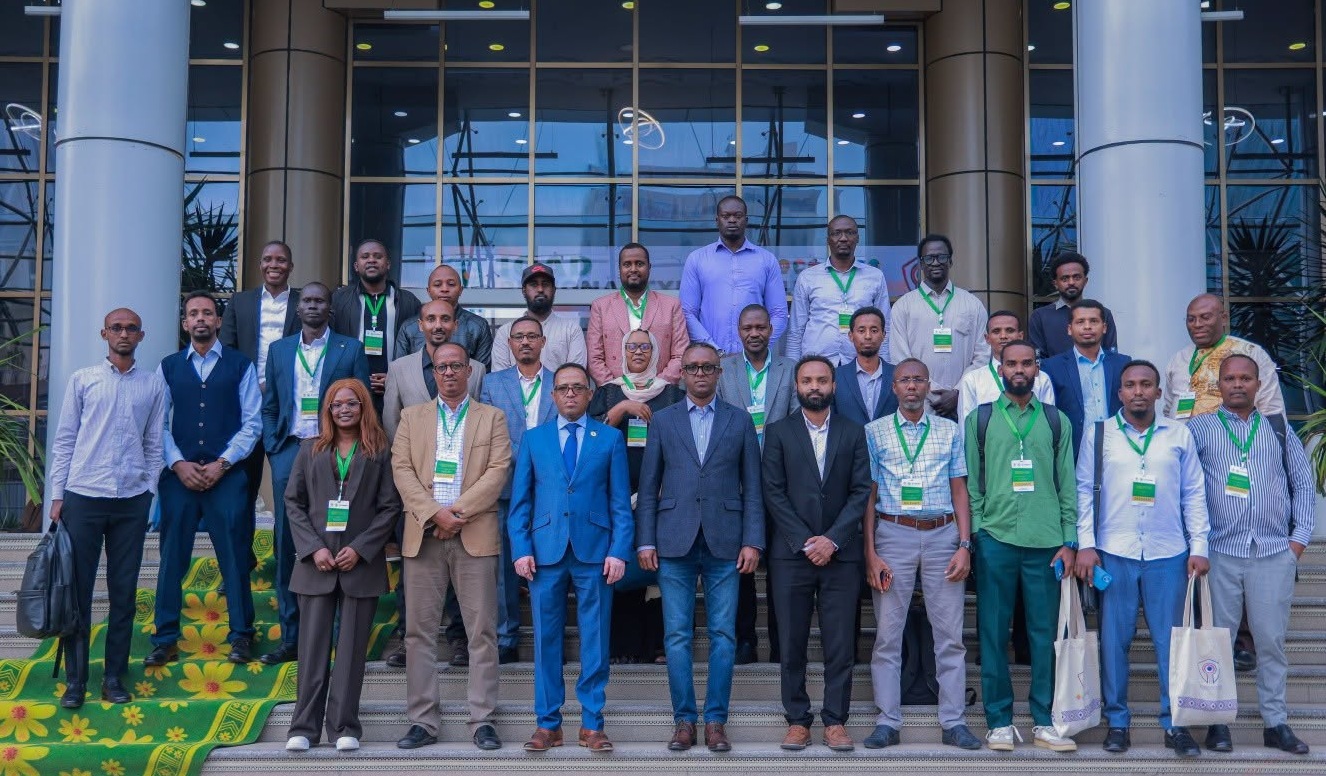
Addis Ababa, June 30, 2026 (ENA) – The IGAD Regional Cyber Exercise 2026 came to an end, with nations involved urging increased regional collaboration, unified cybersecurity strategies, and ongoing efforts to enhance capabilities in response to escalating transnational cyber threats.
The exercise gathered cyber security professionals, government officials, police departments, and key infrastructure managers from Djibouti, Ethiopia, Kenya, Sudan, South Sudan, Somalia, and Uganda.
It became clear during the exercise that participants took part in policy debates, technical drills, and real-world cybersecurity defense activities designed to enhance regional readiness and boost collaborative reactions to cyber threats.
In an interview with ENA, Khadra Ali Yusuf, an expert on data governance at IGAD, mentioned that the exercise effectively integrated policy debates with practical technical drills, such as exchanging threat intelligence and analyzing malicious software.
She mentioned that IGAD plans to capitalize on the achievements of the initiative by setting up a Regional Information Sharing and Analysis Center (ISAC), allowing member countries to exchange details about cybersecurity threats, perform analyses on malicious software, and disseminate insights gained.
As per Yusuf, IGAD is exploring the possibility of turning the regional cyber exercise into a yearly occurrence to enhance technological skills and foster greater collaboration between participating nations.
"Member countries have explicitly stated that they require additional technical knowledge and greater chances to exchange learning experiences. As IGAD, we intend to conduct these exercises every year," the specialist mentioned.
Head of IT Infrastructure at the Ugandan Prime Minister's office, Robert Lwasa stated that the exercise has allowed countries to share insights on cyber security management, organizational structures, and national plans.
Lwasa emphasized that ongoing training, more robust legal systems, political dedication, and cooperation across regions are crucial for safeguarding vital infrastructure and maintaining a safe online space.
On behalf of South Sudan's National Communication Authority, SOC Analyst Yom Malual Majok stated that the hands-on approach of the drill allowed attendees to practice responding to actual cyber threats impacting governmental bodies, banking networks, and private companies.
She mentioned that the training will enable attendees to recognize essential systems, enhance their ability to respond to incidents, and reinforce national cyber security strategies once they return to their own nations.
She highlighted that protecting against cyber threats involves collective effort and requires cooperation across regions.
"Cyber threats do not focus on a single nation since we all utilize the same internet and function within the same digital space," Majok stated, emphasizing that regional structures and collaborative policies can enhance shared strength against such challenges.
On behalf of Somalia's Ministry of Communications and Technology, ICT Director Hassan Hussein Mohammed highlighted the cyber exercise as very advantageous, noting that attendees acquired significant technical expertise and hands-on experience through collaboration with Ethiopian and global specialists.
He stated that Somalia intends to implement the acquired knowledge to enhance its national cybersecurity organizations and bolster the security of vital infrastructure.
 Supplied by SyndiGate Media Inc. (
Syndigate.info
).
Supplied by SyndiGate Media Inc. (
Syndigate.info
).




 Supplied by SyndiGate Media Inc. (