Technology and philosophy

Showing posts with label international economics. Show all posts

Sunday, June 28, 2026

Sudan's Pound Plummets to Record Low Amid War-Driven Crisis

June 10, 2026 (KHARTOUM) – The Sudanese currency has reached an all-time low compared to international money because of heavy betting and increased requests for imports as there is a critical lack of foreign cash reserves.

The native currency has seen a continuous drop due to the ongoing conflict and an expanding trade imbalance, characterized by declining exports and increasing imports.

From the start of this year, currency exchange rates have increased substantially, as the U.S. dollar went up from 3,750 pounds to a range of 4,200 to 4,300 pounds.

Traders operating in the parallel market informed Sudan Tribune on Tuesday that the local currency dropped to 4,400 against one U.S. dollar due to increased demand for dollars and other foreign exchange.

The Saudi riyal climbed to 1,140 Sudanese pounds, the UAE dirham touched 1,171 Sudanese pounds, the euro was being exchanged for 5,058 Sudanese pounds, and the British pound rose to 5,810 Sudanese pounds, with the Egyptian pound standing at 90 Sudanese pounds.

A merchant, who requested to remain unnamed, mentioned that there is strong interest in foreign exchange to support the purchase of fuels, along with betting actions from forex dealers aiming to obtain significant amounts of dollars.

Financial analyst Waleed Dalil stated that the decline in the value of the currency presents significant economic difficulties impacting people's everyday experiences, highlighting that inflation has hit unprecedented levels because of the war's impact on buildings and banking systems.

The burden of finance has completely moved to the informal sector since formal banks cannot supply foreign exchange for importers and residents, causing exchange rates to be influenced by intense speculation and rush purchases, Dalil said.

Economic specialist Haitham Mohamed Fathi stated that Sudan is facing significant decline in key production areas such as manufacturing, mining, petroleum, and farming, with this situation deteriorating throughout the conflict.

Merchants, illegal traders, and gamblers have taken advantage of the nation's changing economic system, with a commerce and services-based economy growing while manufacturing and farming decline, Fathi noted.

The stability of the Sudanese currency relies on the transitional government's capacity to carry out essential structural changes, such as overhauling banking systems, controlling price increases, and boosting industries to rejuvenate the economic situation, according to Fathi.

Fathi pointed out that the increasing discussion about importing critical supplies, especially fuel, has had a direct impact on price levels throughout the manufacturing and transportation networks, with conditions further deteriorating due to the loss of oil-producing regions and unstable revenue streams from South Sudan's petroleum exports.

The Sudanese economy is trapped in a complicated crisis where economic, monetary, and political factors overlap, according to Fathi, who added that this situation has been worsened by insufficient global collaboration and the suspension of external financial support.

The drop in the value of the pound has increased market anxieties, causing the currency to be stuck in a harmful loop of falling exchange rates and rising prices, which leaves the central bank with few options for dealing with today's financial situation, said Fathi.

Supplied by SyndiGate Media Inc. ( Syndigate.info ).

Saturday, June 27, 2026

Sudan Importers Accuse Government Bans of Fueling Currency Collapse and Inflation

June 10, 2026 (KHARTOUM) – The Sudanese National Chamber of Importers has accused the government of causing increased inflation and the decline in the value of the national currency, after an April order prohibited the importation of numerous products.

In late April, the Sudanese government banned the importation of more than 40 high-end and unnecessary items. This action was intended to reduce speculative activities in unofficial currency exchange markets, enhance local production, and strengthen the economic situation.

Nevertheless, the Sudanese pound hit a historic low on Wednesday, as the U.S. dollar was exchanged for approximately 4,700 pounds, representing its greatest decline so far. This downturn is fueled by the continuous conflict, declining exports, and a growing import cost.

The traders' association called on the government to quickly lift the restriction, stating that the measure had not succeeded in stabilizing the currency, caused price increases, and lowered public income.

Al-Sadiq Jalal al-Deen Saleh, leader of the National Chamber of Importers, informed journalists on Wednesday that evidence showed the decision did not work. He mentioned that the chamber had earlier advised the prime minister through a letter regarding the financial consequences.

Salih mentioned that the order overlooked the main factors behind the pound's drop, which he pointed out were speculative activities in the market and increased appetite for foreign exchange. He added that the administration addressed the surface issues instead of tackling the underlying reasons for the crisis.

He stated that prohibiting 46 products would not reduce the demand for foreign exchange or steady the local currency. Rather, it could result in monopolistic situations as importers exit the market, causing product scarcity and increased costs.

Banned items made up approximately 11% of overall imports in 2025 yet generated more than 38% of the customs and tax income gathered at port facilities, according to Salih, who cautioned that a decline in such revenue could increase the budget shortfall.

Salih further cautioned that the limitations would push illegal trading and trafficking across Sudan's weakly controlled frontiers to satisfy economic needs. He claimed that the prohibition serves just a limited number of individuals, generating income at the cost of buyers and the national budget.

According to data collected by specialist market departments on May 24, Salih stated that prices have increased significantly following the implementation of the ban. Local cement costs went up by 22 percent, Egyptian pottery by 42 percent, rice by 98 percent, and Egyptian instant noodles by 54 percent.

He attributed the current price hikes to a psychological reaction as traders and consumers stockpile goods in anticipation of shortages. Salih warned that steeper price increases are likely as supply scarcity worsens and market competition decreases.

Additionally, Salih pointed out that the currency rate declined from approximately 4,100 pounds for one dollar at the time of the announcement to roughly 4,770 pounds on Wednesday, which he used as proof that the restriction did not succeed in stabilizing the foreign exchange sector.

Salih once again urged the government to reassess the policy and implement actions aimed at addressing fundamental economic disparities instead of limiting commerce. He stated that the chamber would remain against the decision to safeguard market balance and national income.

The interim government announced Presidential Order Number 174 from 2026 in April aimed at prohibiting the entry of high-end and unnecessary goods.

The prohibition stemmed from suggestions made by a group assigned to halt the drop in the local currency, directives issued by the Senior Economic Panel, and an analysis provided by the Department of Industry and Commerce.

The regulation applied to over 40 products, such as bottled milk, excluding powdered and baby formulas, certain processed goods, cookies, candies, jellies, mineral and fizzy drinks, pre-mixed fruit beverages, pottery, and granite.

As per the Central Bank of Sudan's 2025 foreign trade data report, Sudan's exports reached $2.64 billion, whereas imports amounted to $6.49 billion, leading to a trade gap of $3.86 billion.

Supplied by SyndiGate Media Inc. ( Syndigate.info ).

Sunday, June 21, 2026

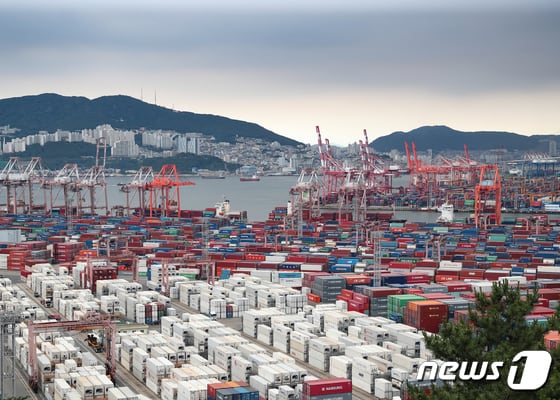
South Korea's Exports Surge 85.9% on Semiconductor Boom

With robust semiconductor exports driving growth, shipments between June 1 and 10 saw an almost 86% rise when measured against the same timeframe in the previous year. Export volumes of semiconductors jumped to triple the levels recorded during the corresponding period last year, marking a new peak for this time frame.

As per the Korea Customs Service’s statement released on the 11th about the “import and export situation between June 1 and 10,” total exports during this time reached $28.635 billion, reflecting an 85.9% rise when contrasted with the corresponding timeframe in the prior year. This exceeds the earlier peak for the initial ten days of a month, which had been recorded in the early part of April at $25.2 billion, thus setting a new all-time record.

Major exports including semiconductors (up 205.8%) and passenger vehicles (increased by 25.4%) contributed to reaching a new peak in export figures during this time frame. In the initial ten days of June, exports hit $11.1 billion, marking the largest total for the first ten days of any month. Export growth was notable across industries such as refined fuels (rose 68.7%) and computer accessories (jumped 259.4%).

Exports experienced significant growth in several key markets, including the United States, which saw an increase of 54.4%, and China with a rise of 101.4%. Additionally, shipments to Vietnam increased by 102.9%, while those to the European Union grew by 46% and to Taiwan by 34%.

The exports saw almost an 86% rise throughout this time frame, partly due to more workdays—seven days (not counting public holidays)—as opposed to 5.5 days recorded during the corresponding period in the previous year, representing a gain of 1.5 days. Nevertheless, when considering this factor, the average daily export value still went up by 46.1% from the same timeframe last year.

The value of imports during the initial ten days of June totaled $23.352 billion, representing an upward surge of 35.6% compared to the corresponding timeframe in the previous year. Export figures surpassed import levels, leading to a trade balance surplus of $5.282 billion. The total surplus accumulated since the start of this year up to the tenth day of this month stood at $107.454 billion.