Technology and philosophy

Showing posts with label korea national news. Show all posts

Wednesday, July 1, 2026

China Tops Nature Index Again, South Korea Ranks 7th

For the third straight year, China has topped the "Nature Index," which measures worldwide scientific research performance. South Korea stayed at 7th position, consistent with the previous year's placement.

The global academic publishing house Springer Nature, which publishes the journal *Nature*, revealed the list of "2026 Nature Index Research Leaders" on the 10th.

The Nature Index is a ranking system developed by Springer Nature that assesses the quantity of research articles published in prestigious scholarly journals, including those focused on natural sciences, along with their influence.

Although the Nature Index mainly focused on fundamental science and medicine disciplines, this year it broadened its coverage by adding 17 applied science journals and 15 social science journals.

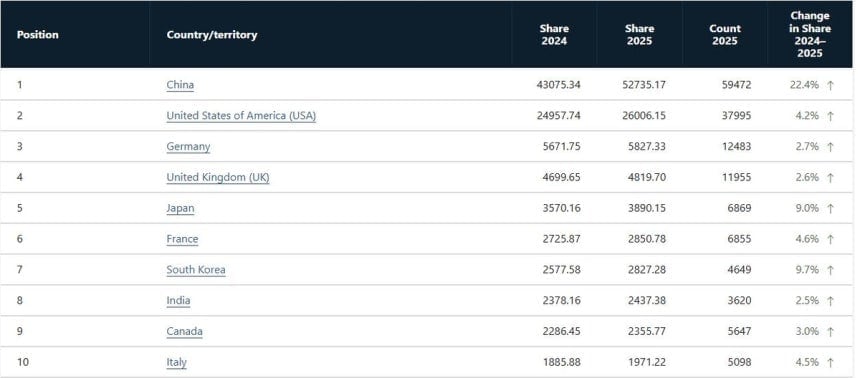
China remained the leading nation for global research production this year. Its output rose by 22.4% between 2024 and 2025.

The United States came in second place, with Germany, the United Kingdom, Japan, France, South Korea, India, Canada, and Italy following closely behind.

Among the leading countries, China was the sole nation to achieve growth surpassing 10%. Japan and South Korea also experienced research output increases within the 9% bracket, reflecting strong expansion trends across Eastern Asia.

South Korea placed third in applied sciences, achieving a 14% increase in research production within this area, reflecting significant progress. Nevertheless, it came in eighth for natural sciences, highlighting that it continues to trail somewhat in fundamental scientific disciplines.

In terms of institutions, the Chinese Academy of Sciences was ranked number one. For the first time since the rankings started in 2015, Harvard University from the United States dropped from the top position to be replaced by Zhejiang University from China.

Apart from Harvard University, all entities ranked from 1st to 12th were Chinese institutes or universities. The German Max Planck Society dropped to 13th position, exiting the top 10.

At Seoul National University in South Korea, the institution secured the 58th position, moving down six positions compared to the previous year. Meanwhile, KAIST climbed two ranks to reach 80th spot.

Tuesday, June 30, 2026

People Power Party Urges Leader Jang to Resign

An internal faction of the People Power Party, consisting of legislators who served one or two terms known as "Alternative and Future," officially urged the departure of party head Jang Dong-hyeok on the 11th. Additionally, they requested that the recently named floor leader, Jeong Jeom-sig, hold a gathering of all members to address Jang's exit.

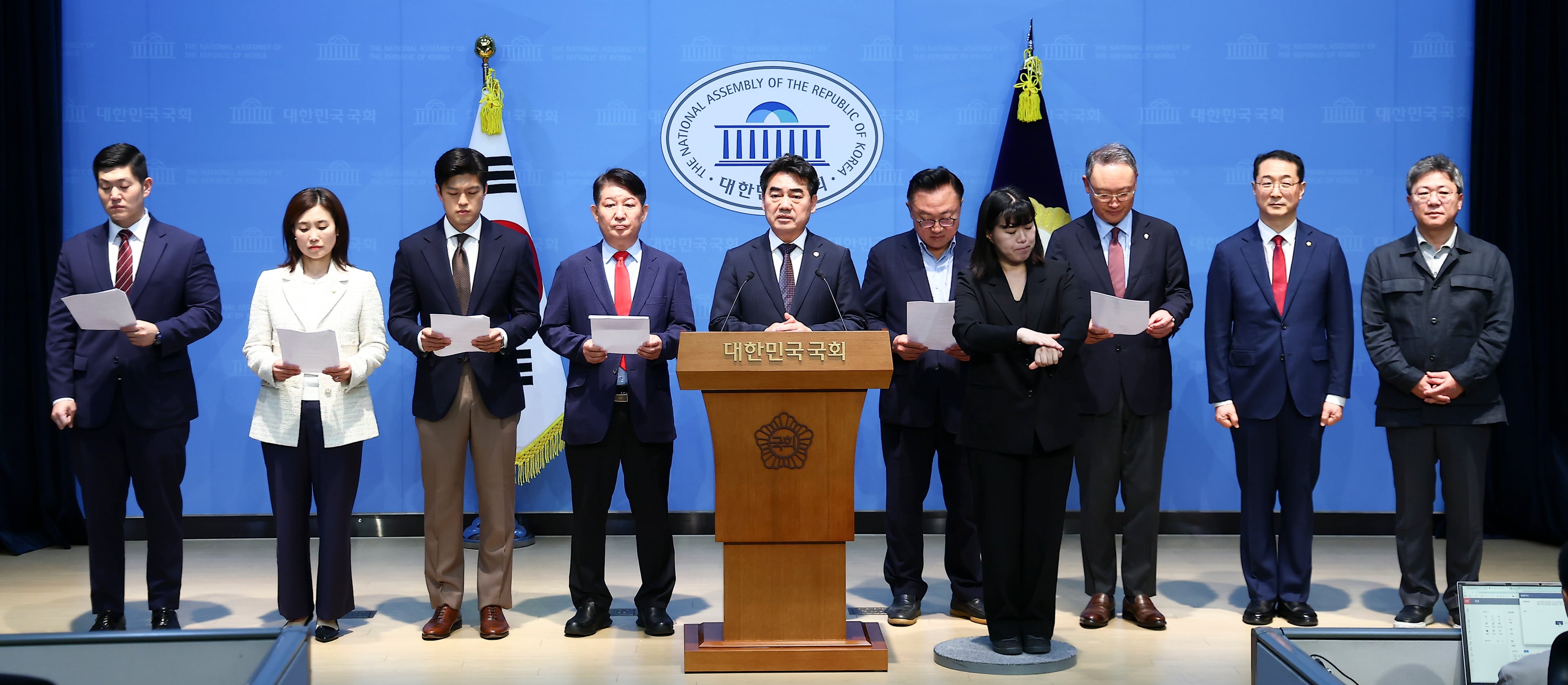
Lee Seong-kweon, a legislator from the People Power Party and head of "Alternative and Future," together with related legislators, convened a media briefing at the National Assembly Communications Center early that day. They remarked, "The People Power Party faced a severe loss in the June 3 local elections," further stating, "Chairman Jang's authority has crumbled, which is entirely due to the leadership of Jang Dong-hyeok." They added, "Conservatives consistently emphasize responsibility. If Chairman Jang genuinely identifies as a 'conservative,' he ought to resign right away."

The collective also rejected Jang's proposal for a "national election." "Alternatives and Future" showed support for the frustration of the 2030 generation regarding violations of voting rights due to systematic issues within the National Election Commission. Nevertheless, they emphasized, "We firmly disagree with holding a national election."

They stated, "It is inappropriate for a conservative party leader to associate citizens' efforts to ensure election integrity with 'election fraud conspiracy theories.' Leader Jang's independent choice to promote these ideas weakens and harms the party's democratic principles."

The group also called for holding a general assembly. Lee said, "The public is observing how the People Power Party will address public opinion and establish an equitable voting system concerning Leader Jang's future and voting rights." He appealed, "We urge Floor Leader Jeong Jeom-sig to hold a general meeting to build agreement on these two matters."

Following the press briefing, elected official Kwon Young-jin spoke with journalists and stated, "We participated in the regional elections under a leadership that lost public confidence, following a route that did not connect with voters and ultimately encountered their disapproval." He further remarked, "Claiming victory in the election is profoundly incorrect."

He added, "If Leader Jang keeps following this course, the party will face criticism for being an organization that, even after electoral defeats, denies its shortcomings, holds onto 'voting irregularity conspiracy narratives,' and aims for political endurance." He ended with, "Resolving issues related to voting rights violations can be handled by the National Assembly and the party independently of Leader Jang."

Exclusive: Yonsei Med Director’s $240M Allowance Triggers Outcry

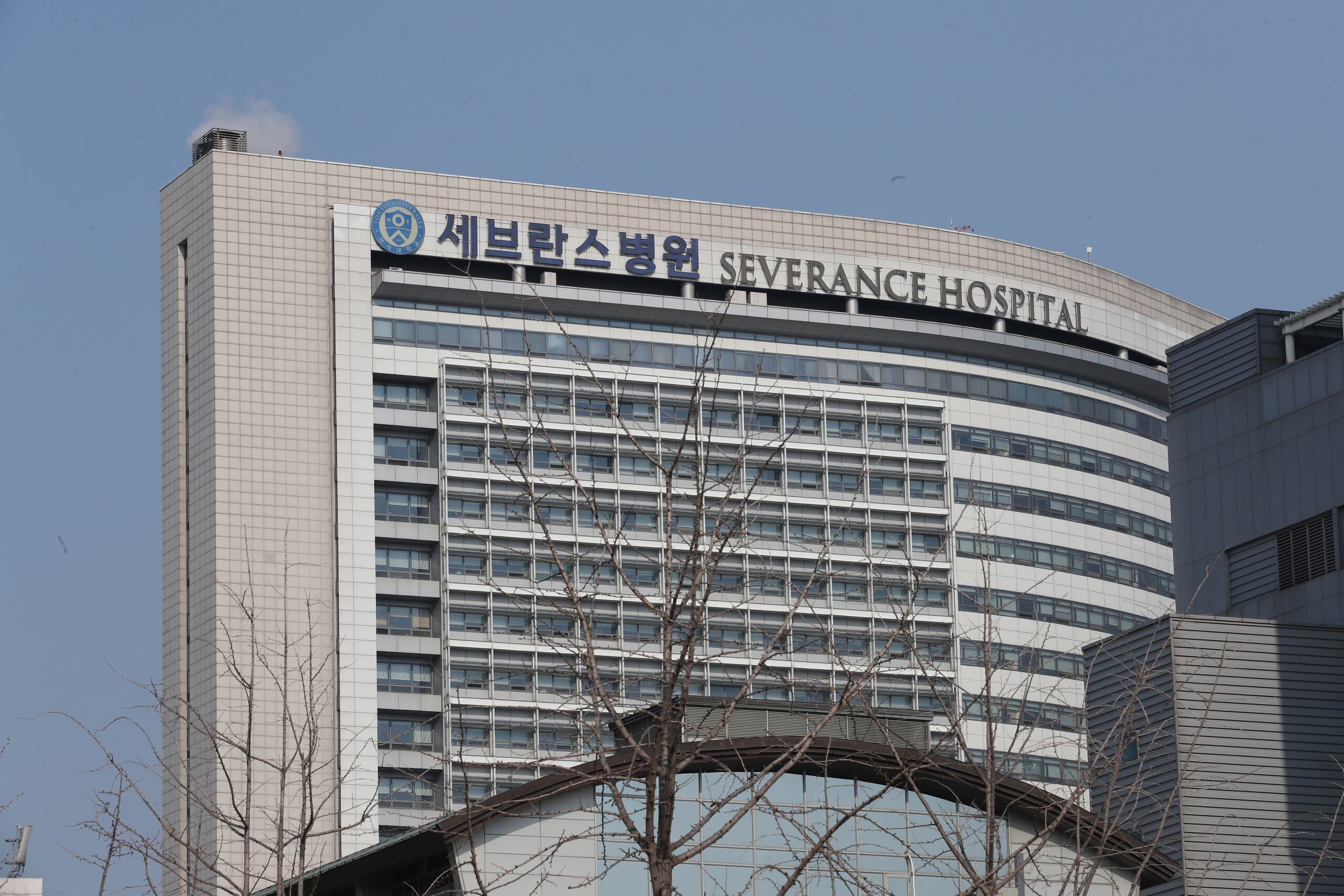
A dispute has arisen among faculty members at Yonsei Medical Center, which manages Severance Hospital, following the disclosure that its director received an additional payment of 240 million South Korean won earlier this year, just after a controversy involving hospital management occurred.

As per reports from the healthcare sector released on the 10th, Yonsei Medical Center distributed a combined amount of 700 million South Korean won in bonuses to nine senior executives during January and February of this year. Director Geum Ki-chang was awarded 240 million South Korean won, with four hospital directors receiving between 60 million and 120 million South Korean won each, and four heads of departments/offices getting 40 million South Korean won apiece.

In order to achieve this, the center introduced new internal rules and categorized the payments as "hospital management allowance" and "administrative responsibility allowance." Nevertheless, certain senior hospital administrators allegedly contributed the entire sum back to the hospital right after becoming aware of the payments.

The recent disclosure has led academics to express worries. Last month, the faculty committee at Yonsei University School of Medicine convened and asked for verification of the details from the hospital.

A lecturer from Severance Hospital stated, "Throughout the administrative dispute in healthcare, 13,000 staff came together, rotated shifts for security duties, and voluntarily took unpaid time off to manage the emergency. However, according to reports, the hospital director supposedly received a 'personal incentive' (bonus based on performance). Such an occurrence has never been seen before during the medical facility's 140 years of operation."

The hospital responded by saying, "This was not a 'performance incentive' but an 'additional payment,' which was lawfully provided following established rules and processes. The wages and additional payments for the head of Yonsei Medical Center and others were less compared to leading hospitals, so extra support was needed. These figures were set after taking into account financial performance and salary structures at rival institutions."

It stated, "Nevertheless, we recognize the comments indicating that 'sufficient input from various members should have been collected' concerning the allowance. We will take feedback into account and implement enhancements moving forward."

Sunday, June 28, 2026

Seoul Housing Demand Surges 2.5x

This year, residential property values in Seoul increased by more than 18%, resulting in a significant jump in reported prices, as complaints rose to more than twice the amount from last year.

As per information provided to Representative Lee Jong-wook from the People Power Party, who serves on the National Assembly’s Land, Infrastructure and Transport Committee, by the Ministry of Land, Infrastructure and Transport, the preliminary count for complaints about this year's public housing prices—which ended last month—reached 6,066 instances. This represents an increase of 2.5 times compared to last year, which had 2,451 reports. It marks the highest figure since 2021, when there were 14,200 cases reported, following a national average rise in public housing costs of 19.05%. Out of all these complaints, 4,379, or 72.2%, sought a decrease in pricing.

Previously, between March 18 and April 6, a total of 14,561 comments were collected regarding the suggested public pricing, marking the highest figure since 2021, which was 49,601 instances.

By January 1 of this year, average home prices across the country rose by 9.13%. In particular, Seoul saw the largest growth with an 18.6% rise, followed by Gyeonggi Province increasing by 6.37%, Sejong by 6.28%, Ulsan by 5.22%, and North Jeollas province by 4.32%.

Friday, June 26, 2026

Seoul's Seoripul 2 District to Power 2,000 Homes by 2028

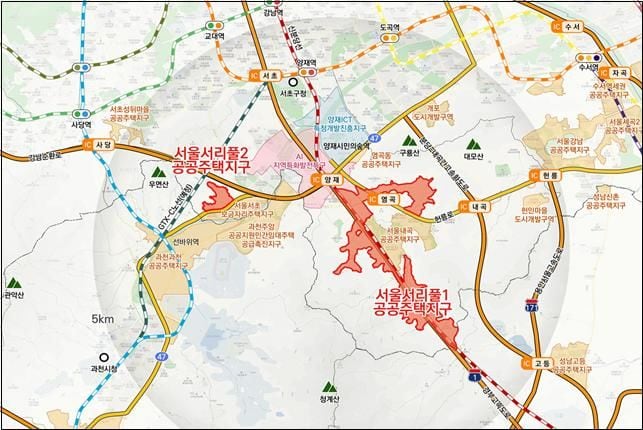
A residential community consisting of 2,000 families will be established in the Seoripul 2 area of Seocho-gu, Seoul. The administration intends to reduce the time between district approval and the commencement of building work by about two years, with hopes of holding an official ground-breaking ceremony as early as December 2028.

On the 11th, the Ministry of Land, Infrastructure and Transport revealed plans to provide homes for 2,000 families within the Seoul Seoripul 2 Public Housing Area located in the Umyeon-dong district of Seocho-gu. This area spans approximately 193,259 square meters. Seoripul is among the four zones designated as Development Restriction Areas (known as Greenbelts), which were previously declared by the government in November 2024 to be opened up for housing development. This marks the initial removal of a green belt restriction in Seoul after twelve years. After the announcement of the Seoripul 1 District last February—intended for 18,000 households—the inclusion of another 2,000 units in the second district brings the overall number of available residences in the entire Seoripul region to 20,000. The Seoripul 2 District underwent a public evaluation starting from November 2024 and was approved at the meeting of the Central Urban Planning Committee earlier this year in March. According to the Ministry of Land, Infrastructure and Transport, "the Seoripul District will develop into a living space close to job sites that support high-tech sectors in the Yangjae and Gangnam regions."

The Department of Land, Transportation, and Construction set a target to reduce the period between area classification and the beginning of home building by over two years. Normally, land development initiatives require about 56 months from approval to starting construction, but the department intends to speed up future steps and conduct construction planning simultaneously with site readiness, hoping to begin construction in December 2028. Earlier, the Seoripul 1 Area managed to move forward its initial planned groundbreaking date for 2029 so that homes could be available in 2029 using actions like forming specialized groups.

Nevertheless, an issue persists because certain inhabitants of the Seoripul 2 District, such as members of Umyeon-dong Cathedral, are advocating for the protection of the cathedral along with the neighborhoods of Songdong and Sikyuchon, making up 1.8% of the area. They have filed requests with the government and municipal officials asking that the cathedral and these two areas be removed from the list of properties subject to purchase and destruction.

Thursday, June 25, 2026

Hong Summoned Again in Martial Law Investigation

A second thorough inquiry led by Special Counsel Kwon Chang-yeong questioned former National Intelligence Service (NIS) Chief Deputy Hong Jang-won on the 11th regarding claims that he conveyed justifications for martial law to foreign allies such as the United States, as part of his responsibilities related to an attempted coup.

Hong reached the special counsel's office in Gwacheon, Gyeonggi Province, around 9:46 a.m. that day. Upon speaking with journalists, Hong said, "I will fully support the special counsel's inquiry," and mentioned, "There's a lot I want to share, but I'll provide all details within."

The special prosecutor considers the NIS's justification for its actions following the imposition of martial law, presented to the CIA and other entities on December 3, as an element of the coup attempt. As per the special prosecutor, the NIS was asked by the Office of National Security on December 4, 2024, to "provide information about the circumstances leading to the emergency martial law" for foreign allies, alongside a Korean-language document entitled 'External Explanatory Documents.'

Under former NIS Director Cho Tae-yong’s instructions, Hong’s overseas division reportedly translated the document into English and briefed the CIA station chief in South Korea. The special counsel believes Hong oversaw and approved the entire process.

Hong rejects all accusations. His lawyer stated to journalists, "The document related to the CIA was revealed after martial law ceased on December 4, yet the NIS's political affairs meeting and director-level gathering took place the day before, on December 3. It is unreasonable to connect the CIA communication, which arrived following the end of martial law, with the uprising."

As for where Hong was on the day martial law was imposed, the spokesperson stated, "Hong departed from work approximately at 1:30 a.m. on December 4, following the National Assembly's decision calling for an end to martial law. There were no references to CIA-related matters or conversations during the meeting held by department heads near midnight on December 3."

The special prosecutor had previously interviewed Hong for about nine hours on the 22nd of last month. Following this, Hong stated, "As I once served in an important role at the NIS, the special prosecutor may have misinterpreted the circumstances, but I think I adequately explained those misconceptions." Nevertheless, the special prosecutor considered further inquiry essential and called him back for another session.

At the same time, the special prosecutor is also looking into Jeon Moo-gon, who previously served as head of the Planning and Coordination Bureau at the Supreme Prosecutors' Office. Jeon supported former Prosecutor General Shim Woo-jung during the imposition of martial law. The special prosecutor intends to review the actions taken by the Supreme Prosecutors' Office and scrutinize Shim's instructions on the day martial law was declared. Furthermore, they will assess if the office unlawfully interfered with ongoing investigations and court cases related to former President Yoon Suk-yeol and others following the declaration of martial law.

Tuesday, June 16, 2026

Supreme Court Backs Suspended Fine for Lee Kyu-won

On the 11th, the Supreme Court confirmed a lower court decision that put on hold the imposition of a penalty against Lee Kyu-won, head of the Wonju branch of the Rebuilding Korea Party, who was accused of falsifying documents during an inquiry concerning claims of improper benefits at a villa linked to ex-Vice Justice Minister Kim Hak-eui. The suspension of enforcement refers to a process wherein, should the defendant admit guilt for relatively light offenses, their sentence is delayed and automatically dropped after two years, thereby terminating legal proceedings.

The Third Division of the Supreme Court (led by Judge Lee Sook-yeon) confirmed the lower court's ruling to delay the announcement of a 2 million South Korean won penalty, rejecting Lee's appeal. Lee worked as part of the Supreme Prosecutors' Office's Historical Truth Investigation Unit between November 2018 and May 2019. He faced prosecution for reportedly falsifying interviews with significant individuals involved in claims about sexual favoritism, such as construction entrepreneur Yoon Jung-cheon and ex-Chungnam Palace official Park Gwan-cheon, by adding quotes that were never actually said.

The initial court ruling admitted responsibility for one offense — fabricating official records by recreating the third meeting with Yoon in the absence of a recorded conversation — but cleared him of charges related to disclosing classified information, breaching the Personal Information Protection Act, obstructing operations, slander under the Information and Communications Network Act, and violating the Criminal Electronic Procedures Act. The judgment postponed announcing a penalty of 500,000 South Korean won.

The second trial reversed the previous not-guilty verdicts related to violations of the Personal Information Protection Act and the Criminal Electronic Procedures Act, increasing the suspended penalty to 2 million South Korean won. It determined that Lee was responsible for disclosing personal details gathered during interviews and improperly distributing data from the Korea Information System of Criminal Justice Services (KICS). The court noted, "Although the unlawful actions can’t be excused, the seriousness of the offense and damage to legal rights were limited, and the defendant acknowledged the main points."

The Supreme Court supported this decision and rejected Lee's appeal. Following the appellate verdict, the prosecution withdrew its appeal, yet Lee remained determined, stating, "Even the suspended fine of two million South Korean won needs to be addressed, so I will strive to convince the Supreme Court."