Technology and philosophy

Showing posts with label economics. Show all posts

Sunday, July 5, 2026

Everything Changed This Season

A nation featuring a river flowing across it, rich flatlands, and women prepared to cultivate them. Still, it imports four-fifths of its basic food supplies. Three farmers, one growing season, and how things change once funding eventually comes.

In certain seasons, stability is fleeting. Fences collapse, rainfall comes at inappropriate times, and efforts spanning weeks vanish within a single night. For women cultivating in The Gambia’s small-scale farms and rice paddies, such conditions aren’t rare occurrences—they represent the usual cycle they’ve come to expect. This reality makes every instance where things do remain steady far more significant than just a successful crop.

Abibatou Sonko had visited this place previously—rows of onions meticulously cared for, only to be destroyed during the night. At the Tanji Women's Garden Scheme, located 32 kilometers south of Banjul, goats managed to break through the fence and consume all that had been constructed over several weeks. She and her colleagues gathered their strength and began anew; year after year. “There were times when me and my female companions put in such effort yet ended up losing nearly everything,” she remembered. “Honestly, it was disheartening.” There were instances, she acknowledges, where she wondered if keeping going was truly worthwhile.

During the last season, she collected 31 sacks of onions. None were lost, nor diminished. Thirty-one sacks, valued at approximately 1,000 Gambian dalasi ($14) per sack; altogether, the yield amounted to about $435—representing multiple months of steady family earnings in an area where financial stability is uncommon. Positioned next to the land she never gave up on, these sacks served as evidence of a belief she nearly abandoned. She'll openly state that the key change came from using high-quality seeds provided by the P2-P2RS initiative. “In the previous year, goats ruined my crops,” she mentioned, standing near her successful harvest, “but this time, the superior seeds inspired me to keep going with farming. Now I'm feeling driven once more since I can witness the outcomes of our efforts.”

Her narrative reflects a contradiction that characterizes The Gambia. This nation features a river stretching along its full extent, millions of hectares of land suitable for irrigation, and rich farmland, all tended by women eager to cultivate it. Nevertheless, The Gambia imports approximately 81 percent of the rice it consumes—a basic food item eaten at an annual rate of 117 kilograms per individual, nearly double the world average. The problem has never lay in the quality of the earth itself but rather in seeds that fail to thrive, agricultural supplies that never reach their destination, barriers that cannot be maintained, and marketplaces offering no assurance. Abibatou’s goats are not just incidental details—they symbolize every obstacle preventing Gambian farmers from achieving a successful yield.

This is what the current projects aim to transform, methodically, on a large scale, throughout the nation. Through Project 2 of the Program for Enhancing Resilience against Food and Nutritional Vulnerability in the Sahel (P2-P2RS), an initiative worth $17.75 million supported jointly by the African Development Fund (ADF), farmers in 19 districts within the Lower River, Central River, and West Coast regions are beginning to receive better quality seeds, mechanical tilling services, solar-driven irrigation systems, and environmentally friendly agricultural supplies. For numerous communities, continuous farming all year round is now emerging as a feasible option.

The P2-P2RS supports 67,200 individuals directly and indirectly. It is among three key AfDB-backed agricultural initiatives operating in The Gambia at present, along with the Regional West Africa Resilient Rice Value Chains Development Programme (REWARD), which was introduced nationwide in July 2025. This initiative aims to assist 8,000 families and reach 120,000 people through advanced irrigation setups, enhanced seed networks, and better access to markets. Collectively, these projects mark the highest level of agricultural funding the nation has experienced.

Why is food insecurity the main issue in The Gambia?

In The Gambia, rice goes beyond being just sustenance—it represents the stability of a family’s well-being. When there isn’t enough rice, all aspects of life become more challenging: kids stop attending school, women accumulate loans, and households face breakdown due to lack of resources. The difference between what the nation uses and what it generates creates an ongoing stressor influencing choices made daily in most rural homes.

The architectural difficulty stems from overlapping limitations: reliance on farming without irrigation in a nation where precipitation is both seasonal and becoming more unpredictable; restricted availability of verified seeds and materials that truly work in regional environments; insufficient facilities for handling crops after harvest, leading to loss of worth from farm to marketplace; and the lack of consistent purchasers, which hinders preparation.

Binta Ceesay, a farmer and vegetable grower from Buiba Village, expressed it like this: "The climate-resistant verified seeds, fertilizers, and farming techniques training I obtained through the initiative have entirely transformed how I cultivate crops. Even with shifting weather patterns, my production has increased, and I'm currently yielding more than ever before." This statement, which notes that although the weather changed, the harvest didn’t decline, precisely captures the resilience that decades of insufficient investment previously prevented from being developed.

Every one of the three initiatives targets a distinct aspect of the same issue. P2-P2RS provides small-scale farmers with improved seeds and free tilling, eliminating the input barriers that have traditionally limited productivity despite their efforts. REWARD develops irrigation systems that enable continuous farming throughout the year, breaking away from reliance on just one wet season. Meanwhile, the Global Agriculture and Food Security Program (GAFSP completes the cycle by ensuring market access: linking what farmers cultivate directly to school meal programs, allowing 39,397 students to enjoy daily lunches made from locally grown food, and enabling farmers to make long-term plans.

What a stable market undergoes What a consistent marketplace experiences What a dependable economic environment faces What a steady commercial sector encounters What a trustworthy financial system goes through

Improved seeds address one issue. A dependable buyer tackles another, often more significant challenge. A farmer capable of producing more yet unable to sell consistently remains someone without stability. The GAFSP initiative confronts this head-on by linking small-scale farming production with The Gambia’s school meal program, ensuring that crops grown by local farmers are bought within the country and used to provide food for 39,397 students. There is a clear purchaser. Prices have been set. Farmers can now prepare for the upcoming season based on certainty rather than uncertainty.

"Prior to this program, I grew crops not knowing who would buy them or if they'd receive a reasonable price. Now, I am able to organize my farming activities confidently, make investments to grow my land, and regularly provide fresh produce to schools. The consistent earnings I have gained have enhanced my family’s quality of life and restored my optimism for what lies ahead," said Satou Hata, an aggregrator and farmer from Mamud Fana Village, The Gambia.

This term, "plan," holds significant importance. Abibatou can now structure her upcoming season using seeds she has confidence in. Binta Ceesay can make plans based on the weather forecast; she no longer feels the same level of fear regarding it. Satou Hata Ceesay can base her planning on a solid agreement rather than taking risks. Beyond achieving improved crop yields, what unites these three women is a future they can envision sufficiently to commit to. This reflects how agricultural change appears from within—a farmer who sleeps assured about what she'll sow the following day.

  • 67,200 primary and secondary recipients of P2-P2RS within 19 regions
  • 120,000 individuals who benefit from the REWARD initiative indirectly
  • 39,397 students being provided with daily food supplies made from ingredients grown nearby on local farms
  • $17.75M Investment P2-P2RS jointly funded by the African Development Fund

© 2026 African Development Bank. All rights reserved. Published by AllAfrica Global Media (Ants).

Tagged: Economy, Business and Finance, Gambia, Women and Gender, Food and Agriculture, West Africa

Supplied by SyndiGate Media Inc. ( Syndigate.info ).

Tuesday, June 30, 2026

Gold drops sharply as markets react

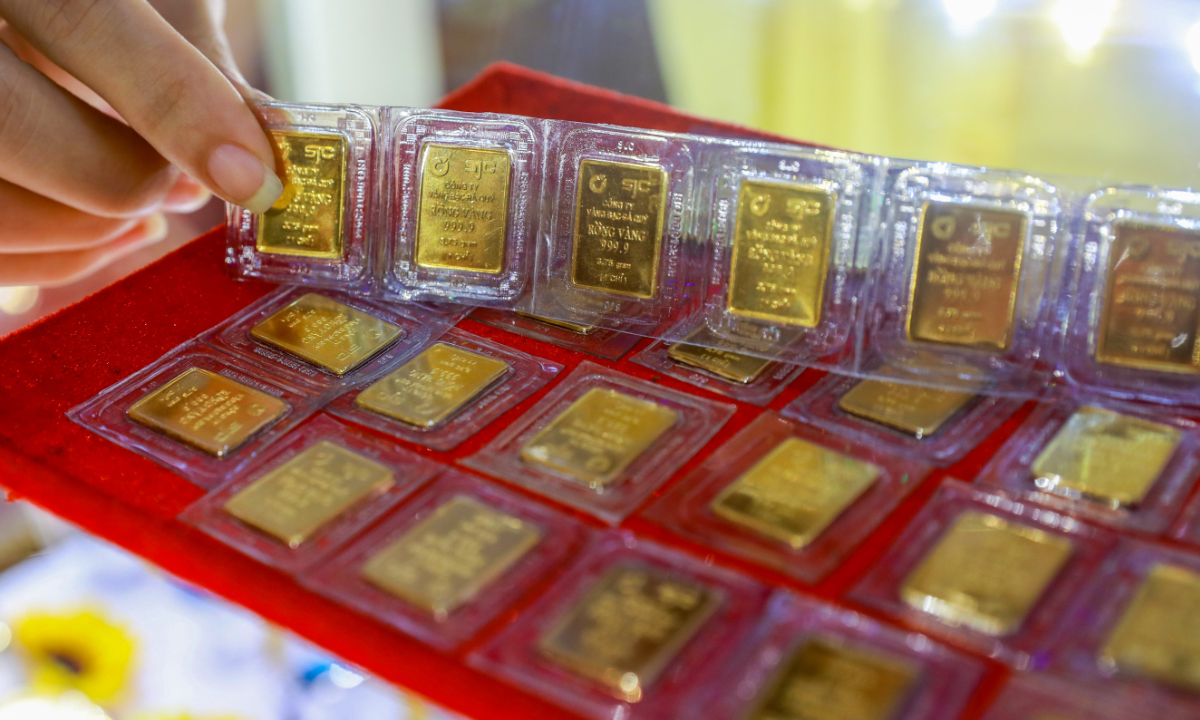
Vietnam gold prices continued to fall on Thursday, reaching the lowest point since September 28, even as international prices bounced back from a six-month low.

The Saigon Jewelry Company reported a decrease of 1.66% in the price of its gold bars and rings, now at VND136 million (US$5,166.88) per tael. Overall, gold rates have fallen by 11% this year within Vietnam.

Gold prices worldwide recovered from a six-month trough on Thursday due to covering of short positions, as investors awaited an important U.S. inflation data release that might provide further insight into the Federal Reserve's monetary strategy. Reuters reported.

Gold prices increased by 0.4% to reach $4,089.12 per ounce, following a drop to its lowest level since November 21 at $4,022.09 during the session. U.S. gold contracts for August shipment declined 0.5% to $4,111.10.

"With prices rapidly approaching $4,000, this is clearly a key point where supporters might rush to secure gains or encourage struggling buyers to return," noted Matt Simpson, a senior analyst at StoneX.

The U.S. dollar index did not make significant progress after Wednesday's CPI data. Therefore, provided there are no unexpected issues in the PPI - gold might experience a short-term technical rebound.

Dollar Climbs in Black Market Amid Turmoil

The American currency increased slightly compared to the Vietnamese đồng in the unofficial market early Thursday.

unofficial currency exchanges priced the dollar at 0.15% more, reaching VND26,400. Vietcombank maintained its rate steady at VND26,410.

The U.S. dollar experienced fluctuations on Thursday due to fresh American military actions in the Middle East, which affected market confidence. Additionally, a rise in May’s U.S. consumer inflation to a three-year peak left investors concerned about the Federal Reserve's approach to monetary policy. Reuters reported.

This week, the foreign exchange market has remained calm, with traders considering the unstable truce in the Middle East alongside an ongoing series of retaliatory attacks between the United States and Iran, which has weakened expectations for a short-term resolution.

The euro reached $1.1553, moving slightly away from the 10-week low it recorded last week, although it has lost much of its increase following an agreement for a truce at the beginning of April. Attention will focus on the European Central Bank’s monetary policy meeting later today as it appears set to increase interest rates to address rising prices.

Sterling stood at £1.33905. The dollar index, used to gauge the U.S. currency versus six key rivals, dropped to 99.903 following reports from U.S. forces stating they have finished attacks on several locations in Iran.

Monday, June 29, 2026

Gold Bulls Optimistic About 2026 Outlook – International Edition

By Kizito CUDJOE

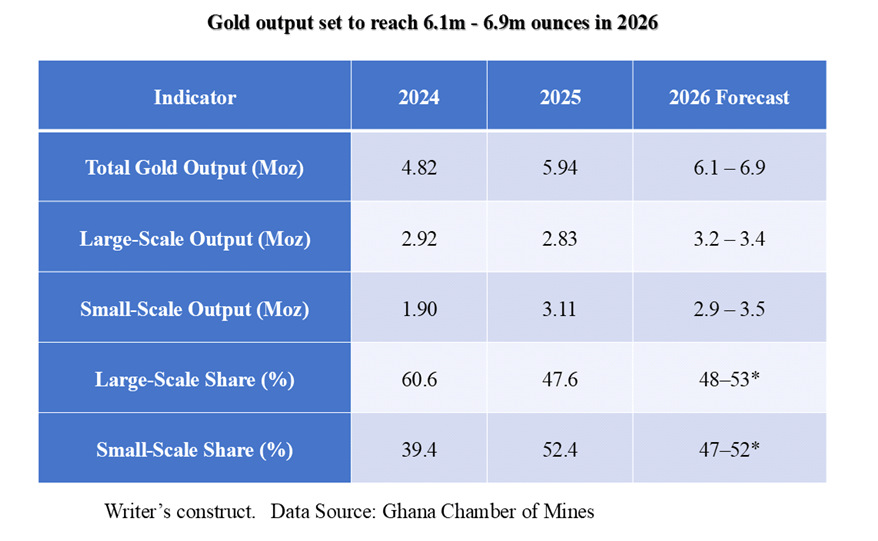
Ghana's mining sector anticipates maintaining record-high gold outputs in 2026, with estimates ranging from 6.1 million to 6.9 million ounces, as both major and minor miners boost their activities, reports the Ghana Chamber of Mines.

The chamber predicts significant gold output ranging from 3.2 million ounces to 3.4 million ounces for this year, whereas production from the informal sector is anticipated to fall between 2.9 million ounces and 3.5 million ounces.

Should they be implemented, these forecasts would highlight the increasing significance of artisanal mining within the nation's gold sector, as this part of the industry could match or surpass production levels achieved by major operations.

The forecast comes after a significant year in 2025, during which production from small-scale miners surpassed that of major producers for the first time in over a hundred years.

Speaking to stakeholders at the 98th session of the Ghana Chamber of Mines' event th Annual General Meeting (AGM) held in Accra, former Chamber President Michael Edem Akafia stated that the nation achieved widespread growth in its conventional minerals during 2025 – with significant increases observed in gold output.

The amount of gold produced that can be attributed rose by 23.41% from 4.82 million ounces in 2024 to 5.94 million ounces in 2025, mainly due to a significant rise in output from the artisanal mining industry.

Gold extraction at a smaller level increased by 63.82 percent, moving from 1.90 million ounces to 3.11 million ounces, thanks to initiatives such as the creation of the Ghana Gold Board. Consequently, artisanal mining contributed 52.4 percent of total country output, surpassing major-scale miners for the first time in over a hundred years," he stated.

In comparison, major gold manufacturing fell by 2.98 percent, dropping from 2.92 million ounces in 2024 to 2.83 million ounces in 2025, which decreased its portion of total domestic production from 60.6 percent to 47.6 percent.

Despite the drop in total large-scale output, the member firms affiliated with the chamber produced 2.77 million ounces in 2025, down from 2.86 million ounces in 2024, marking a decrease of 3.08 percent.

Mr. Akafia cited reduced production levels in most facilities, except for the Asanko Gold Mine and AngloGold Ashanti's Obuasi Mine.

The output from the large-scale operation was backed by Newmont's Ahafo Mine, Cardinal Resources Limited's Namdini Mine, and Zijin's Akyem Mine after it was acquired by Zijin from Newmont in 2025.

Additional major open-pit mines saw a slight rise in production, going from 55,000 ounces in 2024 to 57,000 ounces in 2025, indicating an increase of approximately 2 percent. However, their portion of total national output fell from 1.2 percent to 1.0 percent.

The robust showing of the gold industry aligned with one of the most impressive economic expansion periods in recent times.

The actual gross domestic product (GDP) rose from GH¢197.86 billion in 2024 to GH¢209.64 billion in 2025, showing an increase of 5.95 percent, up slightly from 5.85 percent recorded the prior year.

One of the most successful areas within the economy was the gold mining sector, which grew by 19.6 percent, primarily fueled by an increase in artisanal gold output.

The proportion of Gold in GDP rose from 7.97% in 2024 to 9.98% in 2025, becoming the leading component of the economy. Its portion inside the larger manufacturing industry also grew from 13.8% to 14.8%.

In addition to gold, manganese production grew from 5 million tons in 2024 to 5.2 million tons in 2025, marking an increase of 3.83 percent, whereas bauxite output climbed by 21.9 percent.

However, diamond output fell significantly from 332,297 carats in 2024 to 197,233 carats in 2025, representing a decrease of 40.65 percent.

The drop was blamed on lower natural diamond prices, growing rivalry from man-made diamonds, and weak worldwide demand.

In 2026, it is anticipated that manganese will be produced between 5 million metric tons and 6 million metric tons, whereas bauxite output is predicted to fall within the range of 2.5 million metric tons to 3 million metric tons. The estimated diamond production for the same period lies between 150,000 and 250,000 carats.

Mr. Akafia warned that the future of the mining industry hinges on clear policies, changes in regulations, prompt renewal of licenses, better management of artisanal mining operations, and sustained funding throughout the mineral supply chain.

His comments occur during an active discussion about the trajectory of the mining sector, involving the government's policy on contract mining, lingering problems with renewal of mining leases, and growing demands for increased local involvement in owning and managing mineral assets.

The Minister for Lands and Natural Resources, Emmanuel Armah-Kofi Buah, stated that the government remains committed to seeing mining as a key component of economic development and a significant contributor to foreign currency income.

"In line with our mid-term growth plan, the sector has been given priority within our overall strategy aimed at stabilizing the economy, encouraging manufacturing expansion, and enhancing preparedness for worldwide disruptions," he stated.

The official stated that the government is implementing changes designed to increase regulatory clarity and boost operational effectiveness within the industry.

Supplied by SyndiGate Media Inc. ( Syndigate.info ).
Sunday, June 28, 2026

Sudan's Pound Plummets to Record Low Amid War-Driven Crisis

June 10, 2026 (KHARTOUM) – The Sudanese currency has reached an all-time low compared to international money because of heavy betting and increased requests for imports as there is a critical lack of foreign cash reserves.

The native currency has seen a continuous drop due to the ongoing conflict and an expanding trade imbalance, characterized by declining exports and increasing imports.

From the start of this year, currency exchange rates have increased substantially, as the U.S. dollar went up from 3,750 pounds to a range of 4,200 to 4,300 pounds.

Traders operating in the parallel market informed Sudan Tribune on Tuesday that the local currency dropped to 4,400 against one U.S. dollar due to increased demand for dollars and other foreign exchange.

The Saudi riyal climbed to 1,140 Sudanese pounds, the UAE dirham touched 1,171 Sudanese pounds, the euro was being exchanged for 5,058 Sudanese pounds, and the British pound rose to 5,810 Sudanese pounds, with the Egyptian pound standing at 90 Sudanese pounds.

A merchant, who requested to remain unnamed, mentioned that there is strong interest in foreign exchange to support the purchase of fuels, along with betting actions from forex dealers aiming to obtain significant amounts of dollars.

Financial analyst Waleed Dalil stated that the decline in the value of the currency presents significant economic difficulties impacting people's everyday experiences, highlighting that inflation has hit unprecedented levels because of the war's impact on buildings and banking systems.

The burden of finance has completely moved to the informal sector since formal banks cannot supply foreign exchange for importers and residents, causing exchange rates to be influenced by intense speculation and rush purchases, Dalil said.

Economic specialist Haitham Mohamed Fathi stated that Sudan is facing significant decline in key production areas such as manufacturing, mining, petroleum, and farming, with this situation deteriorating throughout the conflict.

Merchants, illegal traders, and gamblers have taken advantage of the nation's changing economic system, with a commerce and services-based economy growing while manufacturing and farming decline, Fathi noted.

The stability of the Sudanese currency relies on the transitional government's capacity to carry out essential structural changes, such as overhauling banking systems, controlling price increases, and boosting industries to rejuvenate the economic situation, according to Fathi.

Fathi pointed out that the increasing discussion about importing critical supplies, especially fuel, has had a direct impact on price levels throughout the manufacturing and transportation networks, with conditions further deteriorating due to the loss of oil-producing regions and unstable revenue streams from South Sudan's petroleum exports.

The Sudanese economy is trapped in a complicated crisis where economic, monetary, and political factors overlap, according to Fathi, who added that this situation has been worsened by insufficient global collaboration and the suspension of external financial support.

The drop in the value of the pound has increased market anxieties, causing the currency to be stuck in a harmful loop of falling exchange rates and rising prices, which leaves the central bank with few options for dealing with today's financial situation, said Fathi.

Supplied by SyndiGate Media Inc. ( Syndigate.info ).
Saturday, June 27, 2026

Sudan Importers Accuse Government Bans of Fueling Currency Collapse and Inflation

June 10, 2026 (KHARTOUM) – The Sudanese National Chamber of Importers has accused the government of causing increased inflation and the decline in the value of the national currency, after an April order prohibited the importation of numerous products.

In late April, the Sudanese government banned the importation of more than 40 high-end and unnecessary items. This action was intended to reduce speculative activities in unofficial currency exchange markets, enhance local production, and strengthen the economic situation.

Nevertheless, the Sudanese pound hit a historic low on Wednesday, as the U.S. dollar was exchanged for approximately 4,700 pounds, representing its greatest decline so far. This downturn is fueled by the continuous conflict, declining exports, and a growing import cost.

The traders' association called on the government to quickly lift the restriction, stating that the measure had not succeeded in stabilizing the currency, caused price increases, and lowered public income.

Al-Sadiq Jalal al-Deen Saleh, leader of the National Chamber of Importers, informed journalists on Wednesday that evidence showed the decision did not work. He mentioned that the chamber had earlier advised the prime minister through a letter regarding the financial consequences.

Salih mentioned that the order overlooked the main factors behind the pound's drop, which he pointed out were speculative activities in the market and increased appetite for foreign exchange. He added that the administration addressed the surface issues instead of tackling the underlying reasons for the crisis.

He stated that prohibiting 46 products would not reduce the demand for foreign exchange or steady the local currency. Rather, it could result in monopolistic situations as importers exit the market, causing product scarcity and increased costs.

Banned items made up approximately 11% of overall imports in 2025 yet generated more than 38% of the customs and tax income gathered at port facilities, according to Salih, who cautioned that a decline in such revenue could increase the budget shortfall.

Salih further cautioned that the limitations would push illegal trading and trafficking across Sudan's weakly controlled frontiers to satisfy economic needs. He claimed that the prohibition serves just a limited number of individuals, generating income at the cost of buyers and the national budget.

According to data collected by specialist market departments on May 24, Salih stated that prices have increased significantly following the implementation of the ban. Local cement costs went up by 22 percent, Egyptian pottery by 42 percent, rice by 98 percent, and Egyptian instant noodles by 54 percent.

He attributed the current price hikes to a psychological reaction as traders and consumers stockpile goods in anticipation of shortages. Salih warned that steeper price increases are likely as supply scarcity worsens and market competition decreases.

Additionally, Salih pointed out that the currency rate declined from approximately 4,100 pounds for one dollar at the time of the announcement to roughly 4,770 pounds on Wednesday, which he used as proof that the restriction did not succeed in stabilizing the foreign exchange sector.

Salih once again urged the government to reassess the policy and implement actions aimed at addressing fundamental economic disparities instead of limiting commerce. He stated that the chamber would remain against the decision to safeguard market balance and national income.

The interim government announced Presidential Order Number 174 from 2026 in April aimed at prohibiting the entry of high-end and unnecessary goods.

The prohibition stemmed from suggestions made by a group assigned to halt the drop in the local currency, directives issued by the Senior Economic Panel, and an analysis provided by the Department of Industry and Commerce.

The regulation applied to over 40 products, such as bottled milk, excluding powdered and baby formulas, certain processed goods, cookies, candies, jellies, mineral and fizzy drinks, pre-mixed fruit beverages, pottery, and granite.

As per the Central Bank of Sudan's 2025 foreign trade data report, Sudan's exports reached $2.64 billion, whereas imports amounted to $6.49 billion, leading to a trade gap of $3.86 billion.

Supplied by SyndiGate Media Inc. ( Syndigate.info ).
Wednesday, June 24, 2026

EV Charging Discount Drives 9.2% Usage Surge

The reduction in public charging costs for electric vehicles (EVs) during daylight times on weekends and holidays last spring led to a 9% rise in charging instances relative to before the discount was introduced. The initiative sought to promote EV charging during spring afternoons, when solar energy production is significant, thereby making use of excess power. Having demonstrated success, the government intends to implement the identical strategy again this fall.

On the 11th, the Ministry of Climate, Energy and Environment revealed details about the "Spring and Autumn Weekend/Public Holiday Free EV Charging" initiative. This promotional offer lasted for 17 weekends and public holidays starting from April 18 through May 31, with discounts available between 11 AM and 2 PM. Within this timeframe, electric vehicle owners who utilized charging stations managed by the Ministry of Climate, Energy and Environment along with the Korea Electric Power Corporation (KEPCO) were eligible for reductions ranging from 40.1 to 48.6 South Korean Won per kilowatt-hour (kWh).

As per the ministry, about 13,000 public charging stations managed a cumulative total of 79,114 charge events throughout the promotional phase. The overall discount value amounted to 75.46 million South Korean won. On an average day during this time, there were 4,654 charging instances, representing a rise of 9.2% compared to the previous daily mean of 4,261 sessions.

The discount was launched alongside the seasonal and time-dependent electricity pricing changes that began in April. It formed part of a trial aimed at increasing energy usage during spring weekend afternoons, when solar production is significant yet demand remains low, resulting in regular excess supplies. Taking into account these findings, the government intends to bring back the reduced fees for public electric vehicle charging stations between September and October, as surplus solar power is anticipated once again.

Tuesday, June 23, 2026

KOSPI Rises as Housing Demand Spikes 9.3 Trillion Won in Household Loans

A rise in interest in stock investments and more home sales occurred simultaneously, resulting in an increase of over 9 trillion South Korean won in household loans during the previous month. Financial regulators have implemented actions such as lowering credit loan caps for those with higher incomes and reviewing banks' adherence to residential lending contracts.

On the 11th, the Financial Services Commission stated in its *‘May Household Loan Trends’* report that total household loans from all financial institutions rose by 9.3 trillion South Korean won during the previous month. This represents about 2.7 times the growth seen in April (3.5 trillion South Korean won) and far surpasses the rise of 5.9 trillion South Korean won observed in May of the prior year.

With a notable surge in the KOSPI lately, credit loans were responsible for the growth in borrowings. Other types of loans, such as credit loans, experienced a dramatic shift—from a decline of 2 trillion South Korean won in April to an increase of 5.3 trillion South Korean won in May. Particularly, loans under bank-sector negative accounts grew substantially, moving from a drop of 600 billion South Korean won in April to a gain of 2.6 trillion South Korean won in May. Increased consumer spending during Family Month also played a role.

Residential mortgage loans rose by 4 trillion South Korean won, continuing at a high level after an increase of 5.5 trillion South Korean won in the prior month. Nevertheless, due to higher apartment sales in the metropolitan area and broader implementation of approved bulk loan programs, the growth rate of residential mortgage loans saw a slight decline from the previous month. Shin Jin-chang, Director of the Office at the Financial Supervisory Service, said, "It is possible that residential mortgage loans could grow once more as property listings get absorbed following the end of the deferral period for the supplementary capital gain tax on multi-homeowners."

Authorities have introduced an emergency management framework, which involves holding weekly gatherings with financial organizations that haven't met goals related to managing consumer debt. Significantly, the banking industry intends to cut new loan caps for individuals with higher incomes and promote early repayment of credits by waiving charges associated with repaying loans before their scheduled term. The Financial Regulatory Agency will carry out ongoing audits to confirm that banks follow previous agreements they've reached with borrowers when issuing loans, such as promises to sell existing homes, restrictions on buying more properties, and relocation requirements.

Monday, June 22, 2026

Income Gap Surges as K-Shape Growth and Real Estate Divide Deepen

A research report indicates that the disparity in household incomes, which had previously shown a decreasing pattern, has started to increase once more. According to the Bank of Korea, the South Korean economy is experiencing "complicated polarization," with both wealth and income inequalities growing.

The wealth disparity has increased because of higher property costs, while income inequality has grown due to "K-shaped recovery," with economic expansion focused mainly on chip production firms.

On the 10th, the Bank of Korea disclosed in its publication called *Current Status and Ripple Effects of Household Polarization in the Korean Economy* that the income Gini coefficient (calculated using disposable income) dropped from 0.353 in 2016 to 0.323 in 2023, though it increased marginally to 0.325 in 2024.

The Gini coefficient tends toward 0 when there is perfect equality and reaches 1 when there is complete inequality. A value above 0.4 typically indicates significant disparity within a society. The number increased marginally from 0.328 in 2020 to 0.329 in 2021, then decreased steadily before rising once more in 2024 following a three-year period of reduction.

Lee Jae-ho, leader of the Bank of Korea's investigative group, stated, "Indications suggest that the wealth disparity is once more expanding because of K-shaped development within various sectors," noting, "The risk of job replacement caused by the rise of artificial intelligence (AI) might heighten economic imbalance going forward, potentially reinforcing current disparities in assets."

As per the report, the net wealth Gini coefficient decreased to 0.584 in 2017 but quickly increased to 0.625 by 2025. Since real estate constitutes the majority of family assets and is mainly held by older individuals, intergenerational wealth inequality has turned into a structural issue.

The Bank of Korea noted that with rising income disparity and growing wealth concentration, the financial condition of homeless individuals and those with limited earnings is worsening. The percentage of young adults (those in their 20s and 30s) within the bottom fifth of both net worth and income groups almost doubled between 2020 and 2025, increasing from 7.9% to 15.2%. Specifically, only the share of individuals aged 20 to 30 within this group has risen.

The Bank of Korea cautioned that the economic base focused on low-income younger families is deteriorating, potentially reducing consumer activity and production efficiency. This occurs as higher-income individuals with significant wealth have less impact on increasing consumption, and older people, who own property, face constraints in converting their assets into spendable cash.

Based on a national panel data study, when the wealth proportion held by the top 10% rises by one percentage point, total factor productivity decreases by 0.16% after two years. Total factor productivity reflects the extent to which a nation's technological advancement, educational standards, and institutional effectiveness support economic expansion.

Lee stated, "The process of aging is increasing efficiency problems via 'older generations passing wealth to older offspring,' with individuals in their 80s transferring resources to those in their 60s," and highlighted, "Current redistributive measures aimed at maintaining income have shortcomings; therefore, it is important to enhance the emerging industrial system to make sure economic growth advantages are solidly embedded throughout the economy."

Sunday, June 21, 2026

South Korea's Exports Surge 85.9% on Semiconductor Boom

With robust semiconductor exports driving growth, shipments between June 1 and 10 saw an almost 86% rise when measured against the same timeframe in the previous year. Export volumes of semiconductors jumped to triple the levels recorded during the corresponding period last year, marking a new peak for this time frame.

As per the Korea Customs Service’s statement released on the 11th about the “import and export situation between June 1 and 10,” total exports during this time reached $28.635 billion, reflecting an 85.9% rise when contrasted with the corresponding timeframe in the prior year. This exceeds the earlier peak for the initial ten days of a month, which had been recorded in the early part of April at $25.2 billion, thus setting a new all-time record.

Major exports including semiconductors (up 205.8%) and passenger vehicles (increased by 25.4%) contributed to reaching a new peak in export figures during this time frame. In the initial ten days of June, exports hit $11.1 billion, marking the largest total for the first ten days of any month. Export growth was notable across industries such as refined fuels (rose 68.7%) and computer accessories (jumped 259.4%).

Exports experienced significant growth in several key markets, including the United States, which saw an increase of 54.4%, and China with a rise of 101.4%. Additionally, shipments to Vietnam increased by 102.9%, while those to the European Union grew by 46% and to Taiwan by 34%.

The exports saw almost an 86% rise throughout this time frame, partly due to more workdays—seven days (not counting public holidays)—as opposed to 5.5 days recorded during the corresponding period in the previous year, representing a gain of 1.5 days. Nevertheless, when considering this factor, the average daily export value still went up by 46.1% from the same timeframe last year.

The value of imports during the initial ten days of June totaled $23.352 billion, representing an upward surge of 35.6% compared to the corresponding timeframe in the previous year. Export figures surpassed import levels, leading to a trade balance surplus of $5.282 billion. The total surplus accumulated since the start of this year up to the tenth day of this month stood at $107.454 billion.

Saturday, June 20, 2026

Bank Household Loans Surge 6.9 Trillion Won Amid Stock and Housing Boom

The bank sector's household loan volume rose by 6.9 trillion South Korean won last month, reflecting an over three-fold increase in the monthly growth rate. This spike was fueled by growing interest in stock investments after the KOSPI climbed and improved activity in real estate deals in the metropolitan area, resulting in higher demand for various types of individual loans such as credit loans and negative balance accounts along with mortgages.

As per the Bank of Korea's publication called *‘May Financial Market Trends,’* issued on the 11th, bank-based household loans rose by 6.9 trillion South Korean won during the previous month. This rise surpassed threefold the increase seen in April (2.1 trillion South Korean won) and also outperformed the figure for the corresponding period last year (5.2 trillion South Korean won). As a result, the total amount of household loans within the banking system climbed to 1,181.8 trillion South Korean won.

The expansion was driven by various types of loans such as personal credit loans, negative balance accounts, and equity-secured loans. These loans shifted from a decline of 600 billion South Korean won in April to a rise of 3.7 trillion South Korean won in May. According to the Bank of Korea, there was a substantial surge in loan requests due to major individual stock investments occurring alongside spending demands during the holiday season.

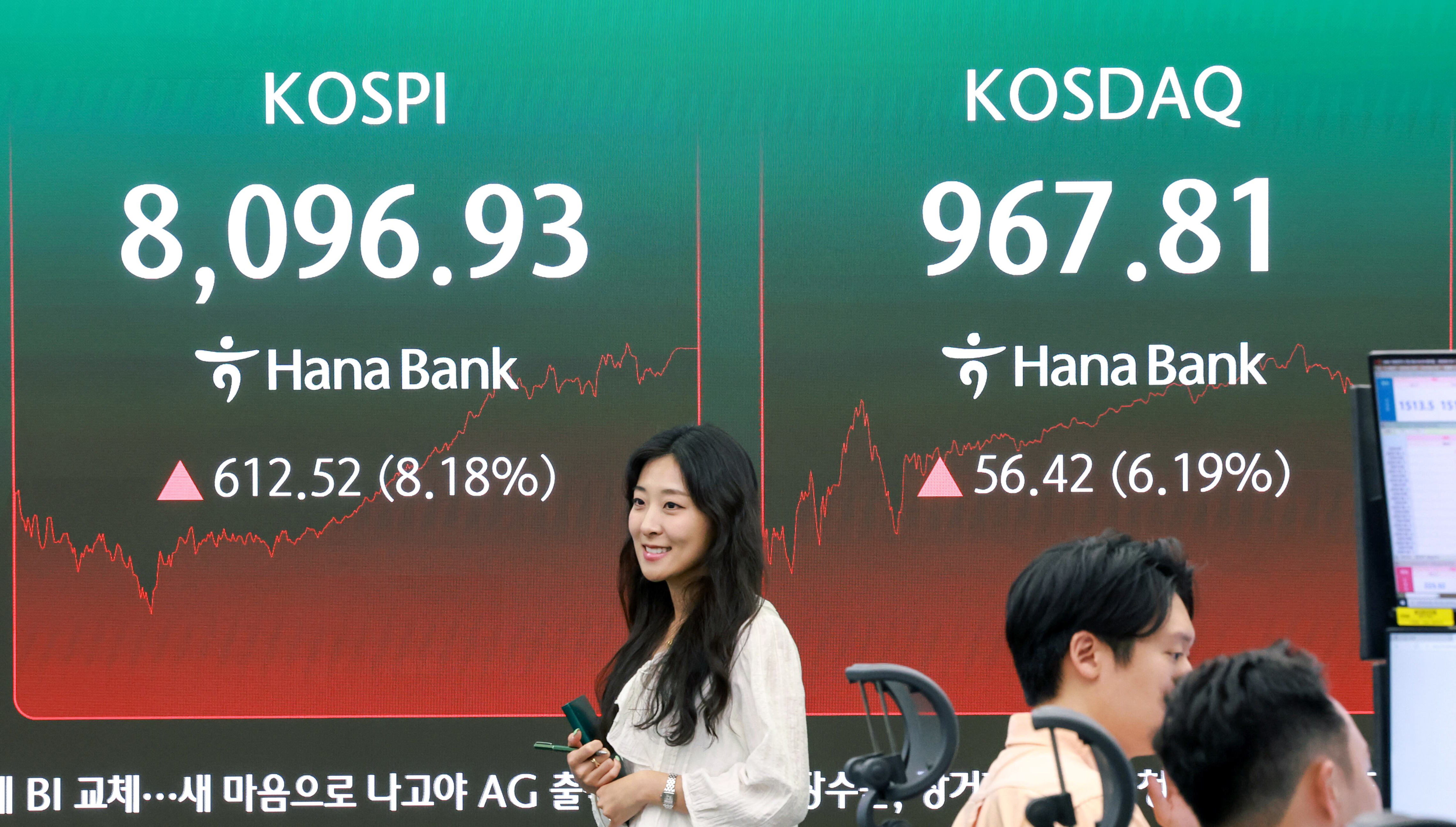
Certainly, the KOSPI climbed to 8,476 by late May, fueled by a booming semiconductor industry and hopes for better company profits, before reaching an all-time peak of 8,801 on June 2. Nevertheless, it subsequently declined due to growing concerns about potential interest rate increases from the U.S. Federal Reserve. Equity-focused mutual funds saw their balances rise by 58.8 trillion South Korean won, supported by higher valuations resulting from increasing share prices along with fresh investments amounting to 7.6 trillion South Korean won. Total assets managed by investment firms also expanded by 86.4 trillion South Korean won, reflecting a significant influx of capital into the equity markets.

Mortgage lending rose by 3.2 trillion South Korean won, marking an expansion compared to the prior month's rise of 2.7 trillion South Korean won. Although jeonse loans remained downward, this trend was due to higher property dealings focused on medium-to-low cost residences within the metropolitan area as well as greater interest in temporary payments for ongoing pre-owned new construction projects. Apartment transaction volumes in Seoul hit 8,500 units during April, representing a notable jump from the preceding month’s total of 5,500 units.

Corporate lending also kept increasing. In May, bank corporate loans rose by 10.6 trillion South Korean won, staying at a level comparable to the prior month's 10.7 trillion South Korean won. SME loans climbed by 5.4 trillion South Korean won as part of an initiative aimed at broadening productive financing, whereas loans for major corporations went up by 5.2 trillion South Korean won because of demands for working capital to settle corporate bonds.

On the contrary, corporate bond issuing decreased because of the pressure from increasing interest rates. As businesses turned to other financing options like bank loans, corporate bonds experienced a net withdrawal of 1.1 trillion South Korean won, with commercial paper (CP) and short-term bonds also moving toward net withdrawals.

Tuesday, June 16, 2026

Mortgage Rates Near 8%, Credit Loans Hit 7%

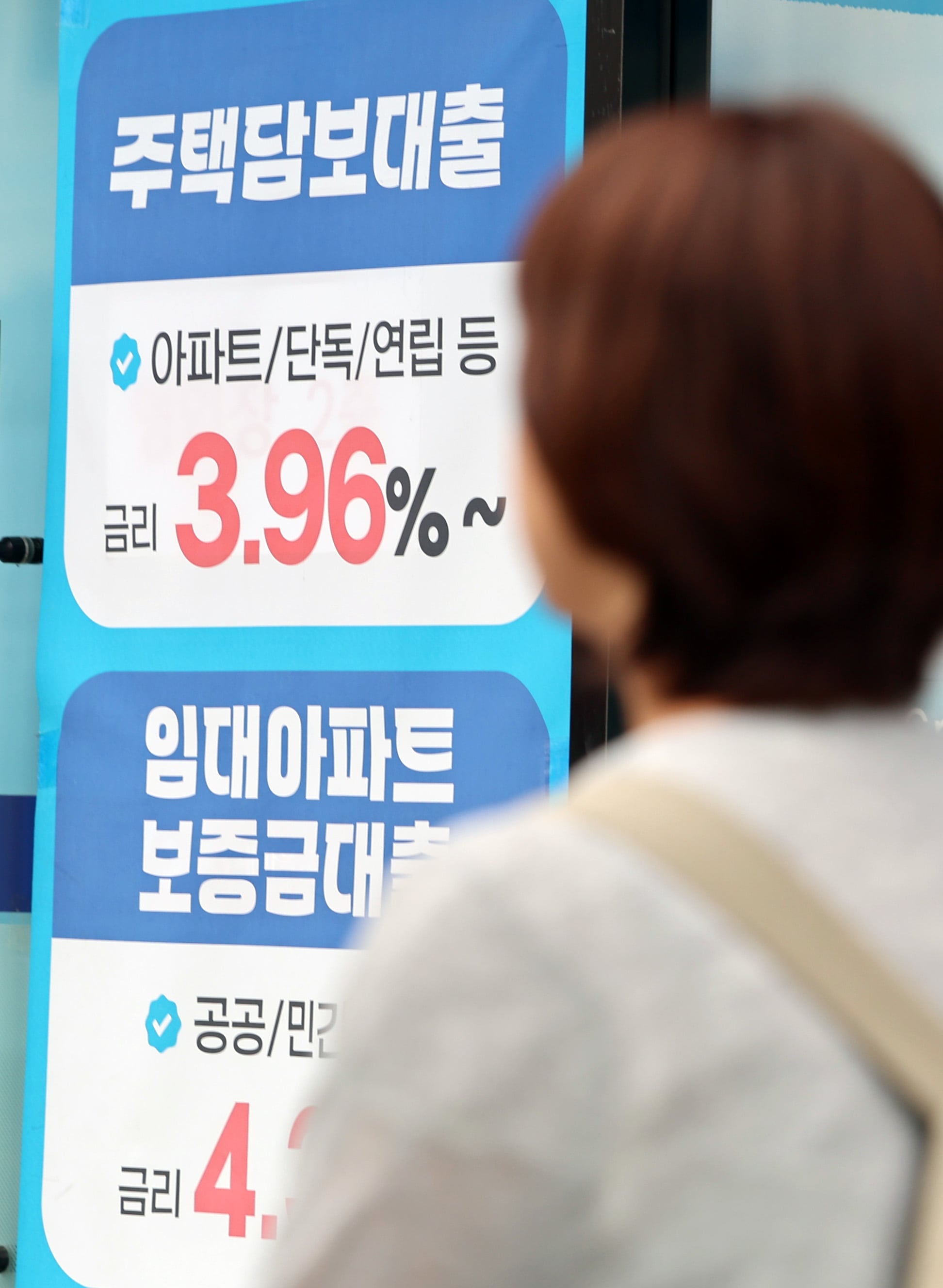
With rising bond market interest rates, bank lending rates are also climbing. As reported by the banking industry on the 11th, the fixed-rate (5-year) mortgage loans from the five largest banks—KB Kookmin, Shinhan, Hana, Woori, and NH Nonghyup—are now ranging between 4.51% and 7.5% annually as of the day before.

Only at the close of last month, the maximum interest rate stood at 7.1% per annum, yet it increased by 0.4 percentage points within just two weeks. The fixed-rate home loan rate has gone up by 1.2 percentage points since the start of this year. Following the point where the cap surpassed 7% annually towards the end of March, it is currently nearing the 8% bracket.

The yield on 5-year financial bonds, used as the standard for fixed-rate home mortgages, increased by 0.187 percentage points to an annual rate of 4.394% from the previous month’s close.

◇Banks Reducing Preferential Rates

With fixed-rate mortgage interest rates rising sharply, there has been an increase in demand for adjustable-rate mortgages, which experience more modest rate hikes. To address this trend, financial institutions are increasing their minimum lending rate requirements.

Lately, KB Kookmin Bank has lowered the favorable interest rate for its 'KB Star Apartment Mortgage Loan' (which uses a new balance COFIX-linked six-month floating rate) by 0.2 percentage points. The lending rates are calculated by combining different spreads with the benchmark rate and then deducting the favorable rate. Reducing the favorable rate leads to a higher overall loan rate.

This month, NH Nonghyup Bank increased both the 6-month floating interest rate and the 5-year fixed rate by 0.2 percentage points respectively.

If someone takes out a loan of 500 billion won with an annual interest rate of 6%, repayable over 30 years through fixed monthly payments, they would have to pay roughly 3 million won each month. But if the interest rate goes up to 8% yearly, the monthly payment jumps to approximately 3.6 million won, leading to an extra cost of about 600,000 won every month.

◇ Increasing Credit Card Balances, Higher Interest Rates

With an increase in money entering the stock market, outstanding credit loan amounts, such as those from overdrawn accounts, are growing, along with the interest rates for these loans.

The one-year credit loan interest rates offered by the five largest banks ranged between 4.35% and 6.15%, according to data from the prior day. This represents a rise of 0.29 percentage points at the higher end and 0.23 percentage points at the lower end compared to the end of the previous month, when the range was 4.36% to 5.89%.

Taking a credit loan of 100 million won, a rise in the annual interest rate from 6% to 7% increases the yearly interest cost from 6 million won to 7 million won, resulting in an additional payment of about 80,000 won per month.

This month, the overdraft account balances at the five leading banks surpassed 42 trillion won, reaching the highest point in three years and seven months since late November 2022.

Banks have raised their bond offerings this year, exceeding 100 trillion won.

A representative from the financial industry stated, "With banks boosting their bond offerings to stop deposits from moving into the stock market, financing expenses have gone up, which is now evident in lending interest rates. The pressure on 'debt-to-invest' and 'yeongkkul (soul-extended loan)' categories may intensify."

KOSPI Drops 1.5% as Inflation and AI Profits Weigh On Markets

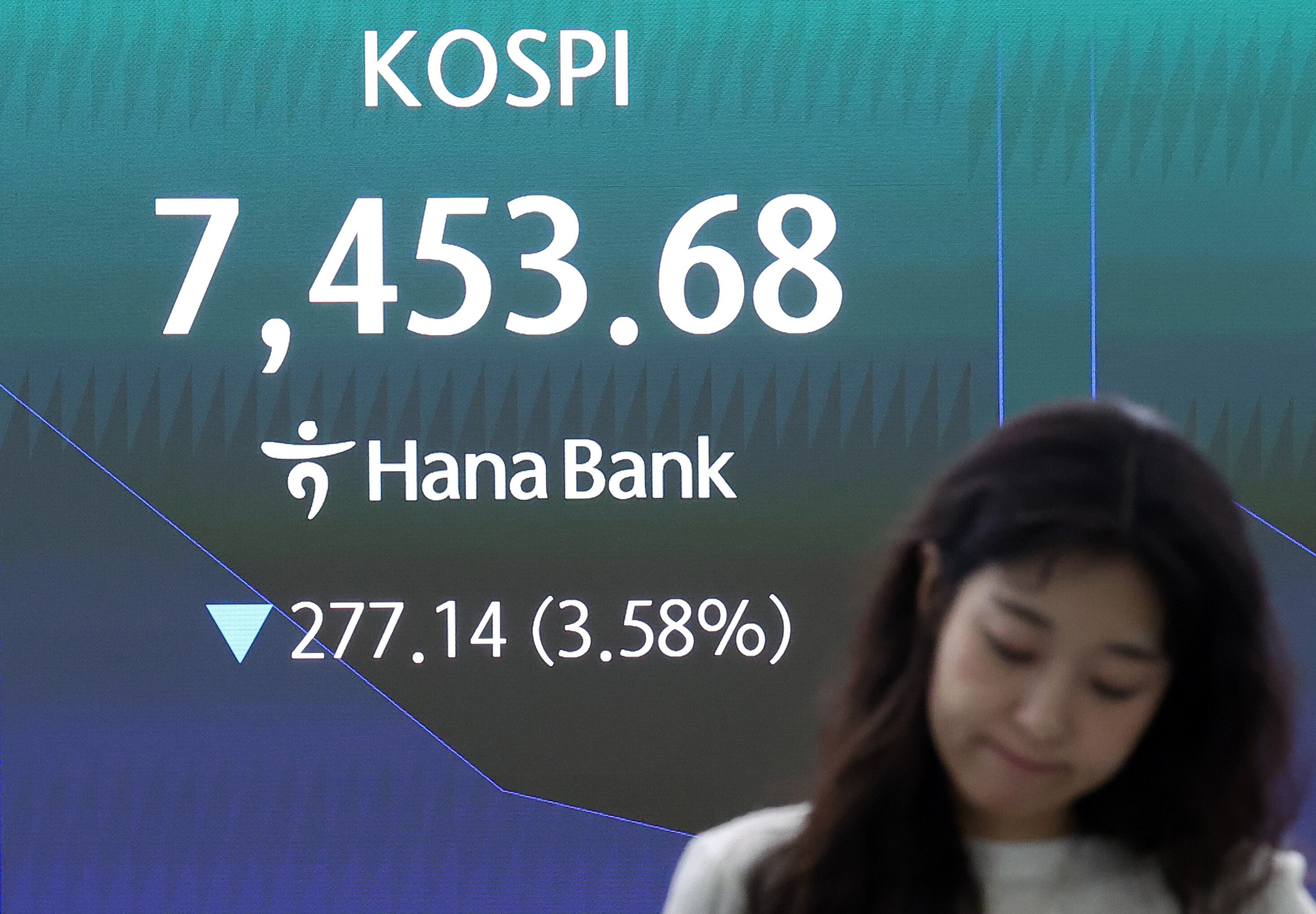
The South Korean stock market declined by about 1.5% on the 11th due to twin pressures from U.S.-induced inflationary trends and worries regarding the financial viability of the artificial intelligence sector.

On the same day, the KOSPI index remained around the 7,616 mark, declining by 108 points (1.4%) compared to the last trading day. Having exceeded 7,730 the previous day, the index fell sharply into the middle of the 7,400s within one session, temporarily crossing below the 7,400 level, reaching a low of 7,394.46.

Many individual stocks also experienced declines. Samsung Electronics, a key indicator in the semiconductor sector, dropped 4,000 South Korean won (1.4%) to 298,000 won from the prior day, falling under the 300,000-won threshold. Hyundai Motor was trading at 584,000 won, declining roughly 3%, whereas LG Electronics decreased by about 3.3% to 216,500 won.

Significantly, Doosan Enerbility, which had gained due to hopes for nuclear power plants, dropped 5.71% (5,200 won) to 85,900 won, recording the biggest fall among major stocks. Samsung Electro-Mechanics also declined, slipping 2.6% to 1,759,000 won. In contrast, SK Hynix increased approximately 2% to reach 2,080,000 won.

The downward trend of the day was driven by the significant fall in U.S. financial markets from the prior day. The Nasdaq Composite Index dropped 1.98%, while the S&P 500 Index declined by 1.62%, causing a halt in worldwide investor confidence.

Financial institutions viewed the scenario not simply as temporary fluctuations but as an indication of deeper structural issues, with both broader economic factors and company performance experiencing instability at the same time. DS Investment & Securities noted, "This drop is hard to ignore as a quick recovery," further stating, "The market is moving into a long-lasting correction period due to declining wage growth and concerns over AI's financial returns."

What specifically caused the market to freeze was worry about "stagnant consumption" and the "AI bubble hypothesis." DS Investment & Securities noted, "Rising oil prices are increasing the Consumer Price Index (CPI), undermining the U.S. Federal Reserve's justification for lowering interest rates, as real hourly earnings in the United States have shown negative numbers for three straight months, putting significant pressure on consumer spending."

Moreover, uncertainty surrounding the financial performance of AI-focused stocks, which were previously highly favored by investors, came into view. After Broadcom, Oracle also fell short of investor forecasts in its primary software operations, raising deeper questions about whether "AI can genuinely create revenue."

U.S. Inflation, Iran Tensions Send Global Bond Yields Soaring

The extended conflict in Iran and growing worries about inflation are causing instability in worldwide bond markets. The U.S. consumer price inflation rate has hit its highest point in three years, while increased military conflicts between the U.S. and Iran have caused the U.S. 30-year Treasury yield to surpass the key threshold of 5% per annum. In South Korea's bond market, government bond rates have also approached their annual peak, as experts observe that investors are anticipating higher bond yields (which mean falling prices).

◇ U.S. Inflation Increases at Highest Rate in Three Years

As reported by the U.S. Department of Labor on the 10th, the U.S. Consumer Price Index (CPI) climbed 4.2% in May when compared to the same period in the prior year. This represented a rise from April's 3.8% growth and was the largest increase seen since 2023. On a monthly basis, prices went up by 0.5%, meeting analysts' predictions. Nevertheless, the core CPI, a key indicator watched by the Federal Reserve in shaping interest rate policies, grew just 0.2% over the past month, below the expected 0.3%. Certain specialists remarked, "The most severe outcome has been prevented."

Although the core CPI saw a smaller increase than expected, which briefly caused U.S. bond yields to fall, rising tensions in the Middle East changed this direction. On the same day, U.S. President Donald Trump posted on Truth Social: "We will attack Iran more severely," leading Iranian President Masoud Pezeshkian to adopt an equivalent position, sparking renewed worries about possible warfare. As reported by Investing.com on the 11th, the U.S. 3-year and 10-year Treasury yields increased by 0.036 percent and 0.041 percent compared to the prior day, hitting annual rates of 4.213% and 4.569%. The 30-year Treasury yield reached 5.044%, crossing above the significant 5% level. An individual from the finance sector remarked, "Ongoing anxieties over inflation, along with potential disruptions in oil supplies due to conflicts involving Iran, are causing pressure on what were once considered secure investments like U.S. Treasuries. Previously, when people avoided risks, they invested in U.S. bonds, thus reducing their yields. However, now factors such as energy prices and U.S. budget shortfalls are making longer-term bonds 'assets for sale.'"

◇South Korean Government Bond Yields Approaching Yearly Peaks

Rising inflation worries and tensions in the Middle East are causing instability in South Korea's bond market. Bond yields in Seoul have reached near-record highs this year, as global interest rate increases continue to push them higher. As reported by the Korea Financial Investment Association, on the 10th, the 3-year government bond yield was recorded at an annual rate of 3.881%, while the 10-year yield came in at 4.273%. These figures are close to their yearly maximums of 3.94% and 4.348%, respectively. Meanwhile, the volume of stock loan deals betting against rising bond prices has hit a new all-time peak. On January 2nd, the total value stood at 182.538 trillion Korean won, but by the 10th, it had climbed to 234.6373 trillion—showing growth of more than 52 trillion Korean won within just six months.

Another element contributing to rising bond yields is the Bank of Korea's decision to raise interest rates. Governor Shin Hyun-song has highlighted the importance of increasing rates, as financial markets anticipate the likelihood of two hikes occurring within the current year. Kim Jin-hee, an analyst from Shinhan Securities, stated, "Taking into account the continued positive surprises in exports and the initial phase of inflationary pressures, tight monetary policy is expected to remain in place through at least the third quarter. Should discussions between the United States and Iran advance during the latter part of the second quarter or the beginning of the third, stable oil prices might briefly reduce market rates; however, a long-term decline seems improbable."