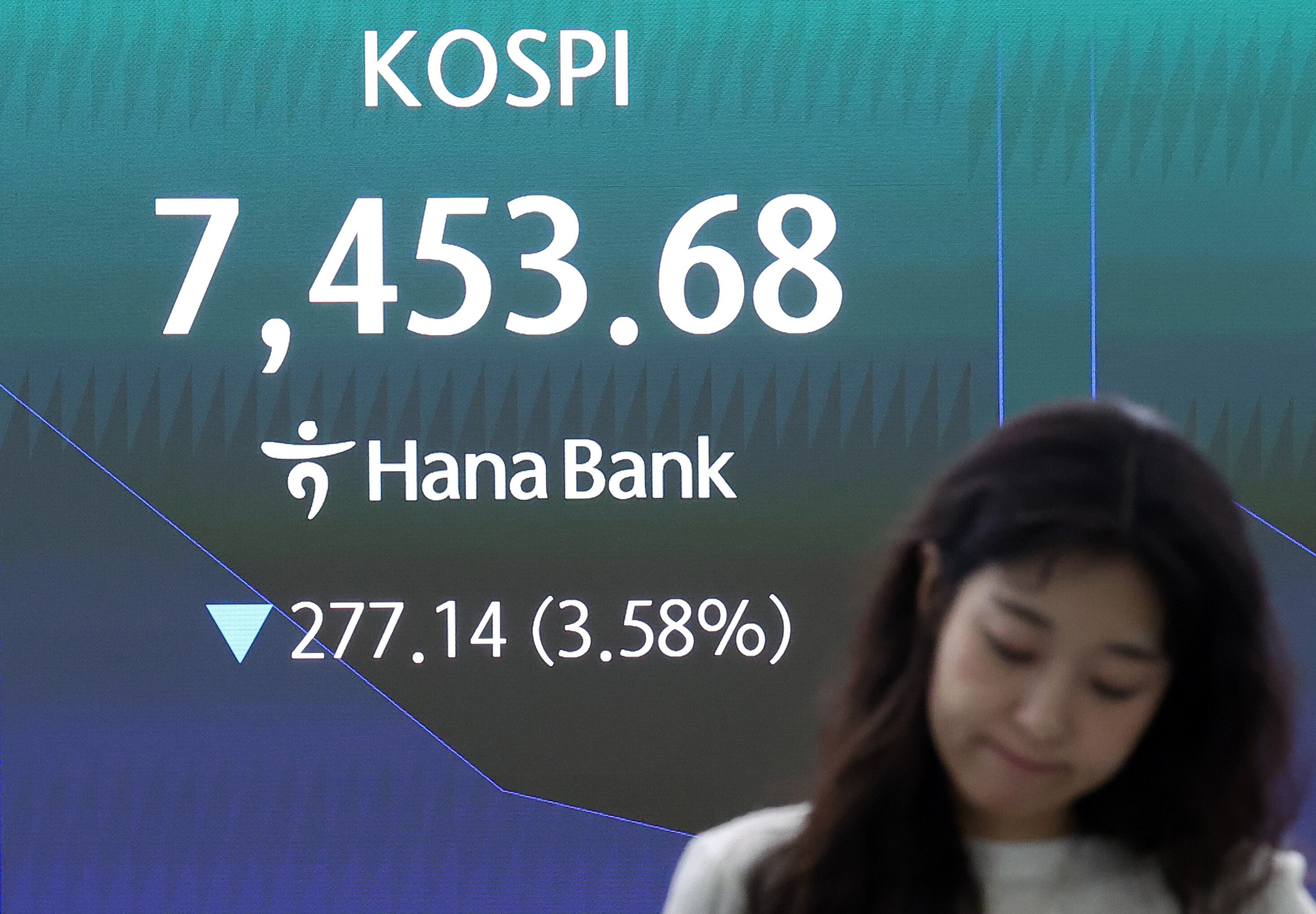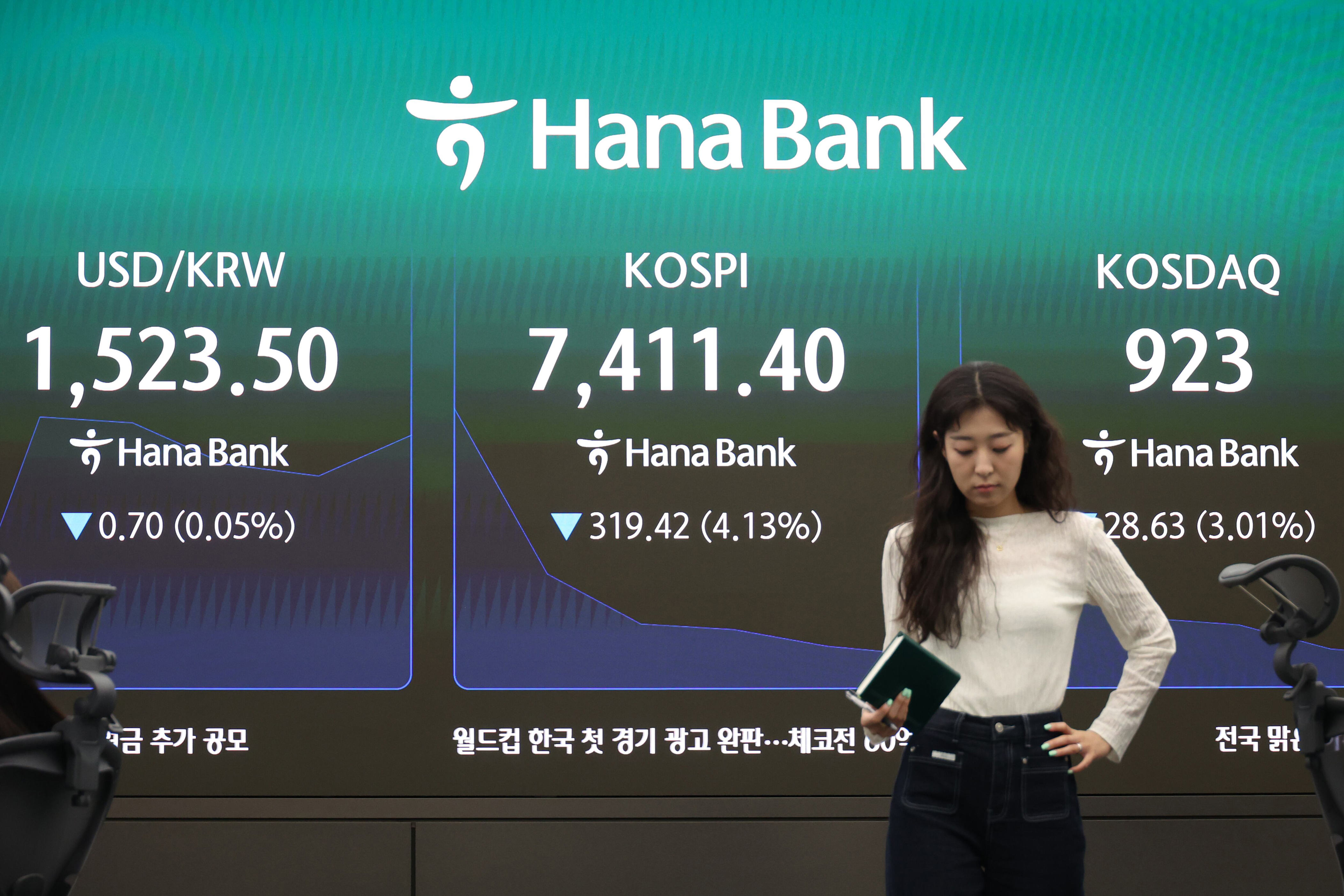
With South Korea's stock market experiencing significant fluctuations between steep drops and rapid increases each day, investor confidence is beginning to wane.
As reported by the Korea Exchange on the 11th, the typical daily transaction amount in the KOSPI market for this month reached 504.49 million shares, representing the smallest monthly average so far this year. This reflects a drop of 42 percent when contrasted with the mean daily trade volume of 869.2 million shares observed between January and May. The average daily trading level hit a high of 1.10766 billion shares in March, followed by reductions to 947.18 million shares in April, 698.79 million shares in May, and now stands near 500 million shares this month.
A decline in trade volume, an essential measure of market liquidity, is clearly visible. Trade volume hit a high of 80.3325 trillion South Korean won on the 29th of last month and 74.33 trillion South Korean won on the 1st of this month, yet averaged only 46.2314 trillion South Korean won during the previous week (from the 4th to the 10th). Significantly, on the 10th, as the KOSPI fell 4.52% to 7,730.82 due to significant sales from foreign investors and institutional players, trade volume decreased to 39.9448 trillion South Korean won. Within a single week, the market's liquidity was reduced by more than half.
Behind the trend of investors holding back and taking a cautious stance are broader economic uncertainties and global political conflicts. On the 10th, the U.S. Department of Labor reported that the U.S. Consumer Price Index (CPI) increased by 4.2% compared to the previous year in May—the largest rise in over three years and one month driven by elevated fuel costs. This greatly reduced hopes for a reduction in interest rates by the U.S. Federal Reserve, leading to stagnation in the stock market.
Amidst the chaos, concerns about an all-out American conflict with Iran arose. On the 10th, U.S. President Donald Trump commented after a U.S. military helicopter was shot down, saying, "Iran will face consequences for delaying," and "We'll strike forcefully today. Talks have ended." Han Ji-young, a research analyst at Kiwoom Securities, noted, "The volatility index (VKOSPI) hit a new peak between 88-91, leading traders to halt transactions completely as part of their risk control measures." Analysts predict that the market will remain stable despite limited trade volume until mid-month, when international developments are anticipated to settle.
In the meantime, concerns about significant overpricing within the New York stock market are encouraging a worldwide approach of waiting and observing. As reported by Yahoo Finance, the "Buffett Indicator," calculated by dividing the overall value of the U.S. stock market by the yearly nominal gross domestic product, has recently climbed to 232.5%. This marks the highest point recorded since GuruFocus started gathering information from 1970 onwards. It indicates that the American stock market is currently 2.3 times bigger than the nation's annual economic production, categorizing it as being in a "significantly overpriced" range according to Wall Street measures. Past patterns show that reaching such an index level often means the U.S. stock market carries a substantial chance of experiencing poor performance during the following year.
Ben Snyder, an equity analyst at Goldman Sachs, mentioned in a study, "Traders are currently buying 'high-priced shares'—stocks having price-to-revenue multiples above 10 times—which have not been observed for many years. The previous time such excessive speculation occurred was during the 2000 internet boom."