Technology and philosophy

Showing posts with label crime. Show all posts

Friday, November 27, 2026

Lissu’s four-year sentence draws international criticism, raises questions over Tanzania’s democracy

Dar es Salaam. The four-year prison sentence imposed on Chadema chairman Tundu Lissu has intensified international scrutiny of Tanzania’s democratic environment, political freedoms and administration of justice.

Although the High Court of Tanzania acquitted Mr Lissu of treason on Friday, November 6, 2026, removing the possibility of a death sentence, it convicted him of incitement and sentenced him to four years in prison.

The verdict drew criticism from international human rights and democracy organisations, including Amnesty International and Human Rights Watch (HRW), which raised concerns about the fairness of the trial, the use of security laws against political opponents and the wider implications for democratic freedoms.

The International Democracy Union (IDU) had also expressed concern about the case a day before the judgment.

The government, however, said the court had made its decision and that any dissatisfied party had the right to appeal.

Government Chief Spokesperson Gerson Msigwa said public debate surrounding the case had been expected, but maintained that the matter had now been determined by the court.

“We have seen the debate, and it was bound to happen. But what has happened is a court decision. If anyone is dissatisfied, the law provides an opportunity to appeal,” he said.

Amnesty questions fairness of trial

Amnesty International said Mr Lissu’s conviction followed a process that, in its assessment, had been flawed from the outset.

In a statement issued on November 6, the organisation’s Regional Director for East and Southern Africa, Tigere Chagutah, said Mr Lissu should not have been arrested, charged or convicted for exercising his fundamental human rights.

He noted that Mr Lissu had spent 577 days in detention since his arrest on April 9, 2025, describing the period as an unlawful restriction of his liberty for exercising his political rights.

Amnesty raised several concerns about the conduct of the trial, including allegations that Mr Lissu was denied confidential access to his lawyers, forcing him to represent himself.

It also cited the interruption of live broadcasts of court proceedings and his detention conditions, including his reported placement in a cell used for prisoners awaiting execution and limited access to spiritual services.

The organisation argued that these concerns undermined the fairness of the proceedings.

It called on the government to overturn the conviction and sentence, release Mr Lissu immediately and unconditionally, and stop using treason and other security-related laws to silence critics.

Amnesty also urged the authorities to respect freedom of expression, peaceful assembly and political participation.

HRW links case to wider concerns

In an assessment published on November 6, Human Rights Watch said the

acquittal on treason charges did not erase serious human rights concerns surrounding the case.

In an analysis by its senior Africa researcher, Oryem Nyeko, the organisation placed Mr Lissu’s prosecution within what it described as a broader pattern of arrests and charges against political opponents in Tanzania.

HRW cited repeated delays in the proceedings and said Mr Lissu had represented himself after alleging that authorities denied him confidential communication with his lawyers.

The organisation also recalled an incident in May 2025 in which activists from Kenya and Uganda who had travelled to Tanzania to observe the trial were allegedly abducted, beaten, tortured and deported.

It argued that the case should be considered in the wider context of how authorities handle government critics and political opponents.

HRW called on the government to stop what it described as the misuse of the criminal justice system against political opponents and their supporters.

IDU says calls for reforms are not treason

The International Democracy Union, a global alliance of political parties committed to democratic principles, issued its statement on November 5, a day before the judgment.

The organisation, of which Mr Lissu is an executive vice-chairman, opposed what it described as politically motivated charges against him.

It argued that demands for free and fair elections and electoral reforms constituted fundamental civil and democratic rights, not treason.

The IDU also raised concerns about Mr Lissu’s prolonged detention, delays in the trial, allegations that the defence could not access some witnesses and the denial of confidential communication with his lawyers.

It further said Mr Lissu, who survived a shooting in 2017, had reportedly been denied specialised medical examinations and treatment he needed while in detention.

Before the judgment, the organisation warned that a treason conviction could have serious consequences for Tanzania’s democracy by weakening political opposition and undermining citizens’ rights to challenge government decisions peacefully.

It called for his unconditional release and the withdrawal of charges it considered politically motivated.

The IDU also urged the East African Community, African Union, Southern African Development Community and democratic governments to make clear that violations of democratic principles could have consequences for their relations with Tanzania.

Bobi Wine questions incitement conviction

Ugandan opposition leader and National Unity Platform president Bobi Wine also criticised the four-year sentence, questioning why Mr Lissu was not acquitted altogether after the court dismissed the treason charge.

In a statement on November 6, he welcomed the acquittal on treason, describing the failure to prove the charge as a setback for what he characterised as the use of state power to intimidate political opponents.

However, he questioned the decision to convict Mr Lissu of incitement and impose a prison sentence.

Bobi Wine interpreted the outcome as an example of the justice system being used to punish people advocating for democracy and restrict opposition voices.

He maintained that Mr Lissu’s calls for electoral reforms should not be treated as a criminal offence and expressed solidarity with Chadema and Tanzanians seeking justice and political freedoms.

Kenyan leaders call for Mr Lissu’s release

In Kenya, People’s Liberation Party leader Martha Karua called on Tanzania to release Mr Lissu, questioning the basis for continuing to detain him after his acquittal on treason charges.

In a statement issued on November 6,Ms Karua asked why Mr Lissu should remain in prison after the court dismissed the major charge that had kept him in detention since April 2025.

She argued that the acquittal raised questions about the justification for his prolonged detention on the treason charge.

Ms Karua, a lawyer and former Kenyan Justice Minister, has followed the case since 2025.

In May that year, she and other Kenyan lawyers were detained after travelling to Tanzania to observe the proceedings before being deported.

She said the central issue was now ensuring that political rights and participation in democratic activities were not restricted through the use of the legal system.

Former Kenyan Chief Justice David Maraga also criticised the proceedings and called for Mr Lissu’s release.

Maraga, now associated with Kenya’s United Green Movement party, said treason charges arising from political positions, peaceful protests and calls for constitutional reforms required particularly close scrutiny.

He argued that the case reflected a worrying trend in parts of East Africa, where treason and terrorism laws were allegedly being used to exclude political opponents from public participation.

Following the judgment, he renewed his criticism of the charges and supported calls for Mr Lissu’s release.

Mr Maraga also stressed the need for constitutional and legal reforms in Tanzania to strengthen judicial independence and protect political rights.

Kenyan senator questions prosecution

Nairobi Senator and Linda Mwananchi Movement leader Mr Edwin Sifuna also welcomed the court’s decision to acquit Mr Lissu of treason.

In a social media statement on November 6, Mr Sifuna argued that the charges against the Chadema chairman should never have been brought before the court.

He said Mr Lissu had been seeking fundamental reforms to Tanzania’s electoral system to ensure a fair election process.

Provided by SyndiGate Media Inc. ( Syndigate.info ).

Thursday, November 26, 2026

Questions linger over the legal basis of Lissu's conviction, sentence

Moshi. The High Court's decision to acquit Chadema national chairman Tundu Lissu of treason but convict him of the lesser offence of incitement and sentence him to four years in prison has raised legal questions about the application of criminal procedure laws and the choice of punishment.

The three-judge panel found that the prosecution had failed to prove the treason charge against Mr Lissu but invoked Section 319 of the Criminal Procedure Act (CPA) to convict him of incitement, an offence not included in the original charge.

The decision has sparked debate among legal practitioners over whether the provision could properly apply to a treason charge and whether Mr Lissu had been given an adequate opportunity to defend himself against the lesser offence.

Another concern relates to the sentence imposed, with some lawyers questioning why the court opted for imprisonment instead of a fine.

They argue that existing Court of Appeal decisions and sentencing guidelines require courts to consider fines before custodial sentences where both options are available.

Mr Lissu had initially faced treason charges under Section 39(2)(d) of the Penal Code, an offence punishable by death.

However, the court convicted him of incitement under Section 390 of the Penal Code, which does not prescribe a specific penalty for the offence.

In explaining its decision, the court relied on Section 319(1) of the CPA, which allows a court to convict an accused person of a lesser offence arising from a charge involving several elements where the evidence establishes some, but not all, of those elements.

The provision states: "If a person is charged with an offence consisting of several particulars, a combination of some only of which constitutes a complete minor offence, and such combination is proved, but the remaining particulars are not proved, he may be convicted of the minor offence, although he was not charged with it."

However, lawyer Peter Madeleka questioned whether the provision could apply to treason, arguing that the offence had no corresponding lesser offence that could be established through the same process.

Speaking to The Citizen’s sister newspaper Mwananchi on Friday, November 6, 2026, he said Section 319(1) applied to offences such as theft, murder, assault and armed robbery, where a lesser offence could arise from some of the elements of a more serious charge.

"Treason has no lesser offence. Therefore, that provision applies to other offences under the Penal Code, not constitutional offences. These include offences such as theft, murder, assault and armed robbery," he said.

Mr Madeleka argued that the provision could be invoked where an accused person faced a serious charge but the evidence established acts constituting a lesser offence within it.

"But Section 319 cannot be applied to treason. In English, this is referred to as a 'cognate offence'. Treason has no cognate offence. In other words, there is no lesser offence of treason. A person is either found guilty or acquitted," he said.

Lawyer Peter Mshikilwa offered a different interpretation of the provision, saying it required a court to examine whether the elements established in a major offence could constitute a lesser criminal offence.

"Reading the law, it provides for other offences, and the court directs itself to those lesser offences. It then examines whether the elements established correspond to the lesser offence," he said.

However, Mr Mshikilwa also expressed concern about the decision to impose imprisonment rather than a fine.

He cited Court of Appeal decisions which, he said, required courts to consider a fine first where the law provided for a fine and imprisonment as alternative penalties.

"What has also surprised us is the decision to impose imprisonment instead of a fine. There are Court of Appeal decisions which state that where there is a choice of punishment, a fine should come first," he said.

He referred to the case involving former Chadema chairman Freeman Mbowe and other party leaders, in which the court imposed fines, with imprisonment provided as an alternative for those unable to pay.

Lawyer Frank Robert also questioned the choice of punishment, saying his main concern was not the application of the lesser-offence provision but the decision to impose a custodial sentence instead of a fine.

Similarly, lawyer Fulgence Massawe said, in his understanding of the law, treason had no corresponding lesser offence, noting that it was not among the offences for which a related lesser offence could be established.

He said he was particularly surprised that Mr Lissu had been convicted of incitement after initially facing a treason charge.

"First, the court's judgment has surprised me on this particular issue: a person is charged with treason but is found guilty of incitement," said Mr Massawe.

He argued that the decision could raise concerns about an accused person's right to a fair hearing, since Mr Lissu had prepared his defence against the treason allegations rather than the incitement charge.

Mr Massawe said the change in the basis of conviction could have affected Mr Lissu's ability to prepare an appropriate defence against the offence for which he was ultimately convicted.

On sentencing, he said the sentencing guidelines required courts to consider a fine before imprisonment where both were provided as alternative penalties, unless special circumstances justified a custodial sentence.

He also questioned whether the court had adequately considered the 577 days Mr Lissu had spent in remand custody facing a treason charge, which is non-bailable, before being convicted of incitement, an offence he said was bailable.

Mr Massawe argued that the period Mr Lissu had spent in custody should have been taken into account when determining the appropriate sentence.

The questions raised by the lawyers centre on three issues: whether Section 319 of the CPA was properly applied to the original treason charge, whether Mr Lissu had a fair opportunity to defend himself against the incitement charge, and whether the court adequately considered non-custodial sentencing options and the time he had spent in remand custody.

Provided by SyndiGate Media Inc. ( Syndigate.info ).
Wednesday, November 25, 2026

Nairobi: Police kill suspected robber who allegedly attempted to stab officer along Juja Road

  • Officers from Pangani Police Station intercepted two armed men robbing a woman along Juja Road on Saturday evening
  • The two suspects fled towards Kosovo Slums after police moved in, prompting a foot chase by the officers on patrol
  • During the chase, one suspect turned on an officer with a knife, triggering a confrontation that ended fatally

Nancy Odindo is a Current Affairs Editor at ANTS.co.ke, covering general news. Odindo has over six years of journalism experience and joined ANTS.co.ke in 2023.

Nairobi police shot and killed a suspected robber along Juja Road on Saturday evening, November 7, after the man drew a knife and attempted to stab an officer during an arrest attempt.

Officers from Pangani Police Station, who were conducting a patrol in the area, spotted two men armed with knives accosting a woman and demanding her belongings. The officers intervened, disrupting the robbery and forcing both suspects to flee in the direction of Kosovo Slums.

Suspect killed after turning on officer

The officers pursued the two men on foot and caught up with them shortly after. As police moved to make arrests, one of the suspects produced a knife and lunged at an officer. Faced with an immediate threat to his life, the officer fired his weapon, fatally wounding the suspect.

"As they moved to apprehend them, one of the men drew a knife and turned on an officer in an attempt to stab him. Faced with an imminent threat to his life, the officer discharged his firearm, fatally injuring the suspect," the National Police Service (NPS) said.

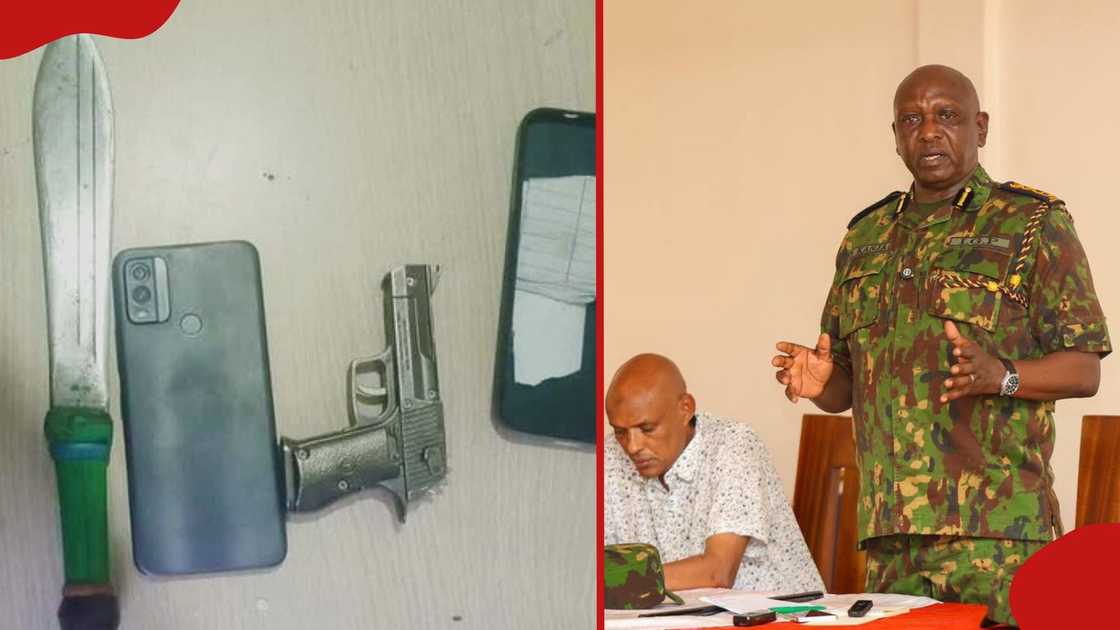
A search conducted at the scene led to the recovery of a mini pistol, a knife, and a mobile phone that had been taken from the woman.

NPS warns of heightened crime risk

The service, which shared the incident on its official account, said it would maintain targeted operations and patrols to prevent and disrupt criminal activity.

The service also cautioned the public to stay alert, noting that robbery and other opportunistic offenses typically increase as the year draws to a close.

"Members of the public are encouraged to remain vigilant, especially as the year draws to a close, when crime patterns have consistently shown robbery, stealing, and other opportunistic offenses to be heightened," NPS said.

The NPS urged members of the public to report suspicious activity to the nearest police station or through the emergency toll-free lines 911 and 999. Reports can also be submitted via the #FichuaKwaDCI hotline on 0800 722 203 or through WhatsApp on 0709 570 000.

Appellate court reverses drunk driving acquittal over inconsistencies

A man in his 40s who attempted to avoid punishment by claiming, “I drank more beer after coming home” following a drunk-driving arrest was found guilty in an appellate trial. While the lower court acquitted him due to the difficulty in ruling out the possibility of additional drinking, the appellate court overturned the verdict, citing his inconsistent statements and conflicting accounts from the couple.

The Chuncheon District Court Criminal Division 1-1 (Judge Lee Geun-young) announced on the 8th that it had overturned the lower court’s not-guilty verdict for A (44), charged under the Road Traffic Act for drunk driving, and sentenced him to six months in prison, suspended for two years.

Mr. A was referred to trial for allegedly driving approximately 4.5 km from a road in Wonju, Gangwon Province, to his apartment parking lot in a drunk state in December 2024.

At the time, a driver following Mr. A’s vehicle reported to 112 that the car was swerving and crossing lanes. When police arrived at his home, Mr. A initially denied driving but later admitted to it, claiming he had consumed an additional 500ml can of beer after returning home. Empty beer cans and cups were found on the dining table when police inspected his residence.

The lower court ruled that it was difficult to exclude the possibility that Mr. A had drunk more beer after returning home. It also stated that the blood alcohol concentration at the time of driving could not be conclusively determined to exceed the legal threshold of 0.03%, acquitting him. The blood alcohol level measured by police was 0.058%.

However, the appellate court’s judgment differed. The court noted that Mr. A had repeatedly changed his statements, initially denying and later admitting to drunk driving. It also viewed the conflicting accounts between the couple regarding the circumstances of post-driving beer consumption as suspicious.

Mr. A’s wife testified that she poured beer into a cup without her husband’s request, while Mr. A claimed he had asked her to bring the beer and drank it directly from the can.

The court also focused on the fact that Mr. A sent text messages to his wife while moving to his home and continued composing messages without opening the door upon arrival. Though the couple claimed the messages were meant to reassure each other, the court considered the possibility that they were orchestrating a cover-up to make it appear as though he had drunk beer after returning home.

The appellate court stated, “The defendant’s excuses and actions to evade punishment after being caught for drunk driving exceeded the scope of legitimate defense and were intended to mislead investigative authorities and the court, which is highly reprehensible.” It added, “The fact that he was previously fined for drunk driving in 2009 was also considered in sentencing.”

Monday, November 23, 2026

Repeat Drunk Driver Fined 13 Million Won for Asleep at Wheel

A court sentenced a man in his 30s to a fine after he was found asleep at the wheel in a severely intoxicated state that warranted license revocation, despite having a prior record for drunk driving.

Changwon District Court Criminal Division 3 Presiding Judge Park Ki-ju announced on the 8th that A, charged with violating the Road Traffic Act (drunk driving), was fined 13 million Korean won.

A was referred to trial for allegedly driving approximately 4 km while intoxicated around 2:11 a.m. on June 5 in Uichang-gu, Changwon, Gyeongnam. A fell asleep inside the vehicle while waiting at a traffic light and was caught by police who responded to the scene.

At the time, A’s blood alcohol concentration was 0.163%, more than double the license revocation threshold (0.08%), according to the investigation.

It was revealed that A had previously received a summary order of 1 million Korean won in fines from the Changwon District Court Masan Branch in September 2016 for drunk driving. The court initially issued a summary order of 13 million Korean won for this latest offense, but A appealed, requesting a formal trial.

The court stated, “The defendant obstructed normal traffic flow by falling asleep on the road and posed a significant risk of causing a traffic accident. Considering the extremely high blood alcohol level and the prior drunk driving conviction, the fine amount specified in the original summary order is deemed appropriate,” explaining the sentencing rationale.

Friday, November 20, 2026

Language clue triggered suspicions of funeral parlour staff who found visitors cutting body

A funeral parlour owner who interrupted three visitors allegedly removing tissue from a man's body has revealed how the trio first aroused her and her staff's suspicions - leading to them being charged.

Esther Swanborough, who has run her family funeral business in Browns Plains, south of Brisba ne, for 30 years, said the two men and a 43-year-old woman turned up to view the body of an elderly man.

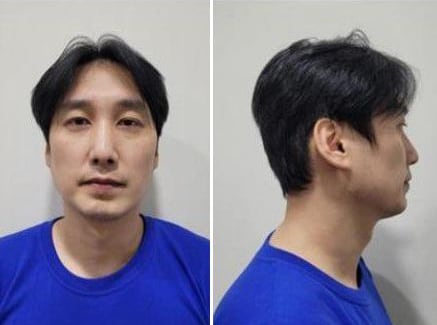
Brian Wong, 47, Changmin Koo, 38 and Cassandra Hunter allegedly presented themselves as the son of the deceased, a male relative and a female support friend respectively.

They arrived carrying backpacks for an arranged appointment at 1pm on Friday to view Wong's father's body inside the parlour's Still Waters Chapel.

'We took them downstairs to have their private viewing time,' Ms Swanborough said.

One of the visitors then asked staff, "please leave the chapel because we have cultural practices that we need to carry out", Ms Swanborough recalled.

Ms Swanborough said that was 'not uncommon. We have 240 cultures we deal with' but what followed allegedly 'was not anything to do with culture'.

She also became suspicious after one of her staff members overheard Koo speaking and told her that he allegedly 'was definitely not a relative, he was speaking Korean', not Mandarin, which was the language spoken by Wong's family.

'Then I just went back in to make sure they were doing okay. Everyone grieves differently,' Ms Swanborough said.

That was when she allegedly discovered that Wong's father's body had been interfered with.

'Something very different was happening. My impression was that something else … was occurring.

'They were (allegedly) trying to remove something that would have been very obvious when he was moved from the viewing room ... gloves were being put away.

'I said, "What have you done," and that was when … I started piecing things together, and we called the police straight away.'

Confronted by Ms Swanborough, Brian Christian Wong allegedly ran from parlour which was declared a crime scene when officers arrived.

Police allege one of the men removed a piece of tissue from the body after the group entered the funeral home carrying scissors, scalpels and blades, which Ms Swanborough said had on arrival been hidden in large backpacks.

The bizarre and grisly alleged incident left her 'shocked, horrified, mortified, that something like this was occurring where in my thirty years and our manager in thirty years have never seen anything like this'.

Cassandra Hunter and Changmin Koo were arrested at the scene. Police arrested Brian Wong at his family's Browns Plains home more than five hours later, on Friday night.

Wong, Koo and Hunter were charged with misconduct with a corpse, entering a premises with intent to commit an indictable offence and being armed with intent to enter a premises and commit an indictable offence.

They faced Brisbane Magistrates Court on Saturday and were all remanded in custody after making no application for bail.

Magistrate Peter Saggers said the group had several sharp implements, according to The Courier-Mail .

'Just reading the bench charge sheets, they're entering Swanborough Funerals home at Browns Plains, whilst armed with scissors, scalpels, and blades to commit an offence, and then, without justification, interfered, namely, wounded a dead body,' he said.

Brian Wong was remanded to face Beenleigh Magistrates Court on November 12.

Changmin Koo will next front court on November 10 when he will need a Korean interpreter.

Cassandra Hunter will remain behind bars until December 7, when she will appear in court via video link.

In a video posted to Facebook, Ms Swanborough sought to reassure other customers that 'at no point in time were any of the other families we were caring for at the time affected'.

‘It was an isolated incident in our viewing room with family members. I want to thank everyone for your support, so much appreciated. We’re doing okay, we’re shocked, we’re emotionally distressed.'

Read more

Japan rethinks its stalking laws after Pokemon store murder

A restraining order failed to protect her. Now a Tokyo shop worker's murder has prompted calls to fit convicted stalkers with GPS tags

Long before Moe Harukawa was killed, she lived in fear. The 21-year-old shop assistant had reported her ex-boyfriend to police and a court had ordered him to stay away from her.

Yet weeks later, Taiki Hirokawa, 26, walked into Harukawa's workplace - a packed Pokemon store in Tokyo's Ikebukuro district - and stabbed her repeatedly in the neck and torso before turning the knife he was carrying on himself. Both later died in hospital.

Harukawa's gruesome murder in March at the hands of a man who had already been arrested and charged with stalking her has stirred debate in Japan on how to stop such fixation-driven attacks.

Do you have questions about the biggest topics and trends from around the world? Get the answers with SCMP Knowledge , our new platform of curated content with explainers, FAQs, analyses and infographics brought to you by our award-winning team.

A number of high-profile stabbings have hit the headlines in recent years, with a spate of knife attacks carried out by teenagers in 2025 adding to public anxieties about safety after two masked men went on separate stabbing sprees on the Tokyo subway system four years earlier.

Authorities have also faced angry allegations that they did not do enough to protect the victim in the latest case.

Hirokawa dated Harukawa from October 2024 to July 2025, but he would not accept the end of their relationship. In December last year, she reported him to the police for stalking and officers who escorted her home found him lurking nearby.

Officers discovered a knife in his rental car and footage on his phone that he had recorded of Harukawa without her knowledge. He received a police warning, but apparently did not heed it, being arrested the following month for weapon possession and voyeurism.

Hirokawa was released at the end of January after a court issued a restraining order and he signed a statement promising to stop harassing Harukawa. He refused to seek counselling as police had advised.

She stayed with relatives for a few weeks before returning to her flat, declining a suggestion to change jobs as working at the Pokemon store was her dream. Police say Hirokawa was not seen stalking her again until the day of the attack.

"This case really hit hard," said Makoto Watanabe, a professor of communications and media at Hokkaido Bunkyo University. "It took place in the middle of the day, in a store with around 100 children and parents and there was nothing that anyone could do to stop it."

Stalking cases that ended in death were not uncommon in Japan, he said, "but it rarely takes place so publicly".

A panel of legal experts has since been set up to review and propose revisions to Japan's Anti-Stalking Act, first introduced in 2000, including requiring anyone charged with stalking to wear a GPS tracking device - a proposal that has attracted criticism from some quarters for violating personal rights.

The panel will make recommendations to the government and observers say Harukawa's killing will doubtless be foremost in members' minds.

Stalking surge

Government statistics show that 22,881 people in Japan sought police advice about being stalked last year, up nearly one-sixth on the year before, while a record 3,037 restraining orders were issued.

Vicki Beyer, a former law professor at Tokyo's Hitotsubashi University, said the rise in cases partly reflected women's greater awareness of stalking and a growing willingness to report it, much as reports of sexual harassment had risen in Japan in recent years.

"Japan has been behind other countries when it comes to crimes against women," she said. "Only acting after a gruesome murder has happened is very much a case of closing the barn door after the horse has bolted."

Even so, Beyer said the authorities were "slowly figuring out what needs to be changed" and suggested that a public-relations campaign to win "hearts and minds", stressing the extra layer of safety GPS monitoring could provide would go a long way towards settling the debate in favour of the proposal.

Societal observers such as Watanabe suspect a lack of parental discipline may have been a factor in the rising case numbers.

"When I was a kid, if I did something wrong in the neighbourhood, a neighbour would tell me off," he said.

"It was the same at school. Now, everyone is too frightened to reprimand a child ... even parents, so they grow up thinking they can do anything they want and no one is ever going to stop them."

He also suggested officials might use the case to overcome objections based on the right to move freely, yet expected little resistance from Japanese society.

"Our society has changed in the last couple of decades," he said. "Everyone has a smartphone, but our human relationships have narrowed dramatically ... That means a generation of young people has no experience of 'no' and they are not able to mentally cope when that happens."

Social media reaction has been strongly in favour of tracking stalkers. One commenter even went as far as to say murderers and sex offenders "should have GPS trackers implanted".

Another said Japan was "too hung up" on human rights and too sympathetic towards offenders. A third dismissed the current emphasis on rehabilitation and counselling as "naive nonsense", saying that for victims "it's a matter of life and death".

Sumie Kawakami, a lecturer at Yamanashi Gakuin University and author of a book on gender issues, said that tracking stalkers would inevitably raise questions about similar monitoring for released murderers and other serious offenders, for whom no such rules currently existed.

Stressing that stalking was not a crime to be taken "lightly", she nevertheless said she expected there to be strong opposition to a requirement for stalkers to wear trackers since "freedom of movement is guaranteed" in Japan.

"Women will obviously welcome this new rule if it comes in and I imagine it will make anyone who has been stalked feel safer if they know their attacker can be traced," Kawakami said.

"We just have to find the right balance between the rights of the two sides."

More Articles from SCMP

Meet F1 world champion Kimi Antonelli’s parents, Marco Antonelli and Veronica Pomaro

China-Switzerland trade partnership offers a model amid fraught EU ties

Woman hurt in flat fire suspected to have been caused by aromatherapy items

Tarmo Peltokoski begins HK Phil tenure with Mahler’s monumental Symphony No 8

This article originally appeared on the South China Morning Post (www.scmp.com), the leading news media reporting on China and Asia.

Copyright (c) 2026. South China Morning Post Publishers Ltd. All rights reserved.

Thursday, July 23, 2026

Nigerian Man Faces Deportation After Shooting in Ex-Girlfriend Dispute

A 23-year-old Nigerian student studying in the U.S., Godson Oghenebrume, received a sentence of 27 months in prison and will be deported following his admission to unlawfully owning a gun and discharging several rounds during an argument with his former girlfriend, who came to his residence with their newborn baby.

The U.S. Attorney for the Middle District of Louisiana, Kurt Wall, revealed this information in a statement released on Wednesday.

Wall mentioned that Oghenebrume received a sentence from U.S. Chief Judge Shelly Dick after being found guilty of possessing a weapon as "an alien who entered the United States on a non-immigrant visa."

He stated that the prisoner "may be removed or deported from the United States after serving their sentence."

As per the declaration, Oghenebrume acknowledged that "On February 7, 2025, Oghenebrume had a Glock model 43X, 9mm handgun with him when he entered the U.S. on an F-1 non-immigrant student visa."

Providing information about the event, the U.S. Attorney's Office stated that Oghenebrume was in his apartment with another woman when his ex-girlfriend, who is also the mother of his newborn child, came to the house carrying the baby.

It was mentioned, "Oghenebrume, who was in the apartment along with another young woman, stepped outside, leading to a confrontation between him and the mother of his child."

Throughout the disagreement, with the infant nearby, Oghenebrume fired the gun.

Wall mentioned that the suspect eventually went back to his apartment, yet the dispute persisted when his former girlfriend arrived and discovered him with another woman.

He stated, "This dispute originated from inside the apartment, and Oghenebrume fired the gun several times as the woman who was pregnant with his child ran away. Several bullet marks were seen on the walls of the building."

He also claimed that Oghenebrume broke his former girlfriend's phone and took the infant, who was present during the entire event.

Prosecutors further stated that Oghenebrume tried to avoid being taken into custody when officers from the East Baton Rouge Sheriff’s Department showed up.

Oghenebrume's former girlfriend then went to the other woman, who was trying to depart, and requested her assistance in retrieving the infant. She consented to help and managed to take the child away from Oghenebrume.

When officers from the East Baton Rouge Sheriff's Office reached the apartment complex, Oghenebrume moved away from them, disregarding their instructions, and threw the Glock model 43X, 9mm handgun into nearby bushes. Oghenebrume was shortly afterwards taken into custody.

As per the declaration, a neighbor reported having heard gunfire, informing authorities that "his ears were still buzzing."

He mentioned that following a Miranda warning, police questioned the Nigerian student about why he discharged the firearm.

The declaration stated, "He asserted that he wished for his former girlfriend to return home and that he fired the weapon to frighten her off."

Just over a week ago, PUNCH Metro stated that the United States expelled a Nigerian citizen named Ayodeji Ajayi, after he had several legal offenses, such as assault within the home, as part of their continuous actions related to immigration control.

The U.S. Immigration and Customs Enforcement has indicated that Ajayi has been residing in the country unlawfully since arriving on a student visa almost twenty years ago.

Supplied by SyndiGate Media Inc. ( Syndigate.info ).
Monday, July 20, 2026

Violence Drops in June Amid High-Profile Attacks: New Report Reveals Trend

July 2, Pakistan – Although there were multiple prominent assaults, Pakistan saw a reduction in total anti-government violence and associated security events throughout June, as reported by the Pakistan Institute for Conflict and Security Studies (PICSS), a research organization based in Islamabad.

As per PICSS—a research institute based in Islamabad that tracks terrorism, anti-government violence, and associated security developments—184 militants were eliminated during actions conducted by Pakistan’s security agencies, making up the biggest portion of the overall 262 deaths.

In contrast, 52 civilians and 26 members of the security forces died throughout the month.

The injury report indicated that 63 civilians, 50 members of security forces, 18 individuals from pro-government peace committees, and three militants sustained injuries.

In comparison to May, the number of casualties within Pakistani security personnel fell by 62 percent, whereas civilian losses decreased by 27 percent. The death toll from terrorists also saw a reduction of 32 percent.

Of those who were hurt, PICSS reported a 43% drop in injuries sustained by security personnel, a 57% fall among ordinary citizens, and a 67% decline involving militants.

PICSS reported a 50% decrease in abductions, with 27 individuals taken in June as opposed to 54 in May. Meanwhile, Pakistani authorities detained at least 27 alleged extremists throughout the same period.

The count of terror incidents also decreased, dropping from 128 in May to 108 in June, which represents a decrease of approximately 16 percent.

Nevertheless, PICSS mentioned, the nation still encountered "high-impact assaults, comprising at least four suicide bombings."

Three instances involved car bombs used for suicide attacks, including an "important assault" aimed at the Sindh Rangers in Karachi on June 27, resulting in the death of three law enforcement officers.

In May, the nation experienced six suicide attacks, among them four instances involving vehicles used as bombs. When providing a provincial analysis for June, PICSS noted that Balochistan saw a "marked drop" in terrorist activities. The region reported 49 incidents in June, down from 71 in May, reflecting a 31% fall. Similarly, the tribal areas of Khyber Pakhtunkhwa, previously known as FATA, also showed a decrease, recording 17 attacks in June versus 22 in May, indicating a 23% reduction.

Nevertheless, the remainder of Khyber Pakhtunkhwa experienced a "modest growth," according to PICSS, as the province reported 37 incidents in June versus 32 in May, marking a 16% increase. On June 9, six members of the Frontier Corps (FC) were killed and four others wounded when they responded to an effort by militants to seize a checkpoint in the Hassan Khel region of Peshawar, reports indicated. Eight insurgents were eliminated during countermeasures.

The think tank noted that Sindh also experienced a rise in terrorist activities, with four incidents documented in June as opposed to just one in May.

"Only one incident occurred in Punjab, whereas no violent attacks were recorded in Islamabad, Azad Kashmir, or Gilgit-Baltistan," stated PICSS.

The document also included data from the first half of 2026: 2,166 deaths, comprising 1,442 militants, 404 non-combatants, 307 military personnel, and 13 individuals from government-aligned ceasefire groups.

An additional 1,137 individuals sustained injuries throughout this time frame, comprising 692 civilians, 281 members of security forces, 136 militants, and 28 participants from the peace council.

Monday, July 6, 2026

BNP Leader Killed in Football Match Dispute Attack

Dhaka, July 2 – A regional BNP official was killed and another person wounded when they were assaulted with bladed instruments during mediation proceedings in the Adabor neighborhood of the city on Tuesday evening, according to authorities who stated the conflict arose due to a disagreement about viewing a soccer game.

The departed individual has been recognized as Md Badsha Mia, the general secretary of the Nobodoy Housing branch of BNP. The wounded person, Saddam Hossain, who serves as the president of the same BNP group, is currently receiving medical care at a hospital.

As per local reports, an altercation occurred during Monday evening in the Nobodoy Housing neighborhood involving two factions disputing about viewing the Brazil versus Japan soccer game from the current FIFA World Cup. On one side stood Saddam Hossain and Badsha Mia, whereas Ripon and Parvez headed the other faction.

To settle the conflict, representatives from each side participated in an arbitration session on Wednesday night.

Nevertheless, following the unsuccessful meeting without an agreement, Saddam and Badsha were assaulted with sharp objects as they departed the location around 8:00 pm, resulting in severe injuries for both individuals.

They were quickly taken to Shaheed Suhrawardy Medical College Hospital. When Badsha's health worsened, he was subsequently moved to Dhaka Medical College Hospital, where physicians confirmed his death.

Friday, July 3, 2026

IMO: 12 Suspects Arrested, 3 Victims Rescued in Kidnapping Operation

The Imo State Police Command has detained 12 individuals accused of multiple violations such as abduction, gang activities, homicide, and other serious criminal acts within the state.

A press release published in Owerri on Wednesday from the Public Relations Officer of the Imo State Police Command, Okoye Henry, stated that the command's officers, under the leadership of ACP Oladimeji Odeyeyiwa, managed to save three individuals.

This initiative forms part of the commander's continuous initiatives aimed at addressing violent criminal activities via intelligence-driven law enforcement and successful cooperation with additional security organizations, community watch groups, and key partners.

Furthermore, the operation led to the retrieval of these objects: one AK-47 assault rifle, two homemade double-barreled firearms, four handmade handguns, two active ammunition rounds, a blue Toyota Highlander vehicle lacking a license plate, a grayish Mercedes-Benz GLK jeep bearing the registration number YAB 831 DQ, three Q-Link motorbikes, a Sumec power generation unit, and eight named brand beer bottles.

In addition, the Imo State Police Command has recovered another hostage and apprehended those responsible through a collaborative, intelligence-driven mission.

The PPRO stated that their operation for rescue and apprehension took place following the kidnap of five travelers from a local bus on Obokofia Road in Egbema and the later abducting of a youth in New Owerri on June 27th, 2026.

Okoye stated that based on reliable information, officers from the Command worked together with personnel from the Egbema Police Division to conduct an operation at a presumed kidnapping den located in Obokofia within the Ohaji/Egbema Local Government Area. During this action, three abducted individuals were successfully freed without harm, and seven people believed to be part of the group were taken into custody. Additional members of the criminal network escaped the area and are now under investigation.

The individuals under suspicion are Eric John, known as "Yahoo Welder," from Ughelli South Local Government Area in Delta State, who resides in Obokofia, Ohaji/Egbema LGA; Light Chukwuma (age 18); Obinna Osuamma (age 18); Sylvester Nnadike (age 60); Tochukwu Precious (age 22); Destiny Albert (age 22); and Caroline Oziomele (age 25), all hailing from Obokofia, within the Ohaji/Egbema Local Government Area.

PPRO revealed that among the items seized during the operation were an AK-47 assault rifle, two homemade double-barreled firearms, two locally manufactured handguns, a blue Toyota Highlander SUV lacking a license plate, a gray-colored Mercedes-Benz GLK vehicle owned by one of the freed individuals, three Q-Link motorbikes, a Sumec power unit, and eight named brand cult hats.

He stated that the inquiry found that one of the recovered victims recognized one of the detained accused, Eric John, known as "Yahoo Welder," as part of the group involved in his kidnapping.

Okoye added that the inquiry showed the group had obtained N5 million from the victim's family and then requested another N50 million as a ransom prior to the individual being freed in a police operation.

A spokesperson for the command stated that during an intelligence-driven operation held on June 21st, 2026, officers from the Imo State Police Command detained five individuals believed to be part of the Senior Vikings Confraternity, referred to as SVC, who were engaged in cult-related actions in Okuku within the Owerri West Local Government Area.

The individuals under suspicion are Iwuagwu Innocent Chigozie (26), from Owu Amakohia in the Ikeduru Local Government Area; Okparaugo Kingsley (32), hailing from Ogbusisi, Umuguma, within the Owerri West Local Government Area; Uchenna Daniel Akagha (23), residing in Uborji, Okuku, part of the Owerri West Local Government Area; Nsubechi Ekezie (25), originating from Umuchiezie, Ahaizu Mbaise Local Government Area; and Nwaneri Chigemezue (28).

He stated that, during questioning, the accused individuals admitted to taking part in a cult ritual conducted on May 24th, 2026, in Umuome, Umuguma, within the Owerri West Local Government Area, where an unidentified individual was reportedly assaulted and killed.

He mentioned that following the information, agents went to the location and retrieved the decomposing corpse.

Okoye mentioned that additional operations conducted at the suspects' hiding places resulted in the retrieval of two homemade guns and two active bullets. A probe is currently underway to determine the dead person's identity and capture remaining members of the organization.

Police Commissioner, CP Audu Garba Bosso, assured residents of Imo State that the command continues to be dedicated to fighting criminal activities, enhancing cooperation with other security organizations, community-based watch groups, and citizens, as well as making sure that every perpetrator faces legal consequences.

He calls on locals to stay alert and notify the closest Police Station or use the Command’s urgent hotline number 0803 477 3600 about any unusual people or actions, since prompt and reliable details continue to be essential for safeguarding lives and assets throughout Imo State.

Supplied by SyndiGate Media Inc. ( Syndigate.info ).

Wednesday, July 1, 2026

Coupang Fined Record 624.6 Billion Won Over Data Leak

Coupang faced a data breach impacting 37.55 million consumers in November, leading to a penalty exceeding 600 billion South Korean won. On the 11th, the Personal Information Protection Commission (PIPC) stated that it had determined a fine of 624.681 billion won against Coupang during a session held on the 10th, due to violations of the Personal Information Protection Act. This amount exceeds the prior highest penalty of 134.791 billion won given to SK Telecom in August of the previous year. Additionally, the commission opted to charge an extra fine of 16.8 million won.

The committee said, "The inquiry verified that this event happened because of Coupang's failure in handling personal data security," and mentioned, "Additional instructions were provided to enhance protective protocols to avoid such occurrences."

In November of last year, the PIPC initiated an inquiry following a complaint from Coupang, establishing a collaborative task force alongside the Korea Internet & Security Agency.

A former employee at Coupang, who departed in late 2024, was discovered to have carried out a data leakage experiment in January of the previous year, methodically extracting personal details between April and November of that same year by gaining access to member profile editing sections, delivery address controls, and purchase history records.

A cybercriminal created fake authorization tokens to gain entry into the delivery address administration section roughly 148 million times starting from April 14 of the previous year, resulting in the exposure of names, phone numbers, and residential addresses. On June 24 of the same year, they entered the user profile editing area 34.966812 million times, causing leakage of names and electronic mail identifiers. Starting from September 26 of the prior year, they logged into the delivery address update segment 50,474 instances and reviewed the purchase record interface 85,213 times, also leading to disclosure of common access codes and transaction specifics.

Using these techniques, the hacker exposed personal details of 33.22472 million members and at least 4.338368 million individuals who were not members. This involved 33.057012 million names along with email addresses, 63.986351 million shipping address entries (including names, addresses, and common access codes) for a minimum of 22.375359 million members and 4.338368 million non-members, as well as purchase records from 58,349 members.

The committee verified that the event occurred due to Coupang's insufficient security management framework and carelessness. It stated, "Coupang was unable to effectively control access rights for authentication signature keys, and even though there were unusual surges in access during the attack timeframe, it didn’t identify these anomalies."

Coupang learned about the further exposure of 160,000 customers' private details from the delivery address section approximately on January 30 this year, yet reported it to officials just on February 5, which was six days after discovery. Moreover, despite being asked four times by the committee to inform non-member individuals affected by the breach, Coupang failed to take action.

The committee mentioned, "Individuals who were not members could not implement protective actions against additional harm because they did not know about the leakage."

In addition, Coupang had internal policies requiring the destruction of user data 90 days after an account was removed and immediate removal of addresses along with account numbers. However, it did not erase 2,465,592 delivery address details (including names, phone numbers, and addresses) belonging to deactivated accounts, resulting in these being exposed. Moreover, it was discovered that 318,499 account numbers from terminated users were not promptly erased.

Not long after the committee started its inquiry, it instructed Coupang to retain evidence like website access records connected to the event. Nevertheless, Coupang manually erased five months' worth of online activity logs spanning from July through November 2024, making it harder to establish the precise sequence of events surrounding the first data breach. Still, the committee mentioned, "There was no proof discovered indicating that the exposed personal details were shared unlawfully."

Additionally, the committee expressed disapproval towards Coupang for collecting consumers' internet browsing data without permission.

The inquiry found that Coupang gathered and kept track of online behavior data from 11.17613 million consumers between December 23, 2024, and February 4 of this year, encompassing 15.645338 million website and application accesses, which were utilized for personalized ads.

As a result, the committee chose to charge a penalty amounting to 423.575 billion won and a fine of 16.8 million won concerning the data breach, along with an extra penalty of 201.16 billion won related to the illicit gathering of internet usage information.

Penalties were assessed according to Coupang's online shopping service income. According to the Personal Information Protection Act, fines may be as high as 3% of revenue. The committee said, "The ultimate fine was decided taking into account the seriousness of the breach and the extent of the harm caused."

The committee independently chose to charge a fine of 248 million won against Coupang Fulfillment Services, which is part of Coupang.

The inquiry revealed that Coupang Fulfillment Services gathered and handled the names of 71 media representatives from the National Police Agency, despite these individuals never having worked at their distribution facilities, and added them to a confidential employee list. The committee considered this action a breach of guidelines for collecting and utilizing personal data. Furthermore, Coupang Fulfillment Services provided staff weight details to the court during a legal case involving an workplace injury, which the committee viewed as a violation of protocols concerning handling private information.

Monday, June 29, 2026

Woman Wanders Through Empty Parliament as Guards Sleep on Duty

A female individual reportedly walked freely through the Houses of Parliament during late hours when security personnel were found sleeping at their posts.

As part of a string of humiliating events, the midlife tourist managed to avoid being noticed for multiple hours by concealing herself in the restrooms following the conclusion of her scheduled visit to the House of Commons.

She later walked through the halls of influence without opposition during the early hours of Sunday morning until she was finally seen, prompting the police to be summoned to detain her for entering unauthorized areas.

Currently, the parliamentary officials have initiated a swift inquiry into how this alarming mistake occurred—and it may examine allegations that staff assigned to patrol the renowned location were instead resting.

A source informed the Daily Mail: "This has created significant controversy because it was discovered that many of the night shift staff who were supposed to be patrolling near the building were actually sleeping."

It happened following an intruder who entered the property during the day and was finally halted by a heating technician when he had gone deep within the House of Lords.

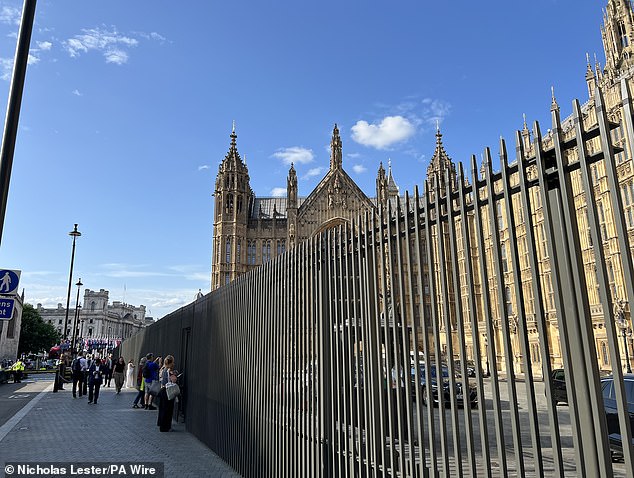
The officials have also faced embarrassment due to a £10 million entrance gate that failed to function properly and a "unattractive" barrier, with Members of Parliament and peers taken aback when Director of Parliamentary Security Alison Giles suddenly resigned early this year.

During the most recent incident, a woman participated in an authorized tour of Parliament on Saturday afternoon before reportedly locking herself inside a restroom stall in Westminster Hall well beyond the time visitors were allowed to stay.

It is said she did not come out of her hiding spot until approximately 2 am on Sunday, after which she started walking around Parliament.

Nevertheless, officials refuted claims that she reached the Prime Minister's office located in the corridor behind the Speaker's Chair.

The female individual was discovered again within Westminster Hall, the earliest remaining section of the palace, with security personnel contacting law enforcement to effect her arrest.

A spokesperson from the Metropolitan Police stated: "On the early morning of Sunday, June 7, a woman in her 50s was taken into custody on charges of unauthorized entry—violating part of the Serious Organized Crime and Police Act 2005—after she stayed within the Palace of Westminster for multiple hours following the end of a scheduled tour."

She was granted bail while additional investigations continue.

A representative from Parliament stated, "An individual was taken into custody for entering the parliamentary grounds without permission on Sunday, June 7th. This matter is currently under investigation by the Metropolitan Police."

The well-being and protection of everyone working in or visiting Parliament remains our highest concern. Although we can’t discuss our security procedures or actions, an assessment is currently being conducted after the event.

The inquiry is anticipated to concentrate on the Post and Patrol staff, individuals belonging to the Parliamentary Security Division tasked with protecting the interior of the premises.

Throughout night shifts, they are assigned specific zones to oversee and are supposed to inspect restrooms; however, it is alleged that they did not detect the woman who was located in a stall labeled as out of service due to repairs.

They are accused of going to sleep instead of remaining on duty through the night — and the intruder was later discovered by Perimeter Officers who typically concentrate on the exterior of the property and the primary entrances.

A source stated, "The administration is expected to impose severe consequences on the officers working during last Saturday evening."

They have responded with an immediate reaction to this situation by requiring all officers on duty to report their locations to the control center at all times; not complying with this is considered a disciplinary issue. Additionally, they are attempting to hide this incident due to its embarrassment.

This month, it came to light that 23 law enforcement personnel received allegations of improper conduct due to reports that individuals tasked with safeguarding the Royal Family at Windsor Castle were found sleeping during their shifts.

Read more

Singapore Confirms Arrest Warrants for 1MDB's Jho Low Remain Active Despite U.S. Clemency Effort

A number of assets connected to 1MDB continue to be held in Singapore, including properties valued at approximately $78 million linked to Low and his relatives.

Singapore police stated that arrest orders for the wanted financial figure Jho Low are still valid, despite the fact that the Malaysian keeps trying to request mercy from the US President Donald Trump .

"Warrants of arrest and Interpol "Red Notices remain active for both Tan Kim Loong and Low Taek Jho," stated the police in a release on Wednesday. Tan is recognized as an associate of Low and is also involved in Malaysia's multi-billion dollar case. 1MDB scandal .

The U.S. and Malaysian officials accuse Low of orchestrating the 1MDB controversy, where billions are said to have been illegally taken from the state-owned investment firm 1Malaysia Development Berhad. Funds were reportedly redirected via a network of dummy corporations, with Low — who has remained hidden since 2015 — denying any involvement in improper activities.

Are you curious about the major issues and developments happening globally? Find your answers here with SCMP Knowledge Our latest platform featuring carefully selected content, including explanations, frequently asked questions, analysis, and visual graphics, presented by our acclaimed team.

Malaysian Prime Minister Anwar Ibrahim He stated that his administration would not entertain any petition for clemency regarding Low, as reported by the state news agency Bernama. Legal processes concerning Low—who faced charges in his absence in 2018—continue to be pursued.

Singapore officials mentioned that multiple properties linked to 1MDB are still under seizure in the country, including those associated with Low and his relatives. By July 2024, approximately S$164 million (US$127 million) in assets had been frozen or restricted from being sold, with S$101 million related directly to Low and his family.

Malaysia has retrieved 29.75 billion ringgit (US$7.3 billion) worth of assets linked to 1MDB, representing roughly 70 percent of the 42 billion ringgit reportedly misappropriated from the fund, as reported by the Malaysian Anti-Corruption Commission .

In 2018, Low faced charges from U.S. officials but managed to avoid capture. Recently, he filed a request for clemency with the U.S. Department of Justice, as mentioned in an announcement on the DOJ’s official site.

More Articles from SCMP

American companies face consequences due to Trump's China tariffs and export restrictions, according to a report.

Prior to Elon Musk's SpaceX, these were the top 5 biggest initial public offerings globally

Tycoon Resources maintains its perfect streak with flair as Tony Cruz secures a pair of victories at Happy Valley

A medical intern was taken into custody by authorities over claims of unauthorized access to patient files.

The article was first published on the South China Morning Post (www.scmp.com), a top-tier news outlet covering stories about China and Asia.

© 2026. South China Morning Post Publishers Ltd. All rights reserved.

Sunday, June 28, 2026

Supreme Court Confirms 5-Year Sentence for Jagyeongdan Missionary

On the 11th, the Supreme Court approved a five-year jail term for a woman charged with producing explicit content involving sexual abuse and engaging in acts akin to rape against a child, during her involvement with 'Jagyeongdan,' South Korea's most extensive sex trafficking organization.

The Third Division of the Supreme Court (led by Chief Justice Oh Seok-jun) confirmed the decision made by the lower court, dismissing the appeal filed by Defendant Ms. A regarding allegations of membership in or managing a criminal group and breaching the Child and Adolescent Protection Act (which includes producing materials related to child sexual abuse).

Jagyeongdan was a pyramid scheme operating through Telegram, established in 2020 under the leadership of Kim Nok-wan. The organization gathered personal details from people who shared images of their bodies on social platforms, women who sought arranged meetups, and males attempting to access Telegram's 'Acquaintance Humiliation Room.' Victims were coerced into providing explicit photographs, which were subsequently utilized for producing and spreading sexually abusive content. It has been discovered that Kim Nok-wan was involved in several real-life sexual attacks as well. With 261 victims, including children, this figure surpasses triple the amount seen in the "Doctor’s Room" incident headed by Cho Joo-bin, which had 73 victims.

Kim Nok-wan, who called himself a 'pastor,' gave titles such as 'missionary' and 'potential missionary' to followers while engaging in acts of sexual exploitation. Ms. A, serving as a missionary within Jagyeongdan, was charged with creating child pornography and attempting rape against a male underage victim.

The initial and subsequent court proceedings resulted in Ms. A receiving a sentence of five years in jail along with three years under supervised release. Throughout the legal process, Ms. A asserted, "I was simply an instrument forced by Kim Nok-wan's intimidation and had no intention of participating in criminal activities," however, the highest judicial authority dismissed this claim. The ruling emphasized, "Her involvement in linking victims to Kim Nok-wan played a central and crucial role in the sexual exploitation offenses," acknowledging her as a joint offender due to her direct actions like generating explicit content for certain individuals.

Nevertheless, the Supreme Court found Ms. A not guilty of being part of a criminal organization, determining that Jagyeongdan did not have enough structural organization to qualify as a criminal group according to the Criminal Act. The court supported the previous decision, noting, "No proof exists that Jagyeongdan was capable of systematically committing crimes independently of Kim Nok-wan."

In the initial and subsequent trials related to the Jagyeongdan incident, Kim Nok-wan was sentenced to life in prison. He has filed an appeal against the decision from the second trial, and the Supreme Court is now examining the matter.

Nottingham Stabbing Victim Fumes as Killer’s Father Breaks Silence After Inquiry Delay

The mother of Nottingham Stabbed victim Barnaby Webber has criticized the father of her son's assailant following his long-awaited statement regarding the incident.

Emma Webber claimed that Amissao Calocane "refused" to provide the families with clear information by offering "ambiguous and diluted" details regarding his mentally unwell son Valdo's actions before the 2023 tragedy.

Three years ago over the weekend, Calocane attacked and stabbed 19-year-old Mr Webber, his friend and fellow first-year student Grace O'Malley-Kumar, as well as 65-year-old caretaker Ian Coates in a violent assault in Nottingham city center.

He subsequently drove Mr. Coates' delivery truck into pedestrians, causing serious injuries to three more people, before being finally subdued in an incident that caused widespread alarm across Britain.

However, although Calocane's mother, Celeste, and his brother, Elias, provided testimony during a public investigation of the incident, Amissao reportedly received specific authorization to avoid doing so.

Three testimonies submitted to the investigation, which concluded last week following three and a half months, have recently been released, in which Amissao stated he had "no clear recollection" of his son's deteriorating mental state or other significant incidents.

He also couldn't recall a discussion from several hours prior when Calocane stated he no longer wished for his mother, who was a nurse, to reach out to him.

In response to his testimony on social media, Ms. Webber stated: "The unclear and weakened written statement from Calocane Senior is preventing us from receiving the answers we deserve."

He was allowed to avoid appearing even though there were many requests from the victims and their families' legal representatives. This choice was one we all strongly disagreed with.

Only statements provide one-directional communication.

Regrettably, we are helpless and restricted by the choice." "It's unfortunate, but we have no control over this decision." "We're unfortunately stuck with the outcome of this choice." "This decision leaves us feeling incapable of acting." "Unfortunately, our hands are tied by what has been decided.

Mr. Calocane stated he was unaware of his son's actions until the day after the tragic event.

He stated: "When they (family members) saw me, they inquired whether I had received any news regarding Valdo."

I stated that I hadn't, and at that moment, they displayed the news on television and informed me about what occurred in Nottingham.

Initially, I found it hard to accept as real.

It took me quite some time to come to terms with what actually occurred – it was only after watching the footage of Valdo that I understood his actions.

The relatives of the victims have been seeking information regarding Calocane's concerning actions in the period leading up to his attack, as well as wanting to understand what steps the villain's family took.

Ms. Webber said: "This is significant and it applies here."

His offspring ruined my family. He took my son away from us.

Isn't it only right for me/us to deserve the opportunity to receive answers and the truth?

The investigation learned that Calocane had been placed under compulsory detention four times within the three years prior to the incident on June 13, 2023, yet he kept being sent back to society even though worries were raised regarding his worsening conduct.

A consulting psychiatrist once cautioned that he "might kill someone" at the time of his initial detention in 2020.

He has a record of violent behavior and was said to have attacked two coworkers at the factory where they were employed only weeks prior to the incident.

However, Leicestershire Police who arrived at the location were unaware that Calocane had an active arrest warrant issued by Nottinghamshire Police for supposedly attacking an emergency responder — a mistake acknowledged by the rookie officer on site as "an operational error."

Calocane consistently deceived healthcare workers in Nottingham, declining a particular medicine due to his claimed anxiety about syringes – even though he had received COVID vaccinations.

He was transferred back to his general practitioner approximately nine months prior to the incident, following his failure to participate with the specialized mental health team.

It emerged that the mental health team had raised issues regarding the detention of Calocane, who hails from Guinea-Bissau in West Africa, for fear it might be perceived as discriminatory.

He received a lifelong hospital directive after admitting guilt for murder based on reduced accountability.

The families continue to be angry because the prosecutors did not pursue a murder charge and are demanding a meeting with the government to discuss their choices.

The investigation will be required to present its conclusions within one year.

Read more

Friday, June 26, 2026

Seoul High Court Confirms Life Sentence for Pizza Shop Killer Kim Dong-won

On the 11th, the Seoul High Court’s Third Criminal Panel, presided over by Judge Lee Seung-han, handed down a life sentence to Kim Dong-won, 42, a franchise operator charged with murdering three people, including personnel from the headquarters of a franchised pizza chain, during his appellate hearing.

Kim is accused of killing three individuals — staff members from the franchise’s main office and a father-daughter pair working as interior contractors — at a pizzeria he managed in Jowon-dong, Gwanak-gu, Seoul, during September of last year. Investigations reveal that Kim, who ran the franchise since October 2023, encountered disputes with both the corporate headquarters and the interior contractor regarding denied complimentary repair services for his store renovation, which he claimed was due to the warranty having expired prior to the incident.

An appeals court declared, "No situation justifies murder," stating, "Although it seems Kim experienced pressure because of internal problems, viewing murder—an action that defies social understanding—as an outcome of these matters cannot serve as a justification." Additionally, it mentioned, "The victims most likely faced intense suffering, and their families almost certainly went through lasting emotional distress and sorrow," determining that the death penalty imposed by the trial court was not overly harsh or insufficient.

The prosecutors sought the death penalty during both the initial trial and the appeals process, yet the court stated, "Considering Kim's absence of previous criminal record and his evident regret, it is challenging to identify situations that clearly warrant a capital punishment."

Tuesday, June 23, 2026

Couple Defies Court Order to Reopen Footpath Through £2M Home Garden

A pair whose fences were removed from their property by local authority employees following a six-year court dispute regarding a riding path might now be subject to legal proceedings due to allegations that they have obstructed the pathway once more.

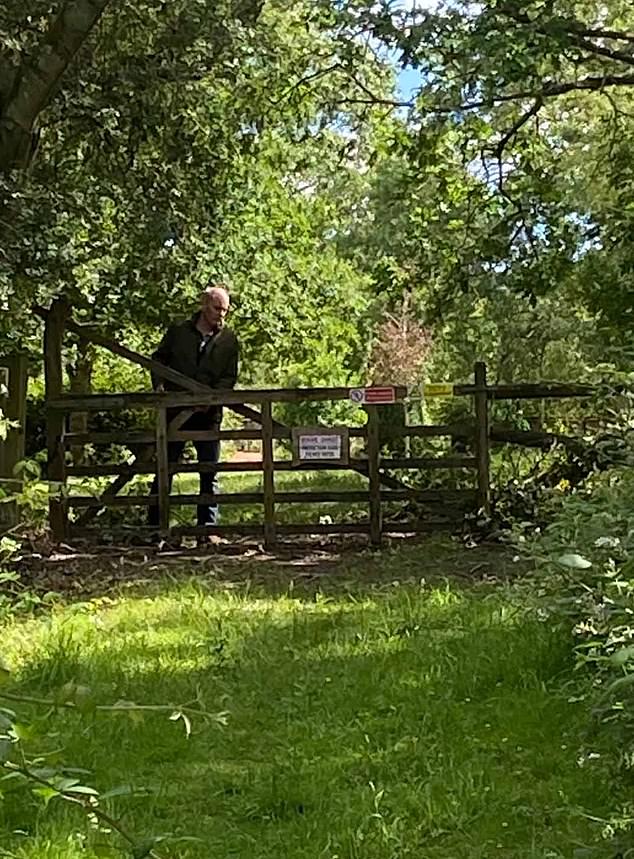
On Monday, workers came to dismantle the three obstacles and thick thorny bushes that had grown along the path which angry locals claimed had been used for over 100 years.

A High Court decision supported the local council and the Planning Inspectorate following their confirmation that the route located next to David and Dawn Moore's home in Little Berkhamsted, Hertfordshire, constitutes a public footpath.

Residents applauded when the gates were removed — though the process was briefly stopped two times to allow an ambulance to respond as Mrs. Moore reportedly became unwell amid the commotion.

At a certain moment, Mr. Moore approached spectators who were recording the event, one of whom said to him: 'I'm applauding because the bridle path is now accessible.'

He responded, "Ah. Open at the cost of my wife fainting, right? Are you satisfied with that?"

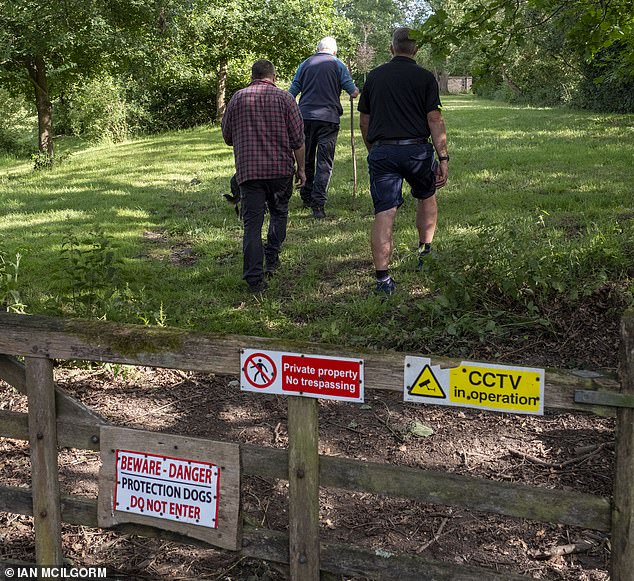
But jubilation has turned to renewed frustration after villagers complained at least one of the gates had been rehung and the Moores – who are believed to have spent up to £400,000 on their failed legal case - were warning anyone attempting to utilize the footpath making an effort to use the bridleway seeking to access the bridleway trying to make use of the walking trail endeavoring to follow the bridleway struggling to navigate the bridleway looking to travel along the bridleway trying to take the bridleway route attempts to use the designated path efforts to proceed via the bridleway that they were ‘trespassing’.

Other allegations suggested that the pair stopped municipal employees from installing a fresh equestrian path sign on publicly owned property located just across from their residence the next day, following an argument with them.

A person said to the Mail: "I had just gone through, and Mr. Moore informed me that I was trespassing. As I kept walking, he shut the gate behind me."

I've informed the committee and provided them with images.

One person stated: "Dawn Moore was the first to confront [the individual attempting to use the bridleway] and inform him that he was taking the incorrect route."

Then David went out and declared that he was entering without permission—so both of them were doing the same.

Other remarks included: "Mr. Moore and his wife were both outside urging the individuals attempting to install the directional sign, who eventually stopped after hearing an emotional tale."

They continuously replace a hazardous and unstable gate, while instructing individuals to leave the property because they are considered trespassers.

They had previously received warnings from the committee, suggesting they may face legal action.

'Strange that she [Mrs Moore] had a miraculous recovery just to challenge those using the footpath.'

The entrance points were taken down following Mr. Moore and his spouse, a medical professional recognized as Dr. Dawn Carnell, disregarding an official directive issued by Hertfordshire County Council.

Violating an enforcement order issued by a local authority constitutes a criminal offense that may result in prosecution before a magistrate’s court, with the possibility of imposing unbounded penalties.

Alternatively, the committee might tear down or eliminate unauthorized elements and seek reimbursement from the property owner.

Court orders may also be issued by the local court or Supreme Court to stop ongoing or serious unauthorized actions.

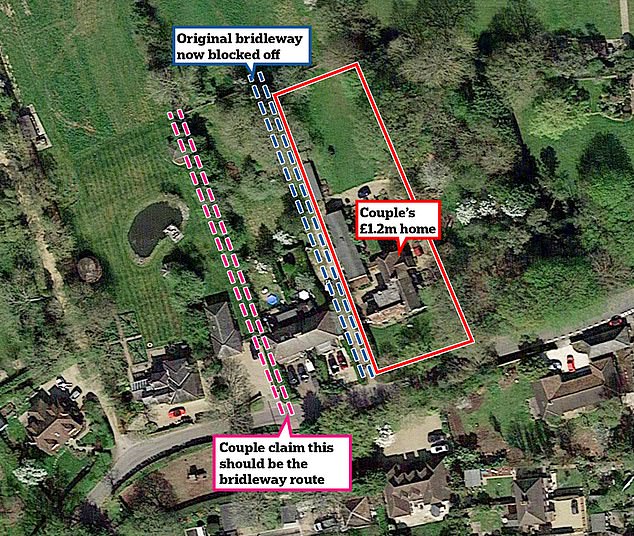
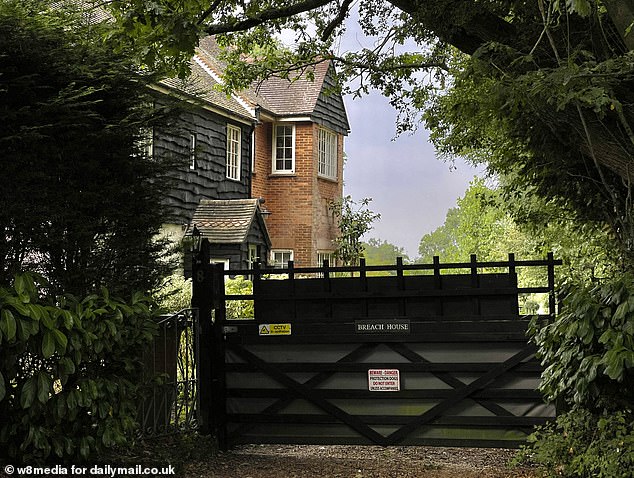
The ongoing conflict centers around the six-bedroom Breach House, some sections of which can be traced to the 17th century. The Moores purchased it for £1.2 million in 2015 and later invested heavily in restoring the neglected home.

In 2019, residents found that the public path crossing the 1.75-acre area had been blocked by signs and secured gates—according to the Moores, the equestrian trail actually passed between two adjacent cottages.

Hertfordshire County Council got involved and issued an order confirming that the bridleway ran across the couple's property, prompting the Moores to appeal their case to the Planning Inspectorate.

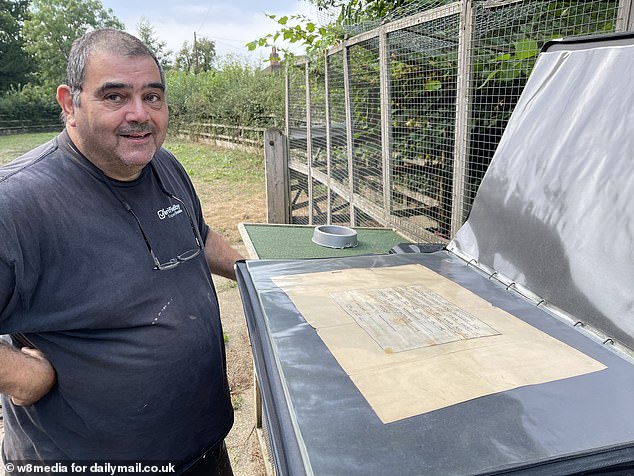
Over the course of a four-day hearing, senior final mapping official Gavin Harbour-Cooper stated that the council examined the issue back in 1956 and determined that the path passed through Breach House.

However, when the initial "Definitive Map" was created three years later, it depicted the "incorrect path" between the houses, even though the Definitive Statement provided the accurate details.

Nigel Adams, the creator of the online real estate platform BigBlackHen.com, who had family members that possessed Breach House between 1973 and 1985, mentioned that he was responsible for selling the house to Mr. Moore and his spouse in 2015.

He stated: 'Throughout this process, I regularly talked with the Moores about the current bridleway and its path across the Breach House property.'

William Marques, who resided in the home during the 1960s, also remembered the path running through it.

He explained how he utilized it to reach his grandparents' house since the alternative path, via road, was 'too risky'.

However, Mr. Moore, who operates an oncology company alongside his wife, informed the investigation that the council acknowledged in 2020 that the bridleway signs near his residence were incorrect, leading to their removal.

He stated: "When I bought the house, I wasn't informed about the presence of a bridlepath running through the land."

After the planning inspector rejected the Moores' case, they took their appeal to the High Court, where the judge also supported the locals and highlighted the 'fundamental unlikelihood of the Claimants' stance'.

They were denied permission to appeal to the Court of Appeal last year, but in an interview last month, Mr. Moore mentioned he is considering taking his case to the European Court of Human Rights.

He explained that he would be "arguing under Article 8 of the Human Rights Convention and also Article 1, Schedule 1 of the ECHR," adding: "All of this centers on the choice to alter my specified 2015 purchasing criterion, which is now established in the High Court."

You have the right to what you bought following full investigation.

Speaking about the six-digit amount he and his spouse invested in their failed court case, Mr. Moore mentioned to the Mail early this year: 'The expense isn't really a factor anymore. It's about whether you believe you're correct or not.'

He mentioned that his wife has fully backed him in the current legal dispute, as both of them feel the council is responsible for supplying incorrect paperwork when they purchased their house.

“This isn’t about me embarking on an adventure into the wilds, donning my helmet, and declaring ‘Whatever occurs, occurs,’” he stated.

This reflects two rational individuals examining the situation from 2015 and being certain of their correctness.

The hostile atmosphere created by the conflict within the neighborhood led Mr Moore — whose spouse is employed at University College Hospital in London — to report incidents such as vehicle vandalism, like scratches on his car, along with acts of intimidation.

In the meantime, the residents of the two adjacent bungalows—among them Wayne Morris, head of the local parish council—invested many thousands of pounds in their personal legal expenses.

Mr. Morris has stated that "a significant amount of time and resources have been squandered" on this matter.

A representative from Hertfordshire County Council stated, “We have learned about this issue through nearby residents and are currently evaluating the possibilities at our disposal.”

The Moores were asked for their response.

Read more

Saturday, June 20, 2026

Heir Fights Dentist Over Beach Walk Near Medic’s Boathouse

  • Subscribe to our US Editor's Choice newsletter to receive the most significant exclusive reports

A minor legal conflict involving a dentist and an inheritor of a multimillion-dollar footwear business might change the regulations governing public access to beaches around the Great Lakes. Wisconsin .

When Paul Florsheim, the great-great grandson of the original owner of Florsheim Shoes, received a trespassing ticket and was charged $313 for taking his dogs for a walk near dentist Daniel Domagala's seaside home in Shorewood, he didn’t just accept the penalty like most individuals might have done.

Rather, he decided to challenge the decision in order for his case to be reviewed by the Wisconsin court. Supreme Court the top judicial authority in the state.

"My character is such that when faced with it, I do not retreat," Florsheim said to the. Wall Street Journal .

Domagala is recognized within Shorewood—a wealthy community situated along the lake's coastline—by locals. Michigan - for keeping an eye on the shoreline near his dock and employing alerts and notices to deter people from approaching too closely.

Florsheim, aged 66, has recently stepped down from his position as a university lecturer at the University of Wisconsin-Milwaukee, and resides in a single-story home located only three houses away from Domagala.

A former teacher is passionate about walking dogs and loves going for walks on the shoreline with his two-year-old German Shepherd named Leo and his six-year-old Border Collie crossbreed, Rosie.

While taking his strolls, Florsheim frequently overlooked Domagala's notices stating, "PRIVATE PROPERTY BEYOND THIS SIGN" and "ONLY WATER ACCESS BEYOND THIS POINT," leading the local doctor to repeatedly contact law enforcement about his neighbor.

The community of Shorewood ultimately decided to issue Florsheim a trespass notice because of the regularity of the incidents.

Under Wisconsin regulations, individuals are permitted to wade, swim, or navigate boats in the Great Lakes’ waters; however, a definitive state Supreme Court decision from the early 1900s safeguards shoreline property owners against unauthorized entry onto their private lands.

Florsheim, who defended himself during his trial over the trespassing charge, claimed it was unreasonable that he could swim in the water near Domagala's home but wasn't permitted to stroll a short distance along the sandy beach.

The former professor failed in court and received a fairly small penalty, yet Judge Margo S Kirchner suggested that this might not mark the conclusion of the matter.

Kirchner stated that her decision against Florsheim was based on a 1923 Wisconsin Supreme Court ruling, where a property owner received preferential access to the shoreline of Lake Winnebago for watering his livestock.

The judge stated that she felt the over-100-year-old decision appeared relevant to this case, yet she pointed out that the precedent did not align with procedures used in other states.

"Maybe Doemel needs to be set aside," Kirchner stated, referring to the 1923 decision.

Florsheim stated to the Wall Street Journal that his initial aim was not to challenge a state Supreme Court decision or establish a new legal standard. It was simply his determined personality that led events to unfold this way, according to him.

From his perspective, Domagala stated in court that individuals regularly overlook his signals and carelessly relax on his land frequently, causing him significant annoyance.

"They act as though they own this place," he stated, confirming that he had to report people walking where they shouldn't approximately 50 times last summer.

The dentist further stated that he had never allowed Florsheim to set foot on his land, comparing the former professor's behavior to an act of trespassing. "Picture someone entering your home and claiming it isn’t yours," Domagala remarked.

It is yet uncertain whether the Wisconsin Supreme Court will accept the case, let alone if it will support the lower court's verdict and its own 1923 determination about priority shoreline access for landowners.

However, should the state's top court decide to take up Florsheim's case, the former professor will be significantly more ready, since he is currently being assisted by attorneys from the non-profit organization Midwest Environmental Advocates.

Read more