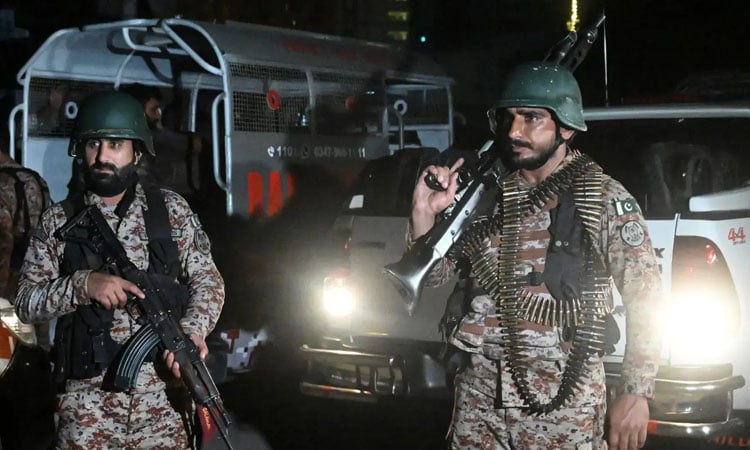
July 2, Pakistan – Although there were multiple prominent assaults, Pakistan saw a reduction in total anti-government violence and associated security events throughout June, as reported by the Pakistan Institute for Conflict and Security Studies (PICSS), a research organization based in Islamabad.
As per PICSS—a research institute based in Islamabad that tracks terrorism, anti-government violence, and associated security developments—184 militants were eliminated during actions conducted by Pakistan’s security agencies, making up the biggest portion of the overall 262 deaths.
In contrast, 52 civilians and 26 members of the security forces died throughout the month.
The injury report indicated that 63 civilians, 50 members of security forces, 18 individuals from pro-government peace committees, and three militants sustained injuries.
In comparison to May, the number of casualties within Pakistani security personnel fell by 62 percent, whereas civilian losses decreased by 27 percent. The death toll from terrorists also saw a reduction of 32 percent.
Of those who were hurt, PICSS reported a 43% drop in injuries sustained by security personnel, a 57% fall among ordinary citizens, and a 67% decline involving militants.
PICSS reported a 50% decrease in abductions, with 27 individuals taken in June as opposed to 54 in May. Meanwhile, Pakistani authorities detained at least 27 alleged extremists throughout the same period.
The count of terror incidents also decreased, dropping from 128 in May to 108 in June, which represents a decrease of approximately 16 percent.
Nevertheless, PICSS mentioned, the nation still encountered "high-impact assaults, comprising at least four suicide bombings."
Three instances involved car bombs used for suicide attacks, including an "important assault" aimed at the Sindh Rangers in Karachi on June 27, resulting in the death of three law enforcement officers.
In May, the nation experienced six suicide attacks, among them four instances involving vehicles used as bombs. When providing a provincial analysis for June, PICSS noted that Balochistan saw a "marked drop" in terrorist activities. The region reported 49 incidents in June, down from 71 in May, reflecting a 31% fall. Similarly, the tribal areas of Khyber Pakhtunkhwa, previously known as FATA, also showed a decrease, recording 17 attacks in June versus 22 in May, indicating a 23% reduction.
Nevertheless, the remainder of Khyber Pakhtunkhwa experienced a "modest growth," according to PICSS, as the province reported 37 incidents in June versus 32 in May, marking a 16% increase. On June 9, six members of the Frontier Corps (FC) were killed and four others wounded when they responded to an effort by militants to seize a checkpoint in the Hassan Khel region of Peshawar, reports indicated. Eight insurgents were eliminated during countermeasures.
The think tank noted that Sindh also experienced a rise in terrorist activities, with four incidents documented in June as opposed to just one in May.
"Only one incident occurred in Punjab, whereas no violent attacks were recorded in Islamabad, Azad Kashmir, or Gilgit-Baltistan," stated PICSS.
The document also included data from the first half of 2026: 2,166 deaths, comprising 1,442 militants, 404 non-combatants, 307 military personnel, and 13 individuals from government-aligned ceasefire groups.
An additional 1,137 individuals sustained injuries throughout this time frame, comprising 692 civilians, 281 members of security forces, 136 militants, and 28 participants from the peace council.


No comments:
Post a Comment