Technology and philosophy

Showing posts with label interest rates. Show all posts

Tuesday, June 16, 2026

Mortgage Rates Near 8%, Credit Loans Hit 7%

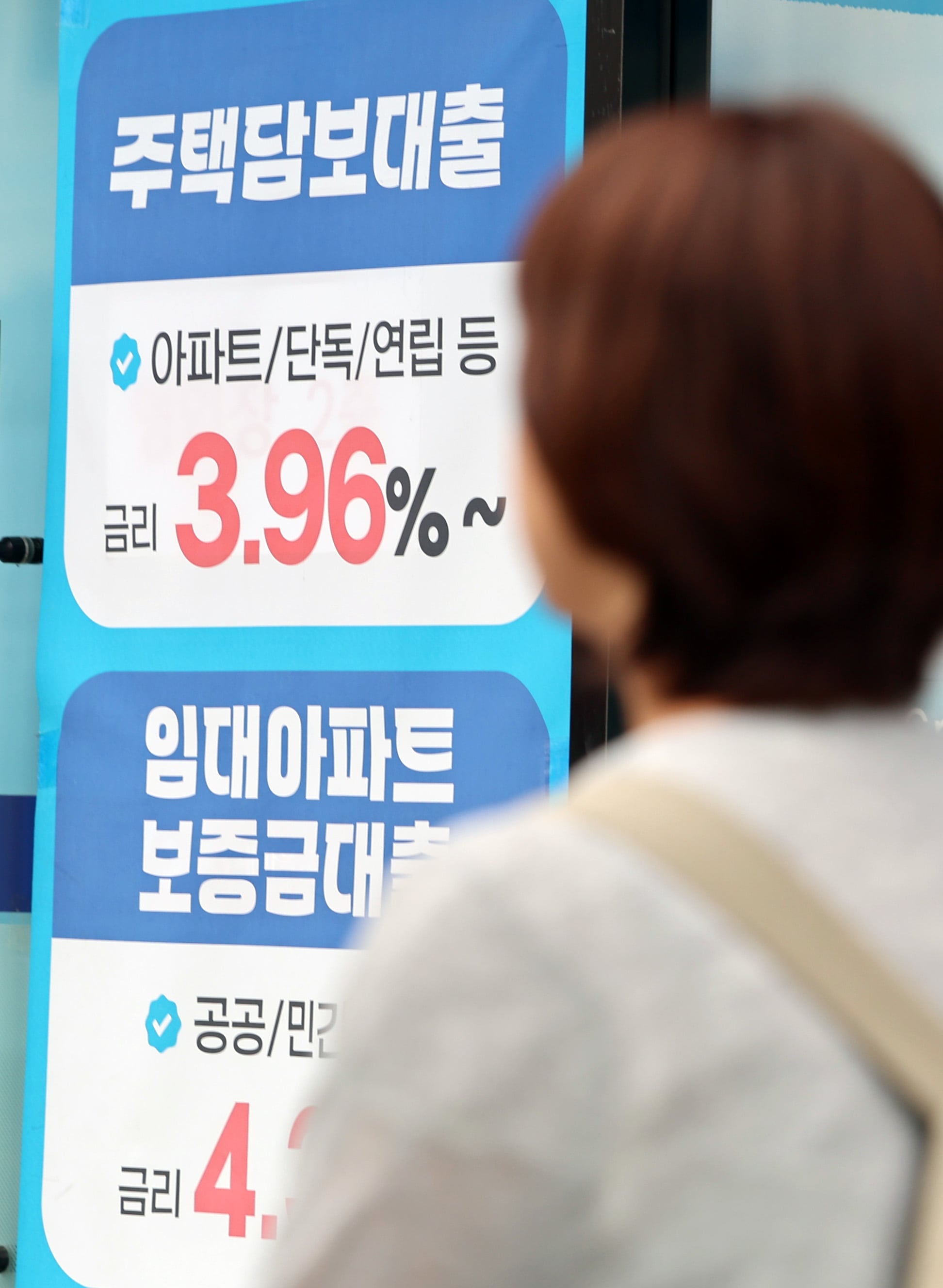
With rising bond market interest rates, bank lending rates are also climbing. As reported by the banking industry on the 11th, the fixed-rate (5-year) mortgage loans from the five largest banks—KB Kookmin, Shinhan, Hana, Woori, and NH Nonghyup—are now ranging between 4.51% and 7.5% annually as of the day before.

Only at the close of last month, the maximum interest rate stood at 7.1% per annum, yet it increased by 0.4 percentage points within just two weeks. The fixed-rate home loan rate has gone up by 1.2 percentage points since the start of this year. Following the point where the cap surpassed 7% annually towards the end of March, it is currently nearing the 8% bracket.

The yield on 5-year financial bonds, used as the standard for fixed-rate home mortgages, increased by 0.187 percentage points to an annual rate of 4.394% from the previous month’s close.

◇Banks Reducing Preferential Rates

With fixed-rate mortgage interest rates rising sharply, there has been an increase in demand for adjustable-rate mortgages, which experience more modest rate hikes. To address this trend, financial institutions are increasing their minimum lending rate requirements.

Lately, KB Kookmin Bank has lowered the favorable interest rate for its 'KB Star Apartment Mortgage Loan' (which uses a new balance COFIX-linked six-month floating rate) by 0.2 percentage points. The lending rates are calculated by combining different spreads with the benchmark rate and then deducting the favorable rate. Reducing the favorable rate leads to a higher overall loan rate.

This month, NH Nonghyup Bank increased both the 6-month floating interest rate and the 5-year fixed rate by 0.2 percentage points respectively.

If someone takes out a loan of 500 billion won with an annual interest rate of 6%, repayable over 30 years through fixed monthly payments, they would have to pay roughly 3 million won each month. But if the interest rate goes up to 8% yearly, the monthly payment jumps to approximately 3.6 million won, leading to an extra cost of about 600,000 won every month.

◇ Increasing Credit Card Balances, Higher Interest Rates

With an increase in money entering the stock market, outstanding credit loan amounts, such as those from overdrawn accounts, are growing, along with the interest rates for these loans.

The one-year credit loan interest rates offered by the five largest banks ranged between 4.35% and 6.15%, according to data from the prior day. This represents a rise of 0.29 percentage points at the higher end and 0.23 percentage points at the lower end compared to the end of the previous month, when the range was 4.36% to 5.89%.

Taking a credit loan of 100 million won, a rise in the annual interest rate from 6% to 7% increases the yearly interest cost from 6 million won to 7 million won, resulting in an additional payment of about 80,000 won per month.

This month, the overdraft account balances at the five leading banks surpassed 42 trillion won, reaching the highest point in three years and seven months since late November 2022.

Banks have raised their bond offerings this year, exceeding 100 trillion won.

A representative from the financial industry stated, "With banks boosting their bond offerings to stop deposits from moving into the stock market, financing expenses have gone up, which is now evident in lending interest rates. The pressure on 'debt-to-invest' and 'yeongkkul (soul-extended loan)' categories may intensify."

U.S. Inflation, Iran Tensions Send Global Bond Yields Soaring

The extended conflict in Iran and growing worries about inflation are causing instability in worldwide bond markets. The U.S. consumer price inflation rate has hit its highest point in three years, while increased military conflicts between the U.S. and Iran have caused the U.S. 30-year Treasury yield to surpass the key threshold of 5% per annum. In South Korea's bond market, government bond rates have also approached their annual peak, as experts observe that investors are anticipating higher bond yields (which mean falling prices).

◇ U.S. Inflation Increases at Highest Rate in Three Years

As reported by the U.S. Department of Labor on the 10th, the U.S. Consumer Price Index (CPI) climbed 4.2% in May when compared to the same period in the prior year. This represented a rise from April's 3.8% growth and was the largest increase seen since 2023. On a monthly basis, prices went up by 0.5%, meeting analysts' predictions. Nevertheless, the core CPI, a key indicator watched by the Federal Reserve in shaping interest rate policies, grew just 0.2% over the past month, below the expected 0.3%. Certain specialists remarked, "The most severe outcome has been prevented."

Although the core CPI saw a smaller increase than expected, which briefly caused U.S. bond yields to fall, rising tensions in the Middle East changed this direction. On the same day, U.S. President Donald Trump posted on Truth Social: "We will attack Iran more severely," leading Iranian President Masoud Pezeshkian to adopt an equivalent position, sparking renewed worries about possible warfare. As reported by Investing.com on the 11th, the U.S. 3-year and 10-year Treasury yields increased by 0.036 percent and 0.041 percent compared to the prior day, hitting annual rates of 4.213% and 4.569%. The 30-year Treasury yield reached 5.044%, crossing above the significant 5% level. An individual from the finance sector remarked, "Ongoing anxieties over inflation, along with potential disruptions in oil supplies due to conflicts involving Iran, are causing pressure on what were once considered secure investments like U.S. Treasuries. Previously, when people avoided risks, they invested in U.S. bonds, thus reducing their yields. However, now factors such as energy prices and U.S. budget shortfalls are making longer-term bonds 'assets for sale.'"

◇South Korean Government Bond Yields Approaching Yearly Peaks

Rising inflation worries and tensions in the Middle East are causing instability in South Korea's bond market. Bond yields in Seoul have reached near-record highs this year, as global interest rate increases continue to push them higher. As reported by the Korea Financial Investment Association, on the 10th, the 3-year government bond yield was recorded at an annual rate of 3.881%, while the 10-year yield came in at 4.273%. These figures are close to their yearly maximums of 3.94% and 4.348%, respectively. Meanwhile, the volume of stock loan deals betting against rising bond prices has hit a new all-time peak. On January 2nd, the total value stood at 182.538 trillion Korean won, but by the 10th, it had climbed to 234.6373 trillion—showing growth of more than 52 trillion Korean won within just six months.

Another element contributing to rising bond yields is the Bank of Korea's decision to raise interest rates. Governor Shin Hyun-song has highlighted the importance of increasing rates, as financial markets anticipate the likelihood of two hikes occurring within the current year. Kim Jin-hee, an analyst from Shinhan Securities, stated, "Taking into account the continued positive surprises in exports and the initial phase of inflationary pressures, tight monetary policy is expected to remain in place through at least the third quarter. Should discussions between the United States and Iran advance during the latter part of the second quarter or the beginning of the third, stable oil prices might briefly reduce market rates; however, a long-term decline seems improbable."