Technology and philosophy

Showing posts with label courts. Show all posts

Sunday, June 28, 2026

Supreme Court: Cosmetic Tattoos Not Considered Unlicensed Medical Practice

The highest judicial authority has decided that individuals without medical training cannot face penalties for conducting aesthetic tattooing services like eyeliner and forehead line tattoos. This represents the initial instance where the court implemented its updated ruling, set by the Supreme Court as a whole body just last month following 34 years of previous guidelines, stating, "Aesthetic tattoo procedures carried out by those without medical qualifications do not qualify as unauthorized medical activity."

The Third Division of the Supreme Court (presided over by Justice No Kyung-pil) concluded the case of aesthetician A, resulting in an acquittal for alleged violations of the Health Crime Control Act as an unlicensed medical professional on the 11th.

Person A faced charges for conducting semi-permanent eyebrow and hairline tattoos on 14 customers between March and June 2019 at a beauty clinic located in Cheongju, North Chungcheong Province, earning more than two million South Korean won. The prosecutors claimed that tattooing, which includes puncturing the skin using needles to insert color, qualifies as a medical procedure under the Medical Services Act, asserting that A, who lacks medical qualifications, performed unauthorized medical activities.

Nevertheless, both the initial and subsequent trials found A. Not guilty. In the first trial held in 2022, it was determined that the phrase "medical act" within the Medical Services Act should be understood narrowly, referring exclusively to activities connected with illness prevention, identification, therapy, or comparable functions. The court decided that eyebrows and hairline tattooing have no connection to treatment and can be carried out by individuals without medical qualifications provided they receive appropriate instruction and maintain proper sanitation standards, therefore not falling under the category of medical acts. The second trial confirmed the verdict of innocence.

Last month on the 21st, the full bench of the Supreme Court updated its previous ruling, noting, "Although tattooing may sometimes be done by healthcare practitioners, it is usually conducted by individuals without medical training. Standard cosmetic tattoo services provided by those without medical licenses do not qualify as practicing medicine without authorization." This represented the initial modification in legal guidance after 34 years.

After the en banc ruling, the Supreme Court rejected the prosecutor's appeal and concluded with A's innocence. The court remarked, "The lower court's verdict stating that the tattooing process was not considered a medical procedure and therefore led to A's acquittal is justified."

Tuesday, June 23, 2026

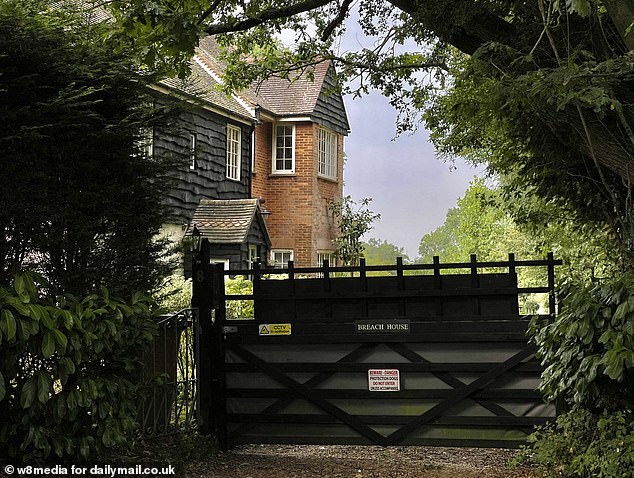
Couple Defies Court Order to Reopen Footpath Through £2M Home Garden

A pair whose fences were removed from their property by local authority employees following a six-year court dispute regarding a riding path might now be subject to legal proceedings due to allegations that they have obstructed the pathway once more.

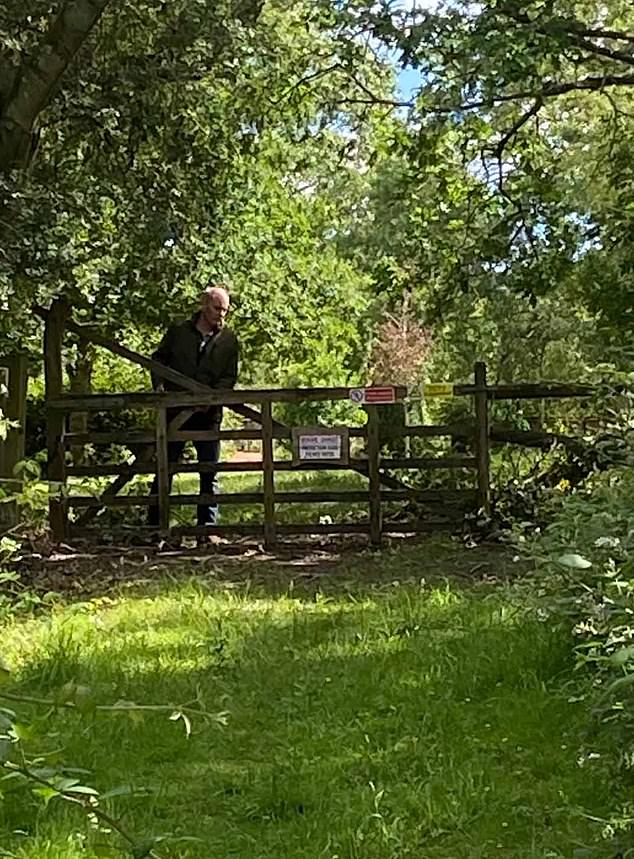
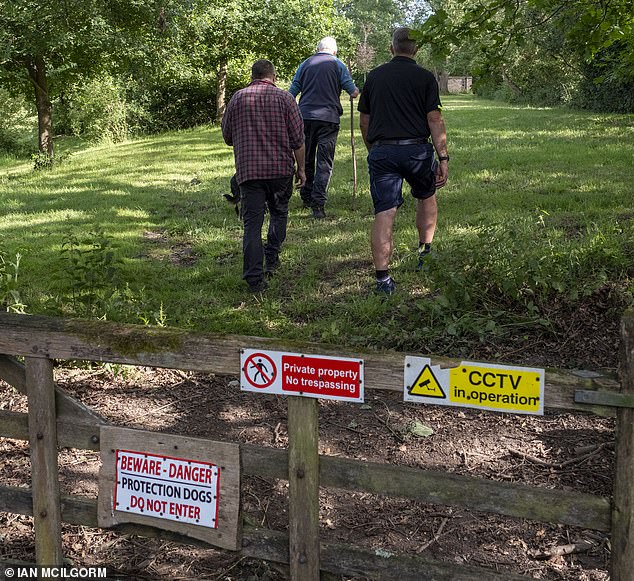
On Monday, workers came to dismantle the three obstacles and thick thorny bushes that had grown along the path which angry locals claimed had been used for over 100 years.

A High Court decision supported the local council and the Planning Inspectorate following their confirmation that the route located next to David and Dawn Moore's home in Little Berkhamsted, Hertfordshire, constitutes a public footpath.

Residents applauded when the gates were removed — though the process was briefly stopped two times to allow an ambulance to respond as Mrs. Moore reportedly became unwell amid the commotion.

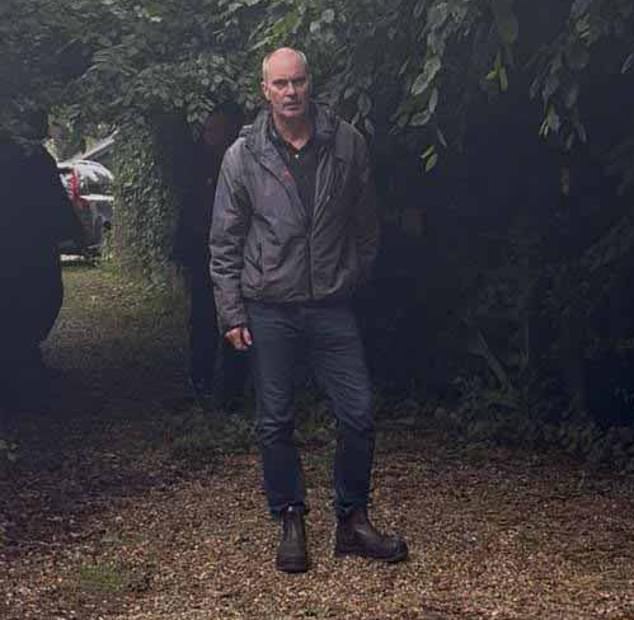
At a certain moment, Mr. Moore approached spectators who were recording the event, one of whom said to him: 'I'm applauding because the bridle path is now accessible.'

He responded, "Ah. Open at the cost of my wife fainting, right? Are you satisfied with that?"

But jubilation has turned to renewed frustration after villagers complained at least one of the gates had been rehung and the Moores – who are believed to have spent up to £400,000 on their failed legal case - were warning anyone attempting to utilize the footpath making an effort to use the bridleway seeking to access the bridleway trying to make use of the walking trail endeavoring to follow the bridleway struggling to navigate the bridleway looking to travel along the bridleway trying to take the bridleway route attempts to use the designated path efforts to proceed via the bridleway that they were ‘trespassing’.

Other allegations suggested that the pair stopped municipal employees from installing a fresh equestrian path sign on publicly owned property located just across from their residence the next day, following an argument with them.

A person said to the Mail: "I had just gone through, and Mr. Moore informed me that I was trespassing. As I kept walking, he shut the gate behind me."

I've informed the committee and provided them with images.

One person stated: "Dawn Moore was the first to confront [the individual attempting to use the bridleway] and inform him that he was taking the incorrect route."

Then David went out and declared that he was entering without permission—so both of them were doing the same.

Other remarks included: "Mr. Moore and his wife were both outside urging the individuals attempting to install the directional sign, who eventually stopped after hearing an emotional tale."

They continuously replace a hazardous and unstable gate, while instructing individuals to leave the property because they are considered trespassers.

They had previously received warnings from the committee, suggesting they may face legal action.

'Strange that she [Mrs Moore] had a miraculous recovery just to challenge those using the footpath.'

The entrance points were taken down following Mr. Moore and his spouse, a medical professional recognized as Dr. Dawn Carnell, disregarding an official directive issued by Hertfordshire County Council.

Violating an enforcement order issued by a local authority constitutes a criminal offense that may result in prosecution before a magistrate’s court, with the possibility of imposing unbounded penalties.

Alternatively, the committee might tear down or eliminate unauthorized elements and seek reimbursement from the property owner.

Court orders may also be issued by the local court or Supreme Court to stop ongoing or serious unauthorized actions.

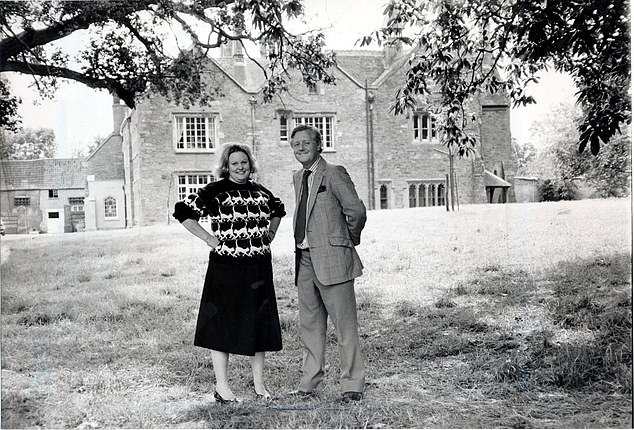
The ongoing conflict centers around the six-bedroom Breach House, some sections of which can be traced to the 17th century. The Moores purchased it for £1.2 million in 2015 and later invested heavily in restoring the neglected home.

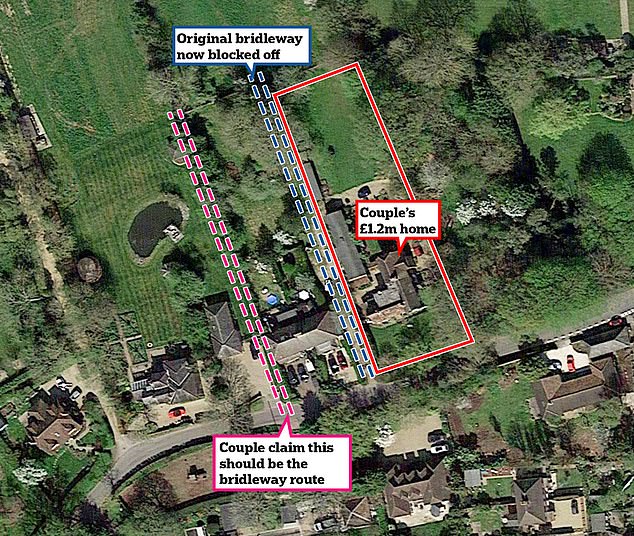
In 2019, residents found that the public path crossing the 1.75-acre area had been blocked by signs and secured gates—according to the Moores, the equestrian trail actually passed between two adjacent cottages.

Hertfordshire County Council got involved and issued an order confirming that the bridleway ran across the couple's property, prompting the Moores to appeal their case to the Planning Inspectorate.

Over the course of a four-day hearing, senior final mapping official Gavin Harbour-Cooper stated that the council examined the issue back in 1956 and determined that the path passed through Breach House.

However, when the initial "Definitive Map" was created three years later, it depicted the "incorrect path" between the houses, even though the Definitive Statement provided the accurate details.

Nigel Adams, the creator of the online real estate platform BigBlackHen.com, who had family members that possessed Breach House between 1973 and 1985, mentioned that he was responsible for selling the house to Mr. Moore and his spouse in 2015.

He stated: 'Throughout this process, I regularly talked with the Moores about the current bridleway and its path across the Breach House property.'

William Marques, who resided in the home during the 1960s, also remembered the path running through it.

He explained how he utilized it to reach his grandparents' house since the alternative path, via road, was 'too risky'.

However, Mr. Moore, who operates an oncology company alongside his wife, informed the investigation that the council acknowledged in 2020 that the bridleway signs near his residence were incorrect, leading to their removal.

He stated: "When I bought the house, I wasn't informed about the presence of a bridlepath running through the land."

After the planning inspector rejected the Moores' case, they took their appeal to the High Court, where the judge also supported the locals and highlighted the 'fundamental unlikelihood of the Claimants' stance'.

They were denied permission to appeal to the Court of Appeal last year, but in an interview last month, Mr. Moore mentioned he is considering taking his case to the European Court of Human Rights.

He explained that he would be "arguing under Article 8 of the Human Rights Convention and also Article 1, Schedule 1 of the ECHR," adding: "All of this centers on the choice to alter my specified 2015 purchasing criterion, which is now established in the High Court."

You have the right to what you bought following full investigation.

Speaking about the six-digit amount he and his spouse invested in their failed court case, Mr. Moore mentioned to the Mail early this year: 'The expense isn't really a factor anymore. It's about whether you believe you're correct or not.'

He mentioned that his wife has fully backed him in the current legal dispute, as both of them feel the council is responsible for supplying incorrect paperwork when they purchased their house.

“This isn’t about me embarking on an adventure into the wilds, donning my helmet, and declaring ‘Whatever occurs, occurs,’” he stated.

This reflects two rational individuals examining the situation from 2015 and being certain of their correctness.

The hostile atmosphere created by the conflict within the neighborhood led Mr Moore — whose spouse is employed at University College Hospital in London — to report incidents such as vehicle vandalism, like scratches on his car, along with acts of intimidation.

In the meantime, the residents of the two adjacent bungalows—among them Wayne Morris, head of the local parish council—invested many thousands of pounds in their personal legal expenses.

Mr. Morris has stated that "a significant amount of time and resources have been squandered" on this matter.

A representative from Hertfordshire County Council stated, “We have learned about this issue through nearby residents and are currently evaluating the possibilities at our disposal.”

The Moores were asked for their response.

Read more

Saturday, June 20, 2026

Heir Fights Dentist Over Beach Walk Near Medic’s Boathouse

  • Subscribe to our US Editor's Choice newsletter to receive the most significant exclusive reports

A minor legal conflict involving a dentist and an inheritor of a multimillion-dollar footwear business might change the regulations governing public access to beaches around the Great Lakes. Wisconsin .

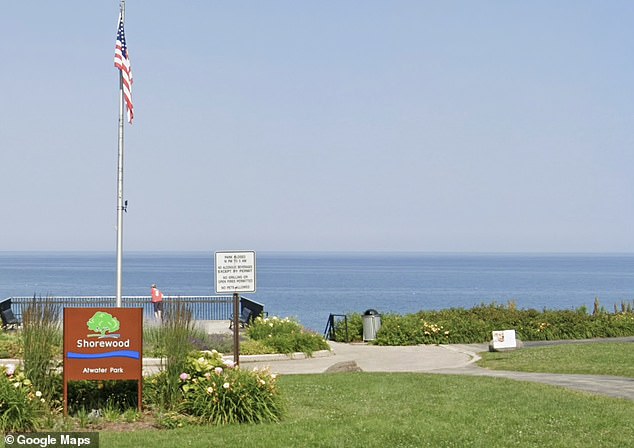
When Paul Florsheim, the great-great grandson of the original owner of Florsheim Shoes, received a trespassing ticket and was charged $313 for taking his dogs for a walk near dentist Daniel Domagala's seaside home in Shorewood, he didn’t just accept the penalty like most individuals might have done.

Rather, he decided to challenge the decision in order for his case to be reviewed by the Wisconsin court. Supreme Court the top judicial authority in the state.

"My character is such that when faced with it, I do not retreat," Florsheim said to the. Wall Street Journal .

Domagala is recognized within Shorewood—a wealthy community situated along the lake's coastline—by locals. Michigan - for keeping an eye on the shoreline near his dock and employing alerts and notices to deter people from approaching too closely.

Florsheim, aged 66, has recently stepped down from his position as a university lecturer at the University of Wisconsin-Milwaukee, and resides in a single-story home located only three houses away from Domagala.

A former teacher is passionate about walking dogs and loves going for walks on the shoreline with his two-year-old German Shepherd named Leo and his six-year-old Border Collie crossbreed, Rosie.

While taking his strolls, Florsheim frequently overlooked Domagala's notices stating, "PRIVATE PROPERTY BEYOND THIS SIGN" and "ONLY WATER ACCESS BEYOND THIS POINT," leading the local doctor to repeatedly contact law enforcement about his neighbor.

The community of Shorewood ultimately decided to issue Florsheim a trespass notice because of the regularity of the incidents.

Under Wisconsin regulations, individuals are permitted to wade, swim, or navigate boats in the Great Lakes’ waters; however, a definitive state Supreme Court decision from the early 1900s safeguards shoreline property owners against unauthorized entry onto their private lands.

Florsheim, who defended himself during his trial over the trespassing charge, claimed it was unreasonable that he could swim in the water near Domagala's home but wasn't permitted to stroll a short distance along the sandy beach.

The former professor failed in court and received a fairly small penalty, yet Judge Margo S Kirchner suggested that this might not mark the conclusion of the matter.

Kirchner stated that her decision against Florsheim was based on a 1923 Wisconsin Supreme Court ruling, where a property owner received preferential access to the shoreline of Lake Winnebago for watering his livestock.

The judge stated that she felt the over-100-year-old decision appeared relevant to this case, yet she pointed out that the precedent did not align with procedures used in other states.

"Maybe Doemel needs to be set aside," Kirchner stated, referring to the 1923 decision.

Florsheim stated to the Wall Street Journal that his initial aim was not to challenge a state Supreme Court decision or establish a new legal standard. It was simply his determined personality that led events to unfold this way, according to him.

From his perspective, Domagala stated in court that individuals regularly overlook his signals and carelessly relax on his land frequently, causing him significant annoyance.

"They act as though they own this place," he stated, confirming that he had to report people walking where they shouldn't approximately 50 times last summer.

The dentist further stated that he had never allowed Florsheim to set foot on his land, comparing the former professor's behavior to an act of trespassing. "Picture someone entering your home and claiming it isn’t yours," Domagala remarked.

It is yet uncertain whether the Wisconsin Supreme Court will accept the case, let alone if it will support the lower court's verdict and its own 1923 determination about priority shoreline access for landowners.

However, should the state's top court decide to take up Florsheim's case, the former professor will be significantly more ready, since he is currently being assisted by attorneys from the non-profit organization Midwest Environmental Advocates.

Read more

Thursday, June 18, 2026

Elite Accused of Paying the Price in £1.2m Divorce Fight

  • Receive your daily news directly by 7 am – subscribe to our latest Morning Mail newsletter at no cost.

A polarizing member of the elite has alleged that he was targeted by a judge due to his identity as a "white man" and his affluent background following his defeat in a divorce case concerning a £1.2 million trust fund.

Sir Benjamin Slade, aged 80, previously placed an advertisement seeking a "castle-educated" anti-communist woman to bear his successor, became involved in a legal dispute with Lady Pauline Slade, who wished to sell a £585,000 home located on his large Somerset estate.

The pair were married for 12 years prior to their divorce in 1994, according to the 7th Baronet of Maunsell, who claimed he grew tired of her 17 feline companions.

As part of their separation, Lady Slade received a £1.2 million trust fund consisting of an "income fund" currently valued at approximately £650,000, along with Old Farm, assessed at £585,000, situated on his extensive 2,000-acre Somerset property.

Nevertheless, after she left the house in 2023, she wished for the property to be sold through trustees in order to settle her obligations and boost her earnings, leading to a complex legal dispute.

In the meantime, attorneys acting on behalf of Sir Benjamin, who resided in the property, contended that she was not entitled to the profits from the house since her entitlement was solely to reside there without paying rent for her lifetime.

The dispute ultimately reached the High Court, with the fund's trustees requesting a judicial decision on whether Ms. Slade was entitled to benefit from the property's sale.

Judge Master Julia Clark decided against Sir Benjamin, determining that one of the key objectives of the trust was to supply his former wife with income "while he was alive."


After the decision was announced, the baronet, who traces his lineage back to Charles II, promised to continue opposing the judgment, calling it a 'farce'.

But I anticipated it," he remarked. "There's significant class hostility, and being a white man from my background means you're bound to face consequences. It's typical.

I think there might be some reverse sexism involved as well. It was a female judge who had recently supported my former wife.

According to Master Clark's opinion, she stated there was "no foundation for determining that if Lady Slade fails to oversee the acquisition of a new property, the main objective of the trust would cease."

She also discovered that there was insufficient grounds to establish that if the former Lady Slade fails to buy a new residence, her 'claim on the net sales proceeds terminates and returns to Sir Benjamin'.

The baronet's lawyer, Robert Deacon, informed the court that Lady Slade left the residence in 2022 or 2023, and subsequently sent a letter in August 2024 stating she did not plan to return to live there.

Lady Slade added that she did not intend to purchase a "new property," but instead wished for Old Farm to be sold in her favor.

Following the ruling, Sir Benjamin stated he had attempted to find a 'reasonable resolution' with his former wife, yet she 'declined to participate.'

There exists a bias toward individuals who possess wealth. I've experienced this myself," he mentioned regarding his former wife. "She isn't a destitute, helpless woman, however.

She comes from an affluent background, resides in a £3 million apartment, and has received a substantial inheritance. Despite having plenty of wealth, this reflects how the social hierarchy works against me.

What is your occupation?" they were resolved for conflict. She somewhat resembles a feminine counterpart to Donald Trump and the Israelis.

Sir Benjamin stated that he had attempted to facilitate an agreement, yet mentioned that she had vacated the premises requiring significant renovations and had failed to cover the maintenance costs.

He stated, "Our main aim was simply to resolve this matter. However, the situation keeps dragging on without an end. The only ones benefiting are the attorneys."

The expenses for the case from both parties will amount to a significant sum, which will need to be covered from her earnings.

We're frustrated and plan to return to court. The house is entirely in ruins, and she left it behind.

None of the expenses have been settled. She has not taken care of the property in any way.

The marketplace is quite poor, and the property is in a state of neglect. It needs repairs funded by someone else, and you shouldn’t think about selling it as it stands now.

That’s a highly challenging approach.

Describing their legal dispute as similar to a neighborly argument about a backyard fence, he stated that Lady Slade had utilized the house just once annually.

This might drag on for many years," he remarked. "Individuals will debate about a garden fence, and whose property line it actually is.

It constantly happens due to disagreements over boundaries. Legal costs skyrocket, and the losing party often faces severe financial damage.

We need to make an agreement. There is a complete list of tasks that must be completed. If it gets sold, it will have to be improved. You can't simply step back and say 'just sell it'.

Even though it ends up in the trust and ultimately returns to me – I wouldn’t be pleased to see it wasted.

It followed Sir Benjamin making news earlier when he offered £50,000 per year for a "well-bred" and "castle-educated" wife to "produce his successor."

Only candidates who were at least 20 years younger were reportedly taken into account, and they needed to know how to handle a shotgun.

One of his stringent conditions was that his new wife should not be a Scorpio, someone who uses drugs, or an alcoholic.

Although he had no issue with Canadians, Americans, Germans, or people from northern Europe, he remarked, "I don't believe getting married to an Inuit would be suitable for me."

His set of conditions also mentioned that he didn’t wish for a spouse who read the Guardian, was from Scotland, or stood over 5 feet 6 inches tall.

He mentioned that they needed to know how to perform ballroom dancing, play bridge and backgammon, and solve crossword puzzles.

Candidates who were favored were informed they needed to own a shotgun and possess a driver’s license, with a helicopter pilot's certificate considered an advantage.

He further mentioned that she needed to have the capability to manage two castles, and that having experience in estates, law, and accounting "would be beneficial."

As a result, he assured the applicant they would receive £50,000 annually along with a bonus, which covered a vehicle, housing, costs, meals, and vacation time.

Lord Benjamin has a daughter named Violet from Sahara Sunday Spain, although he had earlier mentioned that he was still searching for a male successor who shares genetic traits with one of his more distant paternal relatives.

Lord Benjamin had resided at Old Farm following the decision to put his manor house up for sale with an initial price of £3.5 million last year.

He comes from a line of descendants of one of the Duke of Wellington's officers — General Sir John Slade, the first Baronet, who faced criticism from the Iron Duke due to his poor management of the cavalry and for "charging recklessly."

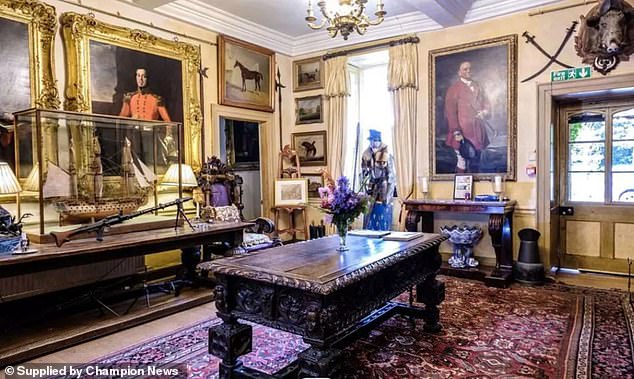
The ancestral home, currently available for purchase, is an expansive 13-bedroom red brick mansion—Maunsel House located in Somerset—that dates back to the 11th century and is believed to be the place where Geoffrey Chaucer composed parts of his writings.

Within, there is a concealed passageway that was previously connected to the nearby parish church, whereas a fully equipped bar features a showcase containing 81 weapons, among them a large-caliber machine gun.

Lady Slade, aged 79, is the daughter of the late Devon county cricketer and British Army officer Major Claude Myburgh.

Read more

Sunday, June 14, 2026

Disability Rights Moot: Aigbokhan Named Presiding Judge

A human rights attorney, community activist, and proponent of freedom of information, President Aigbokhan will act as the lead judge during the semifinals of the renowned Wahab Egbewole, SAN, National Disability Moot Court Competition set to take place at the University of Ilorin.

The National Disability Moot Court Competition, named after Wahab Egbewole, SAN, is considered one of the leading forums for advancing awareness of disability rights among law students in Nigeria.

Commenting on his new role, Aigbokhan thanked the organizers for their trust in him and praised the effort of promoting legal research related to disability rights.

He pointed out that safeguarding individuals with disabilities continues to be among the key human rights issues facing modern society and demands ongoing involvement from legal professionals.

Throughout the years, Aigbokhan has set himself apart by engaging in strategic lawsuits, legal campaigning, and programs designed to enhance skills, all with the aim of fostering openness, responsibility, and safeguarding marginalized communities.

His previous involvement with national and regional tribunals has greatly advanced the growth of human rights law and public interest legal principles in Nigeria and Western Africa.

The final event will take place within the framework of the conference organized by the African Network of Constitutional Lawyers, uniting scholars, judges, legal professionals, and policy makers from throughout Africa.

The nomination acknowledges Aigbokhan's long-term dedication to human rights, constitutional principles, equitable access to legal services, and cases involving the public good, notably his efforts in the lawsuit titled "Unemployed Youths of Nigeria vs. Federal Republic of Nigeria & Others" (Case Number: ECW/CCJ/APP/51/2020), where plaintiffs challenged the Nigerian administration regarding biased hiring practices within the Department of State Services (DSS).

The lawsuit contested the Department of State Services (DSS) hiring policies which permanently excluded applicants with natural impairments (such as stuttering) and those who had previously undergone orthopedic surgery, claiming this violated anti-discrimination laws.

The court was required to accurately evaluate whether the hiring of officials within the DSS violated Article 19 of the Protocol to the African Charter on the Rights of People with Disabilities and Section 29 of the Discrimination Against Persons with Disabilities Act of 2019, as well as whether the data showing more appointments from the northern regions compared to the southern ones constitutes discrimination.

In this instance, the applicant's legal representative, President Aigbokhan, contended that these rigid, inflexible hiring practices essentially exclude eligible candidates from consideration.

An individual contested the state authorities, demanding they establish at least a 5% hiring opportunity quota for people with disabilities, in line with nationwide integration policies.

In its ruling, the court stated that "any difference, exclusion, or advantage related to a specific position grounded on essential requirements should not be considered as discriminatory."

In relation to jobs in specific fields or careers, because of the unique demands or difficulty involved, particular credentials are essential and might disqualify certain groups of individuals who cannot perform the role effectively.

In such circumstances, excluding these individuals cannot be considered discriminatory, provided there is no undeniable evidence that those excluded are capable of performing the job effectively.

In this regard, the court has not received any undisputed evidence showing that individuals who stutter or have physical disabilities, as specified, are still capable of performing the duties needed within a State Security Service.

The court further stated that "Appointments should be based on criteria used by the DSS when selecting individuals for the position, which involve merit."

The candidate has provided no proof indicating that people from the southern region outperformed or achieved higher scores than those from the northern area in evaluation tests or interviews, yet faced rejection for jobs.

A simple claim that the hiring process was unfair, without evidence showing unequal treatment, is considered guesswork and thus cannot be addressed by the court.

Considering this evaluation, the candidate has failed to adequately support their claim of unfair hiring practices related to nationality.

The court further noted that the Respondent has yet to approve the Protocol under the African Charter on the Rights of People with Disabilities.

The Respondent, who is not a party to the Protocol to the African Charter on the Rights of Persons with Disabilities, cannot be considered in breach of its provisions.

The national contest has been running for three years, gathering top law professors from throughout Nigeria to address new legal challenges impacting people with disabilities and promote the development of laws related to disability rights.

Supplied by SyndiGate Media Inc. ( Syndigate.info ).