Technology and philosophy

Showing posts with label investing economy. Show all posts

Monday, June 29, 2026

KOSPI Volume Crashes to 500 Million Shares

With South Korea's stock market experiencing significant fluctuations between steep drops and rapid increases each day, investor confidence is beginning to wane.

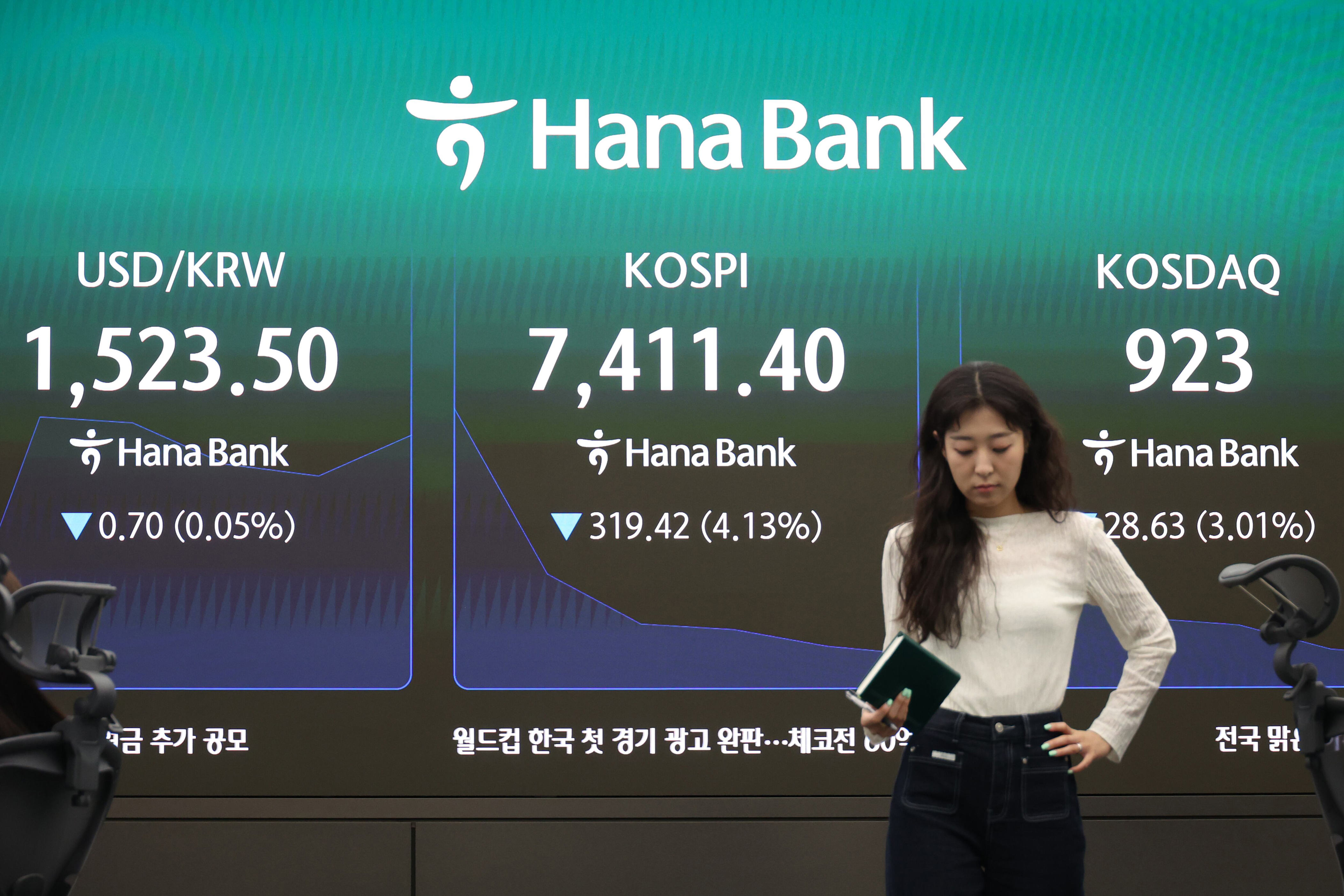
As reported by the Korea Exchange on the 11th, the typical daily transaction amount in the KOSPI market for this month reached 504.49 million shares, representing the smallest monthly average so far this year. This reflects a drop of 42 percent when contrasted with the mean daily trade volume of 869.2 million shares observed between January and May. The average daily trading level hit a high of 1.10766 billion shares in March, followed by reductions to 947.18 million shares in April, 698.79 million shares in May, and now stands near 500 million shares this month.

A decline in trade volume, an essential measure of market liquidity, is clearly visible. Trade volume hit a high of 80.3325 trillion South Korean won on the 29th of last month and 74.33 trillion South Korean won on the 1st of this month, yet averaged only 46.2314 trillion South Korean won during the previous week (from the 4th to the 10th). Significantly, on the 10th, as the KOSPI fell 4.52% to 7,730.82 due to significant sales from foreign investors and institutional players, trade volume decreased to 39.9448 trillion South Korean won. Within a single week, the market's liquidity was reduced by more than half.

Behind the trend of investors holding back and taking a cautious stance are broader economic uncertainties and global political conflicts. On the 10th, the U.S. Department of Labor reported that the U.S. Consumer Price Index (CPI) increased by 4.2% compared to the previous year in May—the largest rise in over three years and one month driven by elevated fuel costs. This greatly reduced hopes for a reduction in interest rates by the U.S. Federal Reserve, leading to stagnation in the stock market.

Amidst the chaos, concerns about an all-out American conflict with Iran arose. On the 10th, U.S. President Donald Trump commented after a U.S. military helicopter was shot down, saying, "Iran will face consequences for delaying," and "We'll strike forcefully today. Talks have ended." Han Ji-young, a research analyst at Kiwoom Securities, noted, "The volatility index (VKOSPI) hit a new peak between 88-91, leading traders to halt transactions completely as part of their risk control measures." Analysts predict that the market will remain stable despite limited trade volume until mid-month, when international developments are anticipated to settle.

In the meantime, concerns about significant overpricing within the New York stock market are encouraging a worldwide approach of waiting and observing. As reported by Yahoo Finance, the "Buffett Indicator," calculated by dividing the overall value of the U.S. stock market by the yearly nominal gross domestic product, has recently climbed to 232.5%. This marks the highest point recorded since GuruFocus started gathering information from 1970 onwards. It indicates that the American stock market is currently 2.3 times bigger than the nation's annual economic production, categorizing it as being in a "significantly overpriced" range according to Wall Street measures. Past patterns show that reaching such an index level often means the U.S. stock market carries a substantial chance of experiencing poor performance during the following year.

Ben Snyder, an equity analyst at Goldman Sachs, mentioned in a study, "Traders are currently buying 'high-priced shares'—stocks having price-to-revenue multiples above 10 times—which have not been observed for many years. The previous time such excessive speculation occurred was during the 2000 internet boom."

Monday, June 22, 2026

Income Gap Surges as K-Shape Growth and Real Estate Divide Deepen

A research report indicates that the disparity in household incomes, which had previously shown a decreasing pattern, has started to increase once more. According to the Bank of Korea, the South Korean economy is experiencing "complicated polarization," with both wealth and income inequalities growing.

The wealth disparity has increased because of higher property costs, while income inequality has grown due to "K-shaped recovery," with economic expansion focused mainly on chip production firms.

On the 10th, the Bank of Korea disclosed in its publication called *Current Status and Ripple Effects of Household Polarization in the Korean Economy* that the income Gini coefficient (calculated using disposable income) dropped from 0.353 in 2016 to 0.323 in 2023, though it increased marginally to 0.325 in 2024.

The Gini coefficient tends toward 0 when there is perfect equality and reaches 1 when there is complete inequality. A value above 0.4 typically indicates significant disparity within a society. The number increased marginally from 0.328 in 2020 to 0.329 in 2021, then decreased steadily before rising once more in 2024 following a three-year period of reduction.

Lee Jae-ho, leader of the Bank of Korea's investigative group, stated, "Indications suggest that the wealth disparity is once more expanding because of K-shaped development within various sectors," noting, "The risk of job replacement caused by the rise of artificial intelligence (AI) might heighten economic imbalance going forward, potentially reinforcing current disparities in assets."

As per the report, the net wealth Gini coefficient decreased to 0.584 in 2017 but quickly increased to 0.625 by 2025. Since real estate constitutes the majority of family assets and is mainly held by older individuals, intergenerational wealth inequality has turned into a structural issue.

The Bank of Korea noted that with rising income disparity and growing wealth concentration, the financial condition of homeless individuals and those with limited earnings is worsening. The percentage of young adults (those in their 20s and 30s) within the bottom fifth of both net worth and income groups almost doubled between 2020 and 2025, increasing from 7.9% to 15.2%. Specifically, only the share of individuals aged 20 to 30 within this group has risen.

The Bank of Korea cautioned that the economic base focused on low-income younger families is deteriorating, potentially reducing consumer activity and production efficiency. This occurs as higher-income individuals with significant wealth have less impact on increasing consumption, and older people, who own property, face constraints in converting their assets into spendable cash.

Based on a national panel data study, when the wealth proportion held by the top 10% rises by one percentage point, total factor productivity decreases by 0.16% after two years. Total factor productivity reflects the extent to which a nation's technological advancement, educational standards, and institutional effectiveness support economic expansion.

Lee stated, "The process of aging is increasing efficiency problems via 'older generations passing wealth to older offspring,' with individuals in their 80s transferring resources to those in their 60s," and highlighted, "Current redistributive measures aimed at maintaining income have shortcomings; therefore, it is important to enhance the emerging industrial system to make sure economic growth advantages are solidly embedded throughout the economy."

Sunday, June 14, 2026

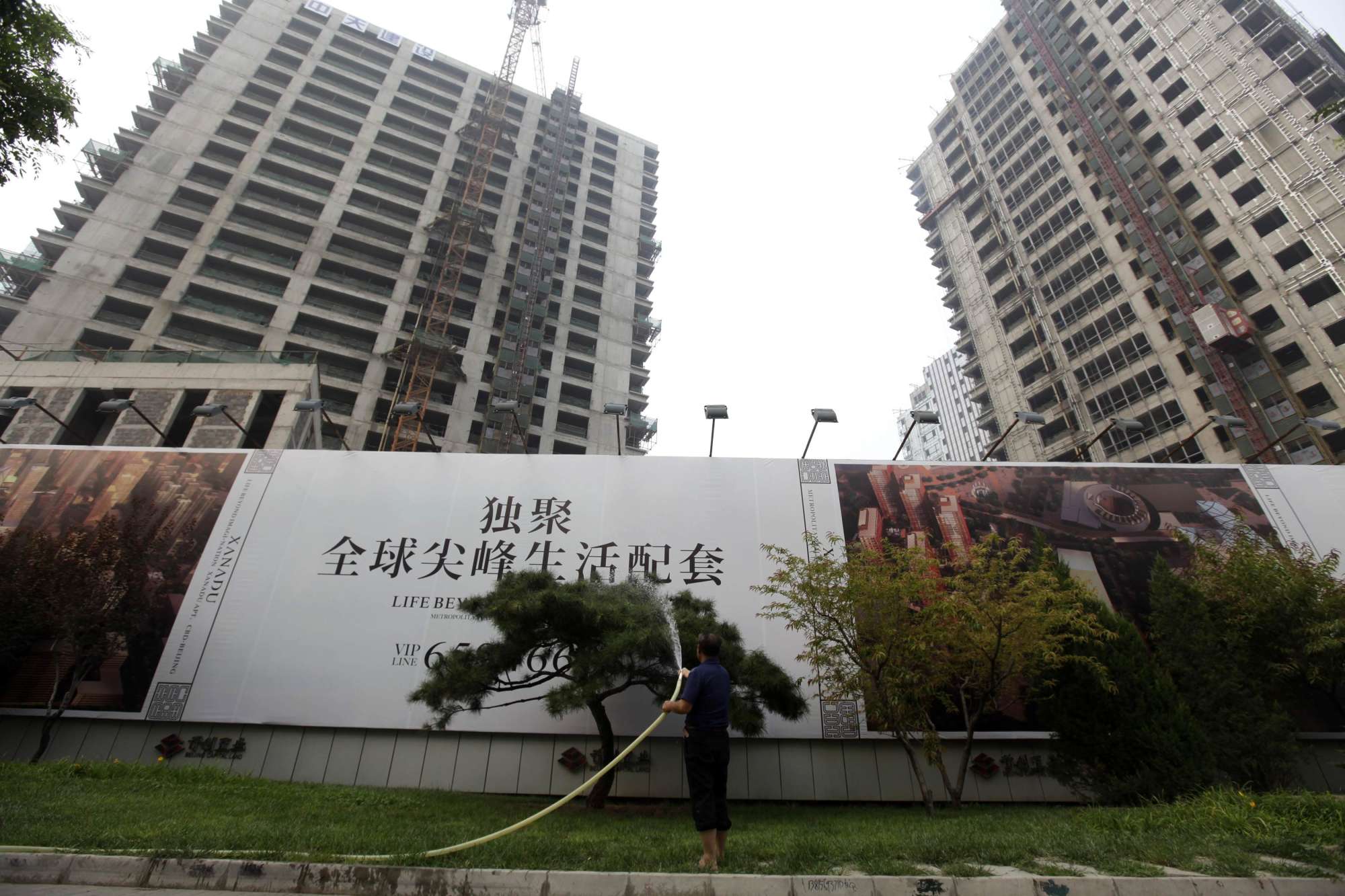
China's $2.2T Urban Renewal Plan Sparks Construction & Property Boom

The plan from 2026 to 2030 involves improvements to pipeline systems, sewage networks, rundown houses, and infrastructure related to schooling and senior citizen services.

China's large-scale urban renovation initiatives, including improving old residences and replacing gas pipelines, are projected to demand an investment of no less than 15 trillion yuan (US$2.2 trillion) over the next five years starting in 2026, presenting new development prospects for building companies.

Real estate developers also saw a boost on Friday following the release of guidelines from the State Council regarding an urban revitalization initiative, which is included in Beijing's 15th Five-Year Plan covering 2026 to 2030.

Total investments may exceed 20 trillion yuan throughout this period, as per information from the reconstruction and renewal plans, reported by the Economic Information Daily, a publication managed by Xinhua, the national news agency.

Are you curious about the major issues and developments happening globally? Find your answers here with SCMP Knowledge Our latest platform featuring carefully selected content, including explanations, frequently asked questions, analysis, and visual graphics, presented by our acclaimed team.

Large-scale rebuilding initiatives can enhance public well-being and serve as a crucial catalyst for the national economy," stated Wang Feng, chairperson of the Shanghainese financial services company Ye Lang Capital. "Certainly, both the central and local authorities will continue with maintenance and modernization efforts beyond 2030, ensuring the safety and effectiveness of the infrastructure.

The five-year strategy outlines Beijing's economic and societal goals, with both domestic and global firms examining different official publications connected to the initiative to identify potential prospects.

The State Council, China's executive body, stated in the guidelines that by 2030, a total of 200,000 kilometers of natural gas pipelines, along with 175,000 kilometers each of sewage pipes and water supply lines within the country's urban regions, will undergo reconstruction.

It further stated that a total of 500,000 deteriorating residential buildings would also undergo renovation, and public facilities To enhance education, healthcare, and senior citizen assistance would also see improvements.

The systems of underground pipelines used for wastewater, electricity, gas, and telecommunications infrastructure are crucial to China's urban development efforts, alongside effective stormwater management to minimize flood risks during the rainy season.

Technology advancement relies on these connections, seen as the basis for a stable commercial setting.

Experts noted that Beijing's goals might advantage real estate builders, who have faced challenges. a five-year slump .

Due to increased funding from the rebuilding and upgrading of public infrastructure, real estate firms might find some optimism as the government shows commitment to modernizing older housing areas," stated Yin Ran, an angel investor and real estate enthusiast based in Shanghai. "However, not every developer will gain advantages. Only those who have significant expertise in handling major redevelopment initiatives will be chosen to participate in this massive multi-billion-yuan revitalization effort.

Country Garden Holding Hong Kong-traded stocks saw an increase of 16.3% reaching HK$0.24 on Friday. China Vanke's stock climbed by 6.7% to HK$2.71, Sunac China went up 6.8% to HK$0.95, and Cifi Holdings moved higher by 5.2% to reach HK$0.06.

The real estate industry and associated sectors — including construction and household appliances — contribute approximately one-quarter of China's total economic production, indicating that even a small rebound could lead to broader effects on overall growth.

Pre-owned home sales in large Chinese cities rose sharply in March and April, with Shanghai driving the increase, raising hopes that the struggling real estate market could be showing signs of recovery.

Experts and traders noted that a more vibrant second-hand market indicated a slow recovery of trust among property buyers following the decline.

More Articles from SCMP

In what ways might South Korea's nuclear-powered submarines change the maritime equilibrium close to the first island arc?

In what way did this young man transform his sorrow into determination while battling brain cancer?

The impact of Trump's conflict with Iran on Asia's money transfer system

Everything you should know about Annette Bening, who portrays Beulah Jackson in Dutton Ranch

The article was first published on the South China Morning Post (www.scmp.com), a top-tier news outlet covering developments in China and Asia.

© 2026 South China Morning Post Publishers Ltd. All rights reserved.