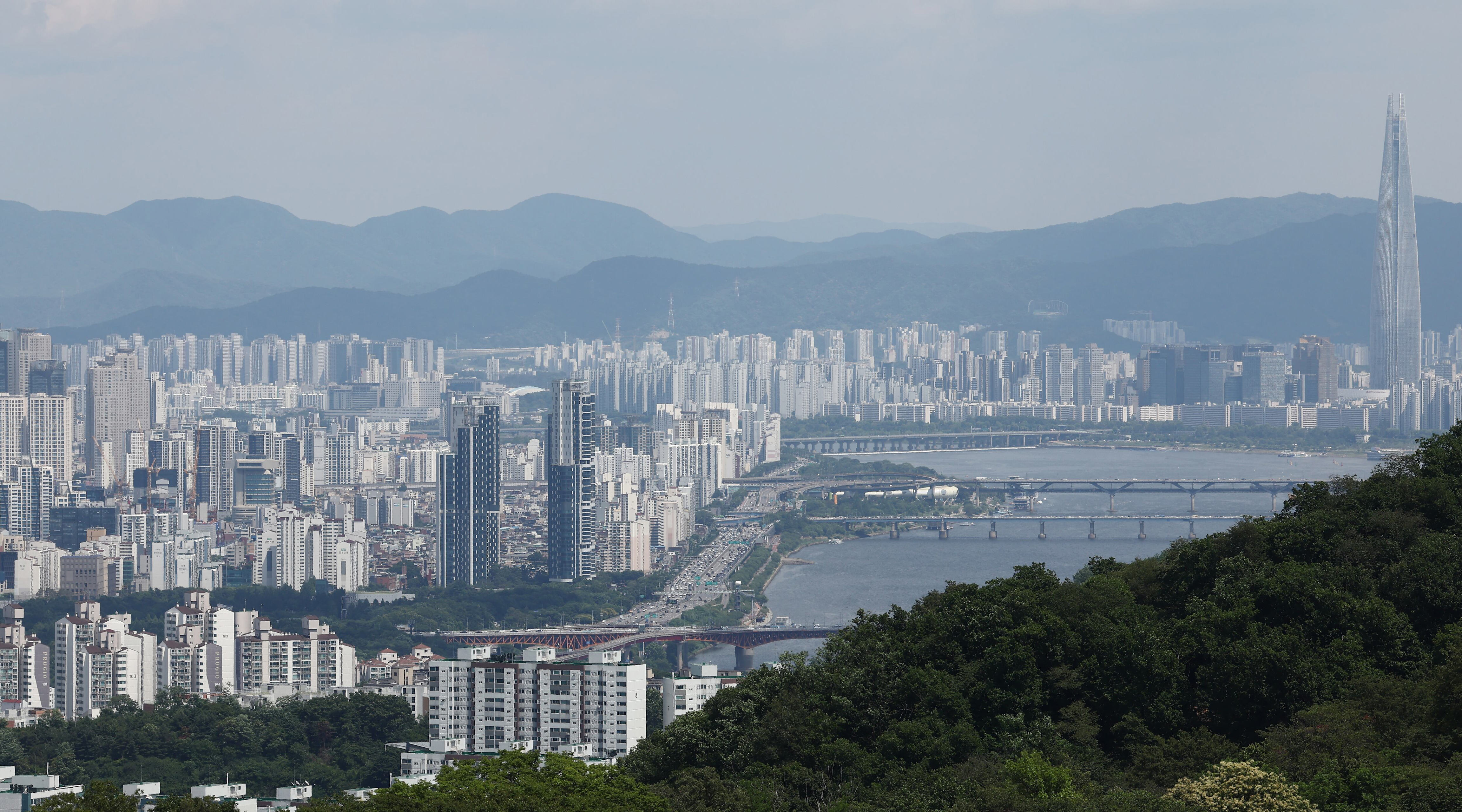
Although current property owners in South Korea face limitations due to the government's broad lending rules and increased taxation, first-time buyers have become significant forces in Seoul's housing sector. By taking advantage of more lenient borrowing terms, they have acquired almost half of all apartment buildings and shared residential properties sold in the city this year.
As per the information released by the Supreme Court Registration Information Plaza on the 11th, during the first five months of this year, 32,843 out of 72,025 recorded transactions involving shared residential properties (such as apartments, townhouses, and office-tel units) in Seoul were made by initial purchasers, making up 45.6% of total sales. This indicates that nearly half of all residences sold in Seoul went to individuals without prior property ownership. This is the highest proportion ever documented since data collection started in 2010, showing an increase of over nine percentage points when compared to the corresponding period last year (which stood at 36.5%).
The main reason behind this situation stems from the contradiction within government loan policies. Although the government classified all of Seoul as a controlled area under the "October 15 Measures" last year, limiting mortgage loans to 40%, first-time homebuyers continue to be eligible for loans covering up to 70% (capped at 600 million South Korean won). Indeed, the share of first-time buyers, which was 38.6% at the close of last year following stricter mortgage rules, has increased each month this year, peaking at 48.7% in April.
With many property owners hurriedly selling their houses to evade higher capital gains tax, introduced from May 10th this year, first-time purchasers took advantage of these quick sales, mainly in suburban regions. In neighborhoods such as Nowon-gu (60.6%) and Seongbuk-gu (59.8%), more than six out of every ten buyers acquired their initial residence. Areas including Gangbuk-gu (57.2%), Seodaemun-gu (55.2%), Gwanak-gu (52.7%), Gangseo-gu (50.9%), Geumcheon-gu (50.2%), and Guro-gu (50.1%) also witnessed first-time buyers making up more than half of all transactions. On the flip side, Gangnam-gu (31.6%) and Seocho-gu (32.7%), known for expensive housing options, had the smallest percentages in Seoul, indicating an uneven real estate landscape.
The largest group of individuals buying their first home were those in their 30s. This segment made up 56.1% of first-time purchasers in Seoul this year, marking the first instance where they exceeded 50% since data collection started. This pattern is linked to the "triple rise" in property sales, jeonse payments, and rental costs, which has led many in their 30s to aggressively buy houses on the fringes of Seoul through borrowing.

