According to a standard poll conducted by research companies Embrain Public, Kstat Research, Korea Research International, and Hankook Research, the support levels for President Lee Jae Myung and the Korean Democratic Party dropped by 9 percentage points (p) and 4 percentage points (p), respectively, when compared with data from three weeks prior.
As per the findings of the "National Index Survey (NBS)" carried out by four companies between the 8th and 10th of last month and published on the 11th, 57% of participants gave a favorable assessment of President Lee Jae Myung’s leadership, reflecting a drop of 9 percentage points compared to the 66% noted three weeks earlier. The share of those providing an unfavorable evaluation rose to 33%, marking an increase of 9 percentage points.
Regionally, President Lee had the highest approval score of 80% in the Honam area, then Incheon and Gyeonggi with 59%. Next came the Chungcheong region at 56%, followed by Busan, Ulsan, and Gyeongsangnam-do with 55%, as well as Gangwon and Jeju also at 55%. Seoul saw an approval rate of 53%. The lowest level was registered in Daegu and Gyeongsangbuk-do with 45%. Over the past three weeks, the ratings have decreased by 19 percentage points in the Chungcheong region, 11 percentage points in Daegu and Gyeongsangbuk-do, 10 percentage points in Seoul, 10 percentage points in the Honam region, 10 percentage points in Gangwon and Jeju, 9 percentage points in Busan, Ulsan, and Gyeongsangnam-do, and 4 percentage points in Incheon and Gyeonggi.
According to different age categories, President Lee received an approval score of 75% from individuals in their 40s and 50s, whereas this figure stood at 51% for people in their 60s. Nevertheless, the support level dipped under 50% across all other age brackets: 48% for those over 70 years old, 48% for those in their 30s, and 41% for those between 18 and 29 years old. In comparison with data from three weeks prior, the ratings declined by 17 percentage points among those in their 60s, 13 percentage points among those in their 30s, 8 percentage points among young adults aged 18-29, 7 percentage points for seniors 70 and older, 5 percentage points for those in their 40s, and 3 percentage points for those in their 50s.
In terms of political ideology, 91% of liberals backed President Lee, whereas 56% of centrists and 28% of conservatives did so. This marks a decrease of 11 percentage points among conservatives, 10 percentage points among centrists, and 3 percentage points among liberals when contrasted with three weeks prior.
According to the party preference poll, the Democratic Party received the most backing with 41%, reflecting a decrease of 4 percentage points compared to 45% observed three weeks prior. Meanwhile, the People Power Party saw an increase from 20% to 25%, marking a growth of 5 percentage points. Next came the Reform Party with 3%, the Rebuilding Korea Party at 2%, the Progressive Party also at 2%, and various smaller parties collectively accounting for 2%. Those who indicated they do not back any political group made up 23%, whereas 1% either said "I don't know" or remained silent.
Regionally, the Democratic Party had an approval rate of 62% in the Honam area, 48% in Incheon and Gyeonggi, and 47% in Gangwon and Jeju. The figure reached 40% in Busan, Ulsan, and Gyeongsangnam Province, 36% in the Chungcheong region, 30% in Seoul, and 24% in Daegu and Gyeongsangbuk Province. Over the past three weeks, the rating dropped by 12 percentage points in the Chungcheong region, 11 percentage points in Seoul, 8 percentage points in the Honam area, 7 percentage points in Daegu and Gyeongsangbuk Province, and 2 percentage points in Busan, Ulsan, and Gyeongsangnam Province. Conversely, it rose by 4 percentage points in Incheon and Gyeonggi and by 2 percentage points in Gangwon and Jeju.
The People Power Party had an approval rate of 42% in Daegu and Gyeongsangbuk Province, 33% in the Chungcheong area, 32% in Busan, Ulsan, and Gyeongsangnam Province, and 31% in Seoul. The figure reached 19% in Incheon and Gyeonggi, 17% in Gangwon and Jeju, and just 5% in the Honam region. Over the past three weeks, the score rose by 13 percentage points in Seoul, 11 percentage points in Busan, Ulsan, and Gyeongsangnam Province, and 6 percentage points in the Chungcheong region.
Among individuals in their 50s, the Democratic Party had more than 50% backing (59%), while those in their 40s supported the party at 57%. This was followed by 37% from people in their 60s, 33% from those who were 70 years old or older, 29% from those in their 30s, and 27% from those in their teens and twenties. In comparison to three weeks prior, support dropped by 12 percentage points for those in their 60s and by 4 percentage points for those in their 50s.
The People Power Party received 38% of votes from individuals aged 70 and older, 34% from those in their 60s, 28% from people in their 30s, 19% from those in their 40s, 19% from those in their teens and early 20s, and 16% from those in their 50s. Over the past three weeks, support rose by 12 percentage points among those in their 30s, 11 percentage points among those in their 60s, and 6 percentage points among those in their 40s.
Within progressive groups, 77% backed the Democratic Party, whereas 55% of conservatives favored the People Power Party. For moderates, 36% supported the Democratic Party and 22% aligned with the People Power Party.
When questioned about their opinions on the outcomes of the June 3 local elections, 45% of participants stated that "the opposition, such as the People Power Party, exceeded expectations." Thirty-one percent mentioned that "the governing party, like the Democratic Party, outperformed predictions." Twenty-four percent either replied with "I'm unsure" or failed to provide an answer.
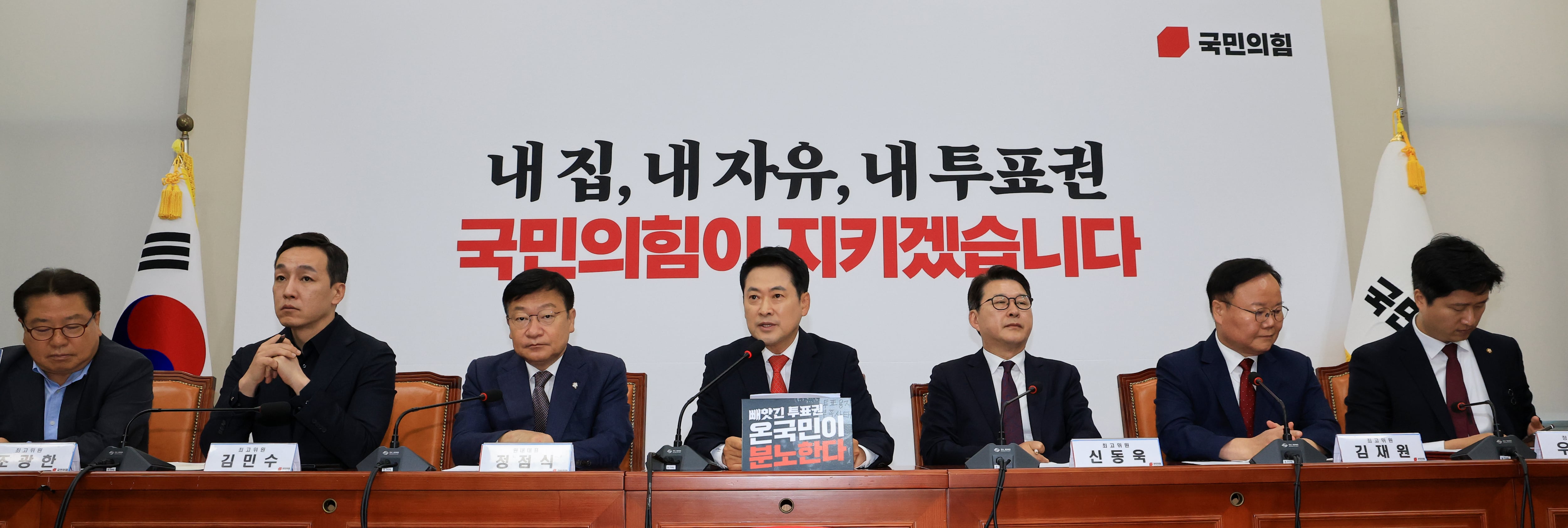
Concerning an investigation by parliament into the lack of voting ballots during the municipal elections, 85% of those surveyed stated it was "essential."
A national index survey was carried out through phone calls made using mobile devices to 1,001 people who were 18 years old or older across the country between the 8th and 10th of last month. The participation rate stood at 26.0 percent, with a margin of error of ±3.1 percentage points at a 95% confidence interval. To learn further information, kindly visit the official site of the National Election Survey Review Committee.