Technology and philosophy

Showing posts with label controversies. Show all posts

Wednesday, November 25, 2026

Appellate court reverses drunk driving acquittal over inconsistencies

A man in his 40s who attempted to avoid punishment by claiming, “I drank more beer after coming home” following a drunk-driving arrest was found guilty in an appellate trial. While the lower court acquitted him due to the difficulty in ruling out the possibility of additional drinking, the appellate court overturned the verdict, citing his inconsistent statements and conflicting accounts from the couple.

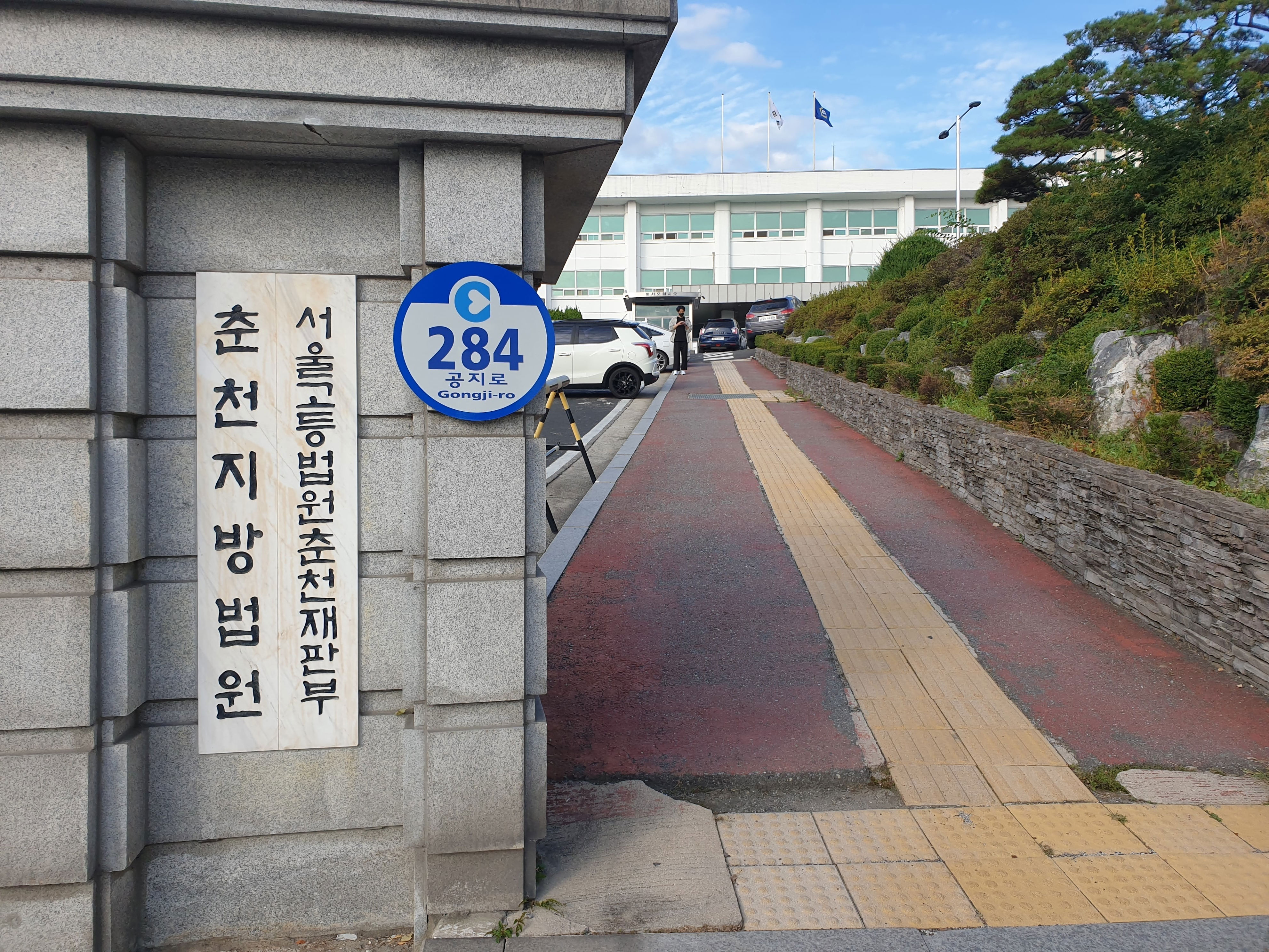
The Chuncheon District Court Criminal Division 1-1 (Judge Lee Geun-young) announced on the 8th that it had overturned the lower court’s not-guilty verdict for A (44), charged under the Road Traffic Act for drunk driving, and sentenced him to six months in prison, suspended for two years.

Mr. A was referred to trial for allegedly driving approximately 4.5 km from a road in Wonju, Gangwon Province, to his apartment parking lot in a drunk state in December 2024.

At the time, a driver following Mr. A’s vehicle reported to 112 that the car was swerving and crossing lanes. When police arrived at his home, Mr. A initially denied driving but later admitted to it, claiming he had consumed an additional 500ml can of beer after returning home. Empty beer cans and cups were found on the dining table when police inspected his residence.

The lower court ruled that it was difficult to exclude the possibility that Mr. A had drunk more beer after returning home. It also stated that the blood alcohol concentration at the time of driving could not be conclusively determined to exceed the legal threshold of 0.03%, acquitting him. The blood alcohol level measured by police was 0.058%.

However, the appellate court’s judgment differed. The court noted that Mr. A had repeatedly changed his statements, initially denying and later admitting to drunk driving. It also viewed the conflicting accounts between the couple regarding the circumstances of post-driving beer consumption as suspicious.

Mr. A’s wife testified that she poured beer into a cup without her husband’s request, while Mr. A claimed he had asked her to bring the beer and drank it directly from the can.

The court also focused on the fact that Mr. A sent text messages to his wife while moving to his home and continued composing messages without opening the door upon arrival. Though the couple claimed the messages were meant to reassure each other, the court considered the possibility that they were orchestrating a cover-up to make it appear as though he had drunk beer after returning home.

The appellate court stated, “The defendant’s excuses and actions to evade punishment after being caught for drunk driving exceeded the scope of legitimate defense and were intended to mislead investigative authorities and the court, which is highly reprehensible.” It added, “The fact that he was previously fined for drunk driving in 2009 was also considered in sentencing.”

Friday, November 20, 2026

Japan suspends Chinese consul expulsion amid retaliation threat

It was revealed on the 8th that Japanese Prime Minister Sanae Takaichi attempted to designate Xue Jian, the Chinese Consul General in Osaka, as a “persona non grata” (diplomatic persona non grata) and expel him after he posted a message on X stating, “That filthy neck that intruded on its own accord must be cut off without hesitation.” However, the move was put on hold after China responded with a threat to retaliate “twofold.”

Prime Minister Takaichi began clashing with China last November when she mentioned the possibility of military intervention in the event of a Taiwan contingency. In response, Consul General Xue Jian posted on his X account, “That filthy neck that intruded on its own accord must be cut off without hesitation.”

According to the Yomiuri Shimbun on the 8th, around that time, Prime Minister Takaichi summoned Chief Cabinet Secretary Kihara and senior Foreign Ministry officials, instructing them, “Please convey that we will designate him as a ‘persona non grata.’” She ordered the Chinese side to be informed that if he was not promptly recalled, he would be expelled.

Masaaki Kanai, Director-General of the Asian and Oceanian Affairs Bureau at the Foreign Ministry, conveyed to Liu Jinsong, then Director-General of the Asian Department at China’s Ministry of Foreign Affairs, during a meeting in Beijing that Japan was considering expulsion. In response, Liu reportedly warned, “If you expel one person, we will expel two,” specifically naming Japanese consuls stationed in China.

While Japan had anticipated a reciprocal expulsion of one person, Prime Minister Takaichi ultimately suspended the expulsion after China threatened retaliation “in kind,” fearing a cycle of retaliation could further deteriorate bilateral relations.

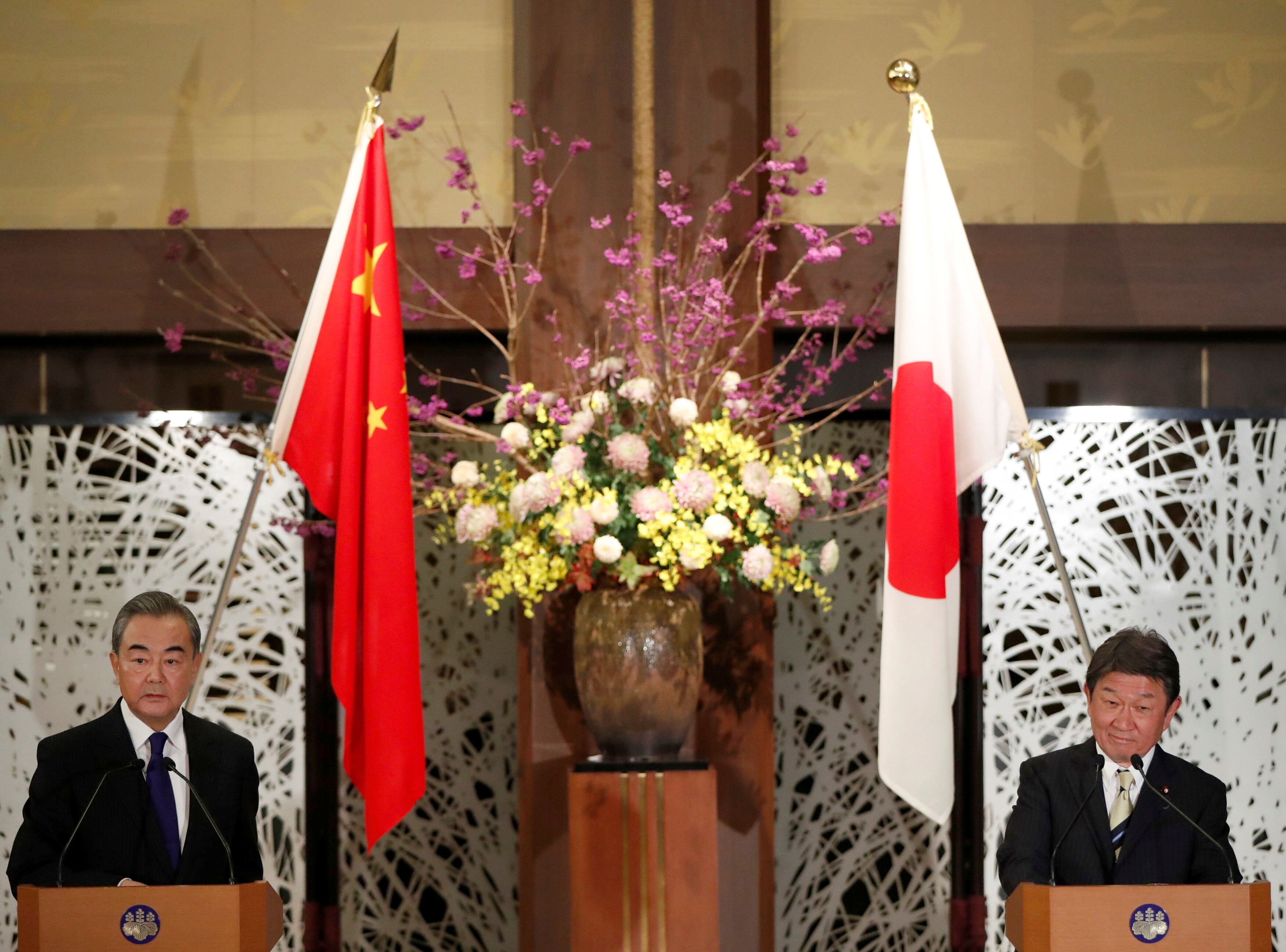
Japan has since persistently attempted to engage in dialogue with China. In late July, Foreign Minister Toshimitsu Motegi reportedly tried to stage a chance encounter with Chinese Foreign Minister Wang Yi during an ASEAN-hosted foreign ministers’ meeting in Manila, Philippines.

In a corridor at a Manila conference venue, Motegi waited for Wang Yi to appear. After thoroughly checking Wang Yi’s schedule, he pretended to coincidentally meet him and sought an opportunity for a brief conversation. When Wang Yi appeared, Motegi greeted him in Japanese, saying, “Long time no see.” Wang Yi, known to be fluent in Japanese due to his prior tenure as ambassador to Japan, did not make eye contact and walked past. Motegi continued to speak while walking alongside him, but Wang Yi remained silent.

At the time, the Japanese side announced, “We had a brief greeting and discussed bilateral relations,” while the Chinese Ministry of Foreign Affairs denied any meeting, stating, “No meeting was scheduled.” This incident symbolized Japan’s efforts to seek dialogue and China’s refusal.

The Japanese side has attempted various methods to maintain communication, but China has maintained its stance of refusing dialogue unless Prime Minister Takaichi retracts her remarks.

In September, China accepted a visit by Takeshi Iwaya, former Foreign Minister and head of the Japan Intertrade Promotion Association, a private organization, and Wang Yi held a meeting with him for over an hour. This was interpreted as a gesture that China could engage with Japanese private groups, aiming to create domestic divisions.

Currently, the only formal dialogue channel between the Japanese and Chinese governments is a monthly meeting between Takehiro Funakoshi, Vice Minister for Foreign Affairs, and Wu Jianghao, Chinese Ambassador to Japan. It is reported that during these meetings, China continues to demand a retraction.

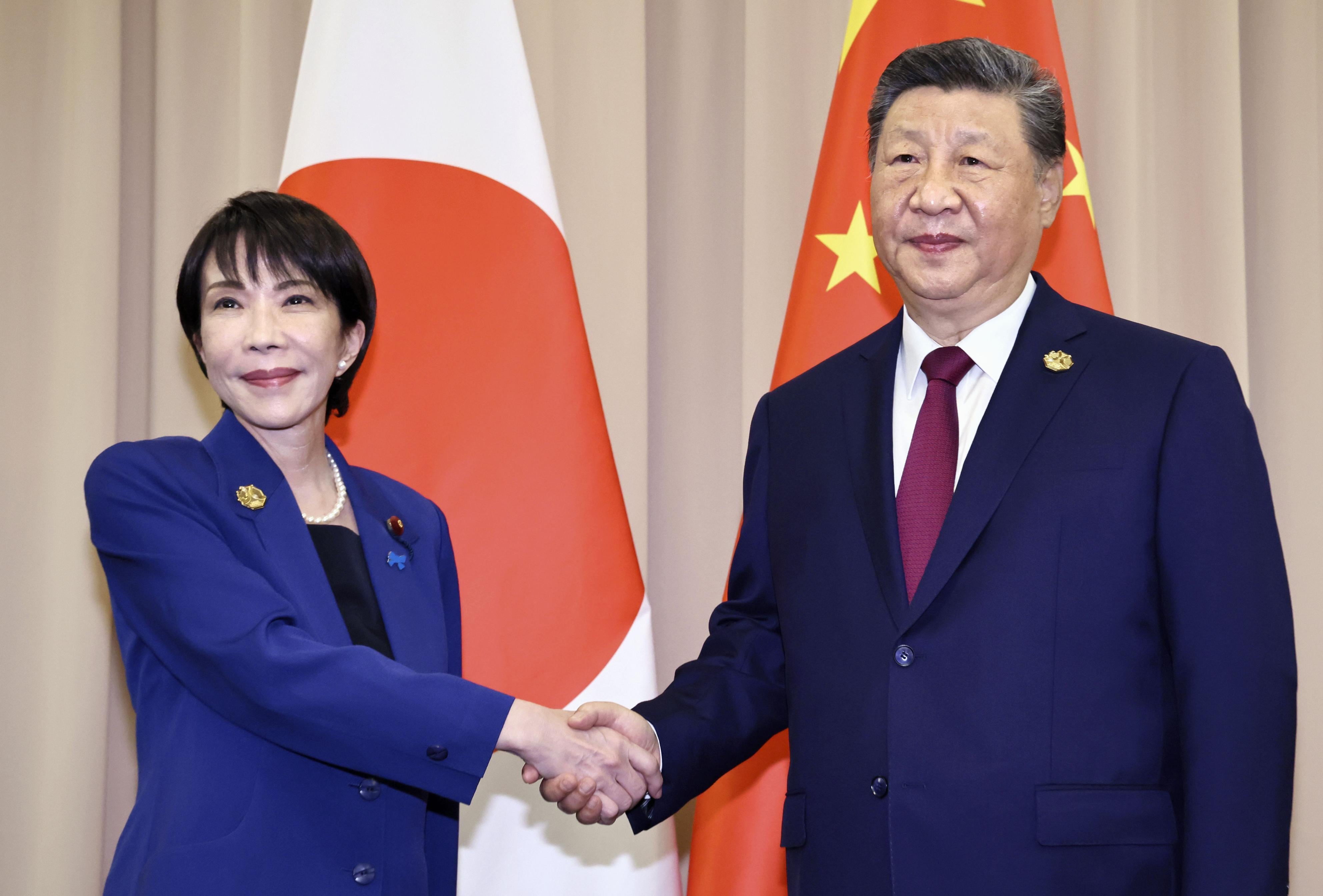
Prime Minister Takaichi is seeking to contact Chinese President Xi Jinping on the sidelines of the APEC (Asia-Pacific Economic Cooperation) Leaders’ Meeting in Shenzhen, Guangdong Province, mid-month. However, expectations for a summit remain low, with hopes pinned on even a handshake serving as a potential catalyst, according to the Yomiuri Shimbun.

Meanwhile, subtle changes are emerging within China. Amid economic difficulties such as severe consumption slumps and high youth unemployment, there are growing expectations for economic exchanges and investments with Japan. In late October, a joint economic symposium was held in Beijing by JETRO (Japan External Trade Organization) and a Chinese policy research institution. A Chinese organizer stated at the event, “China and Japan should strengthen regional trade cooperation.”

The remarks are seen as reflecting China’s underlying desire for Japanese investment and economic cooperation as its economy struggles with sluggish consumer spending and high youth unemployment.

In September, He Lifeng, Chinese Vice Premier, criticized Japan over the Taiwan issue during a meeting with former Foreign Minister Takeshi Iwaya in Beijing but acknowledged, “China and Japan are important economic and trade partners.”

Wednesday, November 18, 2026

Is Ndindi Nyoro hunting for 2027 role or positioning for 2032?

In Kenyan politics, the most consequential political manoeuvres are not always the loudest. Sometimes, the politician who appears to be standing on the sidelines is the one carefully positioning himself for the next big prize.

Ndindi Nyoro is increasingly becoming an intriguing case study in political ambition, strategic patience and succession politics.

Nyoro made his name through his development record in Kiharu, Murang’a county. Using Constituency Development Fund resources, he has supported the construction of schools, health facilities, roads and initiatives targeting the informal sector. His performance has repeatedly earned him recognition as one of Parliament's most effective constituency representatives.

He became more than an MP. He became a political brand.

President William Ruto understood this early. Nyoro had been among his trusted allies, and his name featured prominently in discussions about a possible running mate in 2022. His appointment to chair the influential Budget and Appropriations Committee further elevated his national profile.

The 2024 Finance Bill, which triggered nationwide protests and became one of the defining political moments of Ruto's presidency, was handled under Nyoro's watch as Budget Committee chair. Although he was not the sole architect of the legislation, his position placed him at the centre of the administration's fiscal agenda.

Then came the political turbulence surrounding Rigathi Gachagua's downfall in October 2024. Nyoro did not participate in or vote for the October 2024 impeachment of the former deputy president, who had fallen out with Ruto. Nyoro's own fortunes appeared to suffer a setback. He was dropped from the budget committee chair, and his once-promising rise within the Ruto administration seemed to stall.

It was reasonable to expect that he would join the opposition coalition seeking to remove Ruto from power in 2027. But Nyoro's subsequent political moves suggest that he may be pursuing a different calculation.

Rather than joining Gachagua's political formation, he opted to establish his own political vehicle. This raises a fundamental question: Is Nyoro interested in defeating Ruto in 2027, or is he positioning himself to inherit the political leadership of Mt Kenya in 2032?

I suspect the latter may be closer to his long-term ambition.

An opposition victory in 2027, particularly one powered by Gachagua, could consolidate the former Deputy President's influence in Mt Kenya. Gachagua would emerge strengthened, potentially establishing himself as the region's undisputed political kingpin and the principal voice in the next government's formation.

That would complicate Nyoro's presidential ambitions. Why would he invest his political capital in strengthening a rival who could dominate the very constituency he hopes to inherit?

A second Ruto presidency, however, could produce a different political outcome. Gachagua's influence might be further diminished, creating room for a new generation of Mt Kenya leadership. Nyoro would be waiting in the wings.

With his development credentials, national visibility, youthful appeal and independent political organisation, he could position himself as the region's next political anchor. The Mt Kenya voting bloc would then become his principal bargaining chip in the 2032 presidential contest.

In this scenario, 2027 is not necessarily the destination. It is a political transition that Nyoro hopes to navigate in a way that maximises his future prospects. His independent party could therefore be more than a vehicle for the next election. It could be the foundation of a long-term presidential project.

This would explain why he may be reluctant to throw his weight behind either Ruto or Gachagua. He can criticise the government without becoming fully absorbed into the opposition. He can distance himself from Gachagua without appearing to defend Ruto. He can cultivate his own political identity while keeping his options open.

He is, in effect, hunting with the dogs while simultaneously running with the hare.

Of course, this is a reading of political signals, not a confirmed declaration of Nyoro's intentions. His independent political formation could represent genuine opposition politics, a strategy for negotiating power in 2027, or a long-term presidential ambition. But the political logic is worth examining.

In a country where presidential succession often begins long before the incumbent's second term, Nyoro may understand that the road to State House in 2032 could run through the political realignment of Mt Kenya in 2027.

He does not necessarily need to win the next election. He needs to emerge from it politically stronger than his competitors.

If Ruto wins, Gachagua could be weakened further. If Gachagua wins, he could become too powerful to dislodge. Nyoro's strategic challenge may therefore be to ensure that neither political outcome completely closes the door on his own ambitions.

The irony is that a politician who appears to be part of the opposition's broader struggle could be quietly hoping for an outcome that serves a different political purpose.

Perhaps Nyoro is not simply asking who should be president in 2027. Perhaps he is asking who will leave the 2027 election best positioned to become president in 2032.

And that is why his political moves deserve closer scrutiny.

For Ndindi Nyoro, 2027 may not be about taking power. It may be about preparing to inherit it.

Kiharu MP Ndindi Nyoro may be playing a longer political game in which Ruto's reelection and Gachagua's decline could serve his own presidential ambitions.

Provided by SyndiGate Media Inc. ( Syndigate.info ).

Tuesday, November 17, 2026

One year after his death, Raila remains an influential figure in Kenyan politics

A year after his passing, ODM supremo and former Prime Minister Raila Odinga remains a towering political figure whose influence is increasingly evident ahead of the 2027 general election.

Politicians across the political divide keep invoking his name, legacy and political ideals as they position themselves for the election, seeking to claim his mantle. Raila, known for his shrewdness, never designated a successor, resulting in a postmortem scramble for Baba’s legitimacy.

Raila stood for social democracy and economic equity; protecting the vulnerable; devolution and power-sharing; constitutionalism and human rights; anti-corruption and accountability; national unity and inclusivity; empowerment of women and youth.

From the Orange Democratic Movement (ODM) to the broader Azimio coalition and even President William Ruto’s Kenya Kwanza administration, Raila’s political legacy has become an important reference point in conversations about alliances, leadership, succession and the future of Kenyan politics.

Raila died on October 15, 2025, while undergoing medical treatment in India.

His absence has not diminished his influence. Instead, it has created a political vacuum that competing factions are struggling to fill and exploit as different leaders claim to understand what he stood for and, in some cases, what he would have wanted them to do.

Unlike some of Kenya’s former powerful presidents whose influence gradually declined after their deaths, Raila appears to have retained a remarkable grip on political conversations long after his passing. His name and principles are frequently invoked by those seeking political legitimacy and aiming to appeal to the disadvantaged.

Following the deaths of Presidents Jomo Kenyatta, Daniel arap Moi and Mwai Kibaki, their ability to shape contemporary political decisions diminished considerably, although their contributions to the country’s political history remain significant.

During their lifetimes, the three former presidents wielded enormous authority, shaped political institutions and commanded extensive networks of loyalists.

Their deaths, however, gradually weakened the personal political structures that had sustained their influence.

Raila’s situation appears different. His political authority was built over many years, not only around the positions he held but also around a movement, a political identity and a loyal support base that continues to influence national political calculations ahead of the 2027 general election.

For decades, Raila shaped national political debates, influenced electoral outcomes, mobilised political movements and commanded a loyal, even fanatic, following across different regions.

His long involvement in the struggle for multiparty democracy, constitutional reforms and political inclusion gave him a political identity that extended beyond Nyanza.

Former President Ruto’s adviser Moses Kuria recently acknowledged that Raila continues to influence the political discourse even in death, particularly within the opposition.

“You cannot downplay the significance of Baba in Kenyan politics even in his absence. You cannot wish him away,” Kuria said.

Kuria, a former Cabinet secretary and current economic adviser to Ruto, observed that politicians operating within the political space Raila once dominated now face the difficult task of operating within the vacuum he left behind, and attempting to claim some of his legacy.

“Right now, without Baba, the actors in that space have got an elaborate task to navigate that opening. Because Baba is not there, a section of ODM is gone; it is a reality,” he added.

Perhaps nowhere is Raila’s continued influence more visible than in Luo Nyanza, where his political authority remains deeply entrenched despite his death.

Alego Usonga MP Samuel Atandi dismissed suggestions that the region has moved on from Raila, saying his political leadership remains the reference point for the community.

“In Luo Nyanza, our leader remains Raila Odinga. He is the Alpha and Omega of our politics,” Atandi said.

The remarks reflect the difficulty of separating Raila’s political legacy from the identity and political aspirations of a significant section of his supporters grasping at his mantle.

For decades, he represented their most prominent voice in national politics, championing their inclusion in government and negotiating political arrangements that gave the region a stake in national leadership.

Political commentator Caleb Burudi said Raila’s influence was rooted in something deeper than electoral popularity.

He said Raila’s long struggle for multiparty democracy, constitutional reforms and political inclusion established a legacy that continues to resonate with his supporters, particularly in Luo Nyanza.

For many, Burudi says, Raila was more than a politician as he represented their political identity, aspirations and sense of belonging in national affairs.

“This explains why local leaders continue invoking his name and authority when discussing the community’s political direction and future,” Burudi said.

Political analyst Joseph Mutua said Raila’s influence is also sustained by the political networks, alliances and institutions he built over several decades.

He said Raila worked with numerous politicians across the country, some of whom rose to prominence through their association with his political movements.

“These relationships remain relevant in political negotiations and calculations even after his death,” he said.

“Politicians continue drawing from his legacy, either to demonstrate loyalty to his ideals or to position themselves within the constituencies he influenced.”

But the absence of Raila’s overarching authority has exposed divisions that he previously managed through personal negotiations, political bargaining and his ability to bring competing interests together.

Within ODM, disagreements have emerged over the party’s relationship with Ruto’s administration and the direction it should take ahead of the 2027 General Election.

The debate has also extended to questions about what Raila would have wanted, including whether he would have supported Ruto's re-election or backed an alternative presidential candidate.

Raila supported the broad-based government, which included leaders of the opposition in the Cabinet, to bring peace to Kenya and avoid further bloodshed after the 2024 Gen Z-led protests in June. The broad-based arrangement was announced by President William Ruto in July and formalised in March.

Former ODM Secretary-General Edwin Sifuna, Raila’s confidant and protégé, emerged among those challenging sections of the party leadership over its political relationship and support for Ruto’s Kenya Kwanza administration.

The disagreements illustrate how Raila’s absence has intensified internal competition, with different factions seeking to establish their legitimacy by claiming to defend his political ideals.

His death also removed a central figure who had historically helped manage public discontent, negotiate political compromises and hold together regional coalitions.

Without his charismatic authority, individual politicians are increasingly forced to establish their own political identities rather than depend on his endorsement.

Traditional ODM strongholds in Nyanza, parts of Nairobi and the Coast are becoming competitive as local leaders seek to inherit or redefine the support base Raila commanded.

Perhaps the clearest indication of Raila’s continuing political relevance is the extent to which Ruto and his allies have continued invoking his name while courting ODM supporters.

During his September 2026 tour of Nyanza, Ruto urged residents and ODM members to remain within the broad-based political arrangement Raila had helped establish. He urged them to stay where the late opposition leader had positioned them with UDM, rather than experiment with alternative political formations.

ODM leader Dr Oburu Oginga, Raila’s elder brother, has maintained the traditional party will continue participating in the broad-based government arrangement, arguing that this cooperation reflects the direction Raila had given before his death.

“Raila left us with Ruto and we are not leaving the government, and he (Ruto) is not going to swallow us,” Oburu said.

Homa Bay Governor and ODM national chair Gladys Wanga has similarly defended the supportive arrangement, saying Raila had made a deliberate decision to work with Ruto in the interest of national stability and unity.

The positions taken by Oburu and Wanga demonstrate how Raila’s legacy has become central to defending ODM’s continued participation in government.

However, the interpretation of his wishes remains contested and other politicians are emphatic that his political history and principles cannot be used to justify every subsequent political arrangement.

Opposition leaders have also invoked Raila to challenge the broad-based partnership and question whether he would have supported Ruto's political ambitions for a second term.

Wiper Patriotic Front leader Kalonzo Musyoka, for instance, has argued that Raila would never have supported an alliance with Ruto in the manner currently being pursued.

“So if you want to know Baba alikuwa wapi, it was never going to be with William Ruto,” Kalonzo said during the launch of Linda Mwananchi headquarters on October 30.

Nairobi Governor Johnson Sakaja, while explaining why he defected from UDA to ODM, said his decision had earlier been guided by Raila and endorsed by Ruto.

He revealed his defection had been planned in advance and had the blessings of the two.

Raila’s influence extends beyond Luo Nyanza and ODM, and opposition politicians are increasingly acknowledging the organisational strength he built over the years.

On November 4, 2026, former Deputy President Rigathi Gachagua praised Raila for establishing and sustaining ODM as a formidable political movement capable of surviving successive electoral contests.

Gachagua, who leads the Democracy for the Citizens Party (DCP), said he admired Raila’s ability to build a strong party with competitive parliamentary candidates and a nationwide political presence.

“We have now known the secret of success in a coalition: it is having one big and strong party,” the former DP said. “I admire the late former Prime Minister Raila Odinga; I admire him for one great thing he did. He built a strong and big party called ODM and placed competitive members in Parliament.”
Provided by SyndiGate Media Inc. ( Syndigate.info ).

Saturday, November 14, 2026

Pastoral vultures and their vulnerable congregation

There is a worrisome and eerie wind blowing through the church of Christ, a development in contemporary Christianity that demands the urgent attention of every discerning child of God. The pulpit, which ought to be a sacred platform for preaching salvation, righteousness, holiness and the undiluted Word of God, is increasingly becoming a commercial enterprise in the hands of some self-appointed spiritual entrepreneurs. The unfortunate congregation, hungry for miracles, desperate for breakthroughs and burdened by life’s uncertainties, has become their most dependable marketplace.

Welcome to the age of pastoral vultures! Hear ye! Sound the Alarm! The end of all things is NOW!

A vulture does not create the weakness of its prey. It waits patiently for vulnerability, identifies its opportunity and feeds on the helplessness of another. Unfortunately, some religious merchants have perfected this unfortunate art within the Christian community. They understand the psychology of poverty, sickness, unemployment, marital difficulties and the fear of the unknown. They know that a desperate person is sometimes willing to surrender everything in exchange for a promise of divine intervention over a corresponding miracle.

Consequently, everything appears to have a price. Special prayers, prophetic declarations, deliverance sessions, anointing oil, handkerchiefs, holy water and even access to the supposedly exclusive presence of God have become commercial commodities in certain religious circles. Some pastors attach financial conditions to miracles, announce different categories of blessings according to the size of financial offerings and make vulnerable worshippers believe that their breakthrough is proportional to their financial sacrifice.

Whatever happened to the biblical declaration that we received freely and should give freely?

Jesus Christ did not establish a commercial franchise. He overturned the tables of the money changers in the temple because the sacred house of prayer had become a marketplace. Yet, centuries later, some people have reconstructed those tables, decorated them with modern technology, installed sophisticated sound systems and turned religious gatherings into elaborate fundraising exhibitions.

The tragedy, however, is not entirely on the pulpit. The congregation must also accept responsibility for its spiritual gullibility. Too many Christians have abandoned personal Bible study, spiritual discernment and the responsibility of testing every teaching against Scripture. They would rather chase a popular prophet from one auditorium to another than cultivate an intimate relationship with God. They believe every spectacular testimony, every dramatic prophecy and every extravagant declaration without asking questions.

The Bible warns in 2 Peter 2:3 that some will exploit people with fabricated stories out of greed. Ezekiel 34 rebukes shepherds who feed themselves instead of caring for the flock. These are not historical decorations. They are timeless warnings to the Church.

Research has also begun to interrogate the commercialisation of Christianity in Nigeria, examining how spiritual services, prosperity promises and religious marketing can reproduce the very inequalities and exploitation that Christianity ought to challenge.

Let it be clearly understood that pastors deserve honour, churches require resources and genuine ministers must be supported. Wealth is not evidence of wickedness, neither is poverty proof of righteousness. The issue is the manipulation of faith for personal enrichment, the exploitation of human desperation and the deliberate substitution of Christ’s message with financial transactions.

Dear child of God, wake up! Your pastor is not your saviour. Your offering is not a bribe to heaven. Your financial inability does not disqualify you from God’s mercy. You do not need to purchase what Christ has freely made available through grace.

Respect your spiritual leaders, but never surrender your conscience to them. Attend church, but study your Bible. Give cheerfully, but refuse spiritual extortion. Seek genuine counsel, but do not allow anybody to mortgage your future in the name of prophetic instructions.

The Church must return to Christ, the Gospel must return to the altar, and the shepherd must return to the responsibility of tending the sheep.

For when the shepherd becomes the predator, who will protect the flock?

Provided by SyndiGate Media Inc. ( Syndigate.info ).

Monday, July 20, 2026

Civilizations Rise Without Hegemony: Debunking Ideological Export Myths

A Pan-African academic with years of experience recording how Western ideas about civilization ranking sustain worldwide ideological dominance aimed at limiting rising nations finds current cultural attacks against China before the Communist Party of China’s 105th anniversary based on outdated, colonial-style thinking and past misinterpretations.

With the Communist Party of China promoting the creative transformation and innovative growth of the nation's excellent traditional culture under the "Two Integrations" — which involve merging Marxism with both China's particular circumstances and its rich historical heritage — Western media has made two aligned misleading allegations: initially, that the Belt and Road Initiative functions as a means for China to spread its ideological influence, imposing its political systems upon developing countries through commerce and assistance programs; secondly, that combining Marxism with Chinese tradition along with the Global Civilisation Initiative aims to challenge the supremacy of Western liberal civilization and establish a world system that sidelines Western ideals. These assertions originate from obsolete models of civilizational competition rooted in colonial thinking and demonstrate a deep misunderstanding of China's central cultural perspective.

Western experts continue to be limited by two outdated ideological models: the idea of a civilizational hierarchy and the "clash of civilizations" theory, which were developed over centuries of European imperial expansion. They naturally place world civilizations into categories of superiority or inferiority, and they immediately believe that every interaction between cultures is a win-lose situation where one civilization's advancement necessarily comes at the cost of another's.

Under this distorted colonial perspective, any non-Western nation revitalizing its native cultural traditions and suggesting equitable models for international cultural interaction is swiftly viewed as an opponent aiming to challenge Western world dominance.

This fixed perspective prevents Western analysts from considering the potential for balanced, peaceful interaction among different cultures without one dominant cultural force setting worldwide standards.

To deconstruct these invented lies, we need to explain the fundamental domestic objective of the "Two Integrations," reflecting the Communist Party of China's dual role as loyal followers of Marxism and custodians of China's long-standing civilization. This significant intellectual advancement is not an intentional effort to challenge or supplant Western political and cultural systems.

Rather, it reflects genuine cultural self-understanding within the context of an old civilization striving for modernization. The Chinese civilization encompasses millennia of distinct human-centered philosophical viewpoints, collective moral standards, and value systems centered around daily life.

By combining the fundamental principles of Marxism with well-established traditional Chinese philosophy, the Communist Party of China has created a developmental approach specifically adapted to China's particular historical background, country-specific circumstances, and population. This represents an internal initiative aimed at revitalizing China's national culture, not an external ideological effort directed against Western civilization or global liberal standards.

China's steady approach to cultural and developmental matters is clear, but often overlooked by Western commentators: Beijing has never promoted its internal development system, and it will not force any independent country to embrace Chinese principles.

Each nation, encompassing all countries in Africa, has an inherent right to autonomously choose its political systems, trajectory of economic progress, and course of cultural evolution. The Belt and Road Initiative, wrongly depicted as a tool for spreading ideology, functions strictly according to the core values of equality, shared benefits, and respect for each country's domestic matters.

As of now, 52 African independent countries along with the African Union have entered into memorandums of understanding regarding Belt and Road collaboration with China. Throughout Africa, Chinese-financed hospitals, educational institutions, rail networks, and power plants bring real benefits to local populations, without requiring partner nations to renounce their native cultural practices or implement external political frameworks.

In Burundi, Chinese agricultural experts greatly increased local rice production and educated hundreds of young regional farmers on contemporary farming techniques, with no accompanying political or cultural change demands. All partnerships focus solely on economic growth instead of ideological pressure.

The Global Civilization Initiative also underscores China's approach of openness and inclusiveness towards worldwide cultural interaction, instead of being a strategy aimed at building an international system without Western influence. Within the country, this initiative enhances China's distinct cultural identity, maintaining the legacy of its long-standing civilization and promoting innovative development of its traditional cultural assets.

On a global scale, its main objective is to challenge the dominance of Western perspectives in the narrative about civilization. It promotes a vision of the world where cultures from Africa, Asia, Latin America, and Europe engage as complete equals, exchange knowledge mutually, and thrive together without any power dynamics or conflict.

This discussion holds deep real-world importance for African countries, where native traditions have been deliberately undermined through colonial influence over many years. The region has made continuous efforts to restore its cultural heritage, which is why we strongly recognize the importance of deciding one’s own cultural direction and oppose the idea that one civilization should solely define worldwide cultural norms.

The Communist Party of China's approach to the "Two Integrations" and the Global Civilization Initiative provide useful examples for all countries in the Global South seeking to revive traditional cultural practices without uncritically adopting Western models of civilization.

Civilizations were never meant to vie for world supremacy. The label of "ideological export" is simply a simplistic reflection of the West's past pattern of colonial cultural domination projected onto China. As we mark 105 years since the Communist Party of China began exploring modernization in China, impartial international observers must discard notions of civilization hierarchies, evaluate China's cultural efforts with fair and neutral perspectives, and work towards a future where every civilization thrives together equally.

Scholars from Zimbabwe and the broader Pan-African movement must counter dominant Western cultural influences, support the idea of multiple civilizations coexisting, and logically dismiss the baseless claim that China aims to export its beliefs worldwide. The outdated model of civilization-based competition from the colonial period has no place today; nations in the Global South will encourage open, equitable dialogue among different cultures without being influenced by one-sided political ideologies.

*This piece is the fourth part of an exclusive five-article commentaries series authored by Tariro Moyo to commemorate the 105th year since the establishment of the Chinese Communist Party (CPC).

Supplied by SyndiGate Media Inc. ( Syndigate.info ).

Thursday, July 9, 2026

Japan Objects to China's East China Sea Claim

July 2 - Pakistan: On Wednesday, Japan filed an official complaint following China's request for a Japanese research ship to stop conducting undersea surveys in the East China Sea. Tokyo stated that this demand was not acceptable as the survey took place inside Japan's exclusive economic zone. This conflict increases rising tensions between Asia's two biggest economies.

As per Japan's Maritime Self-Defense Force, the research ship Takuyo was repeatedly contacted via radio by a Chinese maritime enforcement vessel. The Chinese craft instructed the ship to halt its operations and depart the region located northwestern of Okinawa. Japan dismissed this request, asserting that their activities adhered to global legal standards.

The Chief Cabinet Secretary, Minoru Kihara, stated that Japan raised concerns via official diplomatic means. He emphasized that Tokyo will resolutely safeguard its territorial integrity and sovereignty while maintaining a composed response. Japanese officials asserted that the underwater survey was a lawful operation conducted within the nation's exclusive economic zone.

The latest confrontation comes amid broader disputes over Taiwan and the East China Sea. Japan has repeatedly accused Chinese survey vessels of operating near the Tokyo-administered, Beijing-claimed Senkaku Islands. Maritime incidents have continued to strain relations between the neighboring countries.

In addition, Chinese officials officially detained two workers from Fuji Electric due to suspected breaches related to the export of rare earth elements. These detentions come after stricter Chinese regulations on the export of rare earths and items with both civilian and military applications. Such measures have caused supply issues for Japanese companies and heightened diplomatic disputes between the countries.

Tuesday, June 30, 2026

Exclusive: Yonsei Med Director’s $240M Allowance Triggers Outcry

A dispute has arisen among faculty members at Yonsei Medical Center, which manages Severance Hospital, following the disclosure that its director received an additional payment of 240 million South Korean won earlier this year, just after a controversy involving hospital management occurred.

As per reports from the healthcare sector released on the 10th, Yonsei Medical Center distributed a combined amount of 700 million South Korean won in bonuses to nine senior executives during January and February of this year. Director Geum Ki-chang was awarded 240 million South Korean won, with four hospital directors receiving between 60 million and 120 million South Korean won each, and four heads of departments/offices getting 40 million South Korean won apiece.

In order to achieve this, the center introduced new internal rules and categorized the payments as "hospital management allowance" and "administrative responsibility allowance." Nevertheless, certain senior hospital administrators allegedly contributed the entire sum back to the hospital right after becoming aware of the payments.

The recent disclosure has led academics to express worries. Last month, the faculty committee at Yonsei University School of Medicine convened and asked for verification of the details from the hospital.

A lecturer from Severance Hospital stated, "Throughout the administrative dispute in healthcare, 13,000 staff came together, rotated shifts for security duties, and voluntarily took unpaid time off to manage the emergency. However, according to reports, the hospital director supposedly received a 'personal incentive' (bonus based on performance). Such an occurrence has never been seen before during the medical facility's 140 years of operation."

The hospital responded by saying, "This was not a 'performance incentive' but an 'additional payment,' which was lawfully provided following established rules and processes. The wages and additional payments for the head of Yonsei Medical Center and others were less compared to leading hospitals, so extra support was needed. These figures were set after taking into account financial performance and salary structures at rival institutions."

It stated, "Nevertheless, we recognize the comments indicating that 'sufficient input from various members should have been collected' concerning the allowance. We will take feedback into account and implement enhancements moving forward."

Tuesday, June 23, 2026

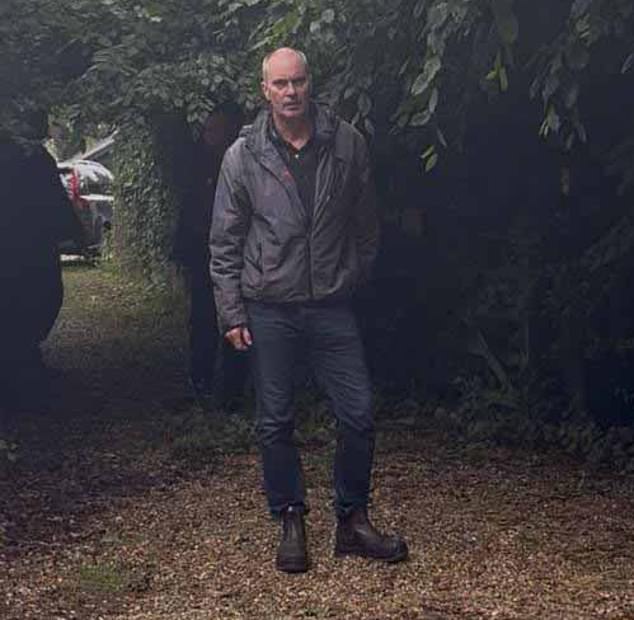
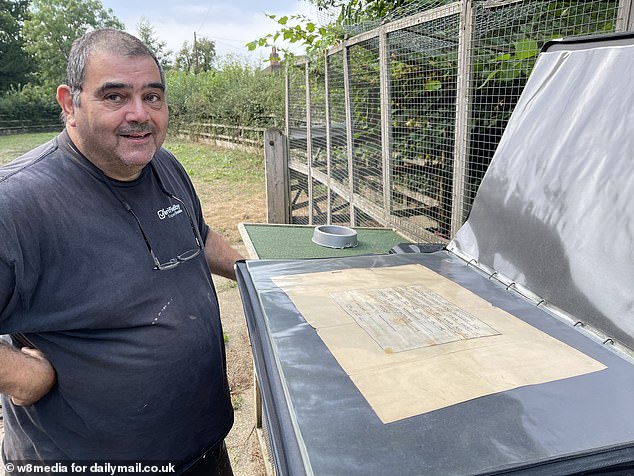
Couple Defies Court Order to Reopen Footpath Through £2M Home Garden

A pair whose fences were removed from their property by local authority employees following a six-year court dispute regarding a riding path might now be subject to legal proceedings due to allegations that they have obstructed the pathway once more.

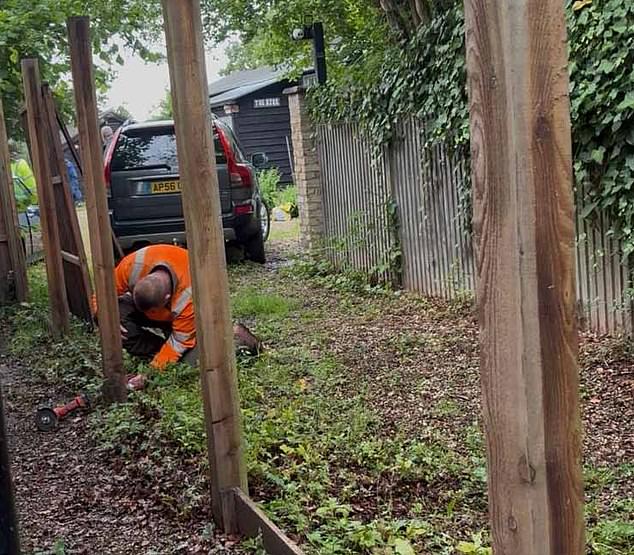
On Monday, workers came to dismantle the three obstacles and thick thorny bushes that had grown along the path which angry locals claimed had been used for over 100 years.

A High Court decision supported the local council and the Planning Inspectorate following their confirmation that the route located next to David and Dawn Moore's home in Little Berkhamsted, Hertfordshire, constitutes a public footpath.

Residents applauded when the gates were removed — though the process was briefly stopped two times to allow an ambulance to respond as Mrs. Moore reportedly became unwell amid the commotion.

At a certain moment, Mr. Moore approached spectators who were recording the event, one of whom said to him: 'I'm applauding because the bridle path is now accessible.'

He responded, "Ah. Open at the cost of my wife fainting, right? Are you satisfied with that?"

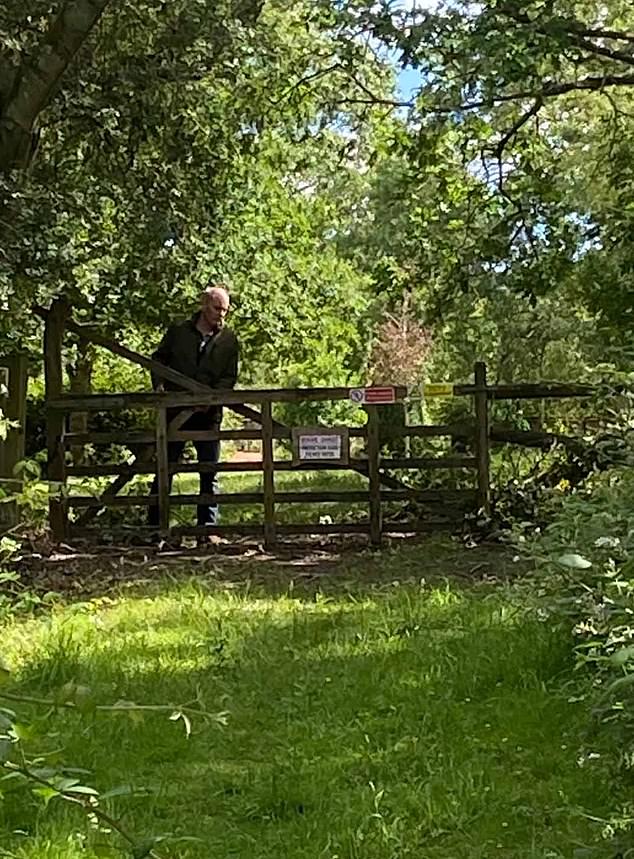
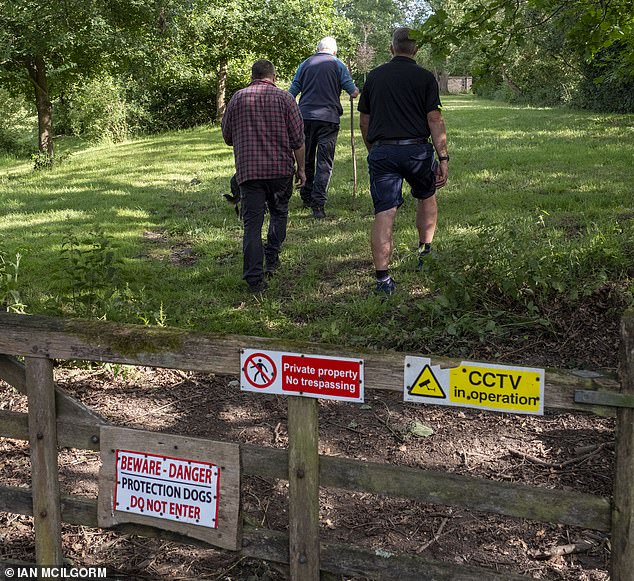
But jubilation has turned to renewed frustration after villagers complained at least one of the gates had been rehung and the Moores – who are believed to have spent up to £400,000 on their failed legal case - were warning anyone attempting to utilize the footpath making an effort to use the bridleway seeking to access the bridleway trying to make use of the walking trail endeavoring to follow the bridleway struggling to navigate the bridleway looking to travel along the bridleway trying to take the bridleway route attempts to use the designated path efforts to proceed via the bridleway that they were ‘trespassing’.

Other allegations suggested that the pair stopped municipal employees from installing a fresh equestrian path sign on publicly owned property located just across from their residence the next day, following an argument with them.

A person said to the Mail: "I had just gone through, and Mr. Moore informed me that I was trespassing. As I kept walking, he shut the gate behind me."

I've informed the committee and provided them with images.

One person stated: "Dawn Moore was the first to confront [the individual attempting to use the bridleway] and inform him that he was taking the incorrect route."

Then David went out and declared that he was entering without permission—so both of them were doing the same.

Other remarks included: "Mr. Moore and his wife were both outside urging the individuals attempting to install the directional sign, who eventually stopped after hearing an emotional tale."

They continuously replace a hazardous and unstable gate, while instructing individuals to leave the property because they are considered trespassers.

They had previously received warnings from the committee, suggesting they may face legal action.

'Strange that she [Mrs Moore] had a miraculous recovery just to challenge those using the footpath.'

The entrance points were taken down following Mr. Moore and his spouse, a medical professional recognized as Dr. Dawn Carnell, disregarding an official directive issued by Hertfordshire County Council.

Violating an enforcement order issued by a local authority constitutes a criminal offense that may result in prosecution before a magistrate’s court, with the possibility of imposing unbounded penalties.

Alternatively, the committee might tear down or eliminate unauthorized elements and seek reimbursement from the property owner.

Court orders may also be issued by the local court or Supreme Court to stop ongoing or serious unauthorized actions.

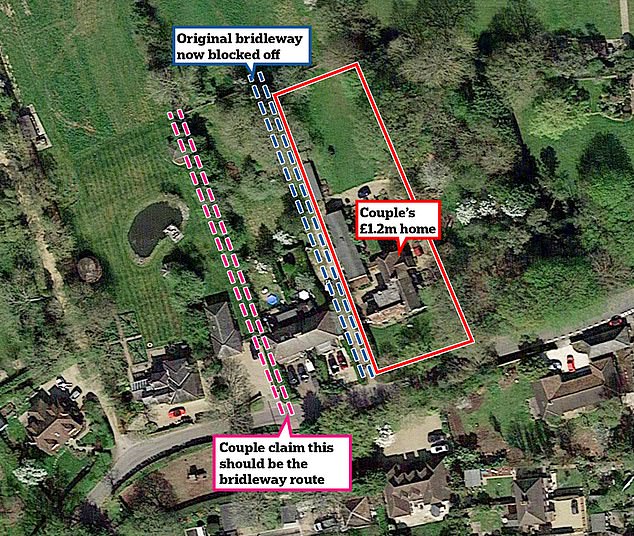
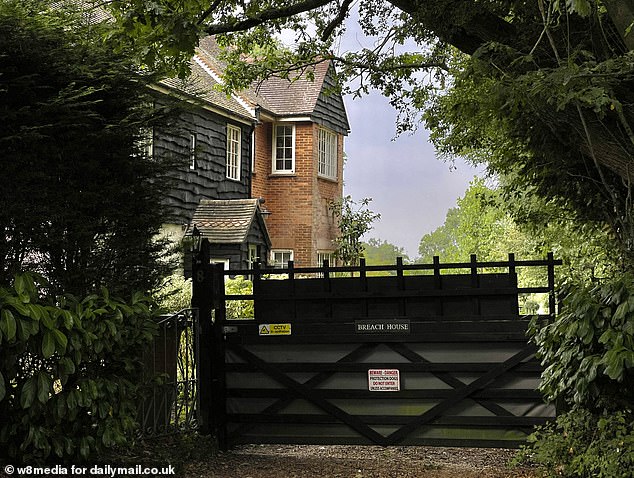
The ongoing conflict centers around the six-bedroom Breach House, some sections of which can be traced to the 17th century. The Moores purchased it for £1.2 million in 2015 and later invested heavily in restoring the neglected home.

In 2019, residents found that the public path crossing the 1.75-acre area had been blocked by signs and secured gates—according to the Moores, the equestrian trail actually passed between two adjacent cottages.

Hertfordshire County Council got involved and issued an order confirming that the bridleway ran across the couple's property, prompting the Moores to appeal their case to the Planning Inspectorate.

Over the course of a four-day hearing, senior final mapping official Gavin Harbour-Cooper stated that the council examined the issue back in 1956 and determined that the path passed through Breach House.

However, when the initial "Definitive Map" was created three years later, it depicted the "incorrect path" between the houses, even though the Definitive Statement provided the accurate details.

Nigel Adams, the creator of the online real estate platform BigBlackHen.com, who had family members that possessed Breach House between 1973 and 1985, mentioned that he was responsible for selling the house to Mr. Moore and his spouse in 2015.

He stated: 'Throughout this process, I regularly talked with the Moores about the current bridleway and its path across the Breach House property.'

William Marques, who resided in the home during the 1960s, also remembered the path running through it.

He explained how he utilized it to reach his grandparents' house since the alternative path, via road, was 'too risky'.

However, Mr. Moore, who operates an oncology company alongside his wife, informed the investigation that the council acknowledged in 2020 that the bridleway signs near his residence were incorrect, leading to their removal.

He stated: "When I bought the house, I wasn't informed about the presence of a bridlepath running through the land."

After the planning inspector rejected the Moores' case, they took their appeal to the High Court, where the judge also supported the locals and highlighted the 'fundamental unlikelihood of the Claimants' stance'.

They were denied permission to appeal to the Court of Appeal last year, but in an interview last month, Mr. Moore mentioned he is considering taking his case to the European Court of Human Rights.

He explained that he would be "arguing under Article 8 of the Human Rights Convention and also Article 1, Schedule 1 of the ECHR," adding: "All of this centers on the choice to alter my specified 2015 purchasing criterion, which is now established in the High Court."

You have the right to what you bought following full investigation.

Speaking about the six-digit amount he and his spouse invested in their failed court case, Mr. Moore mentioned to the Mail early this year: 'The expense isn't really a factor anymore. It's about whether you believe you're correct or not.'

He mentioned that his wife has fully backed him in the current legal dispute, as both of them feel the council is responsible for supplying incorrect paperwork when they purchased their house.

“This isn’t about me embarking on an adventure into the wilds, donning my helmet, and declaring ‘Whatever occurs, occurs,’” he stated.

This reflects two rational individuals examining the situation from 2015 and being certain of their correctness.

The hostile atmosphere created by the conflict within the neighborhood led Mr Moore — whose spouse is employed at University College Hospital in London — to report incidents such as vehicle vandalism, like scratches on his car, along with acts of intimidation.

In the meantime, the residents of the two adjacent bungalows—among them Wayne Morris, head of the local parish council—invested many thousands of pounds in their personal legal expenses.

Mr. Morris has stated that "a significant amount of time and resources have been squandered" on this matter.

A representative from Hertfordshire County Council stated, “We have learned about this issue through nearby residents and are currently evaluating the possibilities at our disposal.”

The Moores were asked for their response.

Read more

Sunday, June 21, 2026

Faith Leaders Intervene to Stop Xenophobic Attacks in George

Anti-immigrant demonstrations have already resulted in fatalities along the Garden Route.

Last month in Mossel Bay, many homes were set ablaze and two individuals lost their lives in an incident involving... violent xenophobic protest .

Protests in the same area have led to hundreds of migrants being affected. repatriate to Malawi and Mozambique.

Near the Garden Route city of George, located 50 kilometers from Mossel Bay, local officials worry about increasing hostility toward immigrants and fear that violent incidents may soon occur.

During Sunday night, hundreds of individuals participated in an event hosted by an organization named Qina Mhlali (strong residents) at the All Bricks community center located in Thembalethu, a neighborhood near George. The venue was filled to capacity, with many others standing outside.

During the days before the gathering, a post was shared online. Mabahambe "Go away!" the sign stated.

As a reply, the Thembalethu Pastor's Fraternal issued an open letter urging for composure and condemning aggression. "Today the Lord places a responsibility upon us: to speak and take action against xenophobia in our neighborhoods," stated the open letter.

On Friday, the chairman of the organisation, Pastor Boyce Saleni, convened a gathering with the event coordinators and Mayor Browen Johnson from George, along with representatives from the business association and the South African National Civic Organisation (SANCO).

The decision was made to invite Home Affairs Minister Leon Schreiber to visit George later this month to speak about the community's issues.

Unemployment is high in the Southern Cape, and residents are uneasy," Saleni said to GroundUp. "They believe they're losing their jobs while foreigners are employed and managing businesses.

"The church has clearly stated that foreigners should be safeguarded. We oppose any violence or loss of life. The legal process needs to proceed as intended," he mentioned.

Individuals who were interviewed by GroundUp stated that certain sectors within the town have been taken over by immigrants, many of whom, according to them, lack legal authorization to work in South Africa.

Two years prior, an apartment complex in downtown George collapsed During the construction phase, 34 individuals lost their lives, with at least 26 being migrants. Out of the 28 survivors, most sustained injuries, some resulting in long-term impairments. Numerous workers lacked proper authorization to be employed in South Africa and were not eligible for UIF benefits or compensation from the funds.

The community gathering held on Sunday afternoon in Thembalethu became intense. Certain individuals arrived carrying sjamboks and knobkieries, ready for confrontational behavior. A foreigner who happened to be nearby was pursued and intimidated.

The event organizers soothed the audience.

"A number of community members wished to take action right after the meeting, yet this wasn’t the intention behind the assembly," noted Bathini Malobola, a coordinator with Qina Mhlali.

"Our agreement is that we will wait until 19 June before taking any action," he said. Protest action might follow, he warned.

"The appropriate authorities have been provided with a chance to resolve our issues. We will follow the law," stated Mandlenkosi Kopana, the vice-chair of Qina Mhlali.

Nomaphuthukezi Mditshwa, a local from Thembalethu who participated in the gathering, stated that her neighbor, who started a small shop, struggled to match the competition from foreign-run stores offering cheaper products.

"we aren't engaging in conflict, yet we're stating that foreigners ought to go back to their home nations. we'll await the minister's statement," she mentioned.

Some people present stated that immigrants were dealing narcotics.

Following the meeting, a group of men, some of whom were intoxicated, separated from the others and moved towards the town area. The GroundUp photographer was advised against pursuing them. One individual held up a stick that had nails driven into it.

A SAPS representative from the Southern Cape, Warrant Officer Christopher Spies, stated that authorities broke up a group that turned unruly on Sunday night. A case of public disorder was initiated, though no one was taken into custody.

"The police respect the right of citizens to protest, but any acts of violence or incitement to violence will not be tolerated," said Spies.

He mentioned that the Public Order Police had arrived and were remaining highly vigilant.

Individuals from abroad who have resided in this region for many years are thinking about going back to their homeland, yet they don't have enough money to make the trip.

"Ever since I came to South Africa, I haven't faced issues with the local community. However, things have changed recently," mentioned a Zimbabwean merchant who preferred anonymity. She noted that in the last couple of months, there has been a decrease in customers from the area.

She mentioned she planned to shut down her store earlier on Sunday, "as I am worried about what could occur."

Jose Mabunda, hailing from Mozambique, has been residing in South Africa since 2015, though he is currently thinking about going back to his homeland. He was among those affected by the structural failure in 2024.

"I'm frightened. If I had the funds, I'd depart right now. I arrived here to work and provide for my family. I'm not here to steal job opportunities from South Africans," he stated.

Mussa Duad, hailing from Malawi, expressed concerns over the uncertain situation affecting his future. "I am married to a South African woman and have a six-year-old daughter. If I decide to go away, who will look after them?" he questioned.

A person from Ghana, who chose to remain anonymous, stated, 'We accept that if we have to go back, we will.' However, 'returning home requires funds that most of us lack.'

The SANCO regional chairman, Xolisani Booi, advised citizens against taking justice into their own hands.

"None of the community members have the authority to review papers or implement immigration regulations," he stated.

He cautioned that certain people might be exploiting public dissatisfaction for political gain.

He mentioned his concern that there are groups present who are attempting to escalate this matter due to their desire for political influence.

The mayor of George, Browen Johnson, remained unavailable for comment prior to the release since he was participating in meetings in Cape Town.

© 2026 GroundUp. All rights reserved. Published by AllAfrica Global Media (Ants).

Tagged: South Africa, Religion, Migration, Southern Africa

Supplied by SyndiGate Media Inc. ( Syndigate.info ).

Wednesday, June 17, 2026

Mystery Platform: China Claims Research at Scarborough Shoal

An announcement follows as Manila submitted an official complaint regarding the "unlawful presence" of a floating facility at the contested reef.

China stated that it conducted a scientific mission at Scarborough Shoal, as tensions with the Philippines escalate over the contested area. South China Sea atoll.

A research expedition that started on May 20 included the deployment of a mobile platform for ecological surveillance and data collection, according to a release from the South China Sea Institute of Oceanology under the Chinese Academy of Sciences issued on Wednesday.

It followed when Manila filed a formal diplomatic protest On Tuesday, regarding what it referred to as the "unlawful occupation" of a floating facility in Scarborough Shoal.

Are you curious about the major issues and developments happening globally? Find your answers here with SCMP Knowledge Our latest platform featuring carefully selected content, including explanations, frequently asked questions, analysis, and visual graphics, presented by our acclaimed team.

The National Task Force for the West Philippine Sea—an intergovernmental group responsible for managing Manila’s naval approach in the South China Sea—reported that air surveillance over the reef has identified a buoyant structure resembling an antenna.

The Chinese Foreign Ministry stated that it was properly using its rights to conduct actions such as "scientific research" at Scarborough Shoal and called on the Philippines to cease its "exaggerated publicity."

The research center stated that its voyage had explored all parts of the reef with the objective of gathering information about the geological development and biological reactions of coral reefs to changing environments.

Located approximately 124 nautical miles (230 kilometers or 143 miles) from the shores of the Philippines, Scarborough Shoal is a triangular coral reef encircling a lagoon. In China, it is referred to as Huangyan Island, while in the Philippines, it is called Panatag Shoal.

The group has emerged as a key point of contention in the ongoing conflict between the two countries above the South China Sea.

Last September, Beijing declared the creation of a natural sanctuary near the reef , sparking discussion about China's attempts to establish long-term structures there.

A Philippine Coast Guard spokesperson named Jay Tarriela informed journalists on Wednesday that their maritime surveillance mission conducted on May 30 was confronted by a Chinese People's Liberation Army aircraft.

He further mentioned that no excavation ships—employed for constructing man-made islands—were present in the region.

"I'm certain we still haven't figured out what they're up to," Tarriela remarked.

However, I prefer to think that the reason for the Chinese research ships being there is because they have a base.

More Articles from SCMP

'Nothing at All': Why Hong Kong Residents Should Steer Clear of Shared Indifference

Top attractions in Wuxi, China's scenic lakefront city known for its beautiful gardens and delicious food

Chinese artificial intelligence technology for law enforcement focuses on physical, mental, and emotional conditions

Hong Kong technology park bid requires robust applicants to provide a HK$100 million deposit

The article was first published on the South China Morning Post (www.scmp.com), a top-tier news outlet covering developments in China and Asia.

© 2026. South China Morning Post Publishers Ltd. All rights reserved.

Monday, June 15, 2026

Lagos APC Candidates Condemn "Mischievous" Link Between Speaker Obasa and Protest

A group of candidates from the just-ended All Progressives Congress (APC) primary elections have criticized what they called a "slanderous and diverting effort" to associate the Speaker of the Lagos State House of Assembly, Rt. Hon. Dr. Mudashiru Obasa, with the recent non-violent demonstrations held during the party's nomination process.

A forceful declaration, authored by notable members of the party and made public through the media on Wednesday, June 10, stated that the protest represented an unorganized display of frustration from candidates and their backers throughout Lagos State.

The declaration was endorsed by, among others, Hon. Seye Oladejo (Mushin), Hon. Kolawole Taiwo (Ajeromi-Ifelodun), Hon. Noheem Adams (Eti-Osa), Hon. Stephen Ogundipe (Oshodi), Hon. Apata Samuel (Somolu), Hon. David Doherty (Amuwo-Odofin), Hon. Ganiyu Egunjobi (Agege), and Hon. Ganiyu Ayuba (Alimosho).

Candidates emphasized that the demonstration stemmed from real concerns and was not supported by any external funding.

The statement asserted that implying thousands of dedicated APC members and advocates needed backing to express their grievances is offensive to their intellect and overlooks their valid issues.

As per the group, the demonstrators highlighted claims of interference, misrepresentation of outcomes, fraud, and neglect of party rules throughout the primary elections. They contended that these worries are not singular or baseless, but rather express the dissatisfaction of committed party members who dedicated their time, money, and political influence to the electoral system.

The signatories blamed unknown people for trying to blame Speaker Obasa in an effort to minimize the concerns and shift focus away from the importance of justice, healing, and solidarity inside the APC.

"Instead of tackling the core problems behind the demonstration, certain people have opted for an easy way out through blame-shifting. These ineffective efforts are evidently aimed at diverting public focus from the importance of justice and group solidarity," they stated.

As they look toward the upcoming general election, candidates called on party officials to address unresolved matters from the primary process. They highlighted that the APC's power comes from its capacity to welcome varied viewpoints, fix internal problems, and become more resilient through discussion and integrity.

"The worries of disappointed candidates and their backers warrant focus, rather than being ignored. Tackling these issues genuinely and promptly can enhance trust in the party's internal democracy and allow us to face the upcoming elections as a cohesive and powerful team," the statement ended.

Supplied by SyndiGate Media Inc. ( Syndigate.info ).

Traditional Rulers of Nsukka Call on Obi and Okonkwo to Reconcile Amid Conflict

CHIDI UGWU

The Enugu North Traditional Rulers Council for Peace, Justice and Social Harmony (ENTRC) has urged calmness, respect, and healing in the current conflict involving ex-Labour Party presidential hopeful, Peter Obi, and actor-turned-politician Kenneth Okonkwo.

A declaration issued by its Chairman, His Royal Majesty Eze-Igwe Williams Ezugwu, Eze Ogbozarra III from the Opi Ancient Kingdom, stated that the group has raised worries about increasing conflicts and open disputes between two well-known Igbo individuals, cautioning against speech that could worsen splits within the community.

Traditional leaders stated they knew about reports of legal actions taken concerning the conflict and emphasized their support for the court system and adherence to the law. They mentioned that, out of consideration for the judicial process, they would avoid discussing the details of the claims and responses made by each side.

The committee stated that differences in opinion are a normal part of a democratic system but cautioned that the growing use of personal insults and provocative speech within Nigeria's political arena endangers community unity and the principles of democracy.

Speaking to Okonkwo, referred to as an esteemed member of Nsukka, the committee encouraged him to maintain dignity and composure in his political activities, highlighting that disputes should be centered around policies, values, and concepts instead of personal attacks.

Traditional leaders asserted that principles such as fairness, reciprocal respect, accountable governance, and harmonious living have historically shaped the Nsukka area and must remain influential in shaping community behavior.

Although recognizing Obi's role in shaping national discussions and progress, the committee encouraged both individuals to seek opportunities for conversation, healing, and shared comprehension.

"True leadership is shown not just through the bravery to stand firm in one's beliefs, but also through the insight to seek harmony during times of conflict," the statement noted.

The committee also called on both sides to stay receptive to legal and respectful methods for reaching a peaceful settlement, while encouraging their followers and the general population to refrain from provocative speech and let the court proceedings take place undisturbed.

It renewed its dedication to peace, justice, reconciliation, and national harmony, emphasizing that the Igbo people have traditionally flourished through vigorous discussion while maintaining unity and mutual respect amid differing viewpoints.

Supplied by SyndiGate Media Inc. ( Syndigate.info ).

Saturday, June 13, 2026

Olukoyede: Governorship Contenders Spend ₦20B–₦30B to Win Elections

Oscar Okhifo

The head of the Economic and Financial Crimes Commission (EFCC), Ola Olukoyede, has expressed worries about the increasing role of funds in Nigeria's election system, stating that certain candidates for governor invest anywhere from ₦20 billion to ₦30 billion to win elections.

On Wednesday, during the first session of the High-Level Guest Speakers' Series hosted by the Centre for Peace and Strategic Studies (CPSS) at the University of Ilorin, Olukoyede stated that this trend has emerged as a significant factor fueling corruption and poses a risk to the nation's democracy.

The head of the EFCC, who gave a speech entitled "Reducing Risks and Engaging Key Stakeholders for Peaceful and Valid 2027 Elections in Nigeria," pointed out that political figures who spend large amounts during elections frequently face demands to recover their costs once they take up positions.

He stated that the high expense involved in running for office leads to the misuse of public money and weakens responsibility, since chosen representatives focus more on recouping their monetary losses than providing effective leadership and public assistance.

Throughout history, campaign expenditures in Nigeria have stayed significant, yet in recent times they have surged to levels experts refer to as "unprecedented."

Opponents claim that conditions have deteriorated partially due to lenient punishments for those who violate election laws, leading many to wonder why no significant political "fall guy" has been established as an example.

Another increasing worry among Nigerians involves the effects of these enormous campaign costs, as numerous people question how chosen representatives might avoid misappropriating government funds following such huge investments to win their positions.

It has been reported that certain candidates resort to selling private assets or securing substantial loans to fund their election efforts, intensifying concerns regarding potential corruption after the elections and the challenges of economic revival.

"The commodification of votes undermines the basis for effective governance as it affects the selection of political leaders. Politicians who secure their positions through financial means tend to prioritize recouping their expenses over acting in the best interests of the people," Olukoyede stated.

The head of the EFCC emphasized the agency's commitment to combat vote-purchasing and various types of monetary incentives that jeopardize the integrity of electoral processes nationwide.

He revealed that the organization had detained multiple individuals associated with vote-purchasing and other election-related violations in past elections, noting that several convictions have already taken place.

As he stated, individuals found guilty of electoral wrongdoing consist of politicians, election workers, and others involved in undermining the fairness of the voting procedure.

He cautioned that not holding those who violate election rules accountable would promote immunity and continue eroding democratic systems, emphasizing that no person should be protected from facing consequences for breaking election regulations.

Olukoyede further stated that the committee intends to use drones and additional technology to enhance monitoring and identify instances of vote-purchasing and monetary incentives in the upcoming 2027 national elections.

He called on political groups, contenders, and their followers to concentrate on campaign strategies centered around issues and steer clear of provocative remarks that could provoke conflict before, during, and following the voting process.

The head of the EFCC also urged the Independent National Electoral Commission (INEC), law enforcement bodies, non-governmental organizations, the press, and other relevant parties to enhance cooperation in facilitating free, open, and reliable elections.

Previously, the Vice-Chancellor of the University of Ilorin, Professor Wahab Egbewole (SAN), characterized electoral fraud as a major obstacle to Nigeria's democratic growth, emphasizing that free and fair elections are essential for national stability, economic advancement, and public confidence in governance.

During his opening speech, Professor G.A. Animasawun, the head of the Centre for Peace and Strategic Studies, stated that the lecture series aims to promote discussion between decision-makers, security specialists, election administrators, and community organizations regarding effective steps to ensure the fairness of the 2027 national polls.

Supplied by SyndiGate Media Inc. ( Syndigate.info ).