Technology and philosophy

Showing posts with label loans. Show all posts

Tuesday, June 23, 2026

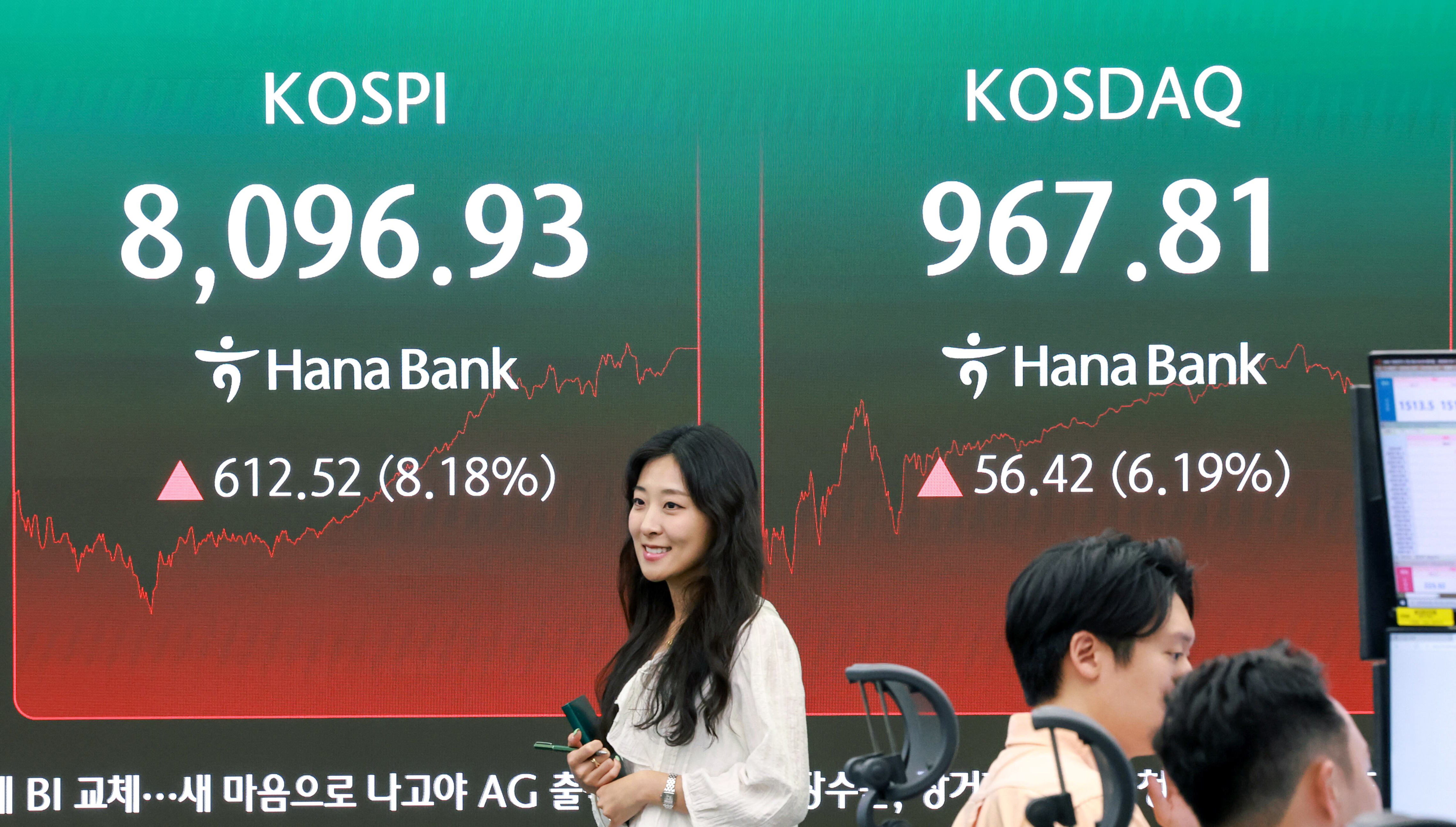
KOSPI Rises as Housing Demand Spikes 9.3 Trillion Won in Household Loans

A rise in interest in stock investments and more home sales occurred simultaneously, resulting in an increase of over 9 trillion South Korean won in household loans during the previous month. Financial regulators have implemented actions such as lowering credit loan caps for those with higher incomes and reviewing banks' adherence to residential lending contracts.

On the 11th, the Financial Services Commission stated in its *‘May Household Loan Trends’* report that total household loans from all financial institutions rose by 9.3 trillion South Korean won during the previous month. This represents about 2.7 times the growth seen in April (3.5 trillion South Korean won) and far surpasses the rise of 5.9 trillion South Korean won observed in May of the prior year.

With a notable surge in the KOSPI lately, credit loans were responsible for the growth in borrowings. Other types of loans, such as credit loans, experienced a dramatic shift—from a decline of 2 trillion South Korean won in April to an increase of 5.3 trillion South Korean won in May. Particularly, loans under bank-sector negative accounts grew substantially, moving from a drop of 600 billion South Korean won in April to a gain of 2.6 trillion South Korean won in May. Increased consumer spending during Family Month also played a role.

Residential mortgage loans rose by 4 trillion South Korean won, continuing at a high level after an increase of 5.5 trillion South Korean won in the prior month. Nevertheless, due to higher apartment sales in the metropolitan area and broader implementation of approved bulk loan programs, the growth rate of residential mortgage loans saw a slight decline from the previous month. Shin Jin-chang, Director of the Office at the Financial Supervisory Service, said, "It is possible that residential mortgage loans could grow once more as property listings get absorbed following the end of the deferral period for the supplementary capital gain tax on multi-homeowners."

Authorities have introduced an emergency management framework, which involves holding weekly gatherings with financial organizations that haven't met goals related to managing consumer debt. Significantly, the banking industry intends to cut new loan caps for individuals with higher incomes and promote early repayment of credits by waiving charges associated with repaying loans before their scheduled term. The Financial Regulatory Agency will carry out ongoing audits to confirm that banks follow previous agreements they've reached with borrowers when issuing loans, such as promises to sell existing homes, restrictions on buying more properties, and relocation requirements.

Saturday, June 20, 2026

Bank Household Loans Surge 6.9 Trillion Won Amid Stock and Housing Boom

The bank sector's household loan volume rose by 6.9 trillion South Korean won last month, reflecting an over three-fold increase in the monthly growth rate. This spike was fueled by growing interest in stock investments after the KOSPI climbed and improved activity in real estate deals in the metropolitan area, resulting in higher demand for various types of individual loans such as credit loans and negative balance accounts along with mortgages.

As per the Bank of Korea's publication called *‘May Financial Market Trends,’* issued on the 11th, bank-based household loans rose by 6.9 trillion South Korean won during the previous month. This rise surpassed threefold the increase seen in April (2.1 trillion South Korean won) and also outperformed the figure for the corresponding period last year (5.2 trillion South Korean won). As a result, the total amount of household loans within the banking system climbed to 1,181.8 trillion South Korean won.

The expansion was driven by various types of loans such as personal credit loans, negative balance accounts, and equity-secured loans. These loans shifted from a decline of 600 billion South Korean won in April to a rise of 3.7 trillion South Korean won in May. According to the Bank of Korea, there was a substantial surge in loan requests due to major individual stock investments occurring alongside spending demands during the holiday season.

Certainly, the KOSPI climbed to 8,476 by late May, fueled by a booming semiconductor industry and hopes for better company profits, before reaching an all-time peak of 8,801 on June 2. Nevertheless, it subsequently declined due to growing concerns about potential interest rate increases from the U.S. Federal Reserve. Equity-focused mutual funds saw their balances rise by 58.8 trillion South Korean won, supported by higher valuations resulting from increasing share prices along with fresh investments amounting to 7.6 trillion South Korean won. Total assets managed by investment firms also expanded by 86.4 trillion South Korean won, reflecting a significant influx of capital into the equity markets.

Mortgage lending rose by 3.2 trillion South Korean won, marking an expansion compared to the prior month's rise of 2.7 trillion South Korean won. Although jeonse loans remained downward, this trend was due to higher property dealings focused on medium-to-low cost residences within the metropolitan area as well as greater interest in temporary payments for ongoing pre-owned new construction projects. Apartment transaction volumes in Seoul hit 8,500 units during April, representing a notable jump from the preceding month’s total of 5,500 units.

Corporate lending also kept increasing. In May, bank corporate loans rose by 10.6 trillion South Korean won, staying at a level comparable to the prior month's 10.7 trillion South Korean won. SME loans climbed by 5.4 trillion South Korean won as part of an initiative aimed at broadening productive financing, whereas loans for major corporations went up by 5.2 trillion South Korean won because of demands for working capital to settle corporate bonds.

On the contrary, corporate bond issuing decreased because of the pressure from increasing interest rates. As businesses turned to other financing options like bank loans, corporate bonds experienced a net withdrawal of 1.1 trillion South Korean won, with commercial paper (CP) and short-term bonds also moving toward net withdrawals.

Tuesday, June 16, 2026

Mortgage Rates Near 8%, Credit Loans Hit 7%

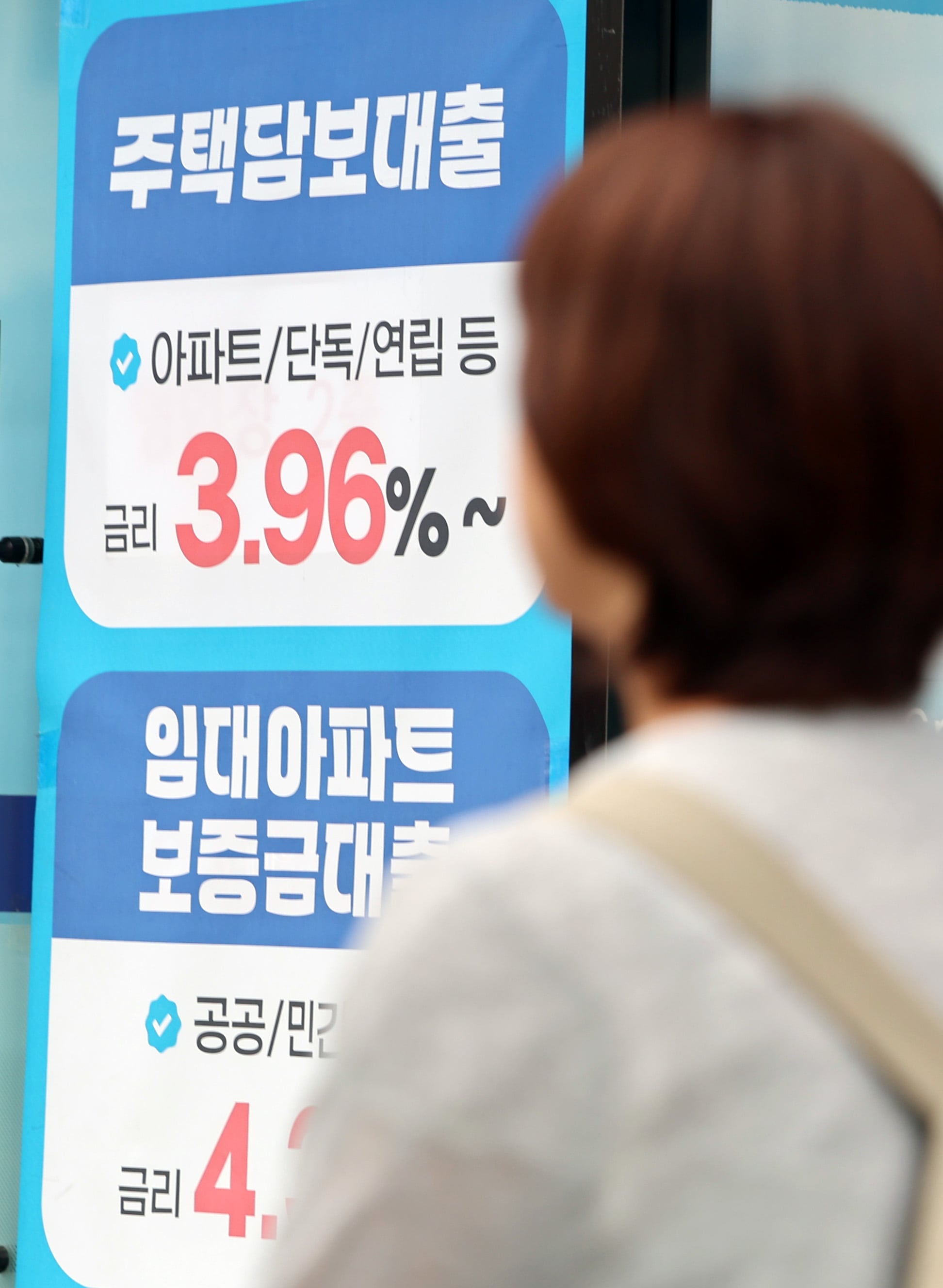
With rising bond market interest rates, bank lending rates are also climbing. As reported by the banking industry on the 11th, the fixed-rate (5-year) mortgage loans from the five largest banks—KB Kookmin, Shinhan, Hana, Woori, and NH Nonghyup—are now ranging between 4.51% and 7.5% annually as of the day before.

Only at the close of last month, the maximum interest rate stood at 7.1% per annum, yet it increased by 0.4 percentage points within just two weeks. The fixed-rate home loan rate has gone up by 1.2 percentage points since the start of this year. Following the point where the cap surpassed 7% annually towards the end of March, it is currently nearing the 8% bracket.

The yield on 5-year financial bonds, used as the standard for fixed-rate home mortgages, increased by 0.187 percentage points to an annual rate of 4.394% from the previous month’s close.

◇Banks Reducing Preferential Rates

With fixed-rate mortgage interest rates rising sharply, there has been an increase in demand for adjustable-rate mortgages, which experience more modest rate hikes. To address this trend, financial institutions are increasing their minimum lending rate requirements.

Lately, KB Kookmin Bank has lowered the favorable interest rate for its 'KB Star Apartment Mortgage Loan' (which uses a new balance COFIX-linked six-month floating rate) by 0.2 percentage points. The lending rates are calculated by combining different spreads with the benchmark rate and then deducting the favorable rate. Reducing the favorable rate leads to a higher overall loan rate.

This month, NH Nonghyup Bank increased both the 6-month floating interest rate and the 5-year fixed rate by 0.2 percentage points respectively.

If someone takes out a loan of 500 billion won with an annual interest rate of 6%, repayable over 30 years through fixed monthly payments, they would have to pay roughly 3 million won each month. But if the interest rate goes up to 8% yearly, the monthly payment jumps to approximately 3.6 million won, leading to an extra cost of about 600,000 won every month.

◇ Increasing Credit Card Balances, Higher Interest Rates

With an increase in money entering the stock market, outstanding credit loan amounts, such as those from overdrawn accounts, are growing, along with the interest rates for these loans.

The one-year credit loan interest rates offered by the five largest banks ranged between 4.35% and 6.15%, according to data from the prior day. This represents a rise of 0.29 percentage points at the higher end and 0.23 percentage points at the lower end compared to the end of the previous month, when the range was 4.36% to 5.89%.

Taking a credit loan of 100 million won, a rise in the annual interest rate from 6% to 7% increases the yearly interest cost from 6 million won to 7 million won, resulting in an additional payment of about 80,000 won per month.

This month, the overdraft account balances at the five leading banks surpassed 42 trillion won, reaching the highest point in three years and seven months since late November 2022.

Banks have raised their bond offerings this year, exceeding 100 trillion won.

A representative from the financial industry stated, "With banks boosting their bond offerings to stop deposits from moving into the stock market, financing expenses have gone up, which is now evident in lending interest rates. The pressure on 'debt-to-invest' and 'yeongkkul (soul-extended loan)' categories may intensify."