Technology and philosophy

Showing posts with label news. Show all posts

Thursday, November 26, 2026

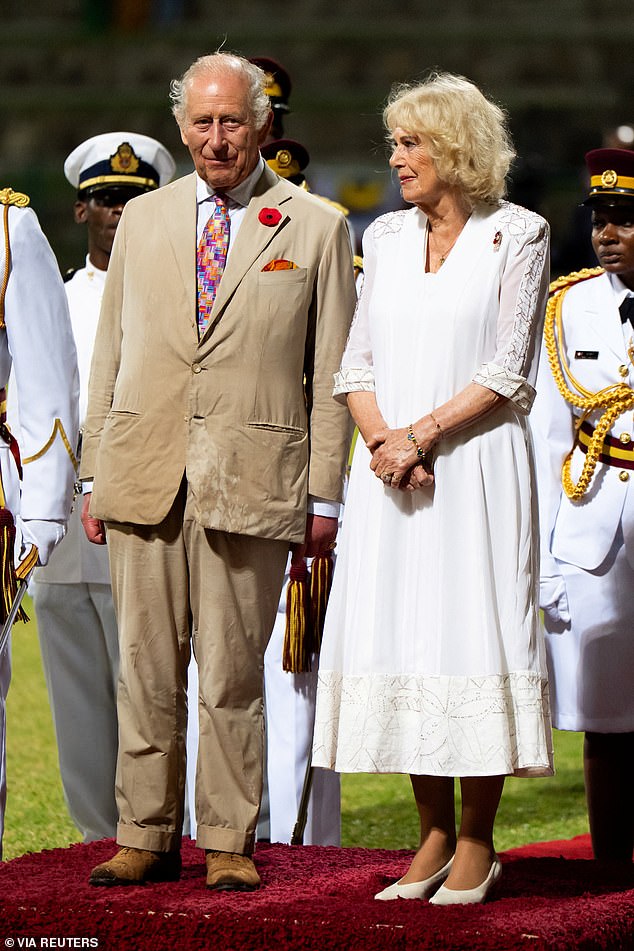
Revealed: Charles' viral 'umbrella-gate' blunder was caused by an aide leaving his brolly in the car

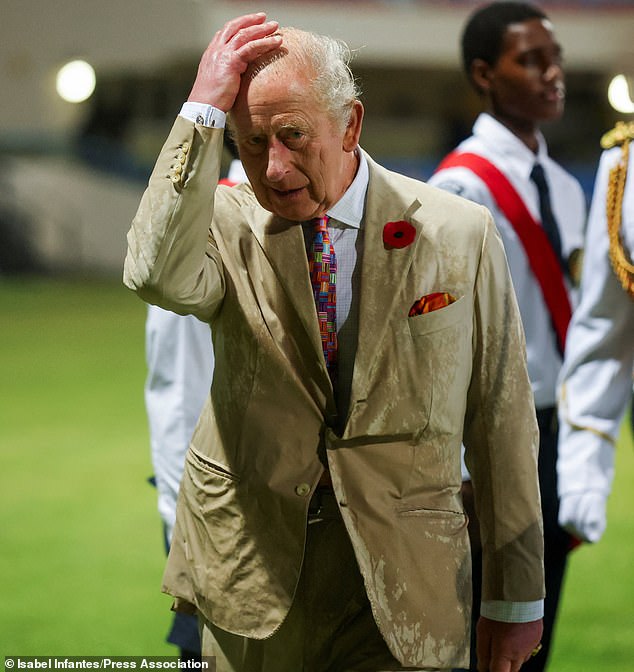
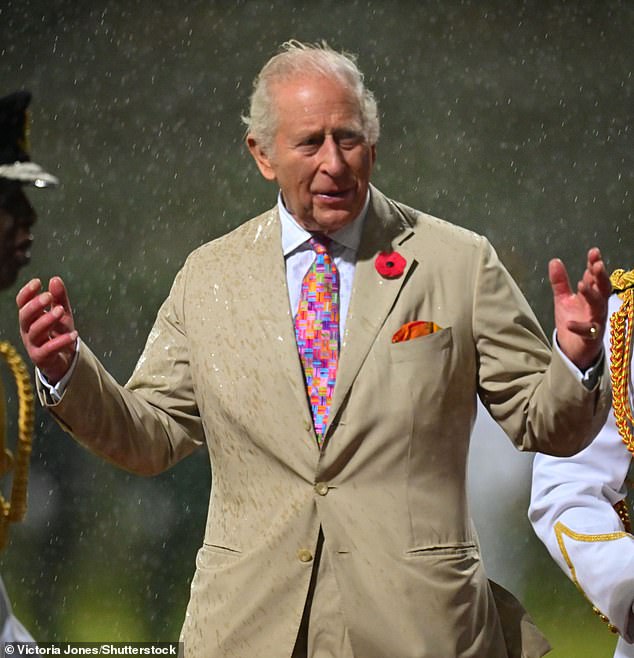
When King Charles found himself at the mercy of the heavens during his Caribbean tour last Sunday, the apparent blunder by aides sparked an international social media frenzy.

But 'umbrella-gate' – as it has been dubbed – was triggered because of a very relatable oversight: the monarch had left his brolly in the back seat of his car, The Mail on Sunday can reveal.

Following a rigorous post-mortem into the embarrassing incident, a royal insider has claimed the King's umbrella was still inside the vehicle when it was parked at the back of the Sir Vivian Richards Stadium in Antigua last Sunday.

Charles had, by that point, already been dropped off for the celebrations to mark the Caribbean nation's 45th anniversary of independence.

The incident saw the soaked King wiping his forehead during the downpour. An equerry finally handed him a small emergency brolly.

The mishap has prompted royal aides to create a new brolly-focused 'protocol' to ensure the King is never caught out by inclement weather on the public stage again. From now on, several umbrellas will be carried by staff during visits.

A source at the event told the MoS: 'It was left in the car which then drove to the back of the stadium. Several umbrellas were carried by staff after that for the remainder of the visit.'

The insider added it 'probably came from one of the guests in the official tent'.

The King has treated the blunder with good humour, and has been encouraged by staff - who knew the grumpy clip would go viral - to turn it into a joke.

The Royal Family's official Instagram account subsequently shared footage of Charles joking to Antigua's Prime Minister Gaston Browne, telling him: 'I think I'm about to grow watercress on my suit.'

A source at the event said the person responsible had been 'spoken to' about the umbrella incident.

The source said: 'The driver did what he was supposed to do, so he was not told off. The Personal Protection Officers were told off.'

Read more

Wednesday, November 25, 2026

Nairobi: Police kill suspected robber who allegedly attempted to stab officer along Juja Road

  • Officers from Pangani Police Station intercepted two armed men robbing a woman along Juja Road on Saturday evening
  • The two suspects fled towards Kosovo Slums after police moved in, prompting a foot chase by the officers on patrol
  • During the chase, one suspect turned on an officer with a knife, triggering a confrontation that ended fatally

Nancy Odindo is a Current Affairs Editor at ANTS.co.ke, covering general news. Odindo has over six years of journalism experience and joined ANTS.co.ke in 2023.

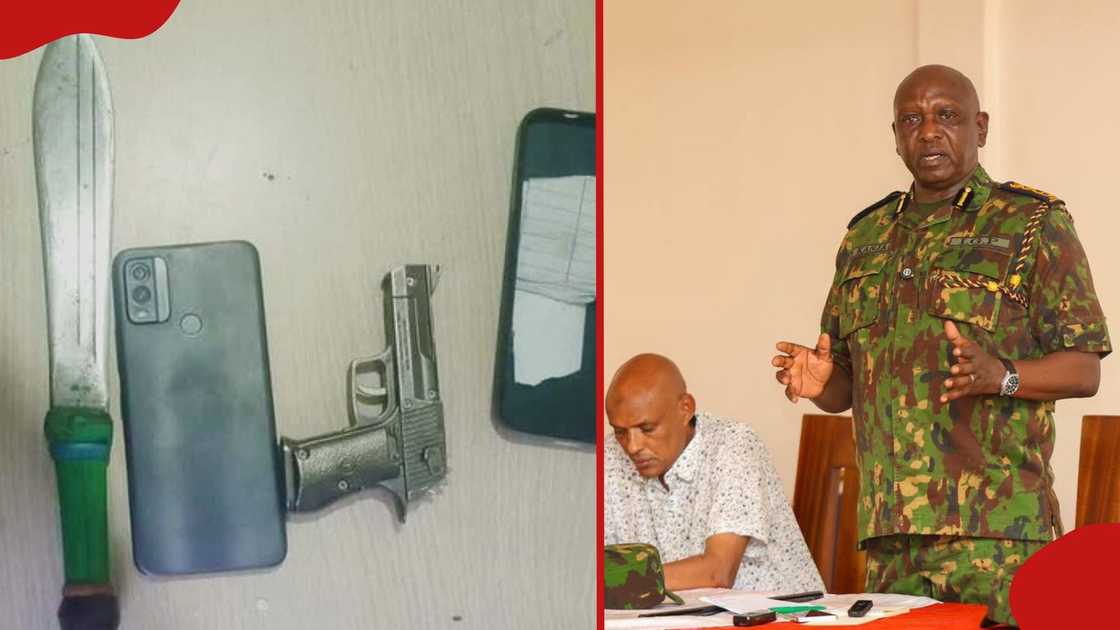
Nairobi police shot and killed a suspected robber along Juja Road on Saturday evening, November 7, after the man drew a knife and attempted to stab an officer during an arrest attempt.

Officers from Pangani Police Station, who were conducting a patrol in the area, spotted two men armed with knives accosting a woman and demanding her belongings. The officers intervened, disrupting the robbery and forcing both suspects to flee in the direction of Kosovo Slums.

Suspect killed after turning on officer

The officers pursued the two men on foot and caught up with them shortly after. As police moved to make arrests, one of the suspects produced a knife and lunged at an officer. Faced with an immediate threat to his life, the officer fired his weapon, fatally wounding the suspect.

"As they moved to apprehend them, one of the men drew a knife and turned on an officer in an attempt to stab him. Faced with an imminent threat to his life, the officer discharged his firearm, fatally injuring the suspect," the National Police Service (NPS) said.

A search conducted at the scene led to the recovery of a mini pistol, a knife, and a mobile phone that had been taken from the woman.

NPS warns of heightened crime risk

The service, which shared the incident on its official account, said it would maintain targeted operations and patrols to prevent and disrupt criminal activity.

The service also cautioned the public to stay alert, noting that robbery and other opportunistic offenses typically increase as the year draws to a close.

"Members of the public are encouraged to remain vigilant, especially as the year draws to a close, when crime patterns have consistently shown robbery, stealing, and other opportunistic offenses to be heightened," NPS said.

The NPS urged members of the public to report suspicious activity to the nearest police station or through the emergency toll-free lines 911 and 999. Reports can also be submitted via the #FichuaKwaDCI hotline on 0800 722 203 or through WhatsApp on 0709 570 000.

Nocchi, of popular Japanese techno-pop group Perfume, gets married

TOKYO - Nocchi of Japanese all-female techno-pop group Perfume has married actor Kento Shibuya, according to an announcement Sunday on the official website of her talent agency.

Nocchi, whose real name is Ayano Omoto, 38, said in a press release, "I will continue to take on new challenges and grow so that I can keep creating enjoyable moments with all of you."

Perfume comprises A-chan, Kashiyuka and Nocchi. Formed in Hiroshima in 1999, the group has been on hiatus since the beginning of this year.

Appellate court reverses drunk driving acquittal over inconsistencies

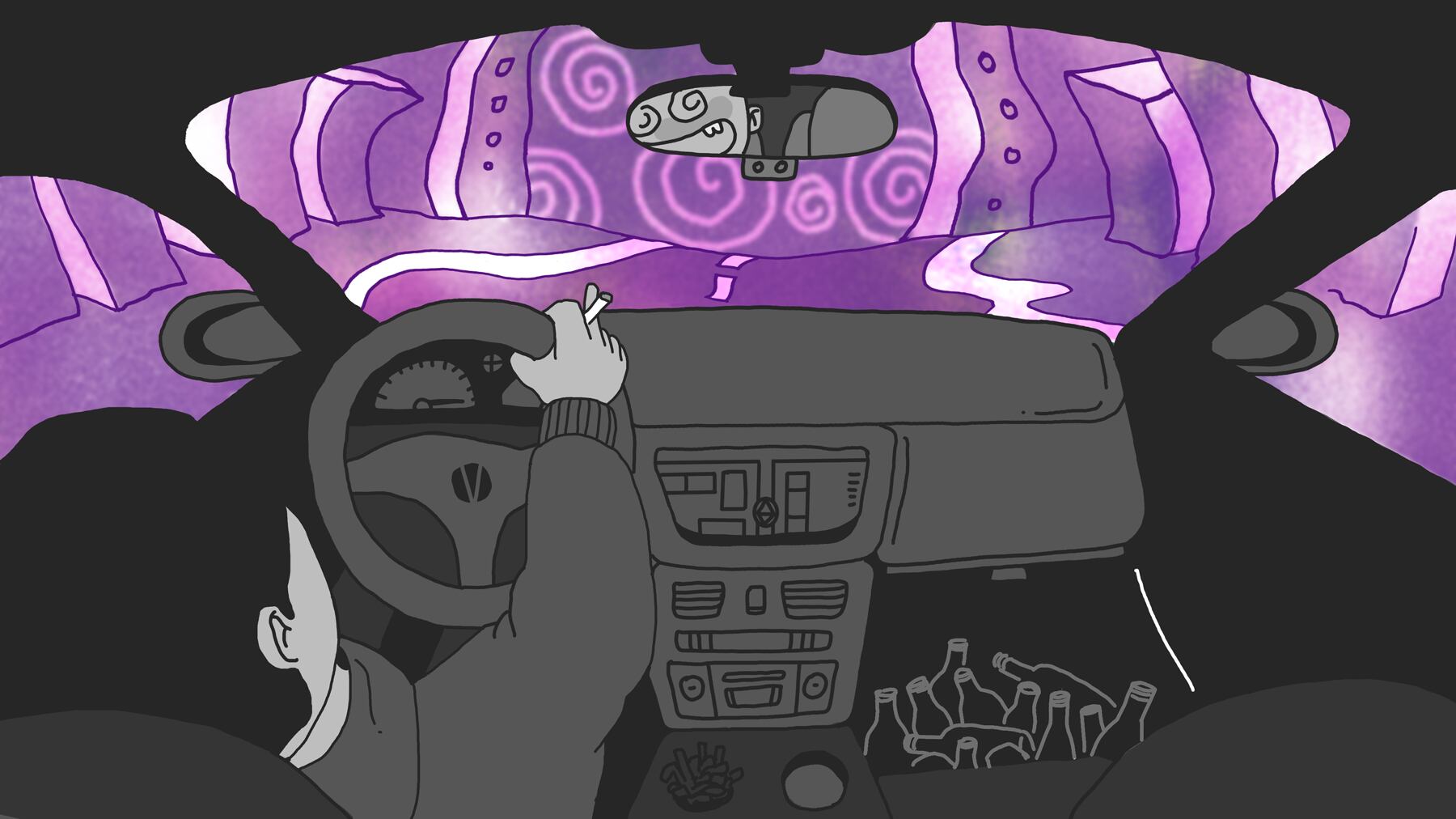
A man in his 40s who attempted to avoid punishment by claiming, “I drank more beer after coming home” following a drunk-driving arrest was found guilty in an appellate trial. While the lower court acquitted him due to the difficulty in ruling out the possibility of additional drinking, the appellate court overturned the verdict, citing his inconsistent statements and conflicting accounts from the couple.

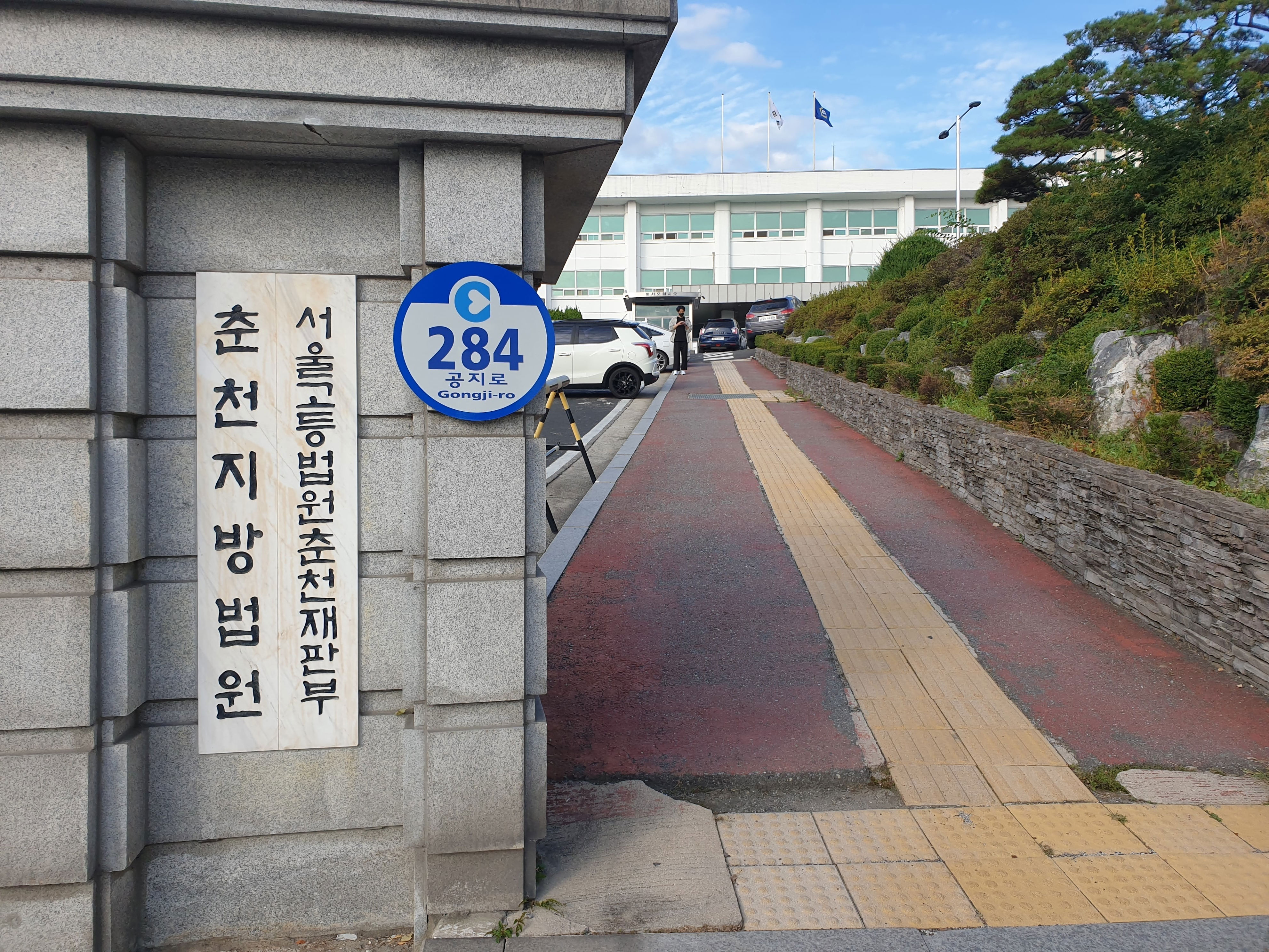
The Chuncheon District Court Criminal Division 1-1 (Judge Lee Geun-young) announced on the 8th that it had overturned the lower court’s not-guilty verdict for A (44), charged under the Road Traffic Act for drunk driving, and sentenced him to six months in prison, suspended for two years.

Mr. A was referred to trial for allegedly driving approximately 4.5 km from a road in Wonju, Gangwon Province, to his apartment parking lot in a drunk state in December 2024.

At the time, a driver following Mr. A’s vehicle reported to 112 that the car was swerving and crossing lanes. When police arrived at his home, Mr. A initially denied driving but later admitted to it, claiming he had consumed an additional 500ml can of beer after returning home. Empty beer cans and cups were found on the dining table when police inspected his residence.

The lower court ruled that it was difficult to exclude the possibility that Mr. A had drunk more beer after returning home. It also stated that the blood alcohol concentration at the time of driving could not be conclusively determined to exceed the legal threshold of 0.03%, acquitting him. The blood alcohol level measured by police was 0.058%.

However, the appellate court’s judgment differed. The court noted that Mr. A had repeatedly changed his statements, initially denying and later admitting to drunk driving. It also viewed the conflicting accounts between the couple regarding the circumstances of post-driving beer consumption as suspicious.

Mr. A’s wife testified that she poured beer into a cup without her husband’s request, while Mr. A claimed he had asked her to bring the beer and drank it directly from the can.

The court also focused on the fact that Mr. A sent text messages to his wife while moving to his home and continued composing messages without opening the door upon arrival. Though the couple claimed the messages were meant to reassure each other, the court considered the possibility that they were orchestrating a cover-up to make it appear as though he had drunk beer after returning home.

The appellate court stated, “The defendant’s excuses and actions to evade punishment after being caught for drunk driving exceeded the scope of legitimate defense and were intended to mislead investigative authorities and the court, which is highly reprehensible.” It added, “The fact that he was previously fined for drunk driving in 2009 was also considered in sentencing.”

Monday, November 23, 2026

Repeat Drunk Driver Fined 13 Million Won for Asleep at Wheel

A court sentenced a man in his 30s to a fine after he was found asleep at the wheel in a severely intoxicated state that warranted license revocation, despite having a prior record for drunk driving.

Changwon District Court Criminal Division 3 Presiding Judge Park Ki-ju announced on the 8th that A, charged with violating the Road Traffic Act (drunk driving), was fined 13 million Korean won.

A was referred to trial for allegedly driving approximately 4 km while intoxicated around 2:11 a.m. on June 5 in Uichang-gu, Changwon, Gyeongnam. A fell asleep inside the vehicle while waiting at a traffic light and was caught by police who responded to the scene.

At the time, A’s blood alcohol concentration was 0.163%, more than double the license revocation threshold (0.08%), according to the investigation.

It was revealed that A had previously received a summary order of 1 million Korean won in fines from the Changwon District Court Masan Branch in September 2016 for drunk driving. The court initially issued a summary order of 13 million Korean won for this latest offense, but A appealed, requesting a formal trial.

The court stated, “The defendant obstructed normal traffic flow by falling asleep on the road and posed a significant risk of causing a traffic accident. Considering the extremely high blood alcohol level and the prior drunk driving conviction, the fine amount specified in the original summary order is deemed appropriate,” explaining the sentencing rationale.

Army sets out plans for 10,000 new troops amid warnings UK must be ready for war within 1,000 days

Plans for a dramatic increase in the size of the British Army are being drawn up amid warnings that the UK must be ready for war in 1,000 days.

The Mail on Sunday has been told that military chiefs want to recruit 10,000 more soldiers over three years, at a total cost of £800 million.

Sources claimed last night the proposals – also including new equipment such as weapons and body armour – would be put to the Government for formal approval 'in the New Year'.

The British Army now stands at around 75,000 soldiers – its smallest since the Napoleonic Wars in the early 1800s – but of these about 8,000 are said to be currently unable to fight on medical grounds.

Plans to expand the numbers came to light after Defence Secretary Wes Streeting warned that Russia 's growing threats to Nato allies meant the UK had to be ready to fight 'in a little over 1,000 days'.

Both Mr Streeting and Chancellor John Healey are under mounting pressure to say how they will increase defence spending to the promised 3 per cent of GDP by 2030, after last month's Budget failed to do so.

A senior officer working on the plan said: 'Our job is to advise about the threats, then propose a solution, but we can all see what is going on in the world.

'The minimum we will need is another 10,000 soldiers.'

However, it recently emerged that the Army was already rejecting 200 applicants a day, many on medical grounds.

The MoD last night declined to comment.

But sources pointed to the Strategic Defence Review which last year stated that ‘there remains a strong case for small increase in Regular [Army] numbers when funding allows.’

However, Tim Ripley, a senior analyst at the Defence Eye website, said last night: ‘Generating another 10,000 soldiers will be a challenge and I suspect they will need to recruit 15,000 to get the 10,000 they need to pass training.’

Tory MP and Shadow Defence Minister Mark Francois said that any ‘sensible plans’ to strengthen the Army would be welcome.

But he raised concerns that Labour was actively discouraging Army recruits by changing the laws governing veterans’ past service in Northern Ireland and making them more vulnerable to prosecution.

He said: ‘Why serve a Government that wants to thank you by throwing you to the wolves after you’ve left?’

Read more

LASU VC, Badejo, congratulates predecessor, Olatunji-Bello, on appointment as pro-chancellor of Redeemer’s University

The Vice-Chancellor of Lagos State University (LASU), Professor Ayodeji Olawunmi Badejo has congratulated her predecessor, Distinguished Professor Ibiyemi Ibilola Olatunji-Bello, on her appointment as the Pro-Chancellor and Chairman, Governing Council of Redeemer’s University, Ede, Osun State, Western Nigeria.

The appointment of Olatunji-Bello was conveyed in a letter dated 1 November and signed by the General Overseer of the Redeemed Christian Church of God (RCCG), Pastor Enoch Adejare Adeboye.

In the letter, Adeboye described the appointment as “a product of the trust which is reposed in you”, even as he expressed confidence in her ability to justify the confidence placed in her by contributing to the University’s pursuit of “the lofty vision set for it”.

The appointment, which takes effect from 1 November , is for an initial tenure of three (3) years.

Olatunji-Bello, a professor of Physiology, served as the 9th uubstantive Vice-Chancellor of LASU from September to September .

Her new appointment places her at the helm of the governing council of the university owned by the RCCG, where she is expected to bring to bear her wealth of experience in academic leadership, institutional governance and administration on the growth and development of the institution.

Prof Badejo on behalf of the management, staff, students and the entire Lagos State University community, celebrates Distinguished Prof Olatunji-Bello on this well-deserved appointment and wishes her a successful and impactful tenure.

Badejo expressed confidence that Olatunji-Bello’s wealth of experience, proven leadership capacity and commitment to excellence would make significant contributions to the continued growth and development of Redeemer’s University.

Provided by SyndiGate Media Inc. ( Syndigate.info ).

2027: No going back on Nigeria’s path to economic prosperity, declares Tinubu

PORT HARCOURT – President Bola Tinubu has declared that Nigeria is on an irreversible path to economic prosperity, insisting that his administration has reversed years of economic decay and ushered in a new era of growth.

Tinubu, who stated this at the Presidential Campaign Rally in Port Harcourt, Rivers State, on Saturday, said the country had entered a golden age of prosperity, assuring Nigerians that the gains recorded under his administration would be sustained.

“We are on course for prosperity. I assure you, we have started the golden age. Prosperity is here.

“This progress has no reverse gear,” the President declared.

He challenged Nigerian youths to take an active part in the 2027 general election, stressing that the outcome would determine their future and economic prospects.

“To the youths of Nigeria, this election is about you; it’s not for me. Your future depends on this election.

“It’s left for you to use the weapons you have, and that weapon is the PVC. If you have not collected yours, please go ahead and collect.

“The weapon you have against poverty is to elect aggressive development of our economy. That’s what I’m pursuing,” Tinubu said.

The President, in defence of his administration’s economic policies, recalled that 27 out of the 36 states of the federation were unable to pay workers’ salaries when he assumed office in 2023.

He said the situation had since improved as a result of policies introduced by his administration, adding that the reversal of the economic decline had restored hope to families dependent on monthly salaries.

“When I took over, 27 out of 36 states were unable to pay salaries. You know what that means. Families depending on salaries. For every salary earner, there’s a dependent, somebody is sharing the food at home.

“But we have reversed the decay. We are on course for prosperity,” he stated.

Tinubu also took a swipe at the presidential candidate of the African Democratic Congress (ADC), Alhaji Atiku Abubakar, questioning his moral integrity to lead the country.

He accused the former Vice President of being among those responsible for Nigeria’s economic challenges and alleged that public funds were diverted to establish his private university.

The President also expressed appreciation to Rivers people for supporting his presidential ambition during the 2023 election, saying he had returned to seek their support for a second term.

“I came to say thank you, thank you on behalf of the APC. Your response has been great. Thank you for the last election, 2022/2023.

“I looked very hopeless then, but you trooped out to support me and gave me your mandate. The mandate I use to govern till today and make positive contributions. I must thank you.

“Today again, I return to say thank you and seek your support for a second term,” he said.

He further commended the people of Rivers State for their contributions to his administration, particularly the FCT Minister, Nyesom Wike, whom he described as a development partner of his government.

Tinubu said the education, welfare and skills development of Nigerian youths remained important priorities of his administration.

The President also commended Rivers State Governor, Sir Siminalayi Fubara, for what he described as maturity, understanding and respect for the wisdom of elders during the political crisis that rocked the state.

He recalled the Federal Government’s intervention in the crisis, saying the governor’s decision to respect the intervention and maintain peace was commendable.

“When we intervened, you respected our position. You maintained peace. You will not regret what you have done as long as all of us are alive,” Tinubu assured Fubara.

Responding, Fubara welcomed the President and expressed appreciation for his intervention in the political crisis, noting that it had contributed significantly to the peace currently enjoyed in Rivers State.

The governor also thanked Tinubu for his administration’s infrastructure projects in the state and the appointments given to Rivers indigenes.

He assured the President of the state’s support in the 2027 presidential election, promising massive mobilisation to secure his re-election.

“When the state was at the crossroads, as a father, you reached out and intervened directly, making sacrifices so that our administration would continue to deliver governance to the state.

“Thank you for standing with us during the trying period.

“As you stood with us, we will stand with you. As you supported us, Rivers State will support you as you seek the renewal of your mandate.

“We will demonstrate our appreciation with our votes. We will campaign, mobilise and deliver a decisive victory with our votes.

“We will deliver not less than three million votes to the President,” Fubara declared.

Also speaking, the Minister of the Federal Capital Territory, Nyesom Wike, who is the Presidential Campaign Director in Rivers and Abuja, welcomed Tinubu on behalf of the people of the state and political parties under the Rainbow Coalition.

Wike declared that Rivers State had already resolved to support Tinubu’s re-election bid in 2027.

“Rivers State has already agreed. We have concluded that come 2027, we will vote for you,” he said.

Earlier, the Director-General of the Presidential Campaign Council, Senator Abdulaziz Yari, charged APC leaders in Rivers State to work towards delivering not less than 2.8 million votes for Tinubu in the 2027 election.

Provided by SyndiGate Media Inc. ( Syndigate.info ).

Sunday, November 22, 2026

LASU VC receives NAEAP delegation on international academic engagements

The Vice-Chancellor of Lagos State University (LASU), Professor Ayodeji Olawunmi Badejo, on Friday, 6 November 2026, received a delegation led by the Director of the university’s Centre for General Nigerian Studies (CGNS), Professor Mubashiru Olayiwola Babatunde Mohammed, (MOB) who briefed the VC on the outcomes of his international engagements in Malaysia and Indonesia, alongside preparations for the 4th CGNS Education Summit.

The meeting took place at the Vice-Chancellor’s Office, Senate Building, Main Campus, Ojo.

Receiving the delegation, Professor Badejo expressed delight at the engagements and commended the Centre for its efforts to strengthen LASU’s international academic relationships.

She particularly acknowledged Professor Mohammed’s role in facilitating collaborative opportunities with foreign universities, describing such partnerships as important to institutional development, knowledge exchange and global competitiveness.

During the briefing, Mohammed, who also serves as the Coordinator/President of the Nigerian Association for Educational Administration and Planning (NAEAP) – LASU branch, informed the Vice-Chancellor of engagements with Sultan Idris University of Education, Malaysia, and Universitas Brawijaya, Indonesia.

He highlighted proposed Memoranda of Understanding (MoUs) with both institutions, which would provide opportunities for joint research, faculty exchange programmes and other forms of academic collaboration.

Prof. Mohammed also briefed the Vice-Chancellor on preparations for the 4th CGNS Education Summit scheduled to hold from 1 to 3 December 2026 at the Aderemi Makanjuola Lecture Theatre, Campus Ojo Main Campus.

The theme of the summit is: Harnessing Nigeria’s Blue Economy Potential Through Higher Education , and it is expected to bring together academics, government officials and industry experts to brainstorm on the role of higher education in Harnessing Nigeria’s blue economy potential.

Prof. Badejo commended the level of preparation, noting that she had reviewed the summit’s publicity materials and programme.

She expressed her readiness to support the University’s participation and accommodate the event in her official schedule.

The briefing also addressed the growing demand for the GNS Compendium, the Centre’s prescribed learning resource for General Nigerian Studies.

The Centre sought Management’s approval for the procurement of an additional 2,000 copies of the 615-page publication, representing its 24th tranche, to meet the needs of students across the University’s academic programmes and campuses.

The additional copies are expected to enhance students’ access to the learning material and support the Centre’s academic activities, including student training and Direct Entry processing.

Members of the delegation also presented gifts brought back from their trip to the Vice-Chancellor.

.

A clock was presented to Professor Badejo from Sultan Idris University of Education, Malaysia.

Earlier, the Vice-Chancellor received a separate courtesy visit from the Executive Director of China Civil Engineering Construction Corporation (CCECC) Nigeria Limited, Eric Eshen.

The visit formed part of the University’s engagements with external organisations.

The engagements underscore LASU’s continued commitment to strengthening international academic partnerships, promoting institutional collaboration and advancing its educational objectives.

Provided by SyndiGate Media Inc. ( Syndigate.info ).

Saturday, November 21, 2026

Hong Kong firefighters get HK$8.4 million tracking upgrade after Tai Po fire

Department says new two-in-one device lets teammates detect a distress signal within 500 metres without a separate handheld receiver

Some 2,000 Hong Kong firefighters have been issued upgraded tracking devices after an independent inquiry into last year's deadly Tai Po fire exposed technical limitations in the previous system, the South China Morning Post has learned.

The Fire Services Department spent HK$8.4 million (US$1.1 million) on the new Firefighter Tracking Devices (FTDs), which cost more than HK$4,000 each, to help find personnel in distress more effectively.

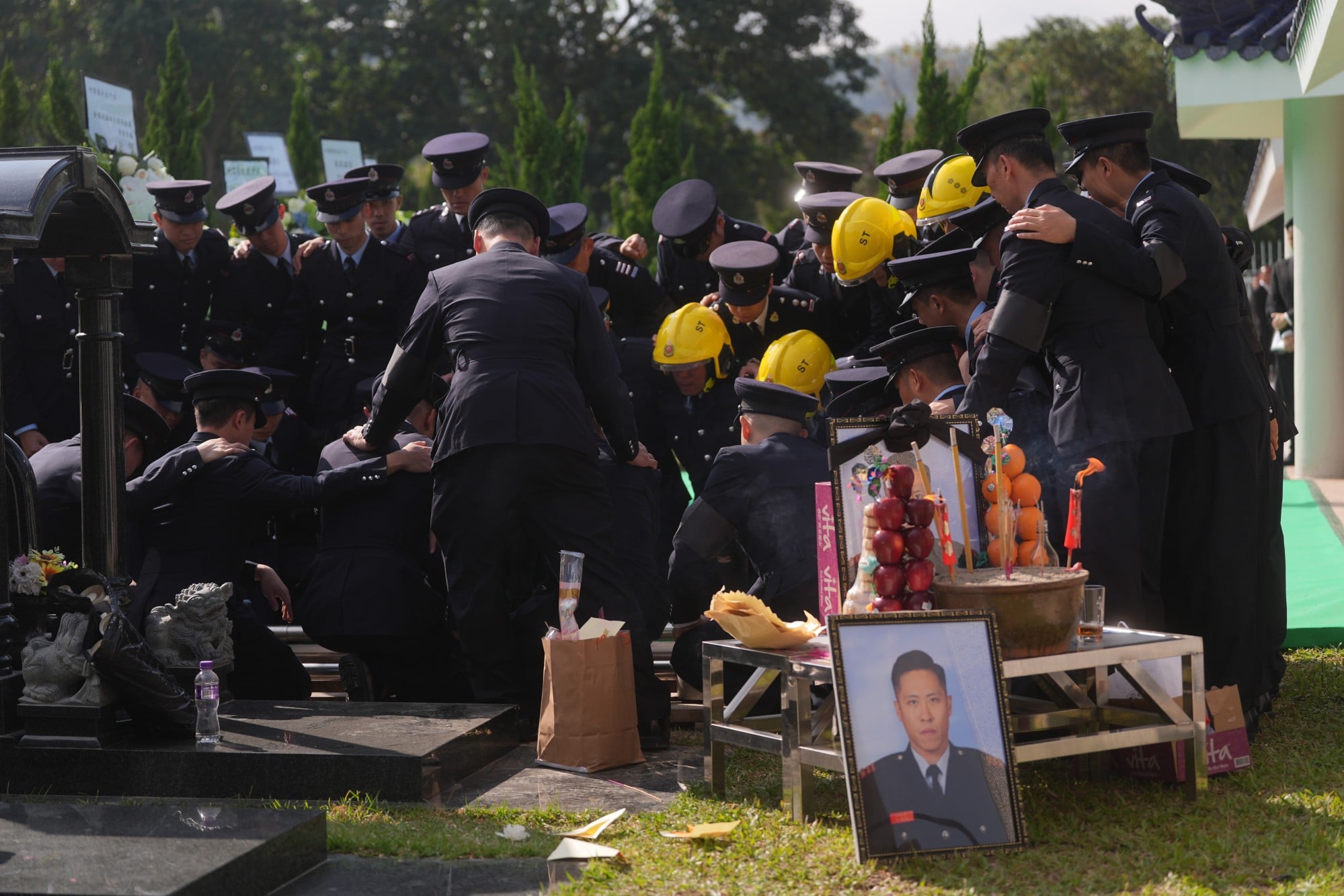
The November 1 roll-out came about a year after the Wang Fuk Court blaze, in which firefighter Ho Wai-ho lost contact with his comrades before becoming one of the 168 people killed.

Do you have questions about the biggest topics and trends from around the world? Get the answers with SCMP Knowledge , our new platform of curated content with explainers, FAQs, analyses and infographics brought to you by our award-winning team.

The report of the judge-led committee, released last month, noted the technical limitations of the first-generation personal distress alarm, the Firefighter Location System (FLS).

Signal transmission on FLS devices, fully deployed in 2020, was limited to a vertical distance of 23 floors and could shrink further depending on a building's physical layout.

At an exclusive demonstration on Thursday, the department unveiled its latest personal distress alarms to the SCMP.

"The Fire Services Department places firefighter safety at the centre of its operations and equips frontline personnel with the most suitable technology available," a spokesman said.

The mainland China-manufactured device, standard kit for every breathing apparatus team member, is a two-in-one transmitter and receiver attached to the breathing apparatus set.

When a firefighter triggers it or stays motionless for 45 seconds at a fire scene, the FTD emits an audible alarm and flashes.

Every other device worn by teammates within a 500-metre unobstructed radius then picks up a dual-frequency radio signal. The previous system relied on a designated handheld receiver fetched from outside the fire scene.

The new device has a screen that gives rescuers directional guidance and tells them the horizontal and vertical distance to a firefighter in distress. It can handle multiple distress signals simultaneously, and each device can both send an alert and search for others.

The department began working with the supplier to develop the device in February 2025, before the Tai Po fire, and started testing and refining it in July. Procurement began in January this year.

Firefighters at all stations received the devices in August and began a month of training in September.

The two-in-one design marked a fundamental departure from the previous location system, which required a separate handheld receiver, usually kept at the command post outside the fire scene, to detect radio signals from firefighters in distress.

Mounting a search meant deploying a new team with the receiver; the closer rescuers got to the target, the higher the readings became, the more lights and the higher-pitched the tone.

Ho was on the 30th or 31st floor of Wang Tai House, one of eight residential blocks at Wang Fuk Court, when his colleagues tried to locate him and the investigation report concluded it was unlikely the handheld receiver "would have been able to receive the transmission".

The spokesman said that although both could be affected by severe signal blockage, as any wireless device could, the FTD system performed better than the FLS.

Separately, he said that an active tracking system, the FSD Indoor Locating Equipment (FILE), was taken to the Wang Fuk Court scene but not used because it was "designed for large-area firegrounds and low-rise buildings".

The equipment provides real-time information on firefighters' positions, movements and condition at fire sites, and works best in buildings of up to four storeys.

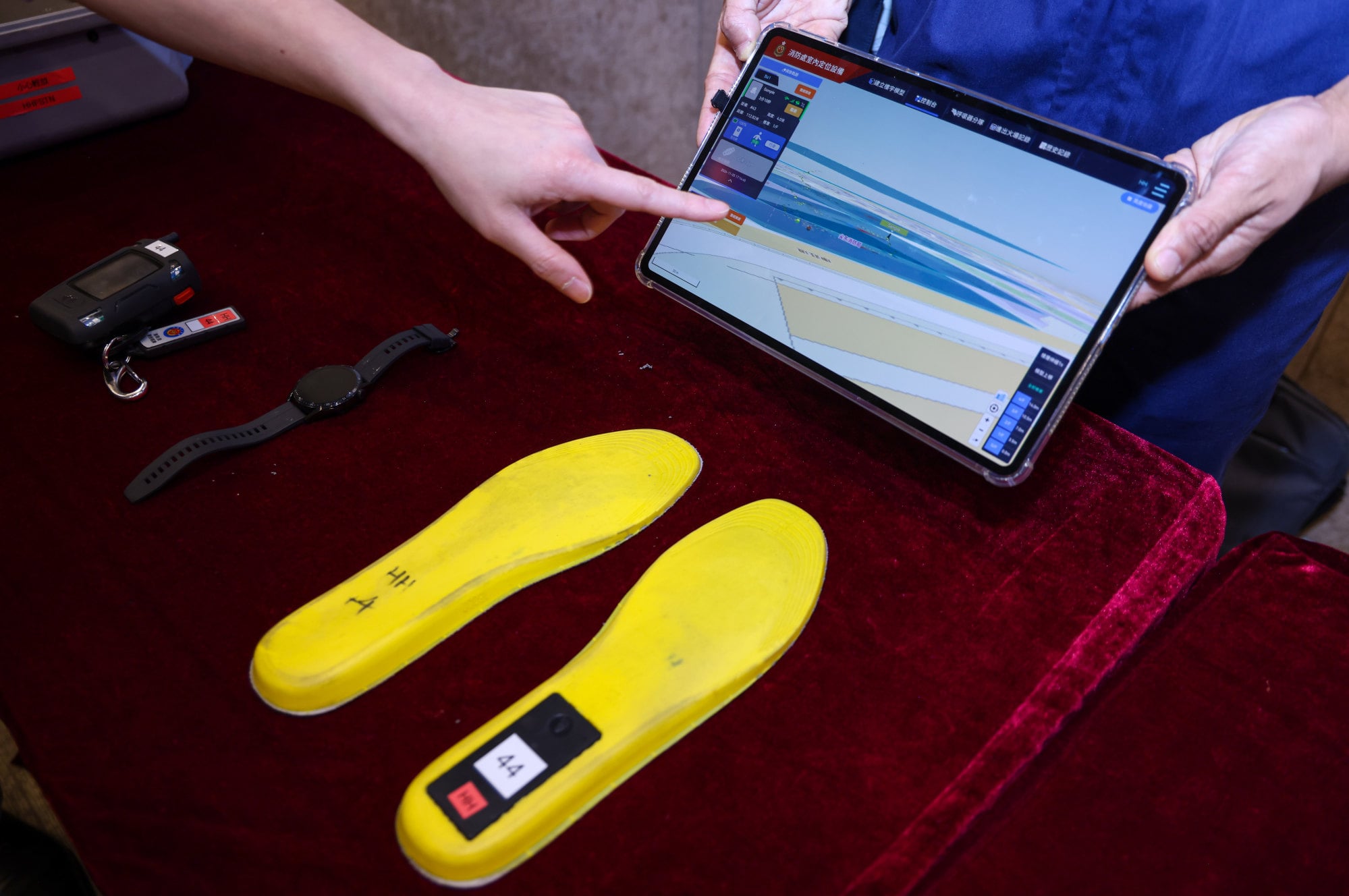
It comprises tracking insoles, health-monitoring watches and receivers. Each system can show the real-time locations of up to eight firefighters on a 3D map displayed on a tablet. Donning and calibrating all eight devices takes about 10 minutes.

The equipment relied on inertial navigation, so location errors grew over time. It also needed calibration at ground level, and the fire-scene model it built during operations was less accurate in high-rise buildings.

"It was therefore assessed at the scene as unsuitable for prolonged operations over many floors at Wang Fuk Court," the spokesman said.

The equipment was taken to the scene of every No 3 alarm fire, where the commander decided whether to use it.

"The department will keep improving its equipment in the light of operational experience and will keep abreast of new technologies."

More Articles from SCMP

This week in PostMag: from unique tableware to the humble plastic stool, we explore the power of good design

Philippines’ Alexandra Eala wins stop-start rainy affair to book Hong Kong Open final spot

History repeats in Shenzhen? China hosts another lame-duck US president

SCMP Best Bets: Delight a Hot prospect for punters at Sha Tin

This article originally appeared on the South China Morning Post (www.scmp.com), the leading news media reporting on China and Asia.

Copyright (c) 2026. South China Morning Post Publishers Ltd. All rights reserved.

Friday, November 20, 2026

Japan suspends Chinese consul expulsion amid retaliation threat

It was revealed on the 8th that Japanese Prime Minister Sanae Takaichi attempted to designate Xue Jian, the Chinese Consul General in Osaka, as a “persona non grata” (diplomatic persona non grata) and expel him after he posted a message on X stating, “That filthy neck that intruded on its own accord must be cut off without hesitation.” However, the move was put on hold after China responded with a threat to retaliate “twofold.”

Prime Minister Takaichi began clashing with China last November when she mentioned the possibility of military intervention in the event of a Taiwan contingency. In response, Consul General Xue Jian posted on his X account, “That filthy neck that intruded on its own accord must be cut off without hesitation.”

According to the Yomiuri Shimbun on the 8th, around that time, Prime Minister Takaichi summoned Chief Cabinet Secretary Kihara and senior Foreign Ministry officials, instructing them, “Please convey that we will designate him as a ‘persona non grata.’” She ordered the Chinese side to be informed that if he was not promptly recalled, he would be expelled.

Masaaki Kanai, Director-General of the Asian and Oceanian Affairs Bureau at the Foreign Ministry, conveyed to Liu Jinsong, then Director-General of the Asian Department at China’s Ministry of Foreign Affairs, during a meeting in Beijing that Japan was considering expulsion. In response, Liu reportedly warned, “If you expel one person, we will expel two,” specifically naming Japanese consuls stationed in China.

While Japan had anticipated a reciprocal expulsion of one person, Prime Minister Takaichi ultimately suspended the expulsion after China threatened retaliation “in kind,” fearing a cycle of retaliation could further deteriorate bilateral relations.

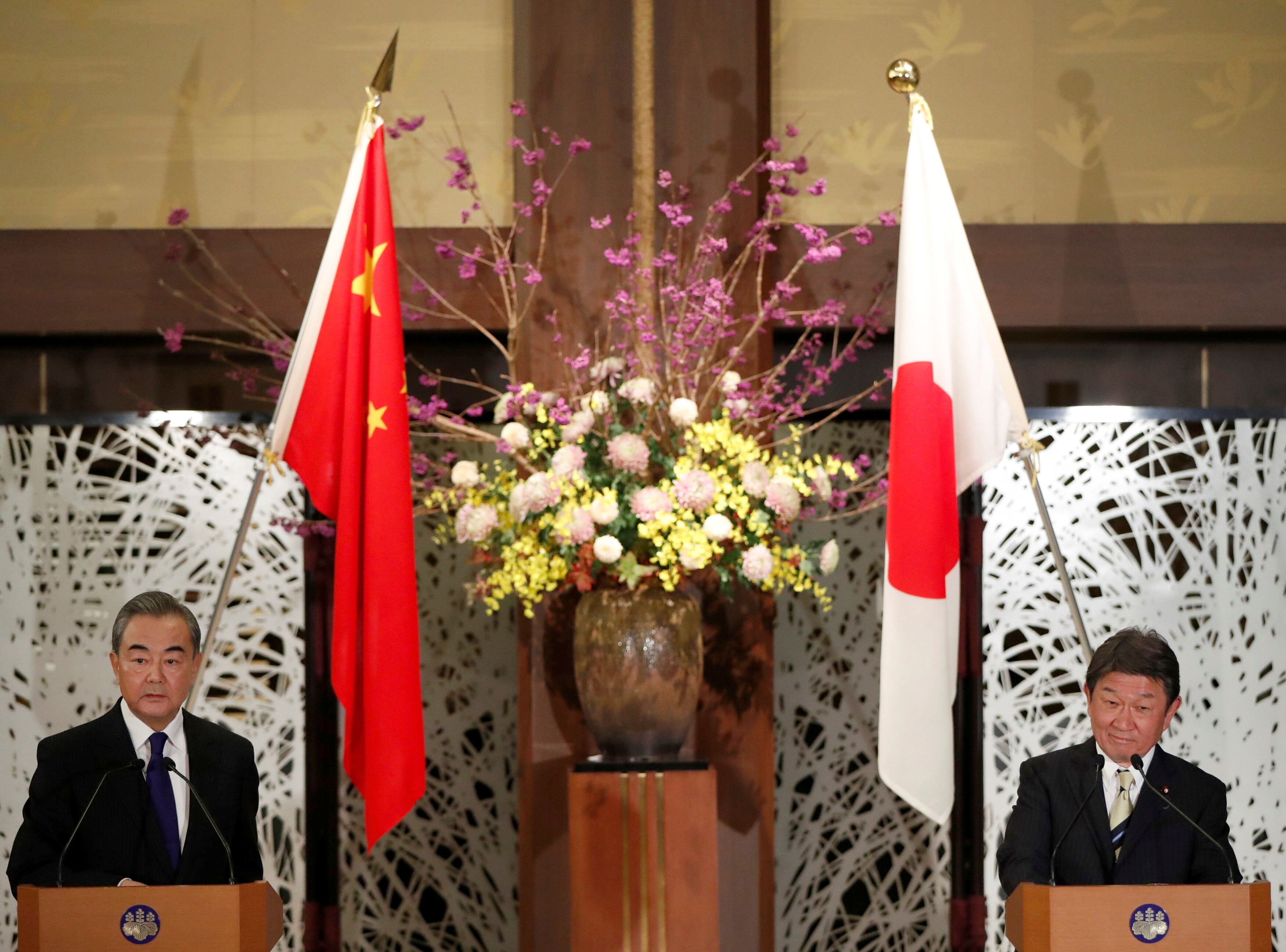
Japan has since persistently attempted to engage in dialogue with China. In late July, Foreign Minister Toshimitsu Motegi reportedly tried to stage a chance encounter with Chinese Foreign Minister Wang Yi during an ASEAN-hosted foreign ministers’ meeting in Manila, Philippines.

In a corridor at a Manila conference venue, Motegi waited for Wang Yi to appear. After thoroughly checking Wang Yi’s schedule, he pretended to coincidentally meet him and sought an opportunity for a brief conversation. When Wang Yi appeared, Motegi greeted him in Japanese, saying, “Long time no see.” Wang Yi, known to be fluent in Japanese due to his prior tenure as ambassador to Japan, did not make eye contact and walked past. Motegi continued to speak while walking alongside him, but Wang Yi remained silent.

At the time, the Japanese side announced, “We had a brief greeting and discussed bilateral relations,” while the Chinese Ministry of Foreign Affairs denied any meeting, stating, “No meeting was scheduled.” This incident symbolized Japan’s efforts to seek dialogue and China’s refusal.

The Japanese side has attempted various methods to maintain communication, but China has maintained its stance of refusing dialogue unless Prime Minister Takaichi retracts her remarks.

In September, China accepted a visit by Takeshi Iwaya, former Foreign Minister and head of the Japan Intertrade Promotion Association, a private organization, and Wang Yi held a meeting with him for over an hour. This was interpreted as a gesture that China could engage with Japanese private groups, aiming to create domestic divisions.

Currently, the only formal dialogue channel between the Japanese and Chinese governments is a monthly meeting between Takehiro Funakoshi, Vice Minister for Foreign Affairs, and Wu Jianghao, Chinese Ambassador to Japan. It is reported that during these meetings, China continues to demand a retraction.

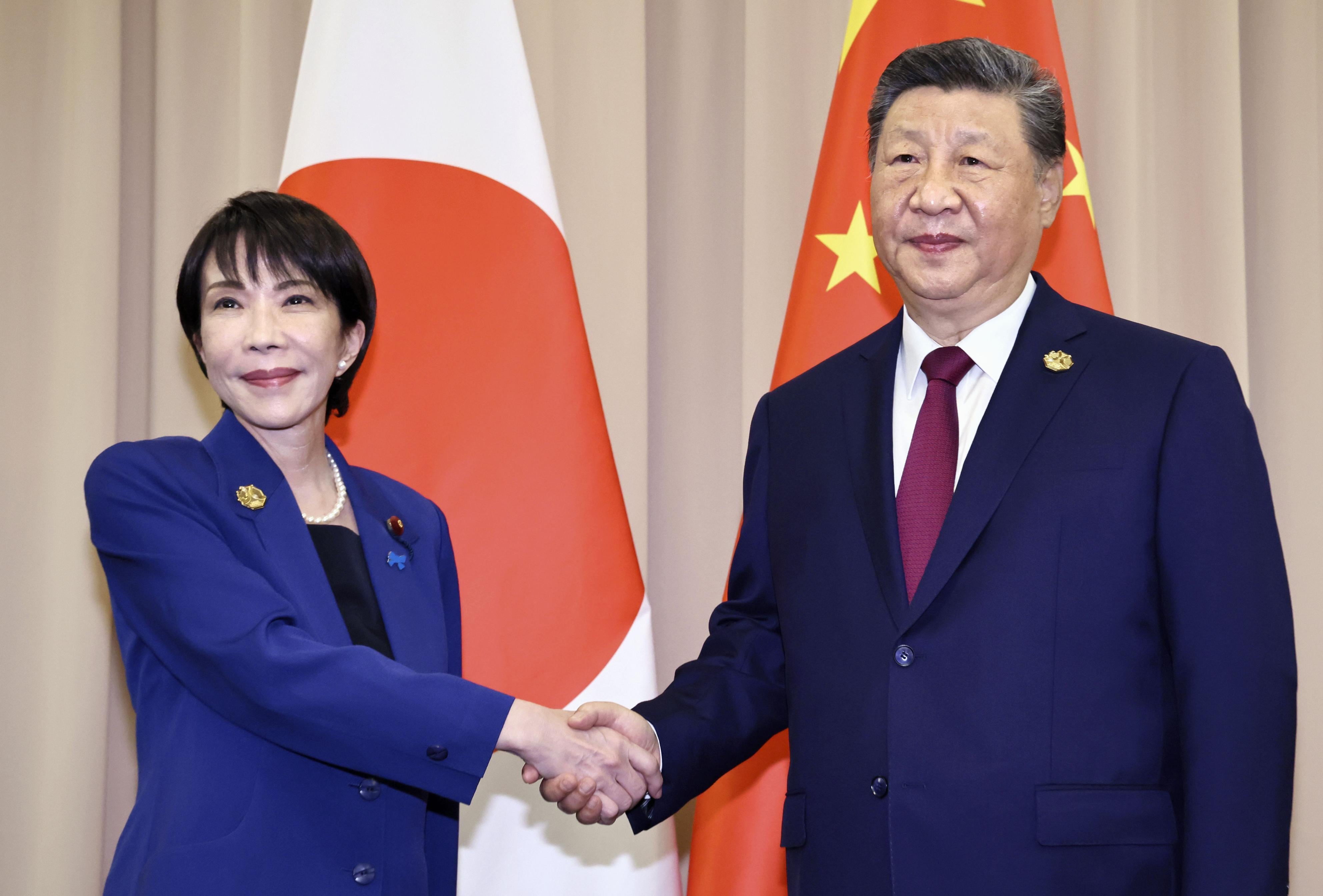
Prime Minister Takaichi is seeking to contact Chinese President Xi Jinping on the sidelines of the APEC (Asia-Pacific Economic Cooperation) Leaders’ Meeting in Shenzhen, Guangdong Province, mid-month. However, expectations for a summit remain low, with hopes pinned on even a handshake serving as a potential catalyst, according to the Yomiuri Shimbun.

Meanwhile, subtle changes are emerging within China. Amid economic difficulties such as severe consumption slumps and high youth unemployment, there are growing expectations for economic exchanges and investments with Japan. In late October, a joint economic symposium was held in Beijing by JETRO (Japan External Trade Organization) and a Chinese policy research institution. A Chinese organizer stated at the event, “China and Japan should strengthen regional trade cooperation.”

The remarks are seen as reflecting China’s underlying desire for Japanese investment and economic cooperation as its economy struggles with sluggish consumer spending and high youth unemployment.

In September, He Lifeng, Chinese Vice Premier, criticized Japan over the Taiwan issue during a meeting with former Foreign Minister Takeshi Iwaya in Beijing but acknowledged, “China and Japan are important economic and trade partners.”

Language clue triggered suspicions of funeral parlour staff who found visitors cutting body

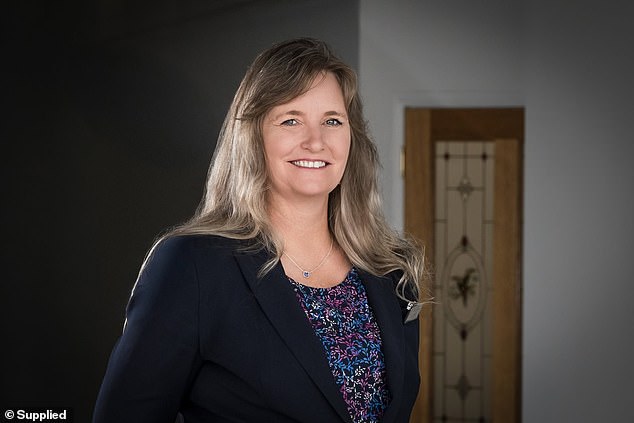
A funeral parlour owner who interrupted three visitors allegedly removing tissue from a man's body has revealed how the trio first aroused her and her staff's suspicions - leading to them being charged.

Esther Swanborough, who has run her family funeral business in Browns Plains, south of Brisba ne, for 30 years, said the two men and a 43-year-old woman turned up to view the body of an elderly man.

Brian Wong, 47, Changmin Koo, 38 and Cassandra Hunter allegedly presented themselves as the son of the deceased, a male relative and a female support friend respectively.

They arrived carrying backpacks for an arranged appointment at 1pm on Friday to view Wong's father's body inside the parlour's Still Waters Chapel.

'We took them downstairs to have their private viewing time,' Ms Swanborough said.

One of the visitors then asked staff, "please leave the chapel because we have cultural practices that we need to carry out", Ms Swanborough recalled.

Ms Swanborough said that was 'not uncommon. We have 240 cultures we deal with' but what followed allegedly 'was not anything to do with culture'.

She also became suspicious after one of her staff members overheard Koo speaking and told her that he allegedly 'was definitely not a relative, he was speaking Korean', not Mandarin, which was the language spoken by Wong's family.

'Then I just went back in to make sure they were doing okay. Everyone grieves differently,' Ms Swanborough said.

That was when she allegedly discovered that Wong's father's body had been interfered with.

'Something very different was happening. My impression was that something else … was occurring.

'They were (allegedly) trying to remove something that would have been very obvious when he was moved from the viewing room ... gloves were being put away.

'I said, "What have you done," and that was when … I started piecing things together, and we called the police straight away.'

Confronted by Ms Swanborough, Brian Christian Wong allegedly ran from parlour which was declared a crime scene when officers arrived.

Police allege one of the men removed a piece of tissue from the body after the group entered the funeral home carrying scissors, scalpels and blades, which Ms Swanborough said had on arrival been hidden in large backpacks.

The bizarre and grisly alleged incident left her 'shocked, horrified, mortified, that something like this was occurring where in my thirty years and our manager in thirty years have never seen anything like this'.

Cassandra Hunter and Changmin Koo were arrested at the scene. Police arrested Brian Wong at his family's Browns Plains home more than five hours later, on Friday night.

Wong, Koo and Hunter were charged with misconduct with a corpse, entering a premises with intent to commit an indictable offence and being armed with intent to enter a premises and commit an indictable offence.

They faced Brisbane Magistrates Court on Saturday and were all remanded in custody after making no application for bail.

Magistrate Peter Saggers said the group had several sharp implements, according to The Courier-Mail .

'Just reading the bench charge sheets, they're entering Swanborough Funerals home at Browns Plains, whilst armed with scissors, scalpels, and blades to commit an offence, and then, without justification, interfered, namely, wounded a dead body,' he said.

Brian Wong was remanded to face Beenleigh Magistrates Court on November 12.

Changmin Koo will next front court on November 10 when he will need a Korean interpreter.

Cassandra Hunter will remain behind bars until December 7, when she will appear in court via video link.

In a video posted to Facebook, Ms Swanborough sought to reassure other customers that 'at no point in time were any of the other families we were caring for at the time affected'.

‘It was an isolated incident in our viewing room with family members. I want to thank everyone for your support, so much appreciated. We’re doing okay, we’re shocked, we’re emotionally distressed.'

Read more

Japan rethinks its stalking laws after Pokemon store murder

A restraining order failed to protect her. Now a Tokyo shop worker's murder has prompted calls to fit convicted stalkers with GPS tags

Long before Moe Harukawa was killed, she lived in fear. The 21-year-old shop assistant had reported her ex-boyfriend to police and a court had ordered him to stay away from her.

Yet weeks later, Taiki Hirokawa, 26, walked into Harukawa's workplace - a packed Pokemon store in Tokyo's Ikebukuro district - and stabbed her repeatedly in the neck and torso before turning the knife he was carrying on himself. Both later died in hospital.

Harukawa's gruesome murder in March at the hands of a man who had already been arrested and charged with stalking her has stirred debate in Japan on how to stop such fixation-driven attacks.

Do you have questions about the biggest topics and trends from around the world? Get the answers with SCMP Knowledge , our new platform of curated content with explainers, FAQs, analyses and infographics brought to you by our award-winning team.

A number of high-profile stabbings have hit the headlines in recent years, with a spate of knife attacks carried out by teenagers in 2025 adding to public anxieties about safety after two masked men went on separate stabbing sprees on the Tokyo subway system four years earlier.

Authorities have also faced angry allegations that they did not do enough to protect the victim in the latest case.

Hirokawa dated Harukawa from October 2024 to July 2025, but he would not accept the end of their relationship. In December last year, she reported him to the police for stalking and officers who escorted her home found him lurking nearby.

Officers discovered a knife in his rental car and footage on his phone that he had recorded of Harukawa without her knowledge. He received a police warning, but apparently did not heed it, being arrested the following month for weapon possession and voyeurism.

Hirokawa was released at the end of January after a court issued a restraining order and he signed a statement promising to stop harassing Harukawa. He refused to seek counselling as police had advised.

She stayed with relatives for a few weeks before returning to her flat, declining a suggestion to change jobs as working at the Pokemon store was her dream. Police say Hirokawa was not seen stalking her again until the day of the attack.

"This case really hit hard," said Makoto Watanabe, a professor of communications and media at Hokkaido Bunkyo University. "It took place in the middle of the day, in a store with around 100 children and parents and there was nothing that anyone could do to stop it."

Stalking cases that ended in death were not uncommon in Japan, he said, "but it rarely takes place so publicly".

A panel of legal experts has since been set up to review and propose revisions to Japan's Anti-Stalking Act, first introduced in 2000, including requiring anyone charged with stalking to wear a GPS tracking device - a proposal that has attracted criticism from some quarters for violating personal rights.

The panel will make recommendations to the government and observers say Harukawa's killing will doubtless be foremost in members' minds.

Stalking surge

Government statistics show that 22,881 people in Japan sought police advice about being stalked last year, up nearly one-sixth on the year before, while a record 3,037 restraining orders were issued.

Vicki Beyer, a former law professor at Tokyo's Hitotsubashi University, said the rise in cases partly reflected women's greater awareness of stalking and a growing willingness to report it, much as reports of sexual harassment had risen in Japan in recent years.

"Japan has been behind other countries when it comes to crimes against women," she said. "Only acting after a gruesome murder has happened is very much a case of closing the barn door after the horse has bolted."

Even so, Beyer said the authorities were "slowly figuring out what needs to be changed" and suggested that a public-relations campaign to win "hearts and minds", stressing the extra layer of safety GPS monitoring could provide would go a long way towards settling the debate in favour of the proposal.

Societal observers such as Watanabe suspect a lack of parental discipline may have been a factor in the rising case numbers.

"When I was a kid, if I did something wrong in the neighbourhood, a neighbour would tell me off," he said.

"It was the same at school. Now, everyone is too frightened to reprimand a child ... even parents, so they grow up thinking they can do anything they want and no one is ever going to stop them."

He also suggested officials might use the case to overcome objections based on the right to move freely, yet expected little resistance from Japanese society.

"Our society has changed in the last couple of decades," he said. "Everyone has a smartphone, but our human relationships have narrowed dramatically ... That means a generation of young people has no experience of 'no' and they are not able to mentally cope when that happens."

Social media reaction has been strongly in favour of tracking stalkers. One commenter even went as far as to say murderers and sex offenders "should have GPS trackers implanted".

Another said Japan was "too hung up" on human rights and too sympathetic towards offenders. A third dismissed the current emphasis on rehabilitation and counselling as "naive nonsense", saying that for victims "it's a matter of life and death".

Sumie Kawakami, a lecturer at Yamanashi Gakuin University and author of a book on gender issues, said that tracking stalkers would inevitably raise questions about similar monitoring for released murderers and other serious offenders, for whom no such rules currently existed.

Stressing that stalking was not a crime to be taken "lightly", she nevertheless said she expected there to be strong opposition to a requirement for stalkers to wear trackers since "freedom of movement is guaranteed" in Japan.

"Women will obviously welcome this new rule if it comes in and I imagine it will make anyone who has been stalked feel safer if they know their attacker can be traced," Kawakami said.

"We just have to find the right balance between the rights of the two sides."

More Articles from SCMP

Meet F1 world champion Kimi Antonelli’s parents, Marco Antonelli and Veronica Pomaro

China-Switzerland trade partnership offers a model amid fraught EU ties

Woman hurt in flat fire suspected to have been caused by aromatherapy items

Tarmo Peltokoski begins HK Phil tenure with Mahler’s monumental Symphony No 8

This article originally appeared on the South China Morning Post (www.scmp.com), the leading news media reporting on China and Asia.

Copyright (c) 2026. South China Morning Post Publishers Ltd. All rights reserved.

Thursday, November 19, 2026

Hilda Baci to lead Akwa Ibom’s food tourism drive at Christmas Unplugged 4.0

Akwa Ibom State Government has engaged celebrity chef Hilda Baci to spearhead the promotion of the state’s indigenous cuisine and cultural heritage as part of efforts to expand its tourism appeal through the 2026 Christmas Unplugged festival.

The partnership will see Baci become the face of the Ibom Kitchen initiative, using her celebrity profile and media influence to showcase Akwa Ibom’s traditional food, culinary practices and cultural identity to wider national and international audiences.

The engagement, which runs from November 30 to December 31, 2026, also covers the promotion of Christmas Unplugged and the state’s Christmas Carols Festival.

The 2026 edition, tagged Christmas Unplugged 4.0, is themed “Taste of Akwa Ibom: Our Food, Culture and Heritage” and is designed to turn the state’s culinary diversity into a major attraction for visitors and tourists.

A key feature of the month-long event will be the participation of all 31 local government areas, each expected to showcase its indigenous dishes, cultural identity and traditional food practices.

The initiative is also expected to provide a platform for preserving local culinary traditions while drawing attention to the tourism and economic opportunities embedded in Akwa Ibom’s food heritage.

Governor Umo Eno, who approved the engagement, congratulated Baci on the partnership and expressed the hope that the collaboration would extend beyond the Christmas celebrations to advance the state’s broader Destination Akwa Ibom tourism agenda.

The service and appearance agreement was signed at the Chambers of the Attorney-General and Commissioner for Justice, Uko Udom, SAN, by members of the State Inter-Ministerial Committee on Christmas Unplugged on behalf of the government.

Provided by SyndiGate Media Inc. ( Syndigate.info ).

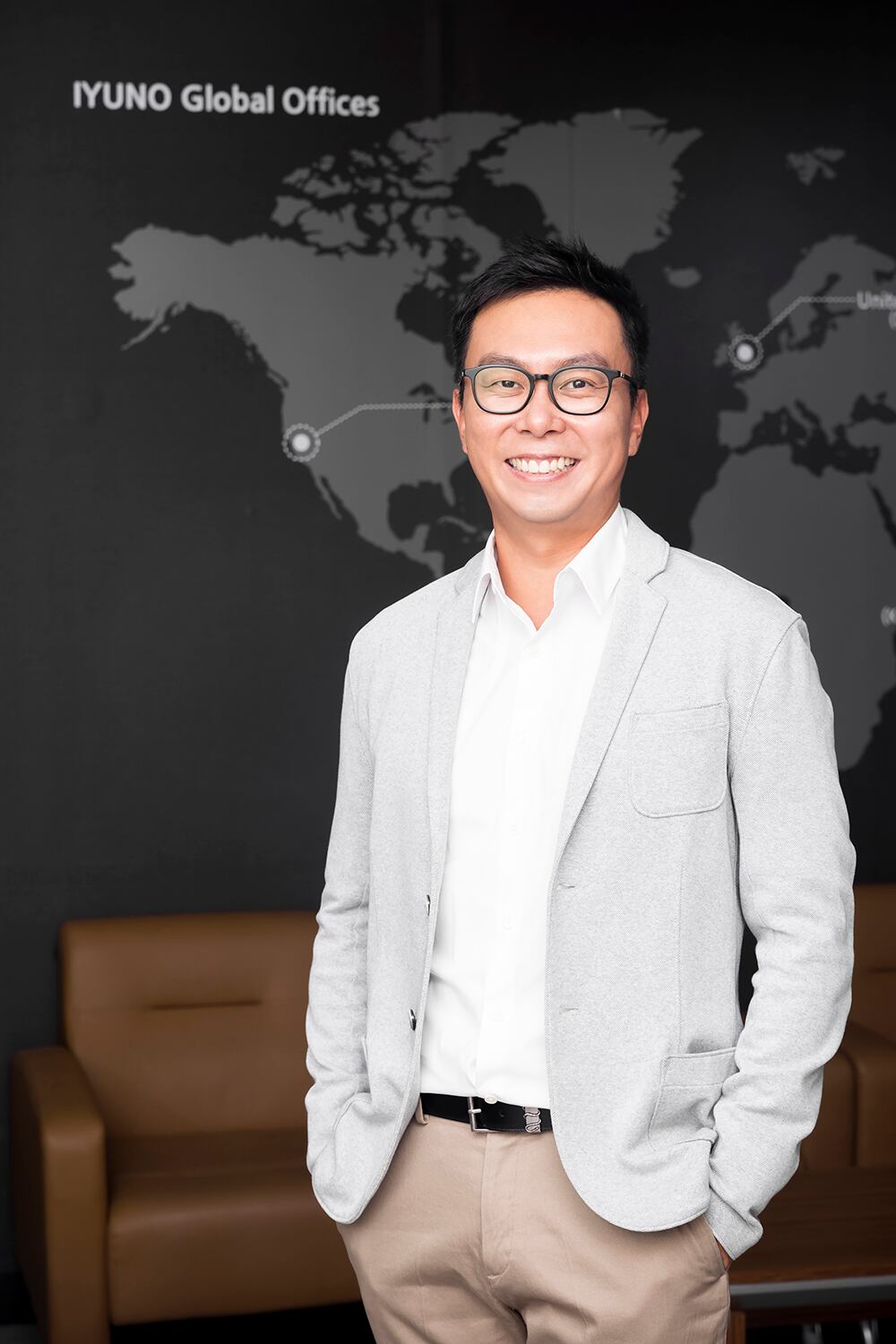
IU global rebounding with AI after revenue drop, breach

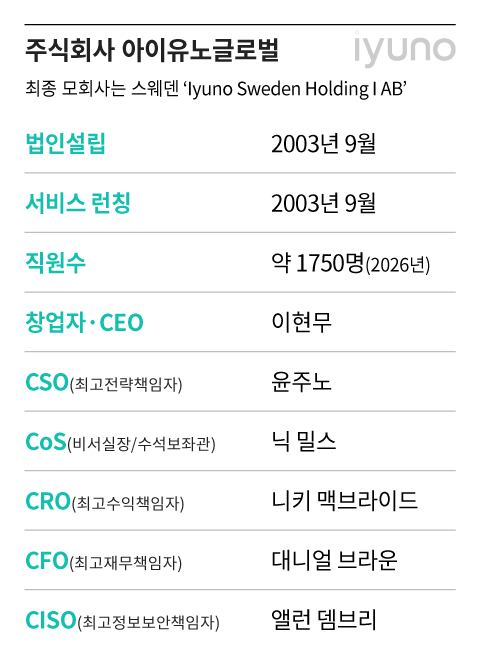
I’m Lee Hyun-moo, founder of IU Global. This is a story of a unicorn that once generated $500 million in revenue but faced collapse. Can a heavyweight unicorn rebound after a downward spiral? Reality isn’t a drama. Heavyweights don’t easily bounce back with pivots.

Today’s interview is with Lee Hyun-moo, founder of IU Global (hereafter IU Global). Honestly, he gave off the vibe of a “cold-blooded businessman” who chooses people based on “pros and cons.” Yet, the *CJAM* reporters found him likable. His skills as a CEO—perhaps the most founder-like among startup founders—deserve respect.
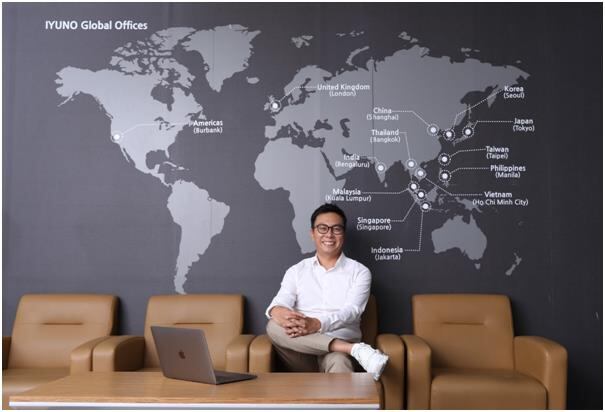
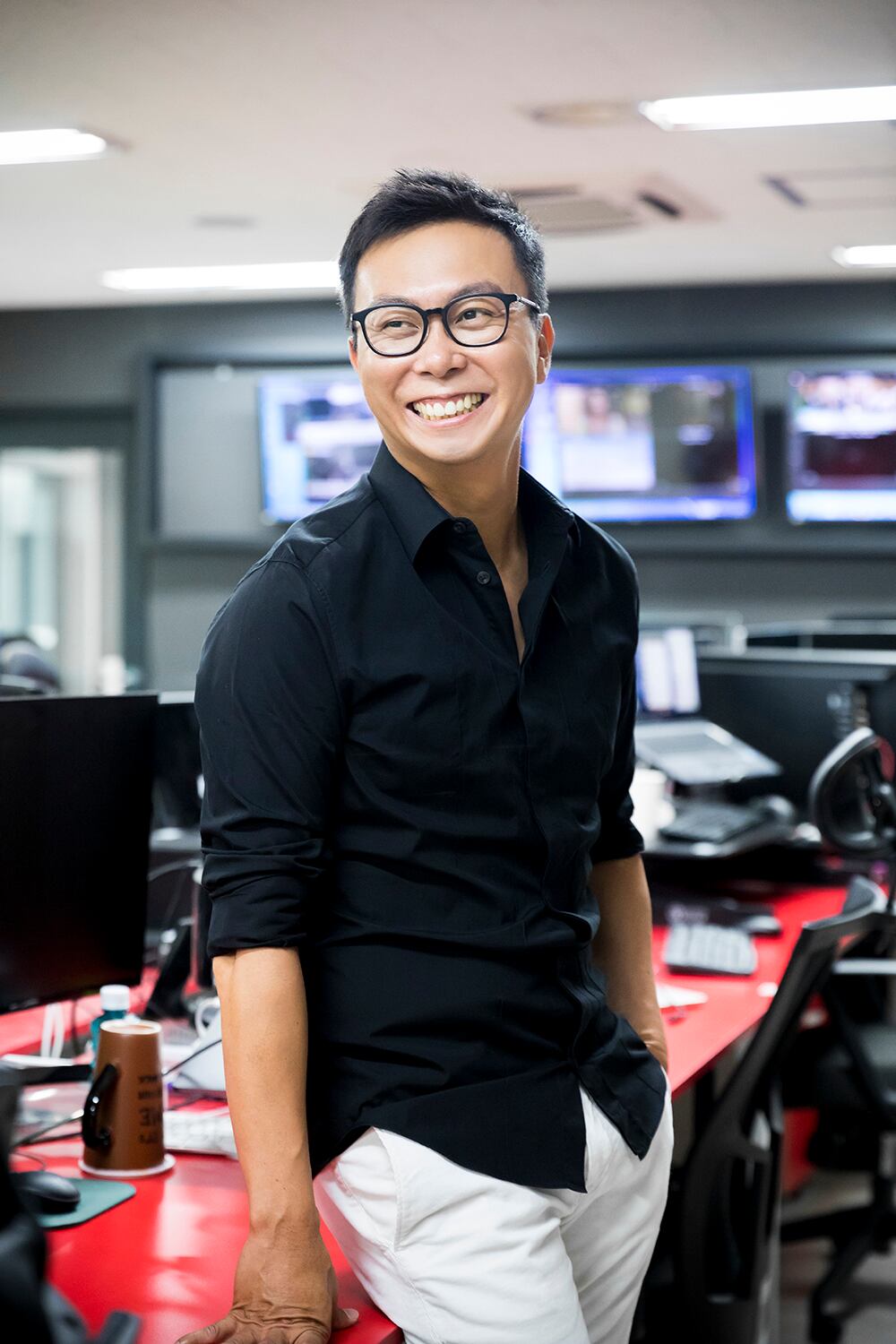
IU Global is the world’s top media localization company. We provide dubbing, subtitling, and technical services for streaming platforms until content is finalized. Our market share is double that of the second-place competitor. We’re the only company directly owning and operating dubbing studios across Asia, Europe, and the Americas. With 300 recording rooms in 31 countries, 20,000 translators, 20,000 voice actors, and services in over 100 languages, we lead the industry.

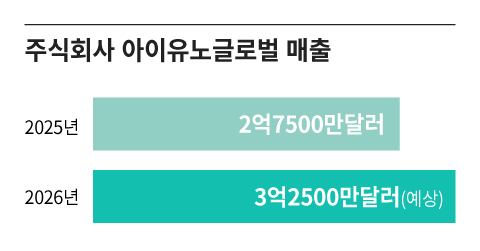
At our peak, revenue hit $511 million. Then, the Hollywood strike and a security breach occurred. Lee Hyun-moo said, “Even I thought there was a 90% chance we’d collapse.” This year’s revenue is projected at $320–50 million. We’ve survived.

Is a dubbing and subtitling company needed in the AI era? The revenue drop stemmed from the belief that AI would replace IU Global’s business. Yet, after hitting rock bottom, we bet on AI. For example, we created an AI named Chloe. Chloe “watches” content like a human and stores it in a database. Lee said, “Innovation happens when you’re broke, at the bottom.” In 2002, three university students started a translation company with 6 million Korean won in cash advances. How did IU Global become number one, collapse, and rise again? Lee answers.

◇ From $6 Million Korean Won Startup to $500 Million Revenue: A Crazy Success Story, But…

= IU Global is a translation, subtitling, and dubbing company, right?

“We’re the world’s top media localization company. It’s not just dubbing and subtitling. We handle end-to-end services: editing, encoding, packaging, and distribution pipelines until content reaches platforms like Netflix. Our market share is roughly double that of the second-place competitor.

We’re the only company with dubbing studios in Asia, Europe, and the Americas. Competitors either lack studios or outsource. Our clients are major global streamers, OTTs, studios, and broadcasters—names everyone would recognize.”

“Revenue breakdown: 70% dubbing, 25% subtitling, 5% media services. We have around 300 recording rooms in 31 countries and work with 20,000 translators and 20,000 voice actors annually. Internal staff range from 1,900 to 2,000—project managers, engineers, and directors.”
= In 2022, revenue was $511 million. It surged post-2018.

“Peak revenue was $511 million, but it dropped. This year, we expect around $320 million. The first half exceeded expectations, and the full year might reach $340–50 million. We’ve recovered significantly.”

“The decline began with the 2022 Hollywood writers’ and actors’ strike. A major client cut spending, and a security breach in 2023 worsened things. We free-fell for two years. Clients left.”

“It was tough. Shareholders trusted us, and we secured internal funding multiple times. We cut costs drastically, including layoffs. However, we invested heavily in security to regain trust and are rebounding in 2026 as major clients return.”

= Rebounding from rock bottom is rare for startups. Most collapse.

“True. The collapse probability was over 90%. It was a grueling period. Positively, the crisis unified us. IU Global was formed by merging three companies, each with its own culture and factions. But when survival is at stake, everyone becomes one team—like Earthlings uniting against aliens. Cultural integration, which takes decades for big companies, happened instantly. There was no time to fight over pie.”

= That’s overly optimistic. Many fail to persuade employees.

“A week after the security breach, after crisis management, we held an all-hands meeting. We said, ‘We’re in deep trouble. This isn’t easy, but if we follow our plan, we can recover.’ Clarity and hope were key.”

◇ “Innovation Happens When You’re Broke”

= The drop wasn’t just about security. There was a prevailing belief that AI would replace subtitling, making IU Global obsolete. Where was the hope?

“AI wasn’t scary then (2022–23) because it couldn’t deliver. Can AI create Netflix-level subtitles for a drama? No.”

= But the narrative was that AI would eventually replace the industry.

“Entrepreneurs draw lines—‘AI won’t do this’—but technology keeps crossing them. Would subtitling vanish? Or could we lead the change? The security breach forced a decision. Previously, we defended against ‘someday’; now, AI became a must-win battle. Revenue was falling, costs were cut to the bone, and without a vision, no one would invest. Desperation drove us to innovate.”

“Funny—we had a similar experience in 2002. We developed a translation software called MediaTrans, patented it, and sold it to CJ. It handled 90% of Korea’s foreign film subtitles. But an executive poached clients and employees, leaving me and one staff member. Revenue dropped from 20 million to 2 million Korean won. To survive, we automated—hence MediaTrans. AI was the same.”

“We invested in AI but saw no results. The conclusion was, ‘AI can’t replace subtitling.’ But crisis changed that. Innovation arises from desperation. When broke, employees work tirelessly without pay.”

= You created Team X during the crisis.

“Two reasons: First, large companies prioritize stability over innovation. Our ‘Security First’ culture blocks risky projects. So, we needed a separate startup-like team under the CEO—Team X, with 20 engineers and operators. Now, it’s a core team.”

“Second, we needed a vision. Five years ago, we co-invested in an AI translation startup. We concluded, ‘Translation can’t be replaced.’ For example, how does AI handle honorifics? Without context—like whether speakers are siblings or strangers—it fails. Back then, we used this to defend against AI. Now, we had to prove it.”

= Your first experiment was English honorifics.

“Simple: Six team members sat in a room. We input, ‘A is 40, B is his 10-year-old daughter,’ then ‘Hey, how are you doing?’ The AI translated it as ‘How are you?’—not ‘How are you, mother?’ Team members said, ‘It doesn’t work.’ But in the LLM era, we tried again with ChatGPT—it worked. Reversing the input switched between formal and informal. That was the breakthrough.”

“We realized the issue wasn’t the model but context. Old models lacked ‘ears’ to listen; LLMs do. If honorifics work, other nuances—gender, age, sarcasm—will too. We expanded experiments and built Chloe.”

◇ Chloe: AI That Replicates Human ‘Watching Experience’
= Define Chloe.

“The problem: Translators, subtitlers, and creators redundantly watch content. They interpret it differently, creating security risks. Chloe uses AI agents to ‘watch’ content like humans. She factors in scripts, previous episodes, brand rules (e.g., ‘No pork mentions in Malaysia’), and generates a database.”

“She tracks characters’ locations, relationships, and emotions. Unlike humans, she shares this memory. From there, AI skills generate subtitles, SDH (Subtitles for the Deaf and Hard of Hearing), audio descriptions, marketing copy, metadata, etc.”

= How is she trained?

“Chloe isn’t a single model. She uses agents to process content. For example, Gemini analyzes video but can’t build memory due to context window limits. Chloe, however, tracks entire seasons. She infers that a character in one scene is the same as in another, even if their appearance or voice changes. She maps apartment layouts—if a character enters a room, she knows they’re inside. These human-like inferences are agent-based. We call it ‘mimicking human watching.’”

“Demo: In a scene where a character speaks to no one, Chloe infers the listener. She describes settings: ‘Elle visits a doctor; a cabinet is on the counter; her emotion is tense.’ She deduces, ‘Elle is pregnant with someone’s baby.’ If a phone shows a kidnapping news article, Chloe translates it. Brand logos are ignored. Human-like tracking is complex—processing a one-hour file takes three hours.”

= Chloe creates subtitles using her ‘content memory’?

“Skills extract outputs. Subtitles, SDH, audio descriptions, synopses, YouTube tags—all derive from her memory. For SDH, she adds ‘tense music plays’ because she knows the soundtrack. Clients build one ‘content memory’ and generate unlimited outputs. Previously, subtitling 20 languages was expensive; now, 100 languages cost only AI tokens.”

= Is Chloe based on Gemini?

“Yes. We use Gemini and enterprise-licensed models. We don’t manage servers—costs are high, but we need top multimodal performance. Internally, we’re eliminating translation layers with ‘Sub X.’ Currently, 10% of workloads use Chloe; by year-end, 70% will. Chloe launches as a SaaS platform in September. Pricing is high due to token costs but far cheaper than human labor.”

“This helped revenue recovery. Clients initially avoided us post-breach but returned, seeing AI partnership value. Our security investments made us a trusted leader.”

◇ The Paradox: AI Dubbing Takes Longer Than Human Dubbing
= Isn’t AI dubbing automatic?

“AI dubbing replaces voice actors but requires creative direction. For a thousand lines, directors specify tone: ‘Read this line strongly, whisper this one.’ AI needs iterative prompting—30–100 times. Human dubbing takes 21 calendar days; AI dubbing takes 24 business days—two weeks longer.”

= YouTube AI dubs lack emotional tone.

“They lack immersion. Paid content needs engagement, so short-form dramas prefer human dubbing.”

= Does Chloe change this?

“AI dubbing’s iteration problem stems from context. Directors manually prompt each line. Chloe automates this. Since she ‘watched’ the entire content, she generates line-by-line prompts. For example, ‘Hello’ becomes, ‘Say this while descending a mountain, given the character’s backstory.’ Humans can’t scale this. Chloe does it automatically—faster, cheaper, and emotionally accurate.”

◇ Conversations with Characters, Not Actors: Chloe’s Content Memory

= What else can Chloe do?

“Subtitles, dubbing prompts, SDH, audio descriptions, synopses, YouTube metadata, press releases, and chatbots. We built a chatbot using content memory. Traditional chatbots lack universe context, but Chloe’s memory enables IP-based bots. For example, chat with *Squid Game* characters. Text-based now, but holograms and physical AI may follow.”
“Chatbot users are teens to early 20s. To attract older audiences, major IPs are key. Context is crucial. Falsehoods become lies only with context. Universe chatbots can avoid this. We’re discussing content memory archives with the Korean government.”

= Can Chloe create content?

“Yes. Extracting context from content, we could generate webtoons or videos from novels. Current Gen Video is limited to 15 seconds with inconsistent faces. Chloe could reverse-engineer this: build content memory from a novel, then create visuals. Consistency—like a remote control staying in the same spot—is key. Without it, production fails. Chloe could solve this.”

◇ $6 Million Korean Won, VHS Tapes, and $1 Billion Debt

= Why a translation company in 2002?

“I failed freshman year, took extra semesters, and translated part-time. My boss offered a job, and I met two partners—a translator and a salesperson. We planned to run it for nine months before studying abroad. Each took 2 million Korean won in cash advances. Deposit: 5 million; desk: 1 million. The partnership dissolved after a year—revenue was too low.”

= The early days were toughest, with $1 billion debt.
“Revenue came in slowly, expenses faster. No accounting knowledge—borrowed from family, KOTEC. The worst: missing a client’s mother-in-law’s funeral, losing half our revenue. I decided to move to Singapore.”

= Why Singapore?

“Korea only needed single-language services. Singapore offered multilingual opportunities. I moved with nothing. For a year, no contracts. Then, a client needed Korean content for a Hallyu channel. I built a low-cost file-transfer system—computers in Seoul and Singapore. I drove hard drives to clients for three years, saying, ‘We’ll handle translation and dubbing if you use our system.’ We later built studios, commuting weekly from Singapore to Kuala Lumpur. This made us Asia’s strongest player.”

= How did you break into the U.S. and Netflix?

“After expanding to five countries, Netflix was booming. A salesperson couldn’t attend a meeting due to tinnitus, so I went instead—it connected us to Netflix. They needed Asian vendors for 190 countries. We secured the contract, and revenue exploded—100% annual growth for three years. We expanded to 10+ countries, and our MediaTrans tech improved. Netflix awarded us twice as a top vendor. We were unstoppable.”

= SoftBank investment and M&A made you number one.

“After dominating Asia, we targeted Europe. But expanding would take decades. Japan was tough—culturally sensitive. Investors suggested going public or bolt-on acquisitions. Our multiple was high; acquiring a company at half our multiple created arbitrage.

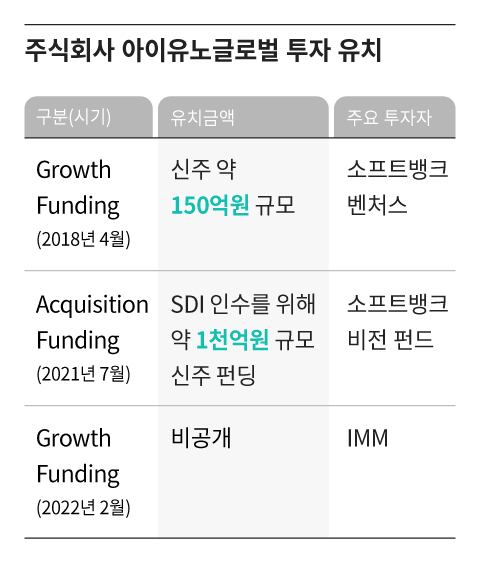
“First investment was SoftBank Ventures Asia (SBVA) in 2018: $25 million at a $100 million valuation, 25% stake. By 2018, revenue was $70–80 million, profit $20 million. We merged with BTI—a larger but indebted company—at equal valuation.

“In 2021, we acquired SDI, our only global competitor. SoftBank’s Vision Fund raised $200 million at a $600–700 million valuation, funding the acquisition.”

= Merging competitors made you the only global player.

“Yes. Our motto was ‘Be the one and only.’ Post-merger, management integrated well, setting record profits. Then came the strike, breach, and crash. We’re climbing back.”

※ *CJAM*’s note: This interview isn’t the end. IU Global’s survival isn’t confirmed. If AI dubbing, subtitling, and ‘human-like content-watching AI’ prove viable, Lee’s vision could surpass $10 billion. The challenge? Tech evolves daily, and competitors may rise unnoticed. If Lee agrees, we’ll revisit IU Global’s survival in one or two years.
Wednesday, November 18, 2026

Democratic Party: President Lee 'Respected globally' amid impeachment calls

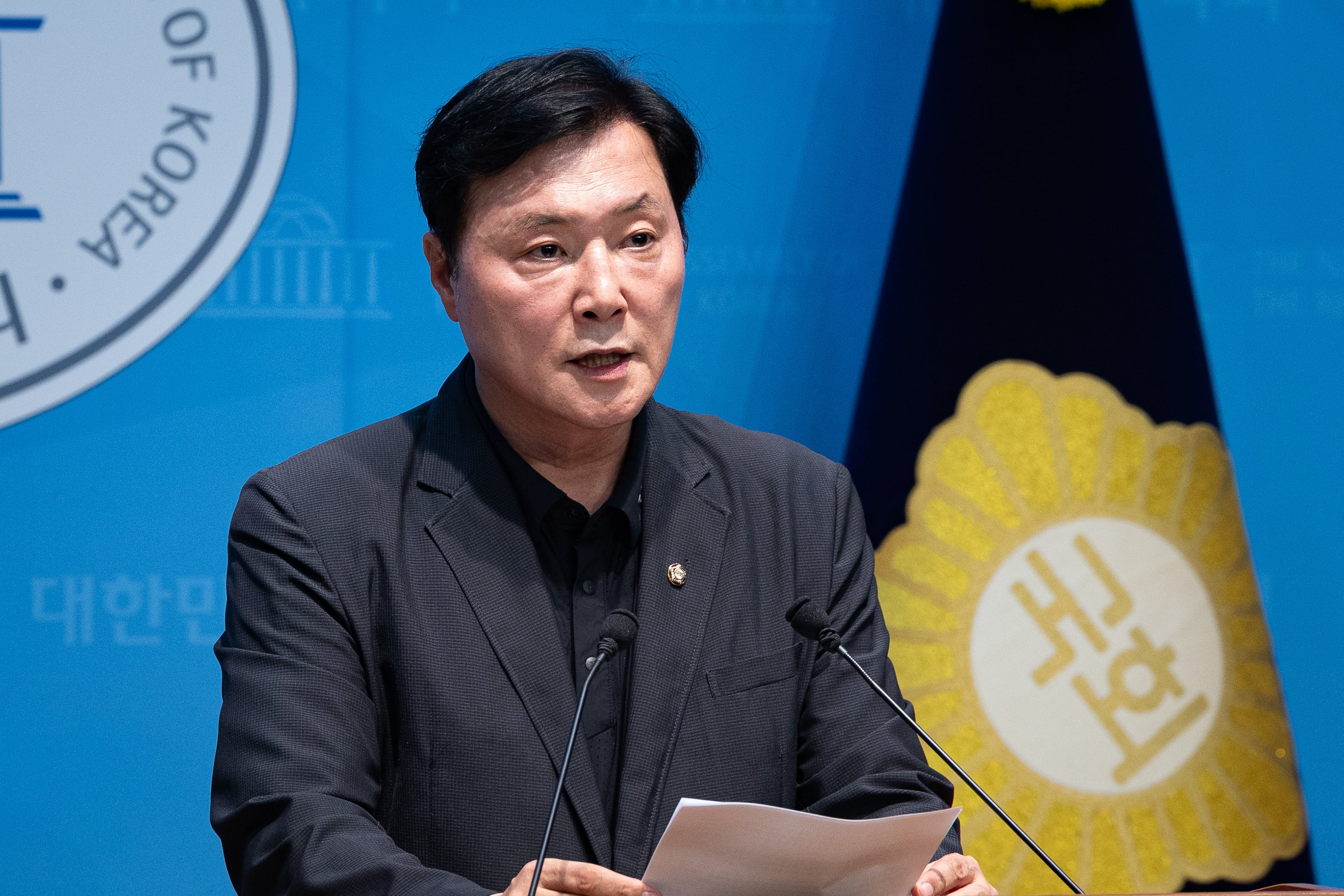
Democratic Party of Korea spokesperson Cho Gye-won said on the 8th regarding President Lee Jae Myung, “He is a president respected by people around the world.”

Spokesperson Cho met with reporters at the National Assembly in Yeouido, Seoul, that morning and stated, “The People Power Party is making an absurd claim that the president should be impeached,” adding, “How quickly has the Lee Jae Myung government normalized South Korea, which former President Yoon Suk-yeol had ruined?” He continued, “The administration is realizing the democratization of South Korea and achieving economic growth at the speed of light.”

He then said, “The People Power Party’s baseless criticism toward the president fundamentally violates common sense and decency,” adding, “I am certain they will face public condemnation.”

Democratic Party of Korea floor leader Han Byung-do also commented on the People Power Party’s mention of impeaching the president that day, calling it “not in their right mind.” Han posted on Facebook, “The People Power Party labeled the handling of the special counsel bill to investigate alleged fabricated indictments as ‘insurrection,’ and went as far as saying, ‘He must be ousted,’ ‘He should be sent to prison,’ and even brought up impeaching the president.”

He added, “It is outrageous for the remnants of the insurrection, who defended Yoon Suk-yeol’s illegal emergency martial law, to dare mention impeachment,” and claimed, “I suspect the intentions of People Power Party leader Jang Dong-hyeok, who has crossed a line that should never have been crossed. I am doubtful whether this is the worst political choice to solidify his unstable political position through impeachment agitation.”

Earlier, People Power Party leader Jang Dong-hyeok held a large-scale outdoor rally near Gyeongbokgung Station in Seoul the previous day. Regarding the special counsel bill to investigate alleged fabricated indictments, which was passed by the National Assembly led by the Democratic Party of Korea, he said, “This is the worst special counsel in history for Lee Jae Myung’s escape,” and insisted, “President Lee Jae Myung, who betrayed the people, must be immediately impeached and ousted.”

Monday, November 16, 2026

Bianca’s Commonwealth breakthrough: Nigeria takes a strategic seat at the table of democratic accountability

…The Raining Diplomatic Days Are Here Again. Is The Era Of Emeka Anyaoku Returning?

A t the announcement by President Bola Tinubu of Ambassador Bianca Odumegwu Ojukwu as Nigeria’s Foreign Affairs Minister, I had said that if there was one appointment President Tinubu had made and got right, it was the appointment of the Foreign Affairs Ministry. Everyday this assertion is proved right by the outstanding efforts of her Excellency, Bianca Ojukwu as she proves her mettle. There are moments in the diplomatic history of a nation when an appointment transcends the individual and becomes a statement about the country’s standing, influence and capacity to shape international conversations. Such a moment has arrived for Nigeria at the 28th Commonwealth Heads of Government Meeting (CHOGM 2026) in St. John’s, Antigua and Barbuda, where Nigeria’s Minister of Foreign Affairs, Ambassador Bianca Odumegwu-Ojukwu, has been appointed Vice-Chair of the Commonwealth Ministerial Action Group (CMAG).

This is a bewildering diplomatic recognition. It is a strategic elevation into one of the Commonwealth’s important political oversight mechanisms, a body charged with defending democracy, constitutional governance, human rights and the rule of law among its 56 member countries.

For Nigeria, this is a moment of national pride. For the Nigerian diplomatic establishment, it is a moment to take stock. For the Odumegwu-Ojukwu family, it is another remarkable chapter in a distinguished family history. And for Ambassador Bianca, it is another feather in a cap that continues to gather international recognition.

The raining diplomatic days are here again!

Those of us who have followed Nigeria’s foreign policy trajectory cannot help remembering the remarkable years of Chief Emeka Anyaoku, the distinguished Nigerian diplomat who served as the third Secretary-General of the Commonwealth from 1990 to 2000. Anyaoku was not merely a Nigerian occupying an international office. He was a global statesman whose voice commanded respect in the corridors of international diplomacy.

His tenure demonstrated that Nigeria could produce diplomatic personalities capable of influencing international conversations, mediating difficult political questions and contributing meaningfully to global governance.

Today, as Bianca Odumegwu-Ojukwu assumes this new Commonwealth responsibility, one is tempted to ask whether Nigeria is witnessing the return of an era when its diplomatic personalities once again occupy strategic international positions. An avalanche of diplomacy prophecies coming to pass are dropping in the testimony baskets of our foreign and diplomatic repository. Nigeria is returning to the centre of important Commonwealth conversations.

To appreciate this achievement, we must understand the woman behind the appointment.

Born Bianca Odinaka Onoh, she is the daughter of Chief Christian Chukwuma Onoh, former Governor of old Anambra State, and Lady Caroline Onoh. She subsequently became the wife of Dim Chukwuemeka Odumegwu-Ojukwu, one of the most important personalities in Nigeria’s political history.

Yet her story is not merely that of an illustrious family or a celebrated marriage. It is also the story of a woman who has established her own identity through education, international exposure and public service.

In 1988, she emerged as Most Beautiful Girl in Nigeria. She went on to win Miss Africa and, in 1989, became the first African to win the Miss Intercontinental crown. She also represented Nigeria at international beauty competitions, including Miss World and Miss Universe.

These were not simply personal triumphs. At a time when Nigeria was seeking greater international visibility, she became one of the country’s recognisable ambassadors abroad, demonstrating the capacity of Nigerian women to compete and excel internationally.

But perhaps more unique was her transition from international pageantry into law, diplomacy and governance. An outstanding transition!

She obtained her Bachelor of Laws degree from the University of Nigeria, Nsukka, in 1991 and was called to the Nigerian Bar in 1992. She later obtained a Master’s degree in International Relations and Diplomacy from Universidad Alfonso X El Sabio in Madrid, Spain, in 2008. Her professional development also included studies in human rights, international relations, conflict and cooperation.

This academic preparation is important because diplomacy is not sustained by ceremonial appearances and diplomatic receptions. It requires knowledge of international law, negotiation, geopolitics, conflict resolution and the delicate relationship between national sovereignty and international obligations.

Her public service journey gathered momentum in 2011 when she was appointed Senior Special Assistant to President Goodluck Jonathan on Diaspora Matters. This was a significant responsibility in a country whose citizens are scattered across continents, contributing to foreign economies, investing in businesses and maintaining strong connections with their homeland.

She subsequently served as Nigeria’s Ambassador to Spain from 2012 to 2015, during which she also represented Nigeria at the United Nations World Tourism Organization. Her assignment involved strengthening bilateral relations, promoting tourism diplomacy and advancing Nigeria’s international image.

Her diplomatic work and public service have attracted recognitions, including the Certificate of Merit from El Mundo Diplomatico for promoting constructive engagement between Nigeria and Spain, Africa’s Outstanding Ambassador recognition by The Voice magazine in 2014, and an Ambassador of Excellence Award from the Anambra State Government in 2016. Her international pageantry distinctions remain an important part of her public achievements.

She also served in political and peacebuilding assignments, including the Anambra State Truth, Justice and Peace Commission, where questions of insecurity, dialogue, reconciliation and social stability demanded considerable sensitivity.

In November 2024, she joined President Bola Ahmed Tinubu’s administration as Minister of State for Foreign Affairs. Following Ambassador Yusuf Tuggar’s resignation, she was appointed substantive Minister of Foreign Affairs on April 29, 2026. She formally assumed duty on May 8, 2026, reaffirming the administration’s commitment to the Four-D foreign policy agenda of Democracy, Development, Diaspora and Demography.

Now comes the Commonwealth breakthrough.

Established in 1995 under the Millbrook Commonwealth Action Plan, the Commonwealth Ministerial Action Group was created to protect the fundamental political values of the organisation. Its responsibilities include responding to unconstitutional changes of government, electoral irregularities, restrictions on political participation, interference with judicial independence, human rights violations and threats to democratic institutions.

Its mandate was broadened in 2011 to allow more proactive engagement with member states facing threats to constitutional governance.

The group is chaired by Malta’s Foreign Affairs Minister, Chris Fearne. Bianca’s emergence as Vice-Chair gives Nigeria an opportunity to participate more prominently in shaping the Commonwealth’s responses to democratic challenges.

What does Nigeria stand to gain?

First, diplomatic visibility and influence. Nigeria now occupies a leadership position within an important Commonwealth political mechanism. This creates opportunities to influence discussions on democracy, constitutional order and institutional accountability.

Second, it strengthens Nigeria’s international profile as a country participating in the defence of democratic governance and human rights.

Third, it provides opportunities for strategic networking, coalition-building and stronger relationships with Commonwealth governments.

Fourth, Nigeria can use this platform to advance African interests, particularly at a time when parts of the continent are experiencing military takeovers, political instability and weakening democratic institutions.

But Nigeria must look beyond the political benefits. The 2026 CHOGM theme, “Accelerating Partnerships and Investment for a Prosperous Commonwealth”, provides an opportunity to connect diplomatic influence with economic benefits. Our country must pursue investment, technology transfer, educational partnerships, tourism development and access to international markets.

We have returned from Antigua with not only handshakes but laurels.Nigeria must roll out the drums. The days of the Giant’s roar are here again.

There is also her family dimension to this feat, her husband’s historical stature and her own professional journey combine to give this achievement a distinctive family significance. Her children also have every reason to take pride in a mother whose public career continues to attract international recognition.

However, this achievement is beyond one family. It belongs to Nigeria and every citizen who desires a country respected and taken seriously in international affairs.

The real test of her new responsibility will be the quality of her contribution. CMAG operates in a politically sensitive environment where questions of sovereignty, constitutional legitimacy and human rights can generate difficult diplomatic confrontations. She will require fairness, courage, consistency and considerable diplomatic maturity.

The legacy of Emeka Anyaoku reminds us of what Nigerian diplomacy can achieve when experience, intellectual depth, national purpose and international credibility converge. His era remains a treasured chapter in our diplomatic history.

Perhaps we are witnessing the opening of another promising chapter.

From the international beauty stage to the courtroom, from diaspora engagement to ambassadorial assignments, and from multilateral diplomacy to the leadership of Nigeria’s foreign affairs establishment, Bianca Odumegwu-Ojukwu has travelled a remarkable public-service journey.

Today, we celebrate a Nigerian woman who has reached another significant milestone. We celebrate a family whose name remains woven into the political history of our country. Above all, we celebrate Nigeria’s renewed opportunity to influence important international conversations.

Nigeria is not condemned to the margins of global affairs. We have the people, the intellectual capacity, the diplomatic experience and the historical credentials to command a place at the table.

The raining diplomatic days are here again!

Congratulations, Ambassador Bianca Odumegwu-Ojukwu. Congratulations, Nigeria. May this Commonwealth breakthrough translate into enduring diplomatic dividends for our nation.

Provided by SyndiGate Media Inc. ( Syndigate.info ).

Sunday, November 15, 2026

Bishop Ekechukwu: Why politicians should stop the drum beats of war

Bishop Dr. Herbert Ekechukwu is the Presiding Bishop of The Lord of Glory Ministry as well as a public affairs commentator. Touched by reports of political attacks in parts of the country, he pens down this message to Nigerians at this critical period, urging the political class to check the violent trend which he fears may destroy the nation. A MUST Read:

INTRODUCTORY TEXTS

“Blessed are the peacemakers, for they shall be called sons of God.” — Matthew 5:9

“When the righteous are in authority, the people rejoice; but when a wicked man rules, the people groan.” — Proverbs 29:2

Nigeria At Dangerous Crossroads

Nigeria is standing at a dangerous crossroads. The signs are no longer hidden. They are in our streets, in our motor parks, on our television screens, and in the language of our politicians.

Political thuggery is on the increase. Election campaigns, which should be festivals of ideas, have become battlefields. If we are not careful, we are breeding the very conditions that led us to civil war before.

Warning By A Watchman

This is not a prophecy of doom. It is a warning from a concerned citizen and a watchman. The Bible says in Ezekiel 33:6, “If the watchman sees the sword coming and does not blow the trumpet, and the people are not warned, their blood will be on his hands.” I have seen the sword. I am blowing the trumpet.

Return Of Political Thuggery

In the early years of this democracy, we thought thuggery would fade. We were wrong. It has returned, more organised, more funded, and more brutal. Today, thugs are no longer just street boys hired on election days. They have become a system. They are recruited, armed, clothed in party colours, and protected by powerful men. They snatch ballot boxes, intimidate voters, chase away electoral officials, and attack opposition supporters.

In Lagos, Kano, Rivers, Anambra, and many other states, we have seen the same pattern: genuine voters stay at home out of fear, while thugs decide who wins. That is not democracy. That is gangsterism with ballot papers.

The Scripture warns us: “These six things the Lord hates, yes, seven are an abomination to Him: hands that shed innocent blood, a heart that devises wicked plans, feet that are swift in running to evil.” — Proverbs 6:16-18

Violent Men Destroy Nations

When thugs become the deciders of elections, the best candidates will not emerge. The most violent will emerge. Violent men do not build nations; they destroy them.

Political thuggery also destroys our youth. The young man who is given N5,000 and a weapon to cause trouble today is being trained to become tomorrow’s armed robber, kidnapper, and cultist. Politicians use them in February and abandon them in March.

The boy who tasted power through violence will not go back to farming or learning a trade. He will look for the next politician to hire him. We are creating a generation that believes violence pays more than hard work.

When Words Become Weapons

Elections should be about manifestos. In Nigeria, they are becoming about insults, threats, and ethnic war cries. Instead of telling us how they will fix power, roads, schools, and security, many politicians tell us who to hate. They divide us: Yoruba against Igbo, Hausa against Christian, North against South, old against young. They use social media to spread fake news, doctored videos, and hate speech. A single lie on WhatsApp can burn down a market in one night.

The Bible says, “Death and life are in the power of the tongue.” — Proverbs 18:21

Verbal, Violent Campaigns

Violent campaigns are not just physical. The verbal violence is even more dangerous. When a leader says, “If we lose, we will make the country ungovernable,” he is planting a seed of war. When a supporter says, “They must not vote in our area,” he is declaring war on his own neighbour.

We must remember: In Rwanda, it was not guns that started the genocide. It was words on the radio. In Nigeria in 1966, it was not just soldiers. It was hate speeches and rumours that pushed us into a 30-month civil war that killed over a million people. We have been there before. We cannot afford to go there again.

Today, our campaigns are breeding three dangerous children: Tribal Biased Neighbours who have lived together for 40 years now see each other as enemies because of politics.

Militarising Youth

Young people are being armed with machetes and guns in the name of “defending our votes.”

Institutional Failure

When people believe elections are rigged and courts are bought, they will stop going to court and start going to the streets. That is how civil unrest begins.

Civil War In The Making

Let us be honest. No nation goes to war in one day. Civil war is bred slowly. It is bred when leaders refuse to accept defeat, when security agencies become partisan, when the poor feel they have no hope, when ethnic groups feel marginalised, when guns become easier to buy than food, and when the youth have no jobs, no future, and no fear.

Signs Of Impending Catastrophe

We have banditry in the North-West, insurgency in the North-East, separatist agitations in the South-East, farmer-herder clashes in the Middle Belt, and cult wars in the South-South and South- West. If you add political violence to this already burning fire, you will get an explosion that no one can control.

A civil war in 2026 will not be like 1967. It will be worse. Then, we fought with rifles in the bush. Now, we will fight in our streets, in our markets, in our churches and mosques, with our neighbours. Social media will make it spread in minutes. And there will be nowhere to run to.

Those who are beating the drums of war have houses in Dubai, London, and America. Their children are schooling abroad. When war starts, they will fly out. It is the poor market woman in Mile 12, the okada rider in Kano, the student in Enugu, who will die. Politicians do not die in wars they create. The people die.

“Woe to those who call evil good, and good evil.” — Isaiah 5:20

The Root Causes

To solve a problem, we must be honest about its roots.

Do-or-DiePolitics: Manypoliticiansseeelections as war because politics is the only business they know. For them, losing an election is losing access to contracts and power. So, they will kill to win.

Weaponised Poverty: A hungry youth is a ready weapon. When a graduate has no job for five years, N20,000 to cause trouble looks like a salary.

Nigeria is standing at a dangerous crossroads. The signs are no longer hidden. They are in our streets, in our motor parks, on our television screens, and in the language of our politicians. Political thuggery is on the increase. Election campaigns, which should be festivals of ideas, have become battlefields. And if we are not careful, we are breeding the very conditions that led us to civil war before.

This is not a prophecy of doom. It is a warning from a concerned citizen and a watchman. The Bible says in Ezekiel 33:6, “If the watchman sees the sword coming and does not blow the trumpet, and the people are not warned, their blood will be on his hands.” I have seen the sword. I am blowing the trumpet.

No Election Is Worth The Blood Of A Nigerian

When the Independent National Electoral Commission (INEC) is not seen as independent, when police arrest only the opposition, when judges deliver judgments that look bought, people lose hope in peaceful change.

Tribal, Religious Fanaticism, Manipulations

Our leaders have learnt that it is easier to divide us by tribe than to unite us by development.

Traditional, Cultural Loyalty

Thugs are arrested on camera and released the next day. Politicians who incite violence are never prosecuted. When there is no punishment, violence becomes a campaign strategy.

Coming Out Of These Jigsaws

It is not too late. Nigeria has survived worse. But survival requires action, not prayers alone. Faith without works is dead (James 2:26).

For Government and INEC:

We need special Electoral Offences Tribunals. A thug caught snatching a ballot box must be jailed before the next election, not after 10 years. And the politician who sponsored him must be disqualified for 10 years. Until sponsors fear punishment, thugs will keep working.

INEC’s results must be transmitted electronically from polling units in real-time, with no room for manipulation at collation centres where most rigging happens. Police must protect all parties equally.

For Political Parties, Candidates, they should sign a peace pact with consequences, not just a photo opportunity in Abuja. Any candidate whose supporters engage in violence must face sanctions.

Campaign On Issues, Not Insults

We, the voters, must demand debates. Ask every candidate: How will you create jobs? How will you stop kidnapping? If he cannot answer, do not vote for him, no matter his tribe.

Role Of Traditional, Religious, Community Leaders

Our Pastors, Imams, Obas, Emirs, and Chiefs must become peace builders. The pulpit and the mosque must not become campaign grounds. Preach peace before the election. Open your halls for peace meetings between rival parties. When a politician comes to your church to preach hate, stop him.

“If it is possible, as much as depends on you, live peaceably with all men.” — Romans 12:18

The Role Of The Youth

Young people, you are the target. They want to use you as weapons. Refuse! Do not sell your future for N5,000. That money will finish in one day, but the bullet you fire or the ballot box you snatch will hunt you for life. If a politician wants you to fight, ask him: Where are your children? Why are they not on the streets fighting?

Instead, become election observers, vote protectors, and peace ambassadors. Use your phone to record violence, not to spread fake news. Your vote is more powerful than any thug’s gun.

For the Media, Social Media Users

Journalists must stop being party praise-singers. Report violence, name suspectes sponsors, and fact-check lies. And every citizen: Before you forward that hate message on WhatsApp, ask: Is this true? Will this kill someone? If you cannot verify, do not forward. You may be forwarding a civil war.

New Political Culture Possible

We must build a new political culture. We must vote based on character and competence, not tribe. We must accept defeat gracefully. In a real democracy, you lose today and win tomorrow. The man who loses an election is not your enemy. He is your neighbour.

Conclusion: The Choice Before Us

Nigeria is like a house with petrol in the sitting room and politicians playing with matches. We can either put out the matches, or we will all burn together — Igbo, Yoruba, Hausa, Christian, Muslim, rich, poor.

The warning is clear: Political thuggery is increasing. Election campaigns are becoming violent. Civil war is being bred in small doses every day. But, we still have a choice. We can choose peace over power. We can choose the ballot over the bullet. We can choose Nigeria over party.

History will judge this generation. Shall we be the generation that watched Nigeria burn because we kept quiet, or the generation that saved it because we spoke up and acted? Let us choose peace. Let us choose life. Let us choose Nigeria.

“For God has not given us a spirit of fear, but of power and of love and of a sound mind.” — 2 Timothy 1:7. No election is worth the blood of any Nigerian.

Provided by SyndiGate Media Inc. ( Syndigate.info ).