Long before Moe Harukawa was killed, she lived in fear. The 21-year-old shop assistant had reported her ex-boyfriend to police and a court had ordered him to stay away from her.
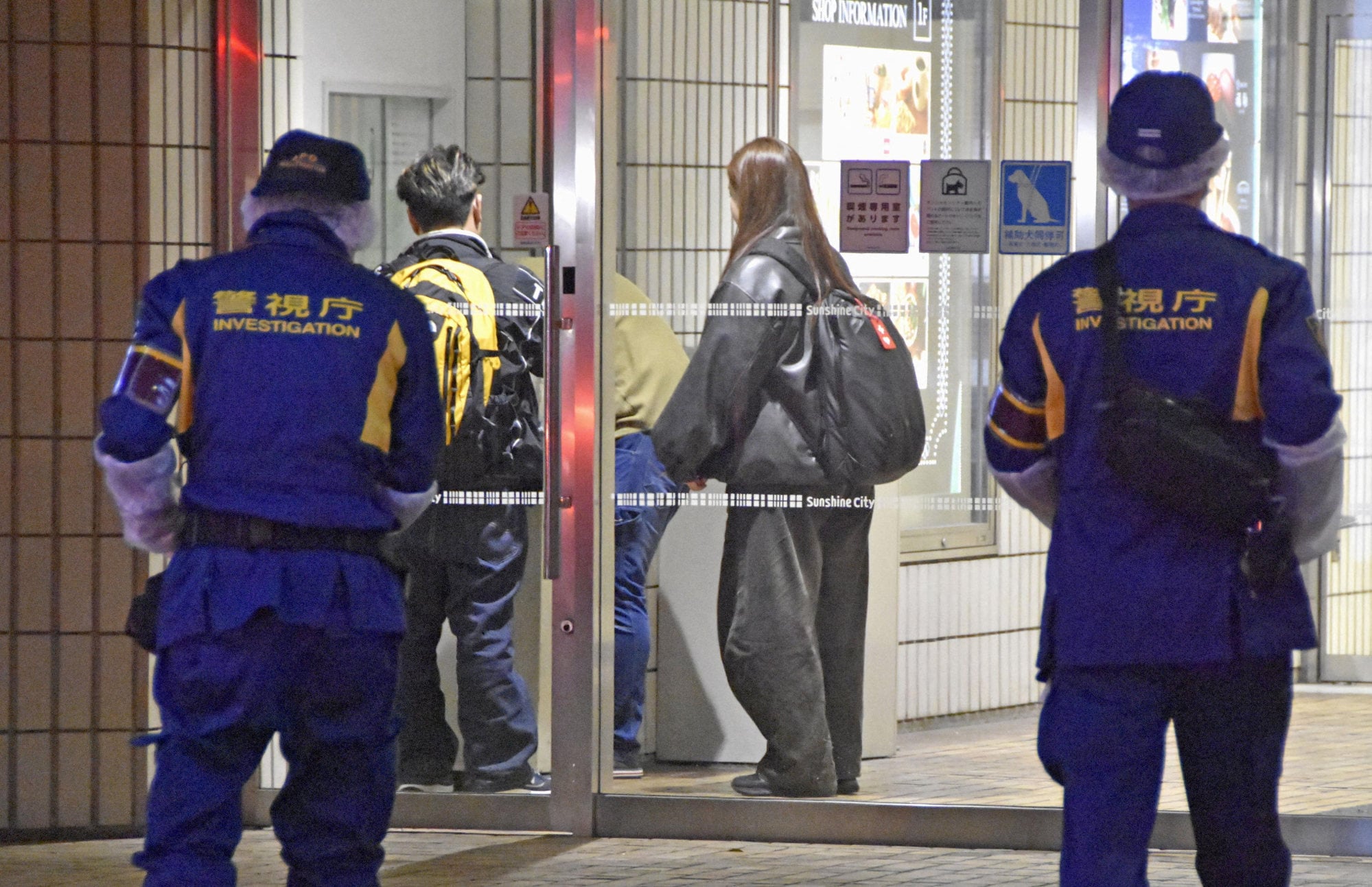
Yet weeks later, Taiki Hirokawa, 26, walked into Harukawa's workplace - a packed Pokemon store in Tokyo's Ikebukuro district - and stabbed her repeatedly in the neck and torso before turning the knife he was carrying on himself. Both later died in hospital.
Harukawa's gruesome murder in March at the hands of a man who had already been arrested and charged with stalking her has stirred debate in Japan on how to stop such fixation-driven attacks.
Do you have questions about the biggest topics and trends from around the world? Get the answers with SCMP Knowledge , our new platform of curated content with explainers, FAQs, analyses and infographics brought to you by our award-winning team.
A number of high-profile stabbings have hit the headlines in recent years, with a spate of knife attacks carried out by teenagers in 2025 adding to public anxieties about safety after two masked men went on separate stabbing sprees on the Tokyo subway system four years earlier.
Authorities have also faced angry allegations that they did not do enough to protect the victim in the latest case.
Hirokawa dated Harukawa from October 2024 to July 2025, but he would not accept the end of their relationship. In December last year, she reported him to the police for stalking and officers who escorted her home found him lurking nearby.
Officers discovered a knife in his rental car and footage on his phone that he had recorded of Harukawa without her knowledge. He received a police warning, but apparently did not heed it, being arrested the following month for weapon possession and voyeurism.
Hirokawa was released at the end of January after a court issued a restraining order and he signed a statement promising to stop harassing Harukawa. He refused to seek counselling as police had advised.
She stayed with relatives for a few weeks before returning to her flat, declining a suggestion to change jobs as working at the Pokemon store was her dream. Police say Hirokawa was not seen stalking her again until the day of the attack.
"This case really hit hard," said Makoto Watanabe, a professor of communications and media at Hokkaido Bunkyo University. "It took place in the middle of the day, in a store with around 100 children and parents and there was nothing that anyone could do to stop it."
Stalking cases that ended in death were not uncommon in Japan, he said, "but it rarely takes place so publicly".
A panel of legal experts has since been set up to review and propose revisions to Japan's Anti-Stalking Act, first introduced in 2000, including requiring anyone charged with stalking to wear a GPS tracking device - a proposal that has attracted criticism from some quarters for violating personal rights.
The panel will make recommendations to the government and observers say Harukawa's killing will doubtless be foremost in members' minds.

Stalking surge
Government statistics show that 22,881 people in Japan sought police advice about being stalked last year, up nearly one-sixth on the year before, while a record 3,037 restraining orders were issued.
Vicki Beyer, a former law professor at Tokyo's Hitotsubashi University, said the rise in cases partly reflected women's greater awareness of stalking and a growing willingness to report it, much as reports of sexual harassment had risen in Japan in recent years.
"Japan has been behind other countries when it comes to crimes against women," she said. "Only acting after a gruesome murder has happened is very much a case of closing the barn door after the horse has bolted."
Even so, Beyer said the authorities were "slowly figuring out what needs to be changed" and suggested that a public-relations campaign to win "hearts and minds", stressing the extra layer of safety GPS monitoring could provide would go a long way towards settling the debate in favour of the proposal.
Societal observers such as Watanabe suspect a lack of parental discipline may have been a factor in the rising case numbers.
"When I was a kid, if I did something wrong in the neighbourhood, a neighbour would tell me off," he said.
"It was the same at school. Now, everyone is too frightened to reprimand a child ... even parents, so they grow up thinking they can do anything they want and no one is ever going to stop them."
He also suggested officials might use the case to overcome objections based on the right to move freely, yet expected little resistance from Japanese society.
"Our society has changed in the last couple of decades," he said. "Everyone has a smartphone, but our human relationships have narrowed dramatically ... That means a generation of young people has no experience of 'no' and they are not able to mentally cope when that happens."
Social media reaction has been strongly in favour of tracking stalkers. One commenter even went as far as to say murderers and sex offenders "should have GPS trackers implanted".
Another said Japan was "too hung up" on human rights and too sympathetic towards offenders. A third dismissed the current emphasis on rehabilitation and counselling as "naive nonsense", saying that for victims "it's a matter of life and death".
Sumie Kawakami, a lecturer at Yamanashi Gakuin University and author of a book on gender issues, said that tracking stalkers would inevitably raise questions about similar monitoring for released murderers and other serious offenders, for whom no such rules currently existed.
Stressing that stalking was not a crime to be taken "lightly", she nevertheless said she expected there to be strong opposition to a requirement for stalkers to wear trackers since "freedom of movement is guaranteed" in Japan.
"Women will obviously welcome this new rule if it comes in and I imagine it will make anyone who has been stalked feel safer if they know their attacker can be traced," Kawakami said.
"We just have to find the right balance between the rights of the two sides."
More Articles from SCMP
Meet F1 world champion Kimi Antonelli’s parents, Marco Antonelli and Veronica Pomaro
China-Switzerland trade partnership offers a model amid fraught EU ties
Woman hurt in flat fire suspected to have been caused by aromatherapy items
Tarmo Peltokoski begins HK Phil tenure with Mahler’s monumental Symphony No 8
This article originally appeared on the South China Morning Post (www.scmp.com), the leading news media reporting on China and Asia.
Copyright (c) 2026. South China Morning Post Publishers Ltd. All rights reserved.


No comments:
Post a Comment