Technology and philosophy

Showing posts with label democracy. Show all posts

Saturday, June 27, 2026

Sudan's Somoud Coalition Rejects Islamist Involvement; Minawi Opposes Exclusion

June 9, 2026 (NAIROBI) - On Tuesday, the Civil Democratic Coalition of Revolutionary Forces (Somoud) reaffirmed its complete refusal to permit the disbanded National Congress Party (NCP) to take part in any upcoming political activities, even as leader of the Sudan Liberation Movement, Minni Minawi, expressed resistance against being excluded from politics.

The alliance ended a three-day physical session of its leadership body in Nairobi, Kenya's capital city. Led by Abdalla Hamdok, the concluding statement highlighted the importance of keeping out the Islamic Group, the abolished NCP, and their affiliated groups, along with eradicating their impact within armed forces, law enforcement, and public administration sectors.

Nevertheless, efforts to remove the NCP encounter opposition from certain political groups and military organizations. Minni Minawi, head of a Sudan Liberation Movement group and governor of Darfur, said on Tuesday that he opposes excluding any political entity from the Sudanese discussion.

Minawi emphasized that the political process should involve every group throughout the spectrum, particularly highlighting the NCP and groups within the Forces for Freedom and Change (FFC).

Call for Humanitarian Truce

Somoud encouraged the Sudanese Army and the RSF to embrace a humanitarian ceasefire proposed by the Quartet group. The alliance advocated for unhindered distribution of assistance to create conditions for a political dialogue aimed at restoring civil governance and merging the nation's various groups into one proficient national military force.

The leadership office voiced significant worry about the worsening living and medical situations faced by Sudanese people within their own country as well as in nations where they have sought refuge, calling for global action and asking receiving countries to stop mandatory returns.

The alliance recognized continued initiatives aimed at forming an extensive civilian opposition to the conflict, supporting recent statements issued in Nairobi, Cairo, and Addis Ababa. It additionally acknowledged a U.S. move to classify the Islamic Movement and the Al-Baraa bin Malik group as terror organizations.

In addition, the Sudan Liberation Movement group headed by Abdel Wahid al-Nur declined to endorse the shared outlook with the Democratic Bloc at the latest talks in Addis Ababa, stating differences regarding the clear removal of the NCP, the Islamic Group, and their associated entities.

Supplied by SyndiGate Media Inc. ( Syndigate.info ).

Friday, June 26, 2026

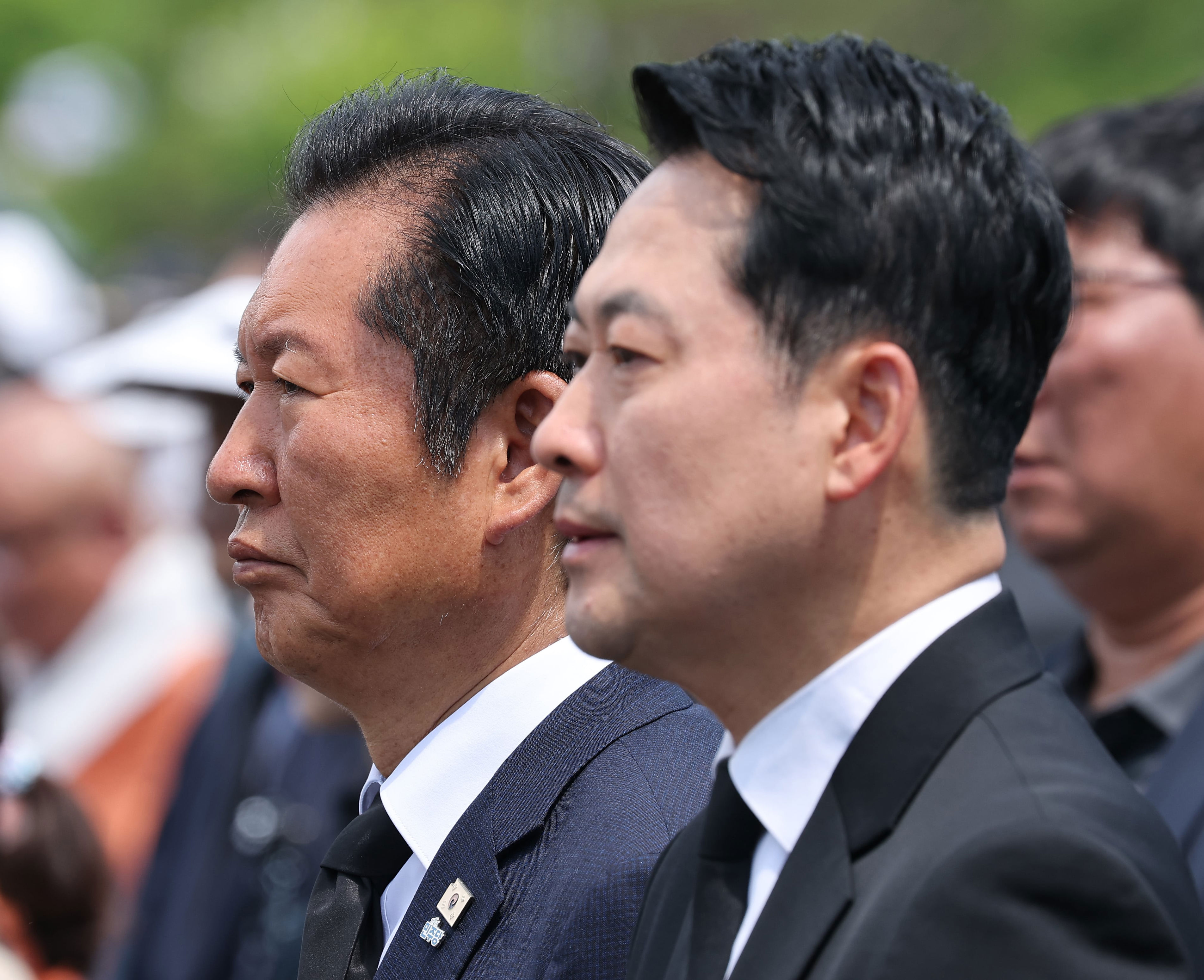
Leaders of Major Parties Suffer Big Losses in Local Elections

During the June 3 local elections for leadership positions in metropolitan autonomous entities, the Democratic Party of Korea won 12 seats, while the People Power Party captured 4. Nonetheless, a public poll indicated that 40.3% of respondents believed the People Power Party was actually victorious, surpassing the 34.3% who saw the Democratic Party as the winning side, with an accuracy range of ±3.0 percentage points. Still, most voters from both the governing and opposing parties felt their respective party leaders were the main losers in the contest.

A study carried out by Media Tomato for News Tomato between the 8th and 9th showed that 40.3% of participants considered the People Power Party the actual victor of the June 3 local elections. 34.3% opted for the Democratic Party, 15.9% said "none," 6.7% picked different parties, and 2.9% were unsure.

Within the base of Democratic Party voters, 61.3% considered the Democratic Party to be the actual victor, whereas only 17.9% saw the People Power Party as such. In contrast, 74.2% of People Power Party backers felt their party had emerged victorious, with merely 6.8% acknowledging the Democratic Party’s win. For independents, 37.1% leaned toward the People Power Party being the winner, while 31.5% backed the Democratic Party, with these figures lying within the range of statistical uncertainty.

When questioned about which political figure suffered the most significant defeat, 30.3% mentioned Jang Dong-hyeok of the People Power Party, 25.6% opted for Jung Chung-rae from the Democratic Party, and 19.6% said "no one." Eleven point eight percent pointed to Cho Kuk, the previous leader of the Rebuilding Korea Party, who stepped down following his loss in a local election in Pyeongtaek, Gyeonggi Province. Eight point four percent expressed uncertainty, while 4.4% picked Lee Jun-seok of the Reform Party.

Among followers of the Democratic Party, 34.7% considered their party head Jung Chung-rae as the main failure, with 24.4% naming Jang Dong-hyeok and 11.0% selecting Cho Kuk. For supporters of the People Power Party, 41.2% blamed their leader Jang Dong-hyeok, 18.8% targeted Jung Chung-rae, and 9.8% chose Cho Kuk. Independents were divided nearly evenly: 26.5% selected Jang Dong-hyeok, 24.4% opted for Jung Chung-rae, and 11.8% supported Cho Kuk.

Before the Democratic Party's national convention in August aimed at selecting a new leader, a simulated three-candidate race showed 24.0% support for Prime Minister Kim Min-seok, 18.4% backing current leader Jung Chung-rae, and 15.8% endorsing Representative Song Young-gil. Within the ranks of Democratic Party voters, Kim Min-seok was ahead with 40.1%, followed by Song Young-gil with 24.0% and Jung Chung-rae at 22.9%.

In terms of public support, the Democratic Party received 42.9%, marking a decrease of 1.4 percentage points compared to three weeks earlier. Meanwhile, the People Power Party increased to 34.7%, gaining 4.4 percentage points, which reduced the difference between the two major parties from 14.0 to 8.2 percentage points. Additional political groups included the Rebuilding Korea Party with 3.5%, the Reform Party at 2.7%, the Progressive Party with 2.0%, and other smaller factions accounting for 3.7%. A total of 9.6% of respondents did not have a favored party, while 0.7% remained uncertain.

The president's approval rate regarding national matters dropped to 54.0%, decreasing by 5.2 percentage points, whereas dissatisfaction increased to 40.9%, rising by 5.3 percentage points.

The study took place using a wireless automatic response system between the 8th and 9th, focusing on 1,036 adults across the country. The participation rate stood at 2.7%, with a margin of error of ±3.0 percentage points at a 95% confidence interval. Additional information can be found on the National Election Survey Deliberation Commission's official site.