Technology and philosophy

Showing posts with label home and property. Show all posts

Sunday, June 28, 2026

First-Time Buyers Drive 45.6% of Seoul Housing Deals

Although current property owners in South Korea face limitations due to the government's broad lending rules and increased taxation, first-time buyers have become significant forces in Seoul's housing sector. By taking advantage of more lenient borrowing terms, they have acquired almost half of all apartment buildings and shared residential properties sold in the city this year.

As per the information released by the Supreme Court Registration Information Plaza on the 11th, during the first five months of this year, 32,843 out of 72,025 recorded transactions involving shared residential properties (such as apartments, townhouses, and office-tel units) in Seoul were made by initial purchasers, making up 45.6% of total sales. This indicates that nearly half of all residences sold in Seoul went to individuals without prior property ownership. This is the highest proportion ever documented since data collection started in 2010, showing an increase of over nine percentage points when compared to the corresponding period last year (which stood at 36.5%).

The main reason behind this situation stems from the contradiction within government loan policies. Although the government classified all of Seoul as a controlled area under the "October 15 Measures" last year, limiting mortgage loans to 40%, first-time homebuyers continue to be eligible for loans covering up to 70% (capped at 600 million South Korean won). Indeed, the share of first-time buyers, which was 38.6% at the close of last year following stricter mortgage rules, has increased each month this year, peaking at 48.7% in April.

With many property owners hurriedly selling their houses to evade higher capital gains tax, introduced from May 10th this year, first-time purchasers took advantage of these quick sales, mainly in suburban regions. In neighborhoods such as Nowon-gu (60.6%) and Seongbuk-gu (59.8%), more than six out of every ten buyers acquired their initial residence. Areas including Gangbuk-gu (57.2%), Seodaemun-gu (55.2%), Gwanak-gu (52.7%), Gangseo-gu (50.9%), Geumcheon-gu (50.2%), and Guro-gu (50.1%) also witnessed first-time buyers making up more than half of all transactions. On the flip side, Gangnam-gu (31.6%) and Seocho-gu (32.7%), known for expensive housing options, had the smallest percentages in Seoul, indicating an uneven real estate landscape.

The largest group of individuals buying their first home were those in their 30s. This segment made up 56.1% of first-time purchasers in Seoul this year, marking the first instance where they exceeded 50% since data collection started. This pattern is linked to the "triple rise" in property sales, jeonse payments, and rental costs, which has led many in their 30s to aggressively buy houses on the fringes of Seoul through borrowing.

Friday, June 26, 2026

Defao Displays New Luxury Cars Weeks After Demolished Mansion

  • Ex-Deputy Speaker of Parliament, Jared Okoth Okode, has revealed a new opulent house along with an array of premium vehicles only weeks after his former residence was destroyed in a property conflict.
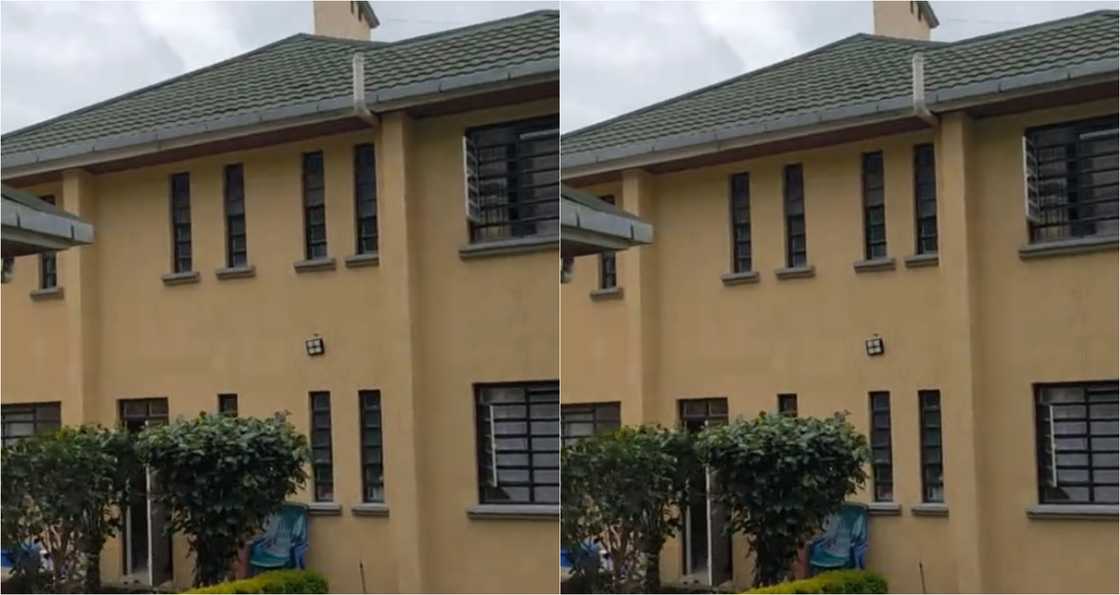
  • The latest development showcases an elegant contemporary style, featuring well-kept gardens, stone-paved pathways, a staff residence, and a beautifully designed estate.
  • His driveway features high-end cars including an Audi A6, Range Rover Sport, Mercedes GLE, Mercedes C200, and Toyota Prado TX.

A former member of the County Assembly from Matare North, Jared Okoth Okode—commonly referred to as Defao—has revealed a brand-new opulent residence along with a remarkable collection of premium cars only weeks following the destruction of his previous house.

The home of Defao was one of many destroyed in the Marurui region along the Northern Bypass due to a property conflict.

A video posted on his social media accounts showed the ex-MCA seemingly transforming his difficult loss into an impressive resurgence through Bien Baraza's track. "My enemies are suffering" plays in the background.

"They believed I was defeated, so I acquired a better perspective. Divine favor became evident," he wrote.

What characteristics does Defao's latest real estate offer?

The latest estate includes walls painted in creamy tones, a rooftop covered with green tiles, well-kept grassy areas, stone-set pathways, and an exquisitely designed outdoor space full of trees and decorative flora.

Additionally, the dwelling features a servants' quarters, enhancing its luxurious appearance.

A notable array of high-end cars was located inside the premises, featuring an Audi A6, a Mercedes GLE, a Mercedes C200, a Toyota Prado TX, and a Range Rover Sport.

Watch the video below:

What was the response of supporters to Defao's latest acquisition?

Supporters have commended his belief and return.

Here are some of the remarks:

Candy stated:

This individual has elevated my belief.

Madanji Woud Rembo said:

I didn't accept the mistake. The bigger the game, the higher the level.

Georgyne Odhiambo stated:

That's an accurate representation of not surrendering, regardless of the outcomes...well done, buddy.

Mac Amani wrote:

God, father like this father, Masha'Allah.

Government 1 said:

That's my sibling Defao. Until we meet again in the parliament, buddy.

G . Njenga stated:

Excellent father... God is supreme.

kiongozi🇰🇪🇰🇪🇰🇪Edu stated:

Your people and this country.

Defao's spouse displays the large Mururu mansion that was destroyed

In a separate report, former Mathare North MCA Defao’s wife Maureen Akinyi showed a view of her house that was destroyed in Marurui near the Northern Bypass due to a property conflict.

Posting a video of the house on TikTok, she demonstrated what the property looked like prior to its destruction. The home featured a white and gray color scheme, a single-story mansion with a large metal door, and a glass door leading to the balcony. The family's estate was covered in cabros, and luxury vehicles were parked along the driveway. Additionally, Defao's wife expressed hope for rebuilding following their loss through a gospel song, mentioning that God has always been reliable to her.

Eco-Home Built for £600k Hits Market at £3.25m — But Utility Bills Are a Breeze

  • Have you got a tale to tell? Send your stories to tips@Ants.co.uk
  • View more Daily Mail on Google – add us as a Favorite Site

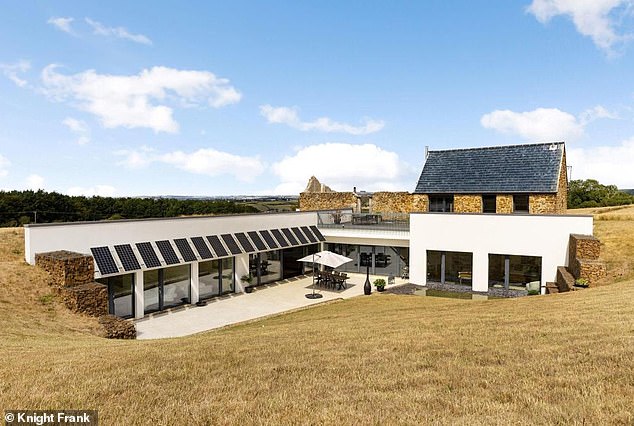
An environmentally friendly home featured on Grand Designs, originally constructed for £600,000, is now available for sale at an astonishing £3.25 million — yet offers a benefit many property owners would love to have: completely free heating costs.

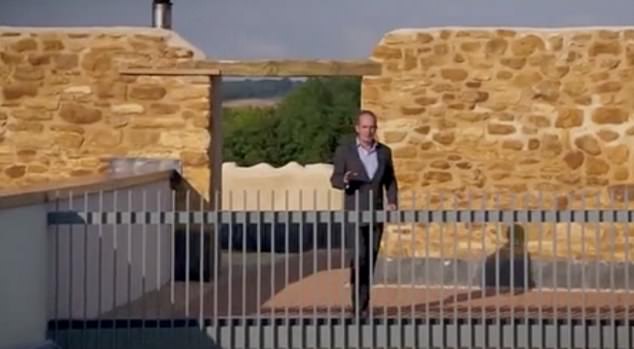
The Underhill House in the Cotswolds was showcased on the popular show or Featured on the successful series, Underhill House in the Cotswolds or Underhill House located in the Cotswolds appeared in the trending program Channel 4 highlighted when it was celebrated as England's initial officially recognized Passivhaus dwelling – indicating it is virtually sealed against air leakage and does not necessitate traditional heating systems.

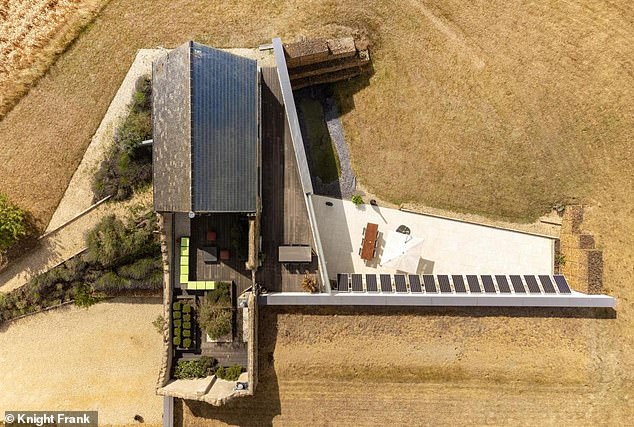
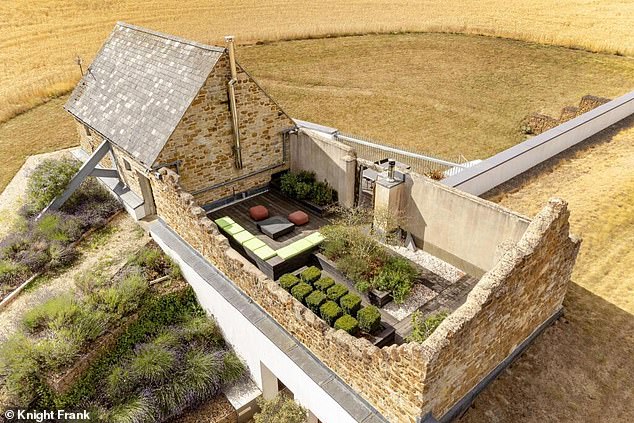
A six-bedroom home, excavated into a slope so as to remain nearly hidden from the nearby landscape, was constructed by architects Helen and Chris Seymour-Smith in 2010.

The spacious house was sold for £1.4 million in 2012 — over twice what it originally cost to build — and is once again available for sale at £3.25 million.

However, although the listed price might cause many purchasers to be surprised, the operational expenses are remarkably minimal.

The home is constructed in such a way that it retains warmth extremely effectively, eliminating the necessity for traditional heating systems.

No radiators are present; instead, heat generated by sunlight, equipment, and individuals indoors is distributed via a ventilation system called an MVHR.

The present proprietor, Glenn Jones, expressed feeling "extremely confident" in his highly efficient residence as he didn't have any expenses to cover.

A university research published in 2014 stated: "Glenn mentioned that their electricity costs are zero because of the solar panels installed on the rooftop."

Apart from that, the only expenses are £300 per year for firewood and a new filter for the MVHR system every six months.

Amidst increasing gasoline prices, Glenn said, 'I feel incredibly comfortable.'

It appears that even though they didn’t intend to purchase a Passivhaus, Glenn and his family remain satisfied with the advantages of residing in one.

Adjacent to a renovated 300-year-old Cotswold stone barn, Underhill House lies in the preserved landscape along the boundary of Gloucestershire and Warwickshire, close to Barton-on-the-Heath.

It was formerly inhabited by a shepherd and was said to have belonged at some point to Roger Taylor, the drummer from Duran Duran.

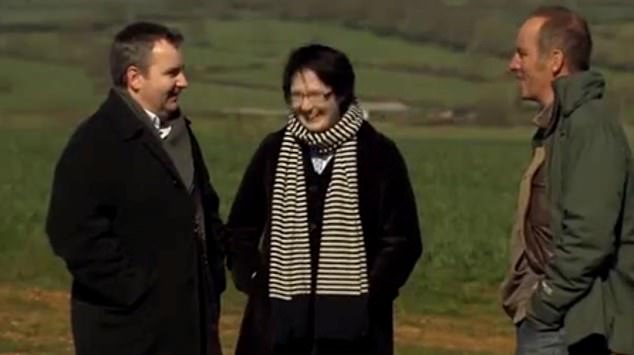
Mr. and Mrs. Seymour-Smith shared with Grand Designs their need for an innovative approach to satisfy hesitant Cotswold planners—renovating the barn and concealing the family residence beneath it.

Back then, the concept was explained as excavating a pit bigger than an Olympic-sized swimming pool beside the barn, followed by placing the family residence within it.

Later, Mrs Seymour-Smith referred to the idea as "loft-style living beneath the surface."

The completed home was constructed using well-insulated concrete and covered with thick insulation, featuring large walls equipped with three-layer glass windows.

Grand Designs mentioned that the heat recovery system maintained an indoor temperature of approximately 20°C, even during colder months.

In 2010, the Seymour-Smith residence allegedly set the highest level of air tightness ever recorded in Britain. The overall leakage from the whole home was likened to an opening as small as a squash ball.

As snow descended, the home was said to remain cozy within—while snow accumulating on the exterior of the windows remained unmelted for four days.

Ms. Seymour-Smith stated that they didn’t desire "a penitential green house with compost toilets," but rather something "clean-cut, contemporary, white, and distinctly not Cotswold."

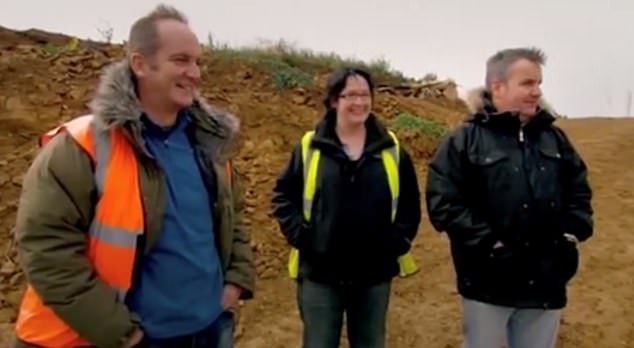
The construction was monitored by Kevin McCloud for Grand Designs, yet contrary to several of the program's most notable ventures, it didn't result in catastrophe.

Later, Mrs. Seymour-Smith humorously remarked, "I wasn't pregnant, and we didn't run out of funds."

After choosing to pursue another venture, the couple sold Underhill, which involved restoring a Grade II listed home in the same village.

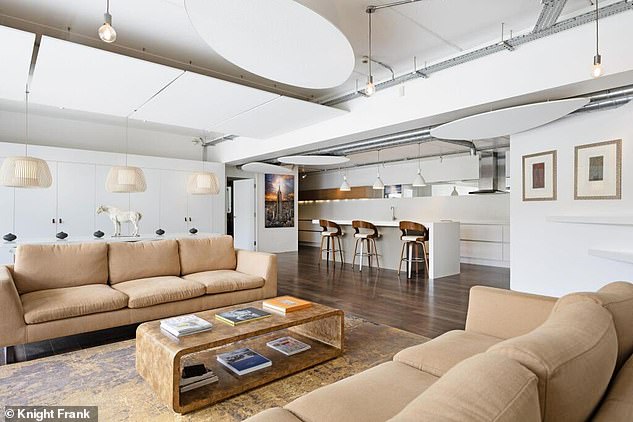
The secret ecological house features six bedrooms, five bathrooms, five living areas, a movie theater, and occupies half an acre of land.

Rightmove lists: 'Underhill House is among the most significant privately built residences in terms of architectural and environmental importance within the English countryside.'

Created, developed, and constructed by architects Helen and Chris Seymour Smith from 2008 to 2010, it gained global attention as England's initial verified Passivhaus, establishing a fresh standard for eco-friendly country architecture.

The home is situated in a remarkable location below and next to a renovated 300-year-old Cotswold stone barn inside an area recognized for its extraordinary natural beauty close to Barton-on-the-Heath.

A fireplace can sometimes be utilized to warm water throughout the winter, yet when sunlight is available, 1,000 yards of rubber tubing installed in the roof allows water to capture solar heat and achieve temperatures up to 100°C.

The list goes on: "Temperature and indoor air quality are managed through an MVHR system (Mechanical Ventilation with Heat Recovery), which removes heated air from kitchens and bathrooms, cleans it, and uses the recovered heat to warm the new incoming fresh air."

'Solar thermal technology mounted on the southwest side of the barn’s roof mainly supplies hot water, supplemented by either the wood-fired stove or an electric heating element.'

Read more

Thursday, June 25, 2026

YouTuber's 1,700 Home Tours Expose Single-Life Secrets

It appears the time when residing alone was simply about getting by has passed. With individuals in their 30s and 40s who are financially independent now forming the majority of solo households, residences have evolved into areas that completely showcase personal preferences and individuality.

Jung Sung-kwon, aged 36, manages the YouTube channels *Jachu-nam* (Living Alone Man), *Yubu-nam* (Married Man), and *Gonggan-nam* (Space Man). He is a veteran content creator with nine years of experience online, having toured more "people's houses" than most real estate professionals. Up until now, he has explored over 1,700 residences. According to Jung, his journey began when he uploaded clips about advice for those living independently, but an unintentional post featuring a friend's house gained significant traction. This led him to shift focus toward showcasing homes from individuals who invite him in. Starting as *Jachu-nam*—which initially featured properties occupied by singles—the platform later grew into *Yubu-nam*, highlighting homes owned by couples, and *Gongkan-nam*, dedicated to exploring business environments. These channels have amassed 1.3 million followers. Everyone involved comes from regular backgrounds; they submit applications explaining why they wish to be featured, with selection done at random.

Jung remarked, "It's a misconception to link the phrase 'single-person household' exclusively with young adults in their 20s who live alone. Most single-person households I've encountered belong to individuals in their 30s and 40s, and the count of middle-aged people in their 50s and 60s residing independently is rising." These observations align with data. As per the *2025 Statistics on Single-Person Households* from the Ministry of Data and Statistics, there were 8,045,000 such households in South Korea in 2024, representing 36.1% of total homes—an unprecedented figure. Of these, 29.7% belonged to those in their 30s and 40s, whereas 32.7% included individuals aged 50 and above. Jung further noted, "The home environment of a single-person household typically showcases the resident's personal preferences, yet in multi-person households, neutral elements tend to dominate. For instance, someone living alone might put a mahjong table in the living area, but families sharing the space would have to choose furnishings based on mutual agreement due to varying tastes."

Which indoor furnishings are typically observed nowadays? Jung stated, "The most common fixture today is the 'ceiling fan,' mounted on the ceiling of the living area. The reality that many individuals reside in uniform apartment units with sturdy frameworks has simplified the installation of elements like ceiling fans or bathroom ventilation systems." He pointed out that the standardization of housing layouts has ironically enhanced the ease of internal fittings and sped up shifts in design styles.

Other changes have been observed in the factors considered when selecting a place to live. Jung noted, "About five to six years ago, many individuals responded 'because there is a big supermarket nearby' when questioned about their choice of neighborhood. Today, an increasing number mention 'convenience for deliveries.' The growth of e-commerce has even influenced the standards used for deciding where to reside."

Technology progress has also changed the importance of different elements. He stated, "Previously, apartment dwellers close to the Han River frequently expressed dissatisfaction with the glare caused by sunlight reflecting off the water and the traffic sounds. But due to improvements in insulation and soundproofing within windows, these grievances have declined. Now, individuals can completely appreciate the Han River as a 'scenic view,' which has boosted its worth."

Jung will present a talk entitled *What Type of Living Spaces Do Modern Single- and Dual-Person Households Reside In?* at 11 a.m. on the sixth day—which marks the third day—of the furniture and lifestyle fair *Sofurn & Life Show*. The event will take place between the fourth and seventh days of next month at COEX Hall A in Seoul. To apply, visit the official website (www.sofurn.or.kr), but first you must complete an online registration and join the Sofurn KakaoTalk group chat.

Wednesday, June 24, 2026

Boost Home Resale Value by Investing in the Basics

The key element of interior design lies in fundamental structure. With the same budget, allocate more resources to essential components such as insulation, moisture protection, and windows rather than focusing on noticeable elements like wall coverings and flooring.

Nam Kyung-yup, aged 49, photo CEO of New Build, boasting 24 years of expertise in the interior design sector, made these remarks. Before establishing the interior renovation firm New Build in 2018, CEO Nam held positions at Samsung C&T and the residential department of Kolon Construction. Starting from last year, he has additionally managed the personalized interior service 'New Home,' connecting businesses directly with clients. He is well-known for his role as an authority offering interior design "hacks" via the YouTube channel 'New Build TV.'

CEO Nam stated, "Renovating an older home primarily depends on fundamental structural improvements." As an illustration, he mentioned that even if one invests 100 million South Korean won in decorating their residence elegantly, it would be pointless if the dwelling remains chilly during winters, sweltering in summers, and has insufficient water resistance in the bathroom. He further noted, "Numerous well-established apartment complexes utilize materials with subpar insulating properties. Without replacing them, regardless of how meticulously the internal renovations are carried out, residents will ultimately reside in a property with flaws."

Having a solid foundation in fundamental building practices can be beneficial when reselling the property in the future. CEO Nam stated, "Although people might have different opinions about home decor, everyone agrees on the importance of insulation, water resistance, and window quality." He added that although elements such as structural framework, architectural style, and material finishes could affect the selling price differently based on personal taste, essential construction aspects contribute significantly to enhancing the property’s worth.

When selecting an interior design firm, he recommended verifying if they hold an appropriate interior construction permit, ensuring the registered business address aligns with their true location, and confirming that the company’s name matches the one on the bank account used for paying construction deposits. He added, "Before beginning the project, you must thoroughly review whether the company can present a detailed work timeline and whether they offer regular updates on daily progress prior to signing the agreement."

He further recommended verifying whether the company is capable of issuing a defect guarantee bond prior to signing the agreement. This type of bond ensures that if issues arise following completion of the interior work and the company fails to carry out repairs, the insurance provider will cover the resulting losses. CEO Nam stated, "This serves as a protective step to avoid scenarios where the company denies post-sale support or disappears without notice."

Tuesday, June 23, 2026

Couple Defies Court Order to Reopen Footpath Through £2M Home Garden

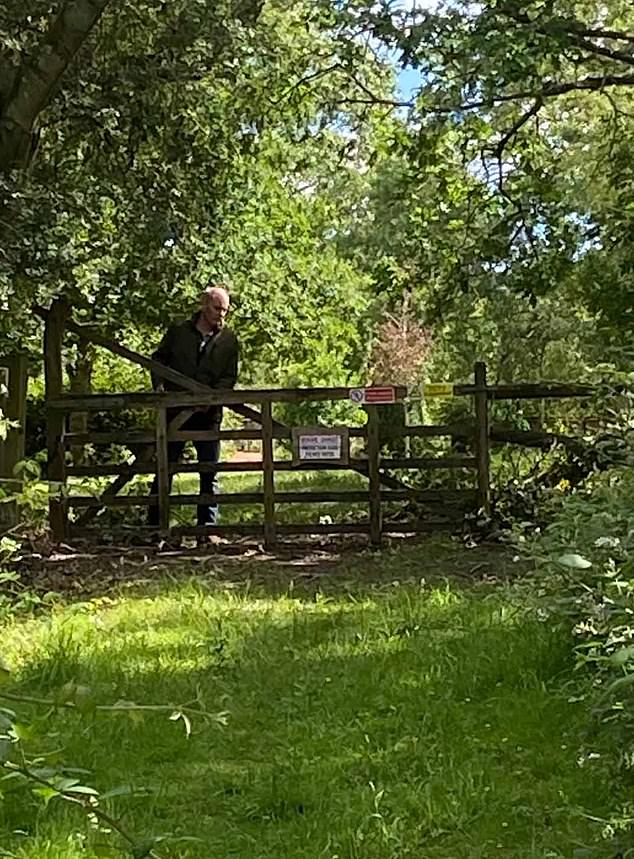
A pair whose fences were removed from their property by local authority employees following a six-year court dispute regarding a riding path might now be subject to legal proceedings due to allegations that they have obstructed the pathway once more.

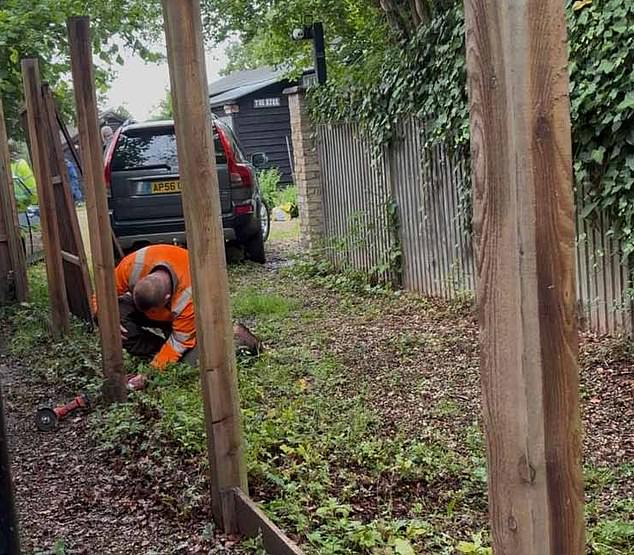
On Monday, workers came to dismantle the three obstacles and thick thorny bushes that had grown along the path which angry locals claimed had been used for over 100 years.

A High Court decision supported the local council and the Planning Inspectorate following their confirmation that the route located next to David and Dawn Moore's home in Little Berkhamsted, Hertfordshire, constitutes a public footpath.

Residents applauded when the gates were removed — though the process was briefly stopped two times to allow an ambulance to respond as Mrs. Moore reportedly became unwell amid the commotion.

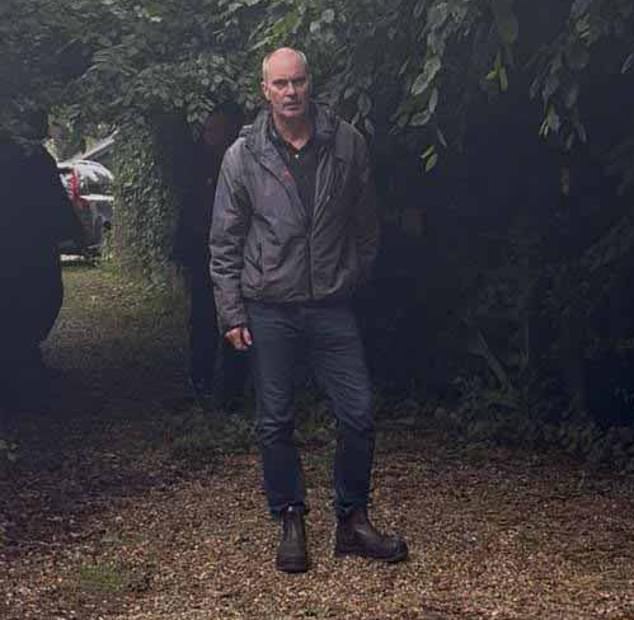
At a certain moment, Mr. Moore approached spectators who were recording the event, one of whom said to him: 'I'm applauding because the bridle path is now accessible.'

He responded, "Ah. Open at the cost of my wife fainting, right? Are you satisfied with that?"

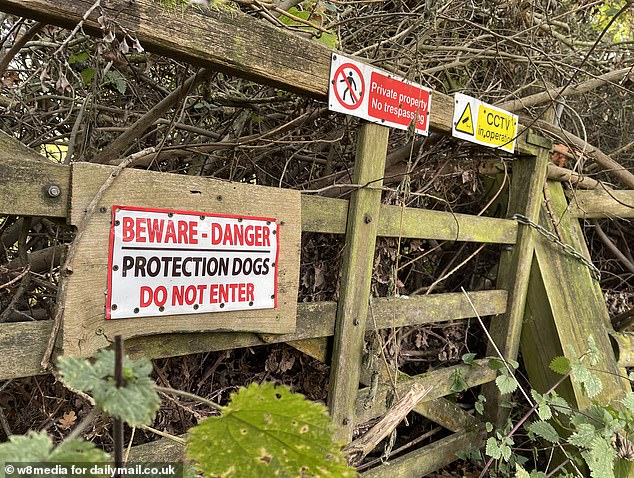
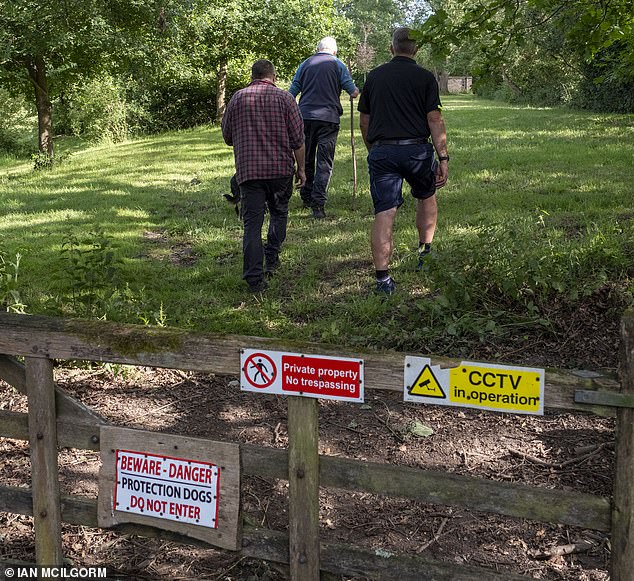
But jubilation has turned to renewed frustration after villagers complained at least one of the gates had been rehung and the Moores – who are believed to have spent up to £400,000 on their failed legal case - were warning anyone attempting to utilize the footpath making an effort to use the bridleway seeking to access the bridleway trying to make use of the walking trail endeavoring to follow the bridleway struggling to navigate the bridleway looking to travel along the bridleway trying to take the bridleway route attempts to use the designated path efforts to proceed via the bridleway that they were ‘trespassing’.

Other allegations suggested that the pair stopped municipal employees from installing a fresh equestrian path sign on publicly owned property located just across from their residence the next day, following an argument with them.

A person said to the Mail: "I had just gone through, and Mr. Moore informed me that I was trespassing. As I kept walking, he shut the gate behind me."

I've informed the committee and provided them with images.

One person stated: "Dawn Moore was the first to confront [the individual attempting to use the bridleway] and inform him that he was taking the incorrect route."

Then David went out and declared that he was entering without permission—so both of them were doing the same.

Other remarks included: "Mr. Moore and his wife were both outside urging the individuals attempting to install the directional sign, who eventually stopped after hearing an emotional tale."

They continuously replace a hazardous and unstable gate, while instructing individuals to leave the property because they are considered trespassers.

They had previously received warnings from the committee, suggesting they may face legal action.

'Strange that she [Mrs Moore] had a miraculous recovery just to challenge those using the footpath.'

The entrance points were taken down following Mr. Moore and his spouse, a medical professional recognized as Dr. Dawn Carnell, disregarding an official directive issued by Hertfordshire County Council.

Violating an enforcement order issued by a local authority constitutes a criminal offense that may result in prosecution before a magistrate’s court, with the possibility of imposing unbounded penalties.

Alternatively, the committee might tear down or eliminate unauthorized elements and seek reimbursement from the property owner.

Court orders may also be issued by the local court or Supreme Court to stop ongoing or serious unauthorized actions.

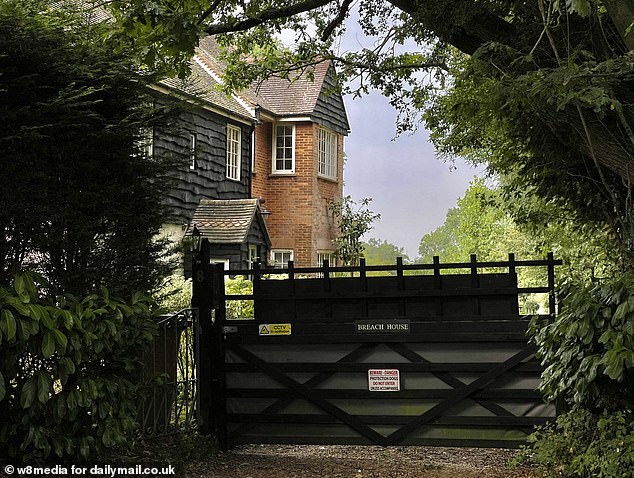
The ongoing conflict centers around the six-bedroom Breach House, some sections of which can be traced to the 17th century. The Moores purchased it for £1.2 million in 2015 and later invested heavily in restoring the neglected home.

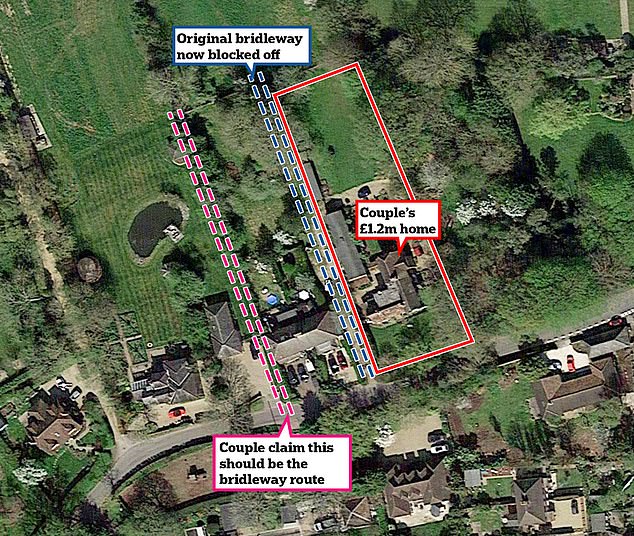
In 2019, residents found that the public path crossing the 1.75-acre area had been blocked by signs and secured gates—according to the Moores, the equestrian trail actually passed between two adjacent cottages.

Hertfordshire County Council got involved and issued an order confirming that the bridleway ran across the couple's property, prompting the Moores to appeal their case to the Planning Inspectorate.

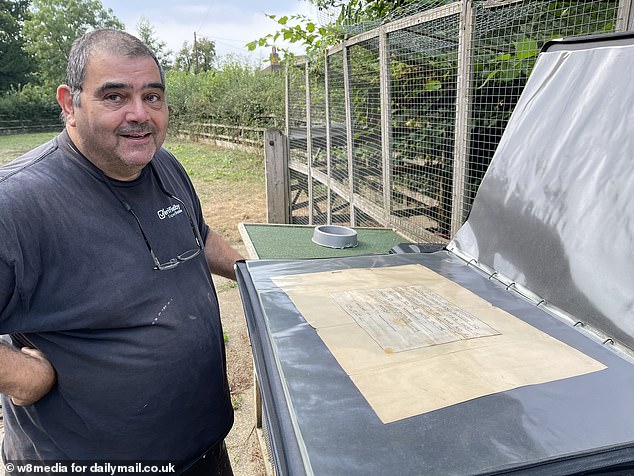
Over the course of a four-day hearing, senior final mapping official Gavin Harbour-Cooper stated that the council examined the issue back in 1956 and determined that the path passed through Breach House.

However, when the initial "Definitive Map" was created three years later, it depicted the "incorrect path" between the houses, even though the Definitive Statement provided the accurate details.

Nigel Adams, the creator of the online real estate platform BigBlackHen.com, who had family members that possessed Breach House between 1973 and 1985, mentioned that he was responsible for selling the house to Mr. Moore and his spouse in 2015.

He stated: 'Throughout this process, I regularly talked with the Moores about the current bridleway and its path across the Breach House property.'

William Marques, who resided in the home during the 1960s, also remembered the path running through it.

He explained how he utilized it to reach his grandparents' house since the alternative path, via road, was 'too risky'.

However, Mr. Moore, who operates an oncology company alongside his wife, informed the investigation that the council acknowledged in 2020 that the bridleway signs near his residence were incorrect, leading to their removal.

He stated: "When I bought the house, I wasn't informed about the presence of a bridlepath running through the land."

After the planning inspector rejected the Moores' case, they took their appeal to the High Court, where the judge also supported the locals and highlighted the 'fundamental unlikelihood of the Claimants' stance'.

They were denied permission to appeal to the Court of Appeal last year, but in an interview last month, Mr. Moore mentioned he is considering taking his case to the European Court of Human Rights.

He explained that he would be "arguing under Article 8 of the Human Rights Convention and also Article 1, Schedule 1 of the ECHR," adding: "All of this centers on the choice to alter my specified 2015 purchasing criterion, which is now established in the High Court."

You have the right to what you bought following full investigation.

Speaking about the six-digit amount he and his spouse invested in their failed court case, Mr. Moore mentioned to the Mail early this year: 'The expense isn't really a factor anymore. It's about whether you believe you're correct or not.'

He mentioned that his wife has fully backed him in the current legal dispute, as both of them feel the council is responsible for supplying incorrect paperwork when they purchased their house.

“This isn’t about me embarking on an adventure into the wilds, donning my helmet, and declaring ‘Whatever occurs, occurs,’” he stated.

This reflects two rational individuals examining the situation from 2015 and being certain of their correctness.

The hostile atmosphere created by the conflict within the neighborhood led Mr Moore — whose spouse is employed at University College Hospital in London — to report incidents such as vehicle vandalism, like scratches on his car, along with acts of intimidation.

In the meantime, the residents of the two adjacent bungalows—among them Wayne Morris, head of the local parish council—invested many thousands of pounds in their personal legal expenses.

Mr. Morris has stated that "a significant amount of time and resources have been squandered" on this matter.

A representative from Hertfordshire County Council stated, “We have learned about this issue through nearby residents and are currently evaluating the possibilities at our disposal.”

The Moores were asked for their response.

Read more

Wednesday, June 17, 2026

Alan Titchmarsh Sells £3.5M Farmhouse in Village Row Over Housing Fight

  • Receive your daily news directly by 7 am – subscribe to our latest Morning Mail newsletter at no cost.

Renowned gardener Alan Titchmarsh has ultimately sold his £3.5 million rural home—just before developments for nearly 160 houses were set to begin right behind it.

The Manor Farm House located in Holybourne, close to Alton in Hampshire, inherently includes four acres of beautifully designed gardens provided by its previous resident.

However, the 17th-century hideaway might soon gain hundreds of new neighbors—causing anger among current residents in the area.

Approximately 850 concerns have been raised regarding a development plan which might lead to the construction of as many as 156 additional houses on property located right behind the old Titchmarsh site — within a community that has only 1,500 residents.

Alan and Alison - who celebrated their 50th wedding anniversary last year - have recently moved to A £2.6 million high-end five-bedroom sanctuary located in Surrey They acquired it from Omaze winner Rachael Reid who purchased it with a £10 raffle entry.

He remarked about the new, one-level high-end residence: "The home is exceptionally contemporary and entirely unlike the Georgian farmhouse we lived in previously."

A 77-year-old television icon has earlier mentioned that he is reducing his workload. because he is getting a little older and wished to relocate to an area with a more manageable lawn prior to it becoming too much to maintain the four-acre property in Hampshire.

His new residence is also nearer to his daughters Polly and Camilla — as well as his grandchildren.

However, Alan has also emphasized The sale has no connection to the argument on the 15.6 hectare plot of land where numerous houses might soon be built, located right behind his old home — even though he listed the property for sale only weeks after the plans were revealed.

Software developers Redbrown presented their plans for the land—designated by East Hampshire District Council officials as an ideal location for new housing—last July. Manor House Farm was subsequently listed for sale in September.

The selling price has not yet been announced, but the gardening-loving British celebrity Alan and his wife Alison had to reduce the initial asking price of £3.95m by nearly half a million pounds before they... managed to locate a purchaser.

Close associates of the celebrity have verified that the transaction was completed, and Alan is "extremely pleased" with his new residence.

A 7,930 square foot Grade II protected Georgian house with five bedrooms was carefully restored by the Titchmarshes after they purchased it for £1.2 million in 2002.

Contacted by the Daily Mail last year, Alan stated that the plans for the residential development were "unrelated to our choice to relocate."

In December, he stated: "We're just reducing our size and relocating nearer to our two daughters and grandkids, who reside a short distance away."

Though it may seem tempting to claim that the suggested project (whether it actually happens or not) has affected our choice, this is entirely off the point.

The settlement will continue to be an enjoyable place to reside, whether or not more homes are built, as these won't affect our current living experience.

The location has been identified by local council officials in the community development strategy as appropriate for over 200 residences that can address the shortage of available housing.

However, the 1,500 inhabitants of Holybourne are worried that their peaceful village life may soon face disruption.

In addition to the additional houses, the project will include green spaces and recreational zones, and, as per Redbrown's internal study, will increase daily traffic on nearby roads by 700 more vehicle trips – all originating from one entrance within the housing complex.

Approximately 38 comments have been submitted in favor of the proposal, primarily due to its plan to include 40 percent affordable housing – however, these positive responses are overshadowed by around 500 complaints from residents regarding issues such as flooding, reduced parking spaces, and increased traffic.

Some concerns remain that invaluable Roman relics from the old settlement of Vindomi might be permanently buried under the soil; fragments of ceramics and currency have been discovered in the area since the 1930s.

Even though Alan maintained that the project had nothing to do with his choice to depart, his previous neighbors seem to indicate otherwise.

A neighbor told the Mail last year: "I believe something like this will cause you to reflect, if someone plans to construct behind your home."

One criticism of the suggestions persisted: "Even (redacted) understood when it was time to stop. The community doesn’t desire this… the severe impact on the village’s environment and layout is clearly visible to everyone who takes a look."

The name mentioned in the complaint was removed by legal representatives.

In an article for BBC Gardeners' World last year, Alan mentioned he had "no intentions of moving" and found it difficult to leave a garden that took over 20 years to create.

"Taking care of four acres and a Grade II-listed home has always been – and continues to be – an incredible experience, yet there will eventually come a time when it becomes too much. I prefer to seek out new opportunities before things get unmanageable," he stated.

Anyone who takes care of my garden will wish to make their own changes — and they should.

They should transform this part of Hampshire land into a refuge that meets their requirements and—ideally—supports the animals that have found shelter in our naturally managed reserve.

The review of the proposals will continue up to June 21.

Read more

Sunday, June 14, 2026

£2M Mansion Owner Awakes to Surprising New Travel Site Next Door

  • Receive your daily news directly by 7 am – subscribe to our latest Morning Mail newsletter at no cost.

Have you ever experienced that unsettling sensation in your gut? Nick Jones likely felt something similar as he looked out from his lovely house in West Sussex at the beginning of the bank holiday weekend and spotted the events unfolding in the field just a short distance beyond his garden wall.

Indeed, his stomach likely sank, figuratively, through the floor of whatever room he was in when it happened.

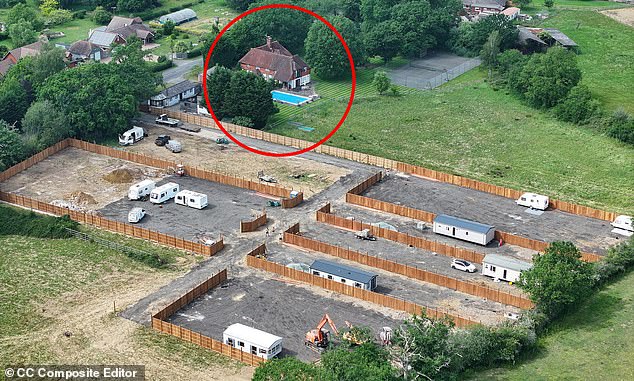
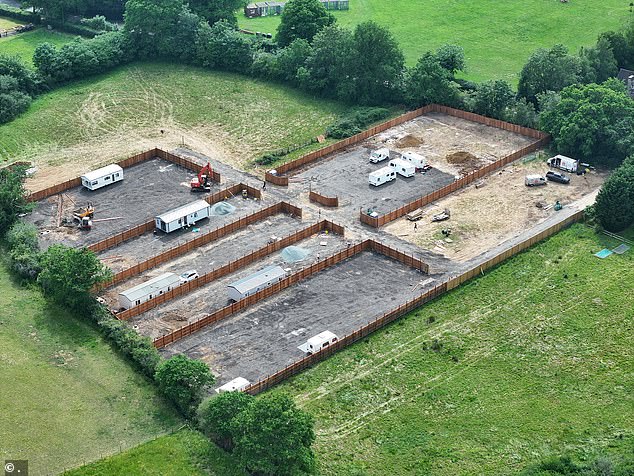
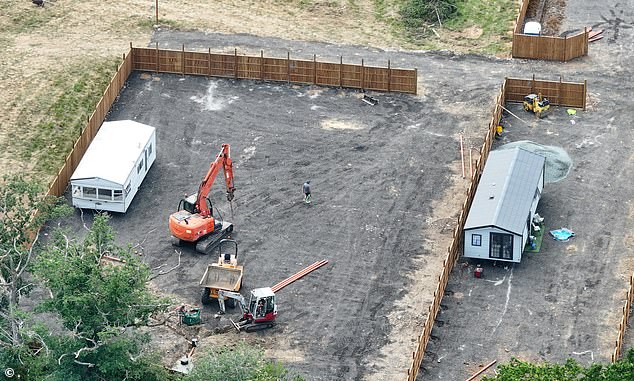
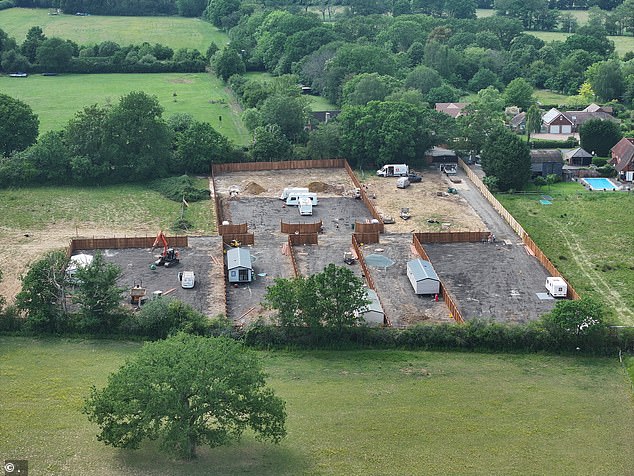
The four-acre area, once open meadow, had become a bustling center of unwanted, loud movement, with vehicles constantly arriving and departing, heavy machinery operating, asphalt being installed, and temporary houses and trailers emerging.

He was certain it could signify only one possibility: visitors had arrived at the peaceful village of West Chiltington (with a population approximately 3,400) and showed no desire to depart.

However, Mr. Jones, a prominent attorney, had stronger grounds than any other villager to experience "devastation" due to the coming of the undesirable neighbors, who have already inflicted villagers with verbal intimidation and mistreatment.

Certainly! Here's a paraphrased version of your sentence: One factor, naturally, is that his 17th-century Grade II listed five-bedroom cottage—featuring an indoor swimming pool and tennis facility—is valued at over £2 million (at least previously)—and sits just next door to the unauthorized campsite.

The second point was something Mr. Jones understood all too clearly—when the worst-case situation started playing out before him last Friday—that he had, though without intent, been the one who brought the travelers to West Chiltington in the first place.

Mr. Jones, as you know, previously maintained horses on the fields near Broadford Bridge Road, yet once he found no further purpose for the property, he disposed of it to a builder for £200,000 on July 21 of the previous year.

He thought the purchaser planned to construct four or five luxury residences on the property and implemented measures to prevent alternative usage.

To safeguard the essence and worth of the nearby region, the transaction came with restrictive covenants—legal agreements that specify how current or subsequent property holders may utilize the land.

They explicitly mentioned that the site was not permitted for use with caravans or permanent residences.

A provision was added to the property title record at the Land Registry to ensure the land could not be sold to an external party without the explicit approval of Mr. Jones and his spouse.

Mr. Jones, aged 57, works at a London-based law firm and has expertise in contractual matters. His legal terms should have been enough to prevent any unethical actions.

Rather, the selling of this apparently unimportant piece of land had an unexpectedly negative outcome. According to Mr. Jones, the developer split the area into sections and sold them to various purchasers, some of whom appeared to be travelers, individuals who do not follow standard regulations.

Naturally, some residents, possibly not informed about the reasons for Mr. Jones's choice to sell the land or his efforts to "secure" the transaction, hold him responsible for "destroying" the village.

Speaking about the travelers, Mr. Jones said to the Daily Mail as he left his house earlier in the week: "I'm making every effort to remove them."
During a later conversation, he stated, "We sold to a developer who provided numerous assurances that we depended on. We considered them genuine, which led us to sign the agreement and safeguard our interests through extensive contractual restrictions regarding how the land could be used."

Later, Mr. Jones found out about the developer going back on the "strategically outlined agreement" and attempted to withdraw from the transaction. However, following his defeat in court, he was forced to finalize the sale against his will.

He stated: "This is extremely distressing for us, just like it is for other residents. We're collaborating closely with our neighbors and the local authority to fix this issue. Our legal team is handling it. We believe that pursuing private legal remedies regarding violations of land usage agreements, combined with support from the council’s enforcers, will ultimately succeed."

Regardless of the situation, it will be a challenging endeavor. Legal disputes with travelers tend to last a long time and seldom result in success.

According to records from the Land Registry, the property was transferred by Mr. Jones to a company named UK Real Estate And Land 1 Limited, which was bound by certain restrictions. However, this company has since been officially closed after submitting a voluntary dissolution request—the method employed by directors to wind down an insolvent business.

We have failed to reach anyone associated with the company, and it remains uncertain who holds ownership of the land at the heart of the dispute.

However, one of the company's former directors was Chad Brady, a 31-year-old man from Yorkshire, believed not to be associated with the travelling group.

His resume raises concerns. Brady was identified at Hull Crown Court last year as the "manager" of a profitable cocaine trafficking scheme in the coastal town of Bridlington, where he enlisted his own sister as a £150 courier.

Brady received a two-year conditional sentence, was required to complete 200 hours of community service, and attend ten days of rehab, and stepped down from the 'board' of UK Real Estate as the legal proceedings began last January.

Here is a rewritten version of your sentence: This is the story behind how quiet West Chiltington, located approximately 12 miles from the historically significant market town of Horsham, found itself taken over by travelers—a trend that has now grown increasingly frequent across the nation.

City hall buildings will remain shut until Tuesday due to the public holidays, complicating efforts to carry out enforcement measures.

The Horsham District Council had previously been placed under 'red alert' due to a social media update from a building company indicating that dump trucks were required in the Horsham region for transporting gravel at a cost of £200 per delivery.

A provisional "cease-and-desist" notice mandating the halt of unauthorized activities — described as "the most suitable measure" by the authorities — was issued on Saturday, May 23.

The Sussex Police arrived to assist the council in preventing an outbreak of public disorder.

According to the definition, these notifications cannot be issued before unlawful activities begin, implying that applications for retroactive planning approval can subsequently be made for construction projects that have already been completed — such as permanent structures, for instance — with human rights laws being strictly used to prevent removal.

It's the paradoxical situation within a framework designed to safeguard travelers while penalizing locals.
Conservative Party leader Kemi Badenoch stated that this has resulted in a 'two-tier' system of justice, which she promises to eliminate by withdrawing from the European Convention on

The European Convention on Human Rights (ECHR) if the Conservative Party secures victory in the upcoming general election.

"One longtime resident of West Chiltington admitted we all feel overwhelmed," stated an individual who has lived there for many years.

Another person discovered a traveler in their yard. "When I questioned him about what on earth he was doing, he claimed he was searching for something he had lost. I wasn’t convinced."

He thinks the intruder was attempting to access his water line and redirect it to the camp — a common method, alongside stealing power — and has shared his worries with Southern Water.

Some people blame Mr. Jones for the situation the village is facing.

It truly is self-inflicted," remarked a concerned local. "I believe it has destroyed village life forever.

Perhaps there are very few more inappropriate locations for a travelers' encampment.

West Chiltington, a classic example of an English village, boasts a croquet club, a brass band (which practices every Wednesday night at the St Mary's Church hall, with "all skill levels welcomed"), and multiple well-known vineyards such as Nyetimber, considered one of the top names in English sparkling wine. However, part of this scenic area has become unsightly.

Large machines are spread out throughout the area near the Jones house, alongside at least seven permanent residences and mobile homes, as well as approximately five campers.

Who can say how many additional travelers might still be en route there?

The installation of gates and sewer pipelines continued throughout the week even with the 'stop notice' in place.

As many as 100 truckloads of broken concrete have already arrived at the location. Starting from Saturday morning, the noise has been extremely loud, according to nearby people. "They began at 7:15 am, and there were already five shipments present prior to the council’s enforcement notice at 8 am," said a person residing and working in West Chiltington.

Nothing following that adhered to the plan, yet it continued until at least 6 pm with the identical trucks moving back and forth.

Resolved to discover the origin of the trucks, he tracked several of them to the transport company Cook & Son located in neighboring Crawley.

The firm faced a fine of £24,000 along with additional expenses totaling £12,500 from magistrates in Brighton during 2024 due to the illegal disposal of numerous truckloads of garbage at a Surrey golf course between 2018.
Inspectors from the Environment Agency discovered that the abandoned shipments included glass, wood, plastic, asphalt, bricks, concrete, and various other substances.

The individual who addressed us mentioned that he thought the real trucks belonged to different subcontractors, although they seemed to be gathering material provided by Cook & Son.

When questioned regarding events during the bank holiday weekend, a woman who took the call verified that the company offers broken concrete, yet remarked: "It’s then their choice how they use it."

A local resident mentioned that he also noted 48 shipments of asphalt chips that were brought in from another location. "They laid down the broken concrete as a foundation and then covered it with asphalt chips for an attractive surface," he explained.

It has certainly reduced the worth of everyone's assets by five times. I am aware of at least one deal that has collapsed.

The UK-based company Real Estate And Land 1 Limited bought property in the village of Willows Green close to Felsted in Essex for £125,000 roughly three months prior to obtaining the West Chiltington site from Mr. Jones.

A comparable structure was later built during the initial May bank holiday, executed with "military precision," much like in West Chiltington, as numerous vehicles transported tons of hard core, fencing supplies, and septic tanks, leading to 140 reports submitted to the local authority by worried locals.

Work was carried out without following a temporary 'stop notice,' similar to what occurred in West Chiltington. Three additional locations were affected across three separate counties—Kent, Lincolnshire, and Derbyshire—during the latest public holiday.
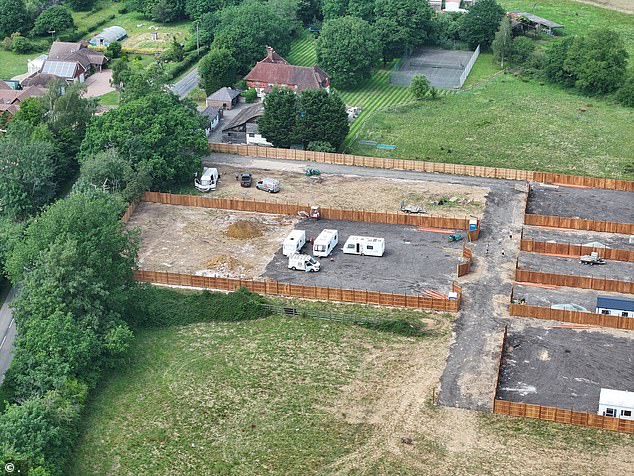
Last Tuesday evening, a cricket field located in a different section of West Sussex fell under the control of travelers. The majority of the 15 motorhomes, trailers, and automobiles were stationed along the edge of Clayton recreational area; however, as an especially serious example of damage, certain vehicles had entered the actual playing surface, causing concerns that the wicket might suffer from tire marks.

In West Chiltington, there is just one subject people talk about. "Nick was really distressed when travelers came to another location roughly half a mile further," mentioned a local. "Nothing has gone wrong yet, but he spoke out strongly against it. We all did."

It's remarkably ironic how things have turned out. It's hard to imagine a clearer illustration of the law of unforeseen outcomes than Mr. Jones's choice to sell the land adjacent to his house.

The home, which he and his family relocated to in 2009, is referred to as a Sussex hall house—a classic medieval structure with wooden framing that was traditionally inhabited by wealthy peasant farmers.

It continues to feature numerous elements from the original design. A story published in the regional newspaper mentioned "the high-ceilinged foyer with stone floor and wooden steps."

The realtor mentioned that the home, which included an adjacent orchard, offered a "significant level of seclusion" and a "pleasant view."

It did so. Until last Friday.

Additional reporting: Jon Austin and Isaac Crowson

Read more

Bramley Apple Enthusiasts Shocked as Original Tree's Garden Faces Sale

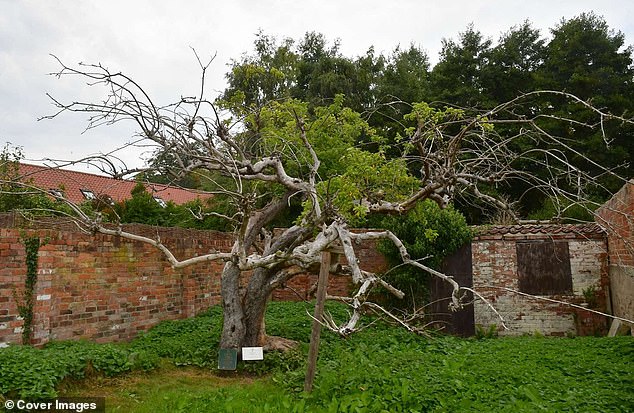
Devotees of Bramley apples were deeply stunned when the garden containing the original tree was put up for sale.

Activists sought to transform Bramley Cottage, which was under the ownership of Nottingham Since 2018, Trent University has transformed into a heritage site to celebrate the ancient tree.

However, the garden in Southwell, Nottingham, has recently been purchased by the occupants of an adjacent cottage, astonishing fans of the original Bramley apple tree amazing followers of the initial Bramley apple tree baffling enthusiasts of the earliest Bramley apple tree stunning devotees of the first Bramley apple tree shocking supporters of the original Bramley apple tree dazzling admirers of the inaugural Bramley apple tree bewildering aficionados of the very first Bramley apple tree astounded patrons of the classic Bramley apple tree flabbergasted collectors of the original Bramley apple tree incredulous observers of the first Bramley apple tree .'

A tree that is over 200 years old was planted by Mary Ann Brailsford in her parents' yard on Church Street during the early 1800s.

Ever since, millions of young trees have been cultivated globally from this original tree, with over 83,000 tons produced annually across more than 300 nurseries in the UK.

Artist Dan Llywelyn Hall helped establish the initiative to purchase the cottage from the university, ensuring continued public access to the tree and transforming it into a historical attraction for visitors.

Activists collected £14,000 through over 320 contributions for acquiring the garden, yet they lost out to residents of Bramley Cottage.

Nevertheless, the campus-run cottage, which was earlier utilized as housing for students, is still available for sale at an estimated price of £400,000.

Mr. Llywelyn Hall, who revealed artworks depicting the tree in 2024, was notified by the university on May 29 that the garden containing 'Mother Bramley' has been sold.

He stated: "It is a deeply sorrowful day for our historic old-growth trees."

It has fallen short due to all the institutions, and now Nottingham Trent University, surprisingly a university focused on environment and agriculture, has taken this step. We're all completely stunned.

Recently, Nottingham Trent University took responsibility for the tree, but it is now providing guidance to the new caretakers, Joshua and Alice Wheatley.

A representative from NTU stated: "We are pleased that the responsibility for caring for the tree has been transferred to the residents of the adjacent property, Bramley Tree Cottage."

Originally, the Bramley was located in this garden, making it wonderful to assist in its return to its initial location.

The institution is currently assisting the new caretakers by offering guidance on maintaining the Bramley, which has exceeded its typical life expectancy significantly.

Nottingham Trent University stated that the tree is affected by honey fungus, which will ultimately cause its death.

The Bramley apple gained popularity as a kitchen essential nearly half a century after Mrs. Brailsford planted the tree in the cottage’s yard.

A 17-year-old young man named Henry Merryweather noticed a gardener with some apples and inquired about their place of origin.

At that time, the garden was owned by a butcher named Matthew Bramley, who allowed the young man to collect some 'Bramley Seedlings'.

Celia Stevens, the great-granddaughter of Mr. Merryweather, stated that the tree holds significant importance in the history of fruits.

She stated, "Being recognized by the public along with some clarification after such a long period of dedication, as one might say, would hold great significance for Southwell."

It has gained acknowledgment, and this ancient old fruit-bearing tree is worthy of all the praise it has accumulated over time.

The authentic Bramley tree was recognized as one of the 50 Great British Trees during Queen Elizabeth's Golden Jubilee in 2002.

And was among 70 trees planted in honor of the late Queen for her Platinum Jubilee two decades later.

Mr. Llywelyn Hall, a Bramley Tree advocate and painter, was the youngest artist to create a portrait of Elizabeth prior to her passing.

Read more