Technology and philosophy

Showing posts with label energy sector. Show all posts

Wednesday, June 24, 2026

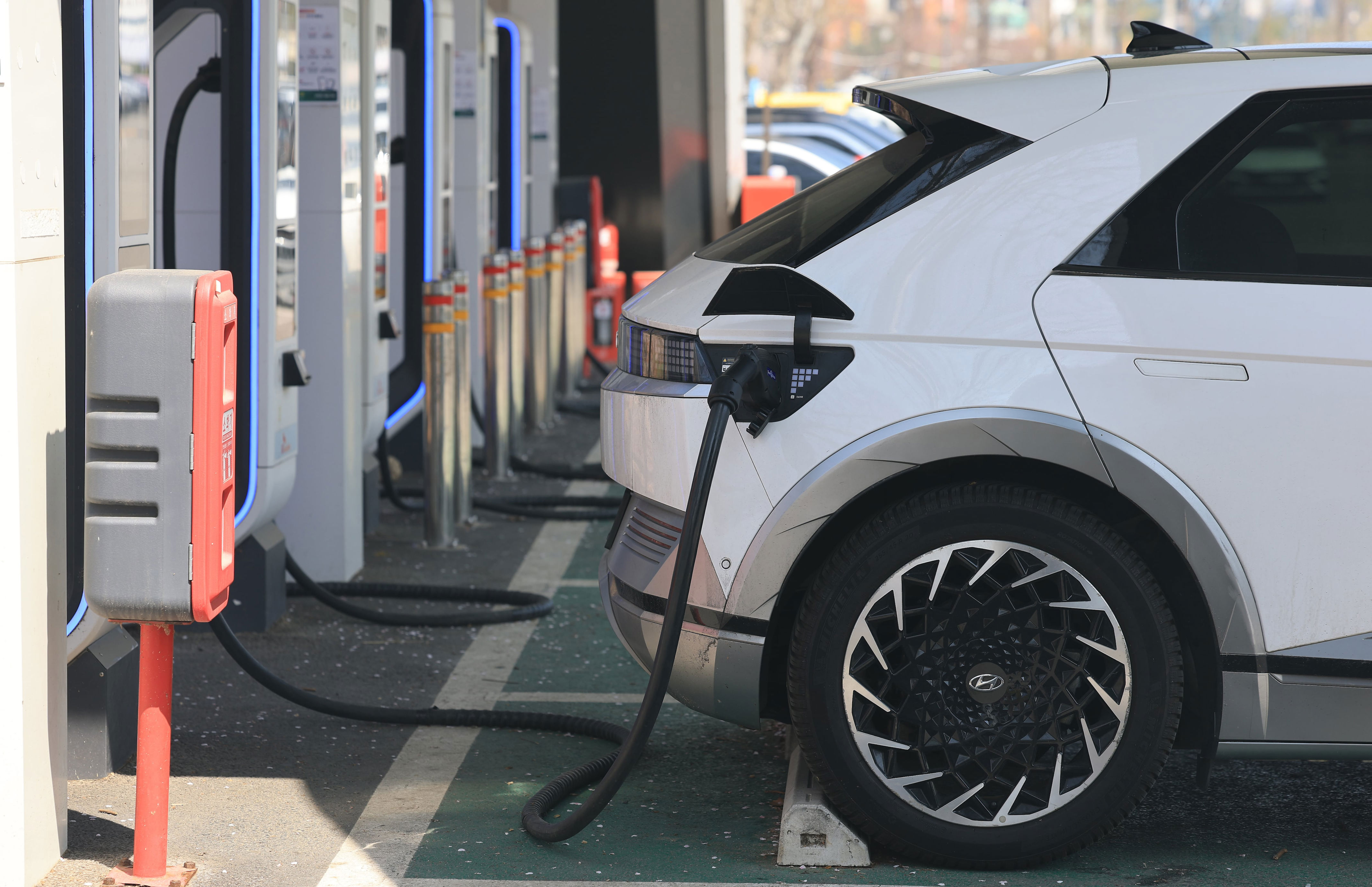
EV Charging Discount Drives 9.2% Usage Surge

The reduction in public charging costs for electric vehicles (EVs) during daylight times on weekends and holidays last spring led to a 9% rise in charging instances relative to before the discount was introduced. The initiative sought to promote EV charging during spring afternoons, when solar energy production is significant, thereby making use of excess power. Having demonstrated success, the government intends to implement the identical strategy again this fall.

On the 11th, the Ministry of Climate, Energy and Environment revealed details about the "Spring and Autumn Weekend/Public Holiday Free EV Charging" initiative. This promotional offer lasted for 17 weekends and public holidays starting from April 18 through May 31, with discounts available between 11 AM and 2 PM. Within this timeframe, electric vehicle owners who utilized charging stations managed by the Ministry of Climate, Energy and Environment along with the Korea Electric Power Corporation (KEPCO) were eligible for reductions ranging from 40.1 to 48.6 South Korean Won per kilowatt-hour (kWh).

As per the ministry, about 13,000 public charging stations managed a cumulative total of 79,114 charge events throughout the promotional phase. The overall discount value amounted to 75.46 million South Korean won. On an average day during this time, there were 4,654 charging instances, representing a rise of 9.2% compared to the previous daily mean of 4,261 sessions.

The discount was launched alongside the seasonal and time-dependent electricity pricing changes that began in April. It formed part of a trial aimed at increasing energy usage during spring weekend afternoons, when solar production is significant yet demand remains low, resulting in regular excess supplies. Taking into account these findings, the government intends to bring back the reduced fees for public electric vehicle charging stations between September and October, as surplus solar power is anticipated once again.

Wednesday, June 17, 2026

Power Systems in Aging Hong Kong Buildings Demand Urgent Focus

A 24-hour electricity blackout at Tsuen Wan Centre has led to demands for checks on aging residential buildings to guarantee stable power during the summer months.

Electricity plays a crucial role in densely populated urban areas, particularly in cities like Hong Kong, where apartment towers cannot be lived in without it. major power outage A situation at a Tsuen Wan residential area this week serves as a reminder regarding the reliability of power networks in older buildings amidst more severe climatic conditions.

Over 3,000 occupants in Phase 1 of Tsuen Wan Centre experienced a loss of both water supply and elevator access for more than 24 hours until power was resumed approximately midday on Tuesday. Worries arose regarding the well-being and security of individuals residing in roughly 1,000 units spread across five buildings as well as a facility catering to disabled persons.

Legislator Jody Kwok Fu-yung stated that the absence of power during the intense heat had a "significant effect," with numerous senior citizens, particularly those who live alone, finding it "extremely challenging" to move about.

Are you curious about the major issues and developments happening globally? Find your answers here with SCMP Knowledge Our latest platform featuring carefully selected content, including explanations, frequently asked questions, analysis, and visual graphics, presented by our acclaimed team.

Individuals who volunteered should be commended for promptly assisting people with navigating stairs and providing essential items like food and water. The Water Services Department set up potable water containers and sent water tankers close to the impacted structures. The Bureau of Home Affairs established four communal halls to house those in need, and the Tsuen King Circuit Sports Centre was additionally utilized as an emergency refuge.

The power supply is generally dependable in Hong Kong, although there have been some notable electrical service problems in recent years. One instance was a major blackout In 2022, an incident occurred that impacted over 160,000 homes in northwest Hong Kong following a fire at a bridge housing high-voltage CLP power lines. More recently, in February and April of this year, power fluctuations caused several people to be stuck in elevators.

These events have led to demands for investigations to confirm whether there are underlying issues requiring resolution in a city known for its dependable electricity service, within a regulatory framework that guarantees providers a profit from their investments.

Currently, there are demands for residential areas to enhance checks on electrical systems throughout the summer season, as this period presents higher chances of malfunctions due to rainfall, moisture infiltration, or elevated power consumption. Homeowners and administrators are required to fulfill their obligations to guarantee that the energy facilities in older buildings remain compliant with standards.

More Articles from SCMP

Did President Xi Jinping's trip to North Korea strengthen China's crucial position?

With the start of the World Cup, political matters ought to be set aside.

With ongoing efforts to reduce reliance on the dollar, could the renminbi replace the euro?

Prior to Elon Musk's SpaceX, these were the top 5 biggest initial public offerings globally

The article was first published on the South China Morning Post (www.scmp.com), a top-tier news outlet covering stories about China and Asia.

© 2026. South China Morning Post Publishers Ltd. All rights reserved.

Friday, June 12, 2026

ECN Partners in Cogeneration Drive for Nigeria's Energy Future

Chibuzor Emejor

The Nigerian Energy Commission (ECN) has formed a collaborative agreement with RSE Engineering Nigeria Limited to speed up the adoption of combined heat and power systems within major economic areas, as part of initiatives aimed at boosting energy reliability, increasing manufacturing efficiency, and advancing Nigeria's shift toward sustainable energy sources.

The collaboration was established with the execution of a Memorandum of Understanding (MoU) in Abuja, where the Director-General and CEO of ECN, Dr. Mustapha Abdullahi, referred to the deal as a significant move towards promoting creative and eco-friendly energy options aimed at meeting Nigeria's increasing power needs.

The agreement emphasizes the advancement and implementation of combined heat and power (CHP) technology—a very effective energy solution that produces both electrical power and usable thermal energy from one fuel source.

At the signing event, Dr. Abdullahi stated that the collaboration highlights ECN's dedication to utilizing key partnerships to advance changes within the energy industry, facilitate technology exchange, enhance skills training, and promote long-term economic progress.

"Today's agreement represents yet another important step forward in the Commission's dedication to promoting Nigeria's energy industry via collaborative efforts, technological advancement, skill enhancement, joint research initiatives, and environmentally friendly power options," he stated.

He stated that the collaboration corresponds with Nigeria's Energy Transition Strategy and backs important national goals such as energy variety, better energy effectiveness, increased energy availability, and lower greenhouse gas emissions.

He pointed out that the Energy Commission, serving as the top governmental body tasked with strategic energy planning and policy alignment, acknowledges that the nation's intricate energy issues necessitate collaborative efforts among government departments, private industry players, academics, financiers, and international collaborators.

"The memorandums of understanding signed today demonstrate our commitment to establishing robust collaborations that will significantly aid national growth and support the execution of Nigeria's energy transformation goals," said Abdullahi.

According to the agreement, ECN and RSE Engineering will work together in various key fields such as policy creation, regulatory assistance, identifying and advancing projects, showcasing and verifying technologies, enhancing capabilities, sharing expertise, and encouraging investments.

The collaboration aims to assist the Federal Government in enhancing the use of Nigeria's plentiful natural gas reserves, decrease reliance on diesel-based power production, cut down energy expenses for businesses, and improve electrical availability for essential facilities.

For RSE Engineering, this partnership offers a chance to bring established European energy technologies to Nigeria, simultaneously fostering domestic industry growth and employment opportunities.

At the event, the Managing Director of RSE Engineering Nigeria Limited, Ms. Olena Nedryhailo, characterized the collaboration as something more than just implementing technology.

"This agreement goes beyond technology. It focuses on collaboration, energy stability, economic growth, and developing real-world solutions for Nigeria's future," she stated.

She stated that ECN's acknowledgment of the company's combined heat and power technology confirms its ability to provide dependable electrical, thermal, and refrigeration services at much greater efficiency and reduced environmental impact compared to traditional energy systems.

We take pride in ECN acknowledging the promise of our combined heat and power technology to provide dependable electricity, refrigeration, and warmth through improved efficiency and reduced environmental impact.

"Collectively, our objective is to assist in achieving national energy targets, build regional expertise, generate employment opportunities, and introduce environmentally friendly energy options for significant initiatives throughout Nigeria," Nedryhailo stated.

As she stated, the deal follows a previous Memorandum of Understanding entered into with Nigeria's Ministry of Industry in December 2025 and demonstrates increasing trust in the technology's potential to support the nation's energy outlook.

She revealed that the holding company of RSE Engineering, located in the Czech Republic, has effectively implemented combined heat and power (CHP) and modular energy systems across multiple nations, providing efficient and dependable decentralized electricity generation options.

Our aspiration is that Nigerians will utilize these co-generation systems to establish power stations and contribute to addressing the energy crisis in Nigeria.

"We have come to exchange experiences from Ukraine and Europe with Nigeria," she stated.

Combined heat and power technology is seen worldwide as among the most effective methods for generating energy, with total efficiency reaching as high as 90% through the simultaneous production of electrical power and usable thermal energy from a single fuel input.

This technology is highly appropriate for sectors such as industry, healthcare institutions, air travel hubs, agricultural processing areas, business complexes, and various high-energy consumption environments.

Among the anticipated advantages of the ECN-RSE collaboration are better electrical stability, decreased operating expenses for companies, greater manufacturing strength, fewer carbon dioxide emissions, more effective use of native natural gas assets as part of Nigeria's Gas Decade program, along with the growth of regional technical expertise and job creation.

Additionally, addressing the gathering was Mr. David Hohiia, the Second Secretary for Economic Matters at the Ukrainian Embassy, who emphasized Ukraine's efforts in ensuring energy stability amid substantial difficulties affecting its electricity network.

He mentioned that Ukraine's knowledge of modular power systems, combined heat and power facilities, and eco-friendly energy technologies might offer important insights for Nigeria as it aims to enhance its energy industry.

He stated that decentralized energy systems provide quicker implementation, higher dependability, and enhanced resistance when contrasted with conventional centralized production methods.

The ceremonial event also included the official establishment of collaborations among ECN and 15 additional organizations spanning areas such as renewable energy advancement, energy conservation, waste-to-energy solutions, research endeavors, energy system modeling, efforts toward reducing carbon emissions, compressed natural gas (CNG) facilities, electric transportation, solar farming setups, and strengthening organizational capabilities.

Nevertheless, the ECN-RSE collaboration was notable among major alliances focused on implementing new energy solutions designed to boost Nigeria's industrial development, enhance energy safety, and speed up the nation's shift toward a greener and more environmentally friendly power system.

End.

Supplied by SyndiGate Media Inc. ( Syndigate.info ).