Showing posts with label garden design. Show all posts
Showing posts with label garden design. Show all posts
Friday, June 26, 2026
A Garden of Rooms: 2,000 Plants in Perfect Harmony
If Margarita Nyambura could talk to her 12-year-old version, the child who regularly visited a prison fence daily to gather orange and yellow blooms, she'd encourage her to persevere. Raised in Embu, where her father served as the auditor overseeing the Eastern Province, Margarita enjoyed a fairly comfortable upbringing. Her household featured a well-kept compound managed by gardeners maintaining orderly, conventional flora. The yard was consistently mowed, and her mother cultivated typical blossoms commonly seen in residences back then.
More captivating to her were the makeshift gardens crafted by local police officers. Used bathtubs had evolved into planting vessels, imparting an essential lifelong understanding: nearly any object can transform into a garden.
Without funds for purchasing vegetation, she gathered clippings from barriers, salvaged young shoots from roadside areas, and acquired what neighbors were ready to offer. Growing plants wasn't merely leisure; it represented exploration and increasing interest in hues.
When her family relocated to Wangige in Kiambu in 1997, she carried solely one money plant. This single specimen became the foundation for further development. Initially, several species perished due to improper illumination and inadequate or excess irrigation.
Mapping out the garden:
"To maintain a plant, you require compost, containers, and planters," she notes.
Prayer plants, known for their delicacy and sensitivity, often pose challenges for keeping alive. She experimented with placing these specimens throughout the landscape, evaluating varying degrees of brightness and moisture content, ultimately identifying optimal locations.
She learned techniques for crafting homemade compost, discerning between goat dung and poultry waste application, and employing upside-down bottles for efficient hydration ensuring survival amidst workdays. Additionally, she established a substantial water reservoir capable of supporting the garden through drier periods.
Professionally traveling globally, she resided for two years in Accra, Ghana, followed by three in Lagos (Nigeria), later moving to Sudan, Switzerland, Barcelona (Spain), Australia, Prague (Czech Republic), and New Zealand. Each nation contributed a botanical treasure—a phormium from New Zealand, cuttings from Mexico and Paraguay, and bromeliads whenever suitable humidities existed.
Gradually, her preferences altered. As a teenager, color dominated her interests. Subsequently, she gravitated toward subtler, specific varieties, such as the Agave Blue Glow transitioning from emerald-blue to vivid blue under January’s warmth, alongside the castle cactus remaining largely unchanged since 1998 owing to slow progression.
"I will demonstrate the castle cactus I sown in 1998—it remains intact. Still small."
Her favorite cultivar is the foxtail fern hanging from raised planters. Dense and verdant, thriving without much care.
Restarting post-injury:
"It's incredibly lush. No concern regarding excessive blooming as it's a long-lasting plant," she remarks.
In 2021, her horticultural narrative faced disruption. A vehicular mishap resulted in broken bones, causing numerous plants' demise during recovery despite her utmost attempts. Species originating from multiple continents, ones nurtured since the 1990s, and rare variants vanished irretrievably.
Upon regaining mobility, only limited surviving flora persisted—including the Monstera retained in its initial 1997 container, the castle cactus from 1998 enduring minimally, plus two snake plants—one plain-green and another patterned.
"What you witness currently represents a newly assembled set," she states.
Margarita holds belief that flora respond sensitively to human proximity and detect both existence and departure.
By 2022, restoration commenced. Reaching 2025, her accumulation surpassed 2,000 plants encompassing bromeliads, fox-tails, prayer-plants, castle cacti, and a pickle plant flourishing since 2012.
At fifty-three, Margarita has neither hired nor requested assistance from professional landscapers.
"That serves as my form of relaxation. I simply engage."
Entering the garden "spaces"
Contrary to standard residential landscapes featuring open fields, Margarita segmented her outdoor area into distinct sections labeled according to weekdays.
"You cannot manage everything simultaneously. Division becomes necessary.”
A region designated for bromeliads lies underneath expansive trees offering cooling shade; a propagation station centered around reused stumps exists; a pathway intended for butterflies features Eugenia hedges being rejuvenated; a tropic zone close to blue rain barrels, and a Halloween alcove housing empty pots full of succulents awaiting autumnal candles.
The ground covers itself with Pemba grass, resistant against arid conditions needing little hydration and excelling in warm climates. After experimenting with Kikuyu grass requiring regular precipitation and Arabian grass struggling in dry weather demanding consistent watering—both unsuitable for her eco-conscious design—she selected this alternative.
The 1996 cabin rests serenely amid surroundings. Its choice stemmed from modest height and confined dimensions enabling maximum utilization of available space.
“I required greater garden compared to living quarters.”
Having observed peers constructing spacious houses occupying fewer spaces, she perceived no necessity for extensive dwellings.
Plants allocated financial planning
Margarita maintains precise knowledge concerning each plant's location, arrival date, sunlight exposure at eight AM, and shaded regions appearing by afternoon. Comprehensive mapping details daylight distribution across the property directing positioning choices effectively. Moreover, she possesses a special fund reserved exclusively for floral necessities involving receptacles, fertilizer, instruments, and liquid reserves.
“You understand registering for a premium plan? Similarly, I apply equivalent practices for my greens,” she mentions.
Previously complaining about receiving less focus than her offspring, her kids today traverse the terrain expressing sentiments like, “We constructed our home.”
Each night following watering and clearing weeds, Margarita settles with a bottle of vino. “An exquisite sensation. Always express gratitude.”
Insights derived from forty years of cultivation experience
Four decades nurturing nature influenced her perspective on finances.
“Patience with monetary matters mirrors waiting for plants to develop and buds to bloom,” she explains.
Secondly, appropriate scheduling plays vital role. Using the Queen of the Night blossom—an ephemeral beauty opening briefly past dusk closing prior dawn—as reference point,
“When opportunities arise, immediate action proves crucial or risk missing them entirely,” she emphasizes.
Third principle involves diversification. Avoid singular concentration on a sole plant category or capital allocation.
Recognizing poor decisions stems directly from personal experiences in cultivating. For instance, the Duranta shrub exhibits appealing leaf edges but expands uncontrollably attracting green reptiles. Plans involve substitution with Eugenia presenting slower expansion combined with attractive foliage amenable to trimming clean cuts.
"Occasionally, upon planting certain elements, realization follows dissatisfaction necessitating acceptance of losses," she acknowledges. →lowoko@ke.nationmedia.com Provided by SyndiGate Media Inc. (
Syndigate.info
).


£20k Makeover: Backyard Transforms into Stunning Oriental Garden
- Receive your news directly by 7am – subscribe to our latest Morning Mail newsletter at no cost
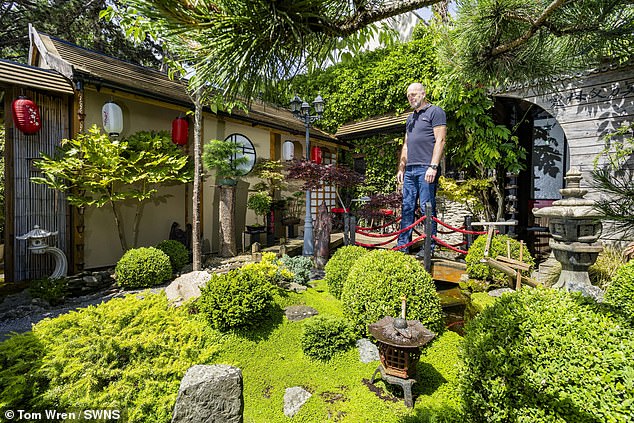
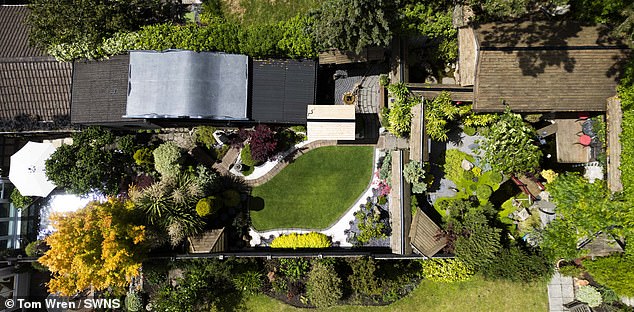
A parent of two has invested a significant amount of money and almost twenty years in turning his barren yard into a remarkable oriental garden, even though he has only visited occasionally. Japan for the very first time last year.
Martin Fitton, aged 58, started his gardening adventure in 2009 and has continuously improved his project over time, motivating other garden enthusiasts as he goes.
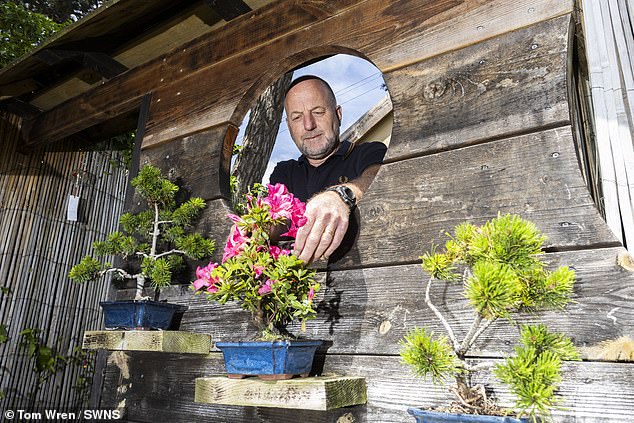
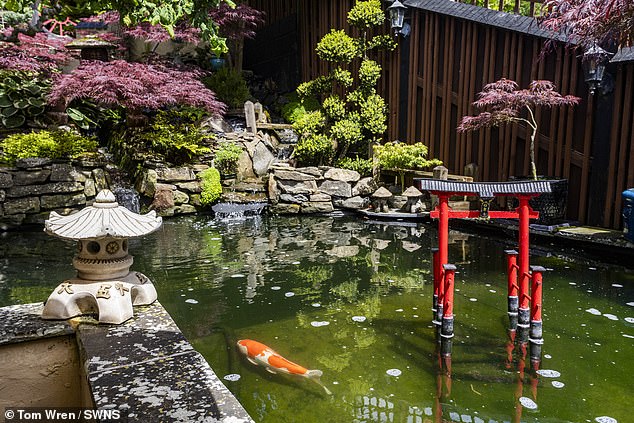
His empty garden has expanded to feature elements like a tea house, a water dragon, a monk’s area for meditation, and beautifully shaped bonsai trees—encouraging visitors to imagine the lush scenery found in rural Japan.
Mr. Fitton's travels achieved remarkable success, with his garden situated in the center of Bristol attracting attention from Tokyo Television in Japan, which chose to produce a full-length program about it.
The group also sent Mr Fitton to Japan for three days in February of this year, helping turn his dream into reality by showing him some of the finest Japanese gardens globally.
A gardening lover remarked, "Everything happened very suddenly—next thing I knew, I was working on my garden, and then I found myself flying off to Japan to collaborate with gardeners, monks, and discover the art of tying bamboo knots!"
The locations they showed me were truly incredible, and I found it hard to believe because each time they took me somewhere, I'd think, "Oh, this is a place I used as inspiration for part of my garden."
It's like they were keeping an eye on me, observed my actions, and subsequently designed my dream.
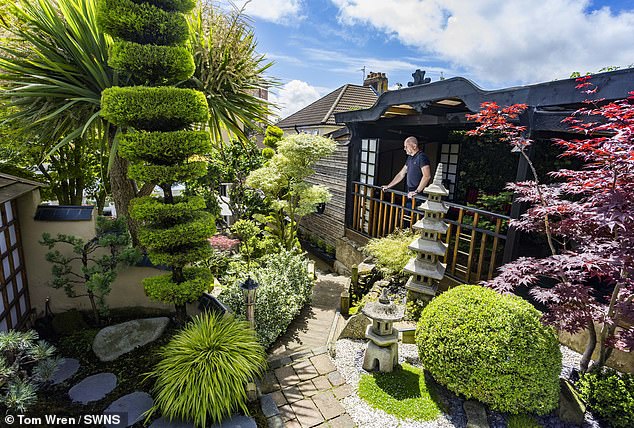
I'm feeling swamped by all the attention, and many individuals reach out to me via my Facebook page, YouTube channel, and website, telling me that I've inspired them to venture into their backyards and build their very own Japanese garden or complete a project they began years ago.
"They further mentioned that after viewing my Facebook post and reels, they experience a sense of peace, joy, and find relief from their daily concerns," said Mr. Fritton.
Although he had been fascinated by the nation for many years, Mr. Fritton finally made his initial visit to Japan last year.
He and his wife Cydnie met with a TV Tokyo film crew during their three-week vacation, which took them to the renowned Adachi Museum Gardens in Yasugi.
Mr. Fitton’s initial idea for his garden came to him 16 years back during a visit to Compton Acres, a 10-acre decorative garden located in Poole, Dorset, accompanied by his family.
He stated, "I recall strolling through the Japanese gardens and spotting the teahouse, and I thought, 'Wow, I'm going to recreate this at my place.'"
I subsequently carried on with the Japanese theme and have been teaching myself.
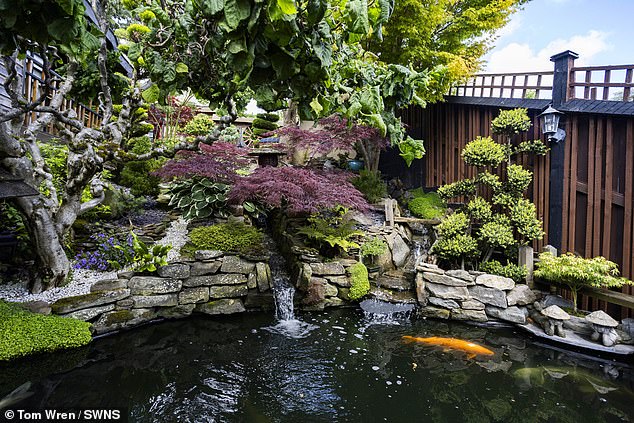
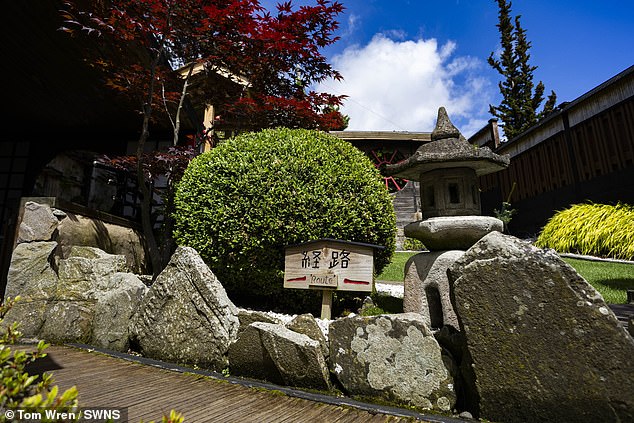
Mr. Fitton invites the public into his garden, allowing guests to discover his collection of koi fish, bamboo elements, moss landscapes, a tranquil area for relaxation, a traditional Japanese roofing style, and an imitation of a well-known Japanese temple.
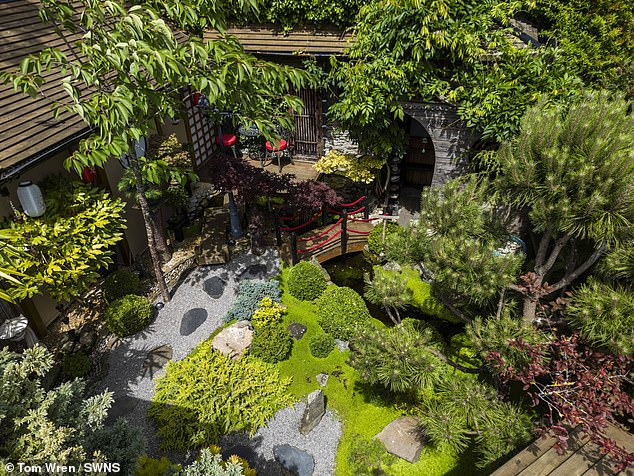
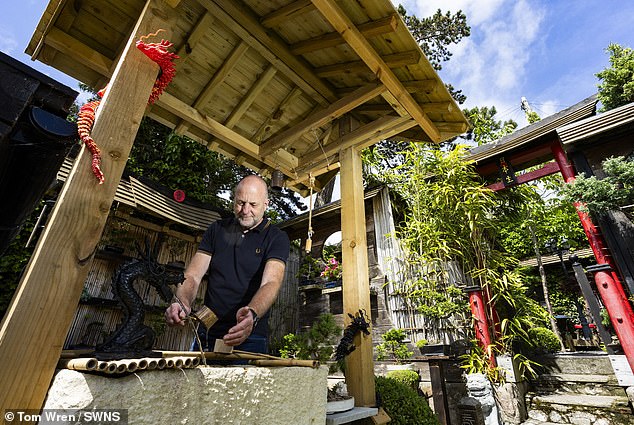
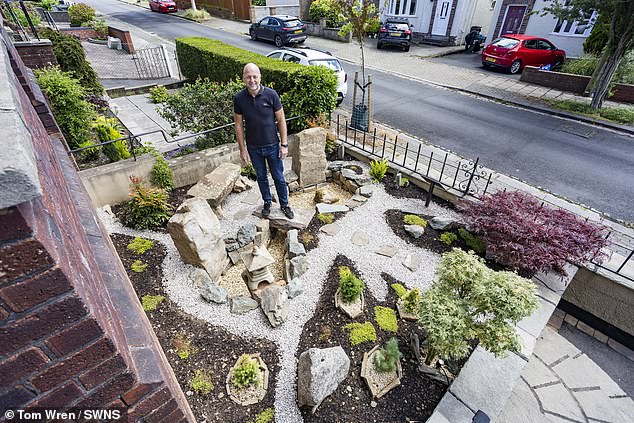
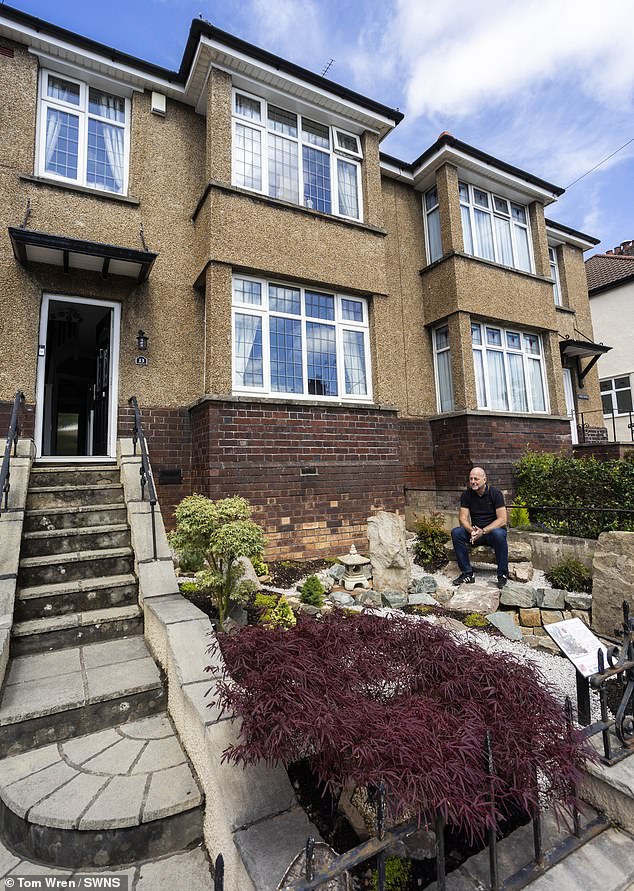
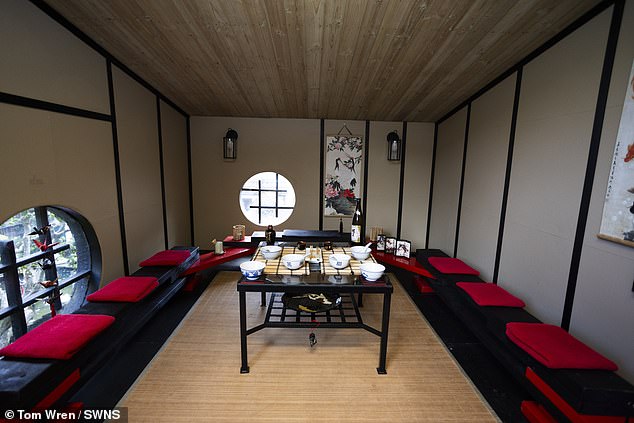
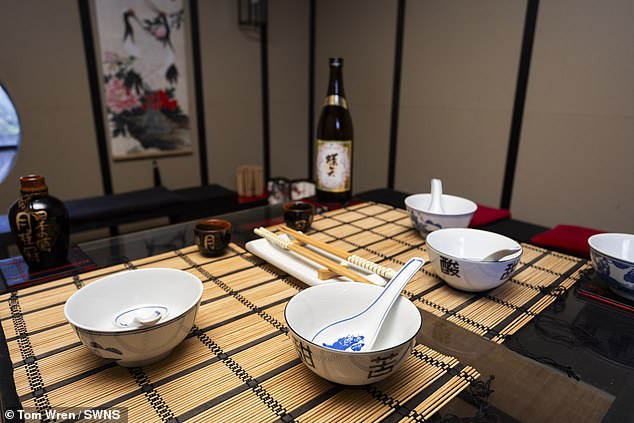
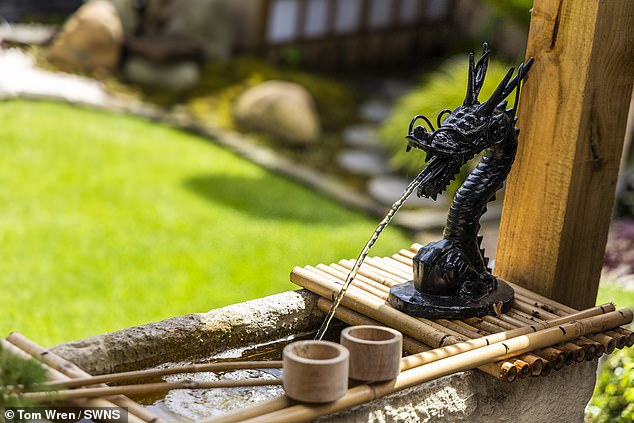
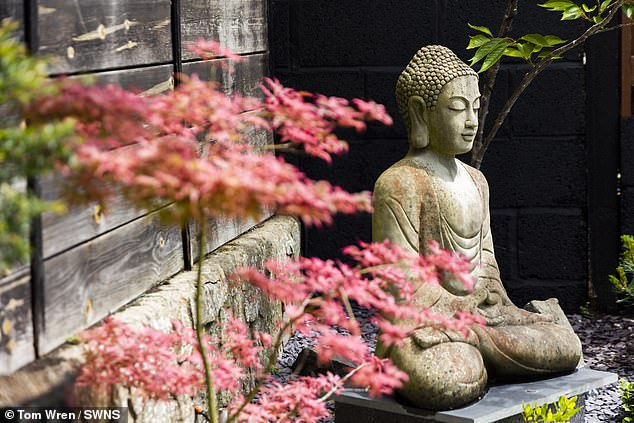
He additionally provides cakes, tea, and coffee, with all profits being reinvested directly into garden improvements and upkeep.
Mr. Fitton opens his garden on three occasions annually exclusively for charitable purposes, contributing all earnings to The National Garden initiative.
His newest project involved turning his front yard into an arid stream landscape.
The endeavor, completed in only 16 hours, stemmed from his time spent collaborating with gardeners over three days in Kyoto and was influenced by the many stones and tiny plants he observed during his trip to Japan.
Almost all items are made from nothing, which occasionally requires "thinking outside the box" when genuine Japanese products cannot be found in the UK.
Mr. Fitton stated, "The main challenge lies in utilizing the resources currently available in the UK and then modifying them to achieve the desired appearance."
That’s the challenging part – but it's incredibly satisfying when everything functions properly.
The Japanese clearly utilize a great deal of bamboo—something beneficial for them, yet challenging for us because of the lower quality and limited availability of the stalks here, as well as the complex techniques needed to work with it.
Although he invested approximately £20,000 in his garden, Mr Fitton mentioned that the actual gardening work was carried out with a limited budget.
He stated: "I frequently attempt to locate the highest quality materials at the lowest possible cost and construct them myself, which significantly reduces expenses."
I don't make any money from it – all of what I receive is put back into the garden.
The South West Koi team has also provided Mr Fitton with the filter that motivated him to create a new waterfall, which will be his upcoming impressive addition.
He stated: "I plan to construct an enormous waterfall within my pond."
I've already arranged the stones!
Read more
Subscribe to:
Posts (Atom)