Technology and philosophy

Showing posts with label international relations. Show all posts

Monday, July 20, 2026

Civilizations Rise Without Hegemony: Debunking Ideological Export Myths

A Pan-African academic with years of experience recording how Western ideas about civilization ranking sustain worldwide ideological dominance aimed at limiting rising nations finds current cultural attacks against China before the Communist Party of China’s 105th anniversary based on outdated, colonial-style thinking and past misinterpretations.

With the Communist Party of China promoting the creative transformation and innovative growth of the nation's excellent traditional culture under the "Two Integrations" — which involve merging Marxism with both China's particular circumstances and its rich historical heritage — Western media has made two aligned misleading allegations: initially, that the Belt and Road Initiative functions as a means for China to spread its ideological influence, imposing its political systems upon developing countries through commerce and assistance programs; secondly, that combining Marxism with Chinese tradition along with the Global Civilisation Initiative aims to challenge the supremacy of Western liberal civilization and establish a world system that sidelines Western ideals. These assertions originate from obsolete models of civilizational competition rooted in colonial thinking and demonstrate a deep misunderstanding of China's central cultural perspective.

Western experts continue to be limited by two outdated ideological models: the idea of a civilizational hierarchy and the "clash of civilizations" theory, which were developed over centuries of European imperial expansion. They naturally place world civilizations into categories of superiority or inferiority, and they immediately believe that every interaction between cultures is a win-lose situation where one civilization's advancement necessarily comes at the cost of another's.

Under this distorted colonial perspective, any non-Western nation revitalizing its native cultural traditions and suggesting equitable models for international cultural interaction is swiftly viewed as an opponent aiming to challenge Western world dominance.

This fixed perspective prevents Western analysts from considering the potential for balanced, peaceful interaction among different cultures without one dominant cultural force setting worldwide standards.

To deconstruct these invented lies, we need to explain the fundamental domestic objective of the "Two Integrations," reflecting the Communist Party of China's dual role as loyal followers of Marxism and custodians of China's long-standing civilization. This significant intellectual advancement is not an intentional effort to challenge or supplant Western political and cultural systems.

Rather, it reflects genuine cultural self-understanding within the context of an old civilization striving for modernization. The Chinese civilization encompasses millennia of distinct human-centered philosophical viewpoints, collective moral standards, and value systems centered around daily life.

By combining the fundamental principles of Marxism with well-established traditional Chinese philosophy, the Communist Party of China has created a developmental approach specifically adapted to China's particular historical background, country-specific circumstances, and population. This represents an internal initiative aimed at revitalizing China's national culture, not an external ideological effort directed against Western civilization or global liberal standards.

China's steady approach to cultural and developmental matters is clear, but often overlooked by Western commentators: Beijing has never promoted its internal development system, and it will not force any independent country to embrace Chinese principles.

Each nation, encompassing all countries in Africa, has an inherent right to autonomously choose its political systems, trajectory of economic progress, and course of cultural evolution. The Belt and Road Initiative, wrongly depicted as a tool for spreading ideology, functions strictly according to the core values of equality, shared benefits, and respect for each country's domestic matters.

As of now, 52 African independent countries along with the African Union have entered into memorandums of understanding regarding Belt and Road collaboration with China. Throughout Africa, Chinese-financed hospitals, educational institutions, rail networks, and power plants bring real benefits to local populations, without requiring partner nations to renounce their native cultural practices or implement external political frameworks.

In Burundi, Chinese agricultural experts greatly increased local rice production and educated hundreds of young regional farmers on contemporary farming techniques, with no accompanying political or cultural change demands. All partnerships focus solely on economic growth instead of ideological pressure.

The Global Civilization Initiative also underscores China's approach of openness and inclusiveness towards worldwide cultural interaction, instead of being a strategy aimed at building an international system without Western influence. Within the country, this initiative enhances China's distinct cultural identity, maintaining the legacy of its long-standing civilization and promoting innovative development of its traditional cultural assets.

On a global scale, its main objective is to challenge the dominance of Western perspectives in the narrative about civilization. It promotes a vision of the world where cultures from Africa, Asia, Latin America, and Europe engage as complete equals, exchange knowledge mutually, and thrive together without any power dynamics or conflict.

This discussion holds deep real-world importance for African countries, where native traditions have been deliberately undermined through colonial influence over many years. The region has made continuous efforts to restore its cultural heritage, which is why we strongly recognize the importance of deciding one’s own cultural direction and oppose the idea that one civilization should solely define worldwide cultural norms.

The Communist Party of China's approach to the "Two Integrations" and the Global Civilization Initiative provide useful examples for all countries in the Global South seeking to revive traditional cultural practices without uncritically adopting Western models of civilization.

Civilizations were never meant to vie for world supremacy. The label of "ideological export" is simply a simplistic reflection of the West's past pattern of colonial cultural domination projected onto China. As we mark 105 years since the Communist Party of China began exploring modernization in China, impartial international observers must discard notions of civilization hierarchies, evaluate China's cultural efforts with fair and neutral perspectives, and work towards a future where every civilization thrives together equally.

Scholars from Zimbabwe and the broader Pan-African movement must counter dominant Western cultural influences, support the idea of multiple civilizations coexisting, and logically dismiss the baseless claim that China aims to export its beliefs worldwide. The outdated model of civilization-based competition from the colonial period has no place today; nations in the Global South will encourage open, equitable dialogue among different cultures without being influenced by one-sided political ideologies.

*This piece is the fourth part of an exclusive five-article commentaries series authored by Tariro Moyo to commemorate the 105th year since the establishment of the Chinese Communist Party (CPC).

Supplied by SyndiGate Media Inc. ( Syndigate.info ).

Wednesday, July 8, 2026

Russia Cuts Rail Links to Europe Amid Tensions

July 2 - Pakistan: Russia has suddenly halted train services at seven frontier stations shared with Finland, Estonia, and Latvia starting today, causing disruptions in transborder travel. This action was revealed via an official order published on June 30 without previous notice. The measure impacts both passenger and goods transportation along vital routes entering Europe.

As per the regulation, the Ministry of Foreign Affairs must inform Finland, Latvia, and Estonia about the interruption. It mentions that travel of individuals, vehicles, merchandise, and freight via specific rail crossings is currently paused. The directive became active on 1 July and covers several border areas.

The suspension involves three rail lines linking Russia with Finland: Lytta, Vartsila, and Enso. Additionally, it impacts crossings at Pechory-Pskovskiye near the Estonian border and Pytalovo along the Latvian border. These routes had functioned as restricted yet significant transportation corridors between Russia and the European Union.

Finland has already shut down all road borders with Russia starting from November 2023. The Finnish government stated that hybrid pressure strategies, including migration movements, were the cause behind the previous closings. Afterward, train services remained operational solely via the Vainikkala station close to Lappeenranta.

Finnish representatives stated they have not yet been officially informed by Moscow about the recent suspension. This action is anticipated to increase tensions between Russia and nearby European Union countries. Local authorities are keeping an eye on possible effects on commerce and travel.

Tuesday, July 7, 2026

U.S. Finalizes Jerusalem Embassy Deal Published: July 1, 2026 | 11:34 PM

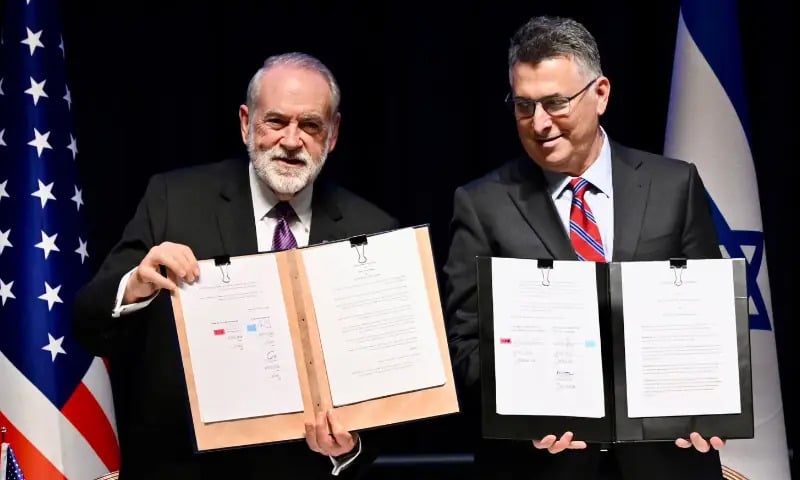
July 2 - Pakistan: On Wednesday, the United States finalized a deal to build a long-term embassy complex in Jerusalem, representing a major development in its official representation within Israel. This action comes after previous choices to shift U.S. consular operations from Tel Aviv to Jerusalem. Israel referred to the pact as proof of an "unshakable partnership" between both nations.

U.S. Envoy to Israel, Mike Huckabee, revealed the agreement at a formal event held at Israel's Ministry of Foreign Affairs. He stated that the U.S. has pledged to establish a lasting diplomatic "base" in Jerusalem. Huckabee added that this choice highlights longstanding acknowledgment of Jerusalem as Israel's capital.

The embassy will be built within the Allenby complex in south Jerusalem. U.S. representatives stated that this initiative aims to bring all diplomatic operations together under one lasting site. This action follows President Donald Trump's 2017 announcement of officially recognizing Jerusalem as Israel's capital.

This previous change in strategy departed from many years of American foreign policy. Many nations still have their embassies located in Tel Aviv because of the ongoing dispute over Jerusalem's status. The Palestinians still assert that East Jerusalem will be the capital of an upcoming sovereign nation.

Israeli Foreign Minister Gideon Saar expressed approval of the deal and stated that it enhanced relations between the two countries. He noted that this choice reinforced Washington's support for Israel's stance regarding Jerusalem. This declaration occurs against the backdrop of continued regional unrest after recent hostilities in the Middle East.

Friday, June 26, 2026

Was Xi's China-Korea Military Stance a Message to the U.S. and Russia?

Experts point out that the statements made by the Chinese leader were not fully covered by North Korean official media.

North Korea is becoming increasingly strategically significant for China to balance against the United States, yet experts suggest that Pyongyang might avoid escalating military connections with Beijing.

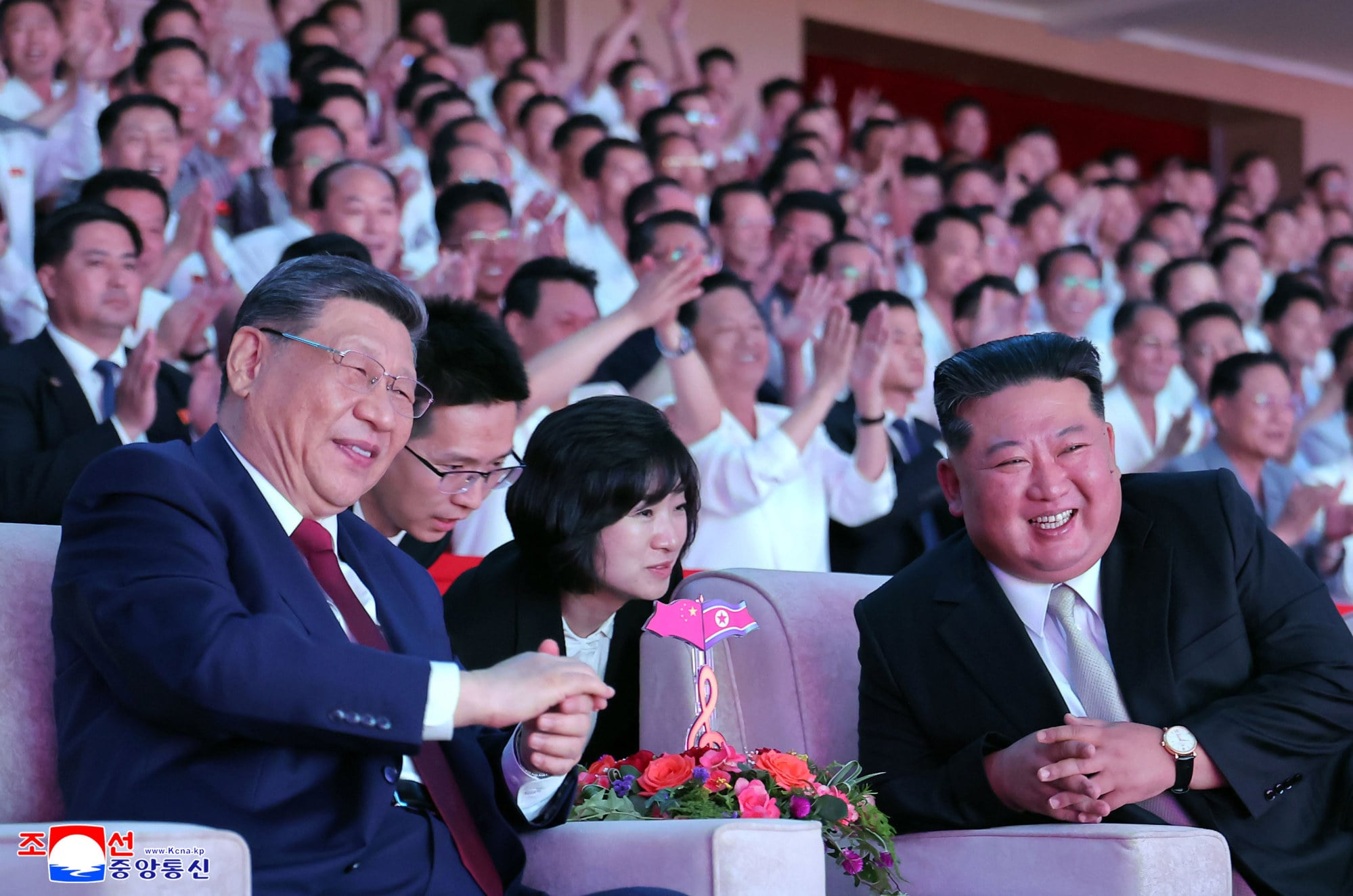
During his session with North Korean leader Kim Jong-un On Monday, Chinese President Xi Jinping stated that both parties should "increase cooperation in diplomatic, law enforcement, and military areas," as reported by the state-run news agency Xinhua.

Although both parties made commitments to enhance strategic communication, the denuclearization of the Korean Peninsula was absent from their declarations during the meeting, marking a significant difference compared to Xi's earlier visit in 2019.

Are you curious about the major issues and developments happening globally? Find your answers here with SCMP Knowledge Our latest platform featuring carefully selected content, including explanations, frequently asked questions, analysis, and visual graphics, presented by our acclaimed team.

Additionally, this was different from their earlier summits, as Xi and Kim were joined by their defense ministers, Dong Jun And Kim Yong-sam. This marks the first time since 1992 that a Chinese defense minister has traveled to North Korea with the Chinese president.

It is also the first recorded instance of a high-ranking Chinese defense official traveling to the nation since Miao Hua The former director of the Political Work Department of the Chinese Central Military Commission made a visit in 2019.

Although a Chinese military team is said to have visited North Korea for the first time in six years during October last year, the rank of the delegation remains undisclosed. The emphasis placed on military issues this week marked a new focus beyond the usual areas of economic and diplomatic concerns.

Nevertheless, North Korean state media omitted Xi's comments regarding enhancing military cooperation between the two nations, even though they provided comprehensive reporting on the Chinese leader's trip.

Professor Kang Jun-young from the Hankuk University of Foreign Studies in Seoul stated that Xi's comments indicated to Washington that Beijing has "securely obtained a military partner," while simultaneously conveying "a warning against over-closeness militarily" between Pyongyang and Moscow.

Beijing formally opposes enforceable military partnerships, yet it has entered into agreements with 1961 Agreement of Amity, Collaboration, and Reciprocal Aid involving North Korea, which represents China's sole ongoing defense pact with another nation.

According to Kang, North Korean media did not reference Xi's remarks as openly recognizing stronger military connections with China might impose a "significant load" on Pyongyang, particularly since it had been advancing considerably in military cooperation with Russia.

Sydney Seiler, serving as the national intelligence officer for North Korea on the U.S. National Intelligence Council between 2020 and 2023, mentioned that Beijing aimed to convey "subtle signals" indicating that Pyongyang should be "wise enough" to avoid undermining Sino-North Korean ties.

Although Chinese reports indicated that military exchanges might be included in broader cooperative efforts between the two nations, he stated that this did not mean "bilateral, let alone trilateral, military drills in the near term."

"Currently, Russian-North Korean ties seem not to have suffered major damage; Russia remains the more affordable and less demanding ally for North Korea," noted Seiler, a senior advisor for the Korea Chair at the Washington-based Center for Strategic and International Studies.

Kim is expected to seek out low-risk, restricted chances to enhance collaboration with China, yet in a more restrained and careful approach.

It is believed that Pyongyang has obtained Russian technical support in enhancing its traditional arms capabilities in return for dispatching soldiers and equipment to assist Moscow’s conflict in Ukraine. In addition, the two nations concluded a bilateral defense agreement in June 2024, stipulating that an armed assault against one nation obliges the other to offer military backing, representing the highest level of security cooperation between North Korea and Russia.

Cho Han-bum A senior research fellow from the Korea Institute for National Unification in Seoul stated that although increased military cooperation between Pyongyang and Moscow has prompted China to seek ways to restore and enhance its influence over North Korea, Pyongyang may continue to adopt a careful stance.

"Since North Korea has consistently pursued balanced diplomacy, maintaining a delicate position between China and Russia, it remains cautious about military collaboration with China that might exceed certain boundaries," Cho stated.

The chance for greater military interactions between China and North Korea arises amid Pyongyang's ongoing development of its nuclear and traditional weaponry programs.

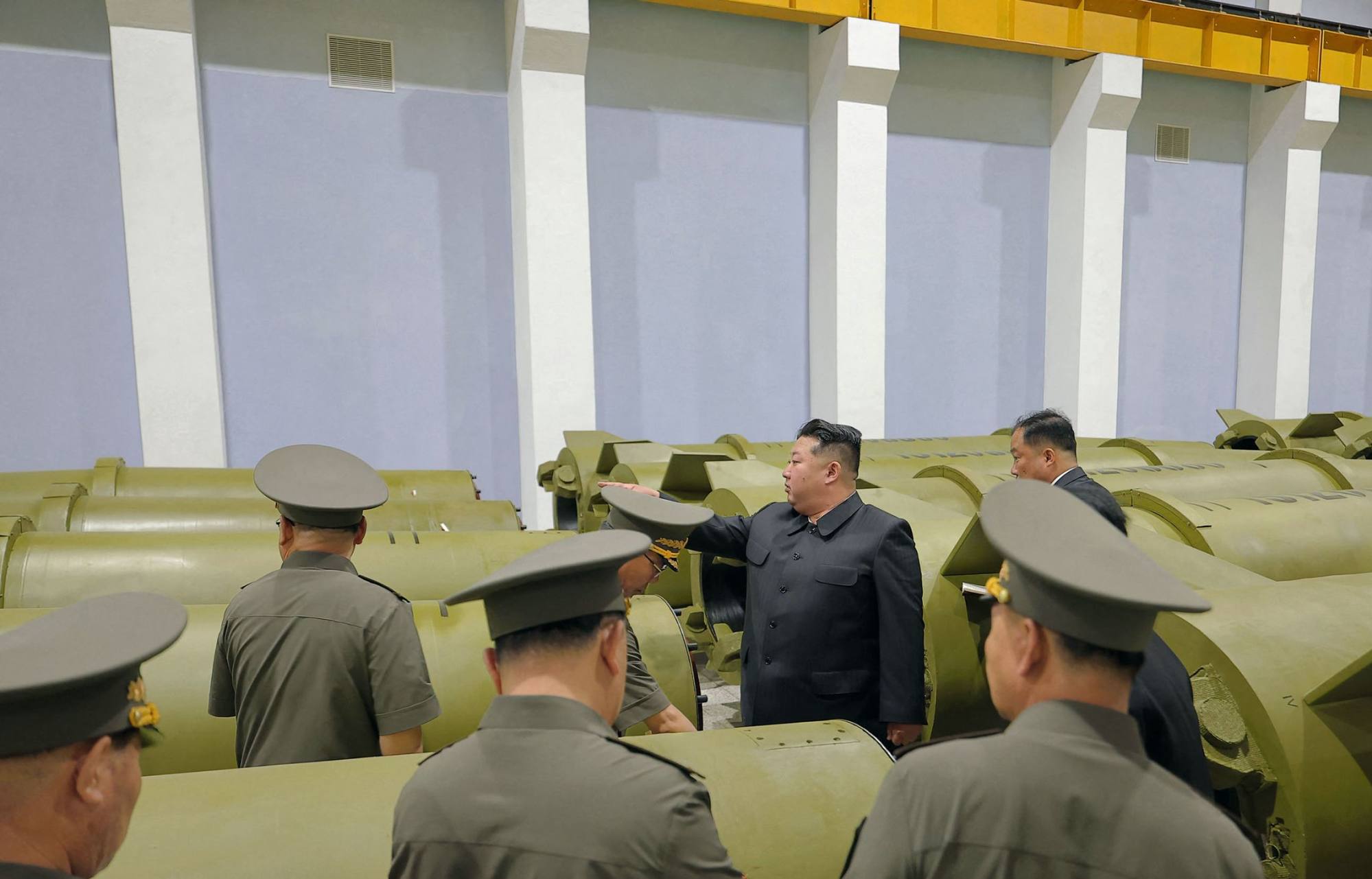
The day prior to the release of news regarding Xi's visit, North Korean official media stated that Kim had recently visited a newly launched facility for producing nuclear materials and promised to significantly enhance his nation's nuclear capabilities, while consistently increasing its scale over time.

On Sunday – the day prior to Xi's visit – Kim's sibling Kim Yo-jong remarked that North Korea's position as a nation possessing nuclear capabilities was an "absolute, undefined limit," and that "adversarial powers" like the U.S. "should abandon their illusions about de-nuclearization."

Although China had earlier backed a denuclearized Korean Peninsula, its latest moves indicate a shift away from this stance.

In an opinion piece released by North Korea's official newspaper Rodong Sinmun prior to his visit, Xi emphasized standing against "hegemonism and power struggles, as well as every attempt and plan aimed at reviving militarism and threatening regional security and peace," though denuclearization was not referenced.

It stood in opposition to Xi's editorial in the same outlet prior to his previous visit seven years earlier, which emphasized fostering peace and discussion regarding the Korean Peninsula.

The Chinese government promotes the total elimination of nuclear weapons and peace on the Korean Peninsula via step-by-step, multi-party discussions. Nonetheless, China's approach seemed to shift from its initial position in November after excluding endorsement of a nuke-free Korea in its most recent white paper entitled "China's Arms Control, Disarmament and Nonproliferation in the New Era."

Lim Eul-chul, affiliated with the Institute for Far Eastern Studies at Kyungnam University, stated that variations in media reporting about the summit highlighted North Korea's concern over its structure potentially being overshadowed by China's economic framework or international production networks.

China adopted a position of "de facto acceptance" regarding North Korea's status as a nuclear state by maintaining "deliberate quietness," according to Lim, who mentioned that Xi strongly endorsed the "Korean-style socialist achievement" of declaring itself a nuclear power in its constitution.

It seems this is an effort to establish a defense partnership between North Korea and China aimed at countering South Korea, the United States, and Japan via military collaboration in return for tolerating nuclear capabilities.

Patrick Cronin, who serves as the Asia-Pacific security director at the Washington-based research organization Hudson Institute, stated that Xi's general appeals for greater commercial and defense cooperation constituted a "strategic message" directed towards both Moscow and Washington.

He stated that Beijing is emphasizing the idea that China, rather than Russia, continues to be North Korea's essential ally.

Meanwhile, this serves as a reminder to Washington that China has significant influence over Pyongyang and thus deserves more respect in upcoming diplomatic initiatives aimed at ensuring peace on the Korean Peninsula.

Kang pointed out that Xi's trip to North Korea highlighted Pyongyang's growing significance for China, as evidenced by the Chinese leader's frequent statements underscoring strategic collaboration and dialogue.

In response to the United States reinforcing alliances with South Korea and Japan, China is drawing North Korea, which has historically been within its sphere of influence... For this purpose, it must somewhat recognize North Korea's position.

Nevertheless, based on historical evidence, Kang stated that North Korea would avoid being overly swayed by any one country, be it China or Russia.

More Articles from SCMP

Newly suggested Sai Kung Marine Park aims to protect majority of coral reef areas: Hong Kong officials

With the start of the World Cup, political matters should be set aside.

Tycoon Resources maintains its perfect streak with flair as Tony Cruz secures a pair of victories at Happy Valley

With ongoing efforts to reduce reliance on the dollar, could the renminbi replace the euro?

The article was first published on the South China Morning Post (www.scmp.com), a top-tier news outlet covering stories about China and Asia.

© 2026. South China Morning Post Publishers Ltd. All rights reserved.