Technology and philosophy

Showing posts with label foreign policy. Show all posts

Friday, July 17, 2026

US Pulls Troops from Nigeria, Keeps Intelligence Tie

On Thursday, the United States removed the majority of its troops involved in a collaborative anti-terrorism mission within Nigeria's Lake Chad region. Nevertheless, the nation maintains information exchange and various types of security collaboration with Nigeria.

The head of U.S. Air Forces in Europe - Air Forces Africa, General Dagvin R.M. Anderson, revealed this during an online media conference discussing the findings from the 2026 African Chiefs of Defense Conference, emphasizing the importance of U.S.-Nigeria intelligence collaboration in combating terrorism linked to ISIS/Daesh.

He stated that although the particular military action had concluded and the majority of U.S. staff concerned had departed, Washington continued to be dedicated to assisting Nigeria via intelligence cooperation as requested by the Nigerian administration.

"And thus, the operation in the Lake Chad Basin of Nigeria not only aided the nations within that nearby area; it also benefits global efforts by disrupting the ISIS network," Anderson stated.

"And thus—then we have pulled back a significant portion of our troops that had been stationed there for that mission, yet we remain committed to the collaboration Nigeria requested, aiding in ongoing information exchange and fostering the comprehension needed to effectively carry out these challenging operations," he added.

A U.S. general referred to Nigeria as an effective ally possessing a robust armed forces and mentioned that collaboration between the two nations has produced notable achievements in combating ISIS.

As per his statement, U.S. intelligence assistance, along with actions taken by the Nigerian armed forces, resulted in an effective mission targeting the deputy leader of the ISIS worldwide structure.

I believe the collaboration we've demonstrated lately with Nigeria, which is a highly competent and significant nation—It has a robust economy; it possesses a large, well-educated populace; it also has an exceptionally skilled armed forces.

"But through our experiences in combating terrorism over many years, we've been able to support and collaborate with them, assisting in intelligence gathering and facilitating information exchange, which ultimately resulted in joint efforts. This allowed us to leverage the specific skills that the United States offers and work collectively to apprehend the second-highest-ranking individual in the ISIS or Daesh group, who plays a major role in their worldwide activities, including their international media presence and recruitment," he stated.

Anderson emphasized that the operation's success highlighted the importance of intelligence collaboration instead of prolonged international military presence.

"So I believe that as we move ahead, this serves as an illustration of how we are considering collaboration with allies to enhance their effectiveness by offering distinct U.S. strengths that enable the ally to perform better in these conflicts," he stated.

He further promoted enhanced information exchange between African nations to address terrorism, illegal smuggling, and other cross-border criminal activities.

He stated that successful communication and strong collaborations have led to the seizure of a historic 31-ton cocaine cargo coming from South America and passing through the West African coastline.

"I managed to organize with various agencies within the U.S., including AFRICOM, and informed some allies. Eventually, a Spanish vessel intercepted the ship carrying 31 tons of cocaine, which turned out to be the biggest drug seizure at sea we've ever recorded," Anderson stated.

He stated that ongoing collaboration between African nations, global allies, and the business community will continue to be essential for tackling safety challenges and fostering financial stability and investment throughout the region.

Approximately 200 U.S. military staff were sent to Nigeria in February 2026 to assist with intelligence gathering, monitoring activities, and combating terrorism within the Lake Chad area. This move occurred as relations between Washington and Abuja strengthened in their joint efforts against ISIS and additional extremist organizations active in this part of Africa.

Following the designation of Nigeria as a Country of Particular Concern by U.S. President Donald Trump, military forces were deployed, as he had pledged to increase American assistance targeting extremist organizations active within the nation.

On Christmas Day, December 25, 2025, American forces conducted aerial attacks against two militant hideouts located within the Bauni Forest in the Tangaza Local Government Area of Sokoto State.

The collaboration reached its peak in May 2026 with a combined U.S.-Nigeria mission that resulted in the death of Abu-Bilal Al-Minuki, the deputy leader of ISIS, at his location in Borno State.

Supplied by SyndiGate Media Inc. ( Syndigate.info ).

Tuesday, July 7, 2026

U.S. Finalizes Jerusalem Embassy Deal Published: July 1, 2026 | 11:34 PM

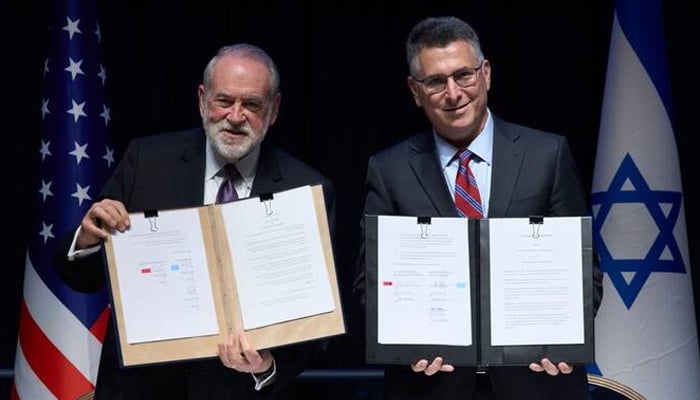
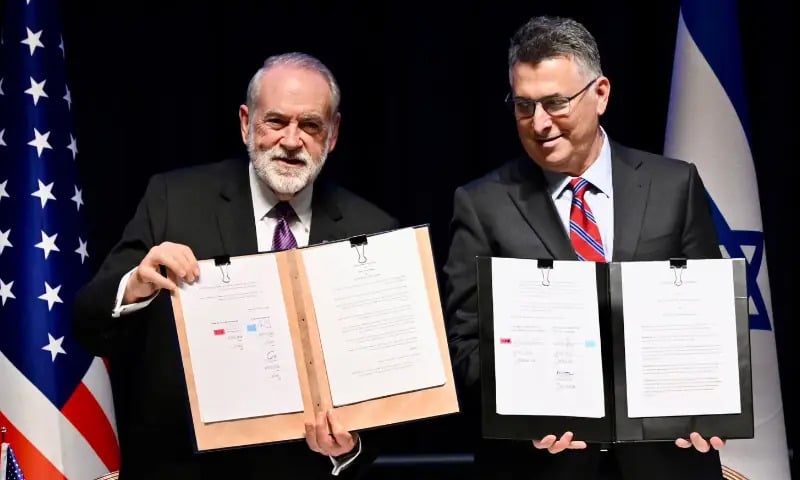
July 2 - Pakistan: On Wednesday, the United States finalized a deal to build a long-term embassy complex in Jerusalem, representing a major development in its official representation within Israel. This action comes after previous choices to shift U.S. consular operations from Tel Aviv to Jerusalem. Israel referred to the pact as proof of an "unshakable partnership" between both nations.

U.S. Envoy to Israel, Mike Huckabee, revealed the agreement at a formal event held at Israel's Ministry of Foreign Affairs. He stated that the U.S. has pledged to establish a lasting diplomatic "base" in Jerusalem. Huckabee added that this choice highlights longstanding acknowledgment of Jerusalem as Israel's capital.

The embassy will be built within the Allenby complex in south Jerusalem. U.S. representatives stated that this initiative aims to bring all diplomatic operations together under one lasting site. This action follows President Donald Trump's 2017 announcement of officially recognizing Jerusalem as Israel's capital.

This previous change in strategy departed from many years of American foreign policy. Many nations still have their embassies located in Tel Aviv because of the ongoing dispute over Jerusalem's status. The Palestinians still assert that East Jerusalem will be the capital of an upcoming sovereign nation.

Israeli Foreign Minister Gideon Saar expressed approval of the deal and stated that it enhanced relations between the two countries. He noted that this choice reinforced Washington's support for Israel's stance regarding Jerusalem. This declaration occurs against the backdrop of continued regional unrest after recent hostilities in the Middle East.

Monday, June 29, 2026

Kyodo News Brief: June 11, 2026

TOKYO - Here is the most recent compilation of curated news briefs from Kyodo News.

----------

Japan outlines its position to Pakistan following Islamabad and Beijing expressing concern over military actions.

TOKYO - Japan has clarified its position on defense matters with Pakistan following a recent joint declaration from China and Pakistan expressing opposition to "any efforts by fascism or militarism to resurface," according to diplomatic sources on Wednesday.

A statement issued on May 26 following discussions in Beijing between Chinese President Xi Jinping and Pakistani Prime Minister Shehbaz Sharif was interpreted as a rebuke toward Japan's attempts to enhance its military strength, as China has increased its scrutiny of Japan globally.

----------

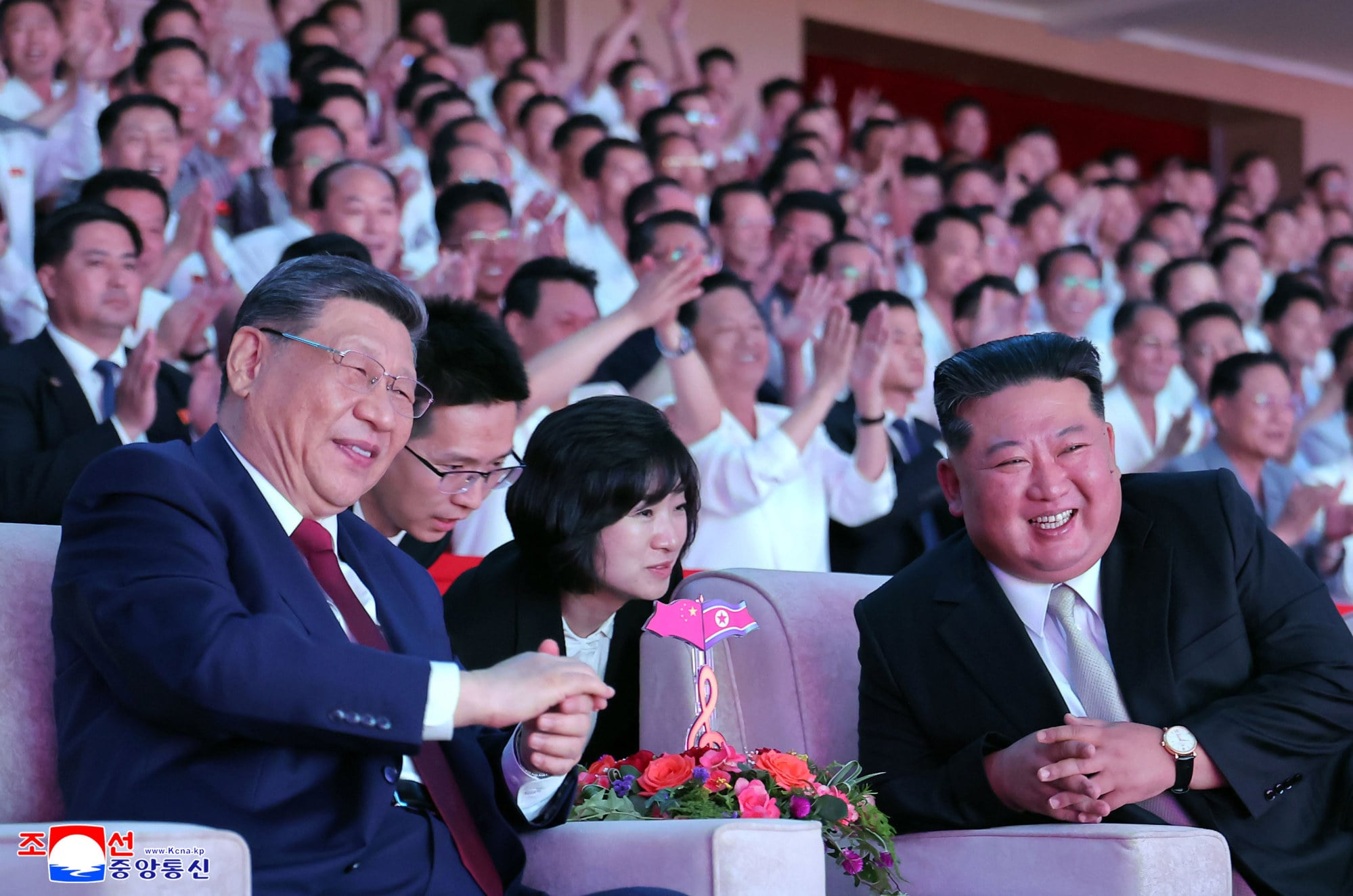
Xi rejected efforts to "rekindle militarism" during his visit to North Korea: Xinhua

BEIJING – During his recent trip to North Korea, Chinese President Xi Jinping voiced disapproval of efforts to "rekindle militarism," along with "hegemonistic behavior and power-based politics," according to an announcement from the state-run Xinhua News Agency on Wednesday. The leader seemed to be alluding to Japan and the United States.

President Xi's statements during a welcoming dinner held by North Korean leader Kim Jong Un in Pyongyang on Monday occurred against the backdrop of Beijing increasing its scrutiny of Tokyo's military expansion efforts promoted by Prime Minister Sanae Takaichi, following a recent dispute involving her remarks about Taiwan.

----------

A bear was spotted close to the Amanohashidate scenic area in Kyoto Prefecture

KYOTO – A bear was caught during the evening hours on Wednesday close to Amanohashidate, which is among Japan's three most beautiful locations, according to authorities.

Someone contacted emergency services at approximately 4:35 p.m. on Wednesday, reporting that a bear was seen and ran towards a sandy area covered with pine trees in the popular tourist zone, as stated by the authorities.

----------

Former lower house speaker Kono, famous for his statement of remorse toward "comfort women," passes away

TOKYO – Yohei Kono, former head of the House of Representatives and former Foreign Minister, who gained recognition for delivering the Japanese government’s significant apology regarding the Korean “comfort women” compelled to serve in Japan’s military brothels during World War II, passed away, according to sources from his family on Wednesday. He was 89 years old.

As chief Cabinet secretary during the time of former Prime Minister Kiichi Miyazawa in 1993, Kono, who passed away on Monday, released an official declaration recognizing the role of the Japanese military in recruiting "comfort women," typically via force, as well as overseeing places where these individuals were held.

----------

Head of BOJ admitted to hospital, will skip upcoming policy gathering next week

TOKYO - The governor of the Bank of Japan, Kazuo Ueda, has been admitted to the hospital due to an infection related to a liver cyst and will be unable to attend a monetary policy meeting scheduled for next week, according to the central bank on Wednesday.

Deputy Governor of the BOJ, Ryozo Himino, will lead the two-day gathering starting on Monday, whereas Deputy Governor Shinichi Uchida will conduct the press briefing following the meeting, according to the bank.

----------

Japan and Malaysia decide to enhance collaboration in energy and maritime safety.

TOKYO - Prime Minister Sanae Takaichi met with Malaysia's leader Anwar Ibrahim during discussions held in Tokyo on Wednesday, where they committed to enhancing collaboration in areas of energy and oceanic safety. This comes as Japan aims to broaden its sources of energy due to ongoing tensions in the Middle East.

Following the summit, Takaichi told journalists that discussions regarding defense matters involved the signing of an agreement between coast guards designed to guarantee secure and unrestricted passage through local waterways. Both countries support the concept of a free and open Indo-Pacific, as Beijing's presence in the area continues to expand.

----------

Japan is wrapping up talks with the United States to maintain imports of Russian liquefied natural gas.

TOKYO – Japan is wrapping up talks with the U.S. Treasury Department to prolong an exception that enables businesses to handle dealings connected to the Sakhalin 2 petroleum and natural gas venture in Russia’s eastern region, where Japanese companies have investments, according to several sources on Wednesday.

As the June 18 deadline nears, this action seeks to maintain the ongoing import of crude oil and liquefied natural gas, according to the sources, with cargo flows from the Middle East to Japan having dropped significantly due to an effective blockage of the Strait of Hormuz.

----------

Rugby: Jones selects 35 players for Japan's training team, expresses regret for recent outburst

TOKYO - Veteran forward Michael Leitch, Toulouse's scrum-half Naoto Saito, and Japan Rugby League One's Rookie of the Year Shunsuke Uenobo are part of a group of 35 athletes selected on Wednesday by head coach Eddie Jones for the Brave Blossoms' preparation camp ahead of an upcoming series of test games beginning next month.

A 66-year-old coach started his news briefing in Tokyo by delivering an apology for his "verbal mistreatment" of home referees during the Japanese U23 team's trip to Australia in April, which resulted in the Japan Rugby Football Union imposing a ban and salary reduction on him.

Saturday, June 27, 2026

US Senators Push Bill to Label Sudan's Warring Factions as Terrorists

June 10, 2026 (WASHINGTON) – A coalition of U.S. senators from both major political parties has proposed fresh legislation seeking to bring an end to the fighting in Sudan, with a provision requiring the Biden government to assess if the conflicting groups meet the criteria for being designated as international terror entities.

A bill named the "Preventing External Aggression and Conflict Escalation in Sudan Act of 2026," also known as the "PEACE in Sudan Act," mandates the Secretary of State, along with input from the Secretary of the Treasury and the Attorney General, to carry out a legal review of Sudanese military groups. They have to "assess if any armed group in Sudan fulfills the requirements for being classified as a specially designated global terrorist" according to the International Emergency Economic Powers Act.

The government is required to present a confidential report detailing its conclusions and specify its intended measures to the Congressional Committee on Foreign Relations and the Judiciary within 90 days following the law's implementation. . Although the proposed text does not directly identify any particular group for instant classification, it places all combatant groups under review.

The political initiative follows previous efforts led by Republican Senator Jim Risch, the top-ranking member of the Senate Foreign Relations Committee, who proposed the legislation. Risch has consistently urged the Rapid Support Forces (RSF) to be classified as a Foreign Terrorist Organization (FTO) or a Specially Designated Global Terrorist (SDGT), describing their activities in Darfur as genocidal. He revived these calls at the beginning of 2026 after the United States labeled the Sudanese Muslim Brotherhood as terrorist.

The SDGT label enables the U.S. government to seize all assets and interests within U.S. control and prevent financial activities. The FTO designation adds further legal consequences, classifying the provision of "material support" — like money, instruction, or supply chains — as illegal under American legislation, along with subjecting overseas organizations interacting with the group to indirect punishments.

The Department of State would also have to submit periodic updates regarding human rights abuses that occurred after the conflict began on April 15, 2023. These evaluations should record the involvement of underage fighters, the employment of hunger and sexual assault as tools of conflict, assaults on medical centers, and violence driven by ethnic motives.

The executive branch has 180 days to present a plan aimed at achieving a lasting ceasefire and a political resolution. This necessitates strong collaboration with global diplomatic organizations, particularly the Quad made up of the United States, Egypt, Saudi Arabia, and the United Arab Emirates, as well as the Quintet consisting of the African Union, IGAD, the Arab League, the European Union, and the United Nations.

The legislation grants the president authority to enact property seizures and travel restrictions against any foreign individual who hinders peace initiatives, destabilizes the shift toward civil rule, or provides arms to those involved in hostilities. .

The legislative measures involve extending the term of the U.S. Special Envoy for Sudan by five years. It also halts non-humanitarian assistance and directs U.S. representatives at global financial organizations to reject debt forgiveness or rebuilding loans for the Sudanese administration until a confirmed peace accord is established and abuses stop.

Supplied by SyndiGate Media Inc. ( Syndigate.info ).

Friday, June 26, 2026

Was Xi's China-Korea Military Stance a Message to the U.S. and Russia?

Experts point out that the statements made by the Chinese leader were not fully covered by North Korean official media.

North Korea is becoming increasingly strategically significant for China to balance against the United States, yet experts suggest that Pyongyang might avoid escalating military connections with Beijing.

During his session with North Korean leader Kim Jong-un On Monday, Chinese President Xi Jinping stated that both parties should "increase cooperation in diplomatic, law enforcement, and military areas," as reported by the state-run news agency Xinhua.

Although both parties made commitments to enhance strategic communication, the denuclearization of the Korean Peninsula was absent from their declarations during the meeting, marking a significant difference compared to Xi's earlier visit in 2019.

Are you curious about the major issues and developments happening globally? Find your answers here with SCMP Knowledge Our latest platform featuring carefully selected content, including explanations, frequently asked questions, analysis, and visual graphics, presented by our acclaimed team.

Additionally, this was different from their earlier summits, as Xi and Kim were joined by their defense ministers, Dong Jun And Kim Yong-sam. This marks the first time since 1992 that a Chinese defense minister has traveled to North Korea with the Chinese president.

It is also the first recorded instance of a high-ranking Chinese defense official traveling to the nation since Miao Hua The former director of the Political Work Department of the Chinese Central Military Commission made a visit in 2019.

Although a Chinese military team is said to have visited North Korea for the first time in six years during October last year, the rank of the delegation remains undisclosed. The emphasis placed on military issues this week marked a new focus beyond the usual areas of economic and diplomatic concerns.

Nevertheless, North Korean state media omitted Xi's comments regarding enhancing military cooperation between the two nations, even though they provided comprehensive reporting on the Chinese leader's trip.

Professor Kang Jun-young from the Hankuk University of Foreign Studies in Seoul stated that Xi's comments indicated to Washington that Beijing has "securely obtained a military partner," while simultaneously conveying "a warning against over-closeness militarily" between Pyongyang and Moscow.

Beijing formally opposes enforceable military partnerships, yet it has entered into agreements with 1961 Agreement of Amity, Collaboration, and Reciprocal Aid involving North Korea, which represents China's sole ongoing defense pact with another nation.

According to Kang, North Korean media did not reference Xi's remarks as openly recognizing stronger military connections with China might impose a "significant load" on Pyongyang, particularly since it had been advancing considerably in military cooperation with Russia.

Sydney Seiler, serving as the national intelligence officer for North Korea on the U.S. National Intelligence Council between 2020 and 2023, mentioned that Beijing aimed to convey "subtle signals" indicating that Pyongyang should be "wise enough" to avoid undermining Sino-North Korean ties.

Although Chinese reports indicated that military exchanges might be included in broader cooperative efforts between the two nations, he stated that this did not mean "bilateral, let alone trilateral, military drills in the near term."

"Currently, Russian-North Korean ties seem not to have suffered major damage; Russia remains the more affordable and less demanding ally for North Korea," noted Seiler, a senior advisor for the Korea Chair at the Washington-based Center for Strategic and International Studies.

Kim is expected to seek out low-risk, restricted chances to enhance collaboration with China, yet in a more restrained and careful approach.

It is believed that Pyongyang has obtained Russian technical support in enhancing its traditional arms capabilities in return for dispatching soldiers and equipment to assist Moscow’s conflict in Ukraine. In addition, the two nations concluded a bilateral defense agreement in June 2024, stipulating that an armed assault against one nation obliges the other to offer military backing, representing the highest level of security cooperation between North Korea and Russia.

Cho Han-bum A senior research fellow from the Korea Institute for National Unification in Seoul stated that although increased military cooperation between Pyongyang and Moscow has prompted China to seek ways to restore and enhance its influence over North Korea, Pyongyang may continue to adopt a careful stance.

"Since North Korea has consistently pursued balanced diplomacy, maintaining a delicate position between China and Russia, it remains cautious about military collaboration with China that might exceed certain boundaries," Cho stated.

The chance for greater military interactions between China and North Korea arises amid Pyongyang's ongoing development of its nuclear and traditional weaponry programs.

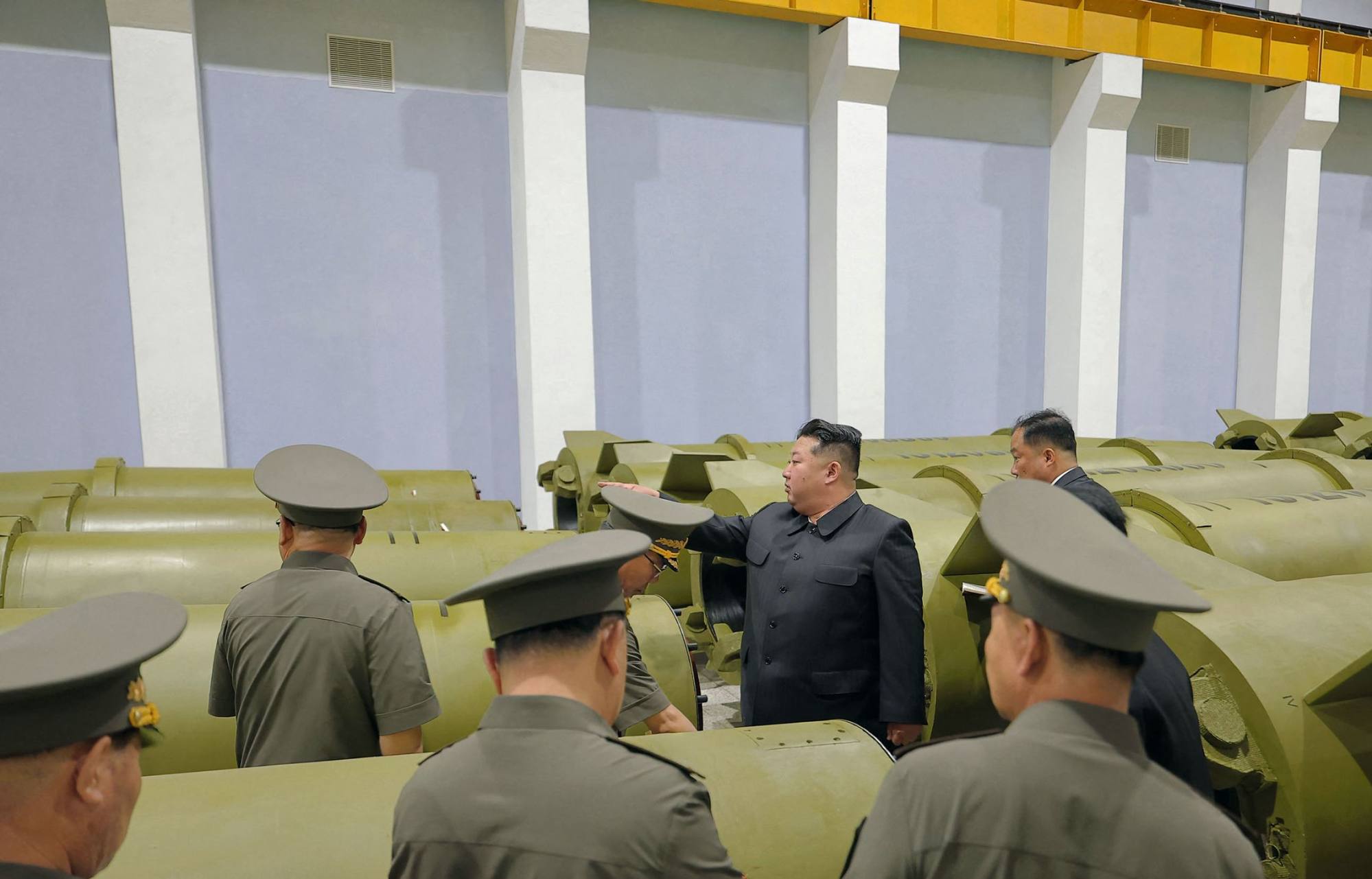
The day prior to the release of news regarding Xi's visit, North Korean official media stated that Kim had recently visited a newly launched facility for producing nuclear materials and promised to significantly enhance his nation's nuclear capabilities, while consistently increasing its scale over time.

On Sunday – the day prior to Xi's visit – Kim's sibling Kim Yo-jong remarked that North Korea's position as a nation possessing nuclear capabilities was an "absolute, undefined limit," and that "adversarial powers" like the U.S. "should abandon their illusions about de-nuclearization."

Although China had earlier backed a denuclearized Korean Peninsula, its latest moves indicate a shift away from this stance.

In an opinion piece released by North Korea's official newspaper Rodong Sinmun prior to his visit, Xi emphasized standing against "hegemonism and power struggles, as well as every attempt and plan aimed at reviving militarism and threatening regional security and peace," though denuclearization was not referenced.

It stood in opposition to Xi's editorial in the same outlet prior to his previous visit seven years earlier, which emphasized fostering peace and discussion regarding the Korean Peninsula.

The Chinese government promotes the total elimination of nuclear weapons and peace on the Korean Peninsula via step-by-step, multi-party discussions. Nonetheless, China's approach seemed to shift from its initial position in November after excluding endorsement of a nuke-free Korea in its most recent white paper entitled "China's Arms Control, Disarmament and Nonproliferation in the New Era."

Lim Eul-chul, affiliated with the Institute for Far Eastern Studies at Kyungnam University, stated that variations in media reporting about the summit highlighted North Korea's concern over its structure potentially being overshadowed by China's economic framework or international production networks.

China adopted a position of "de facto acceptance" regarding North Korea's status as a nuclear state by maintaining "deliberate quietness," according to Lim, who mentioned that Xi strongly endorsed the "Korean-style socialist achievement" of declaring itself a nuclear power in its constitution.

It seems this is an effort to establish a defense partnership between North Korea and China aimed at countering South Korea, the United States, and Japan via military collaboration in return for tolerating nuclear capabilities.

Patrick Cronin, who serves as the Asia-Pacific security director at the Washington-based research organization Hudson Institute, stated that Xi's general appeals for greater commercial and defense cooperation constituted a "strategic message" directed towards both Moscow and Washington.

He stated that Beijing is emphasizing the idea that China, rather than Russia, continues to be North Korea's essential ally.

Meanwhile, this serves as a reminder to Washington that China has significant influence over Pyongyang and thus deserves more respect in upcoming diplomatic initiatives aimed at ensuring peace on the Korean Peninsula.

Kang pointed out that Xi's trip to North Korea highlighted Pyongyang's growing significance for China, as evidenced by the Chinese leader's frequent statements underscoring strategic collaboration and dialogue.

In response to the United States reinforcing alliances with South Korea and Japan, China is drawing North Korea, which has historically been within its sphere of influence... For this purpose, it must somewhat recognize North Korea's position.

Nevertheless, based on historical evidence, Kang stated that North Korea would avoid being overly swayed by any one country, be it China or Russia.

More Articles from SCMP

Newly suggested Sai Kung Marine Park aims to protect majority of coral reef areas: Hong Kong officials

With the start of the World Cup, political matters should be set aside.

Tycoon Resources maintains its perfect streak with flair as Tony Cruz secures a pair of victories at Happy Valley

With ongoing efforts to reduce reliance on the dollar, could the renminbi replace the euro?

The article was first published on the South China Morning Post (www.scmp.com), a top-tier news outlet covering stories about China and Asia.

© 2026. South China Morning Post Publishers Ltd. All rights reserved.