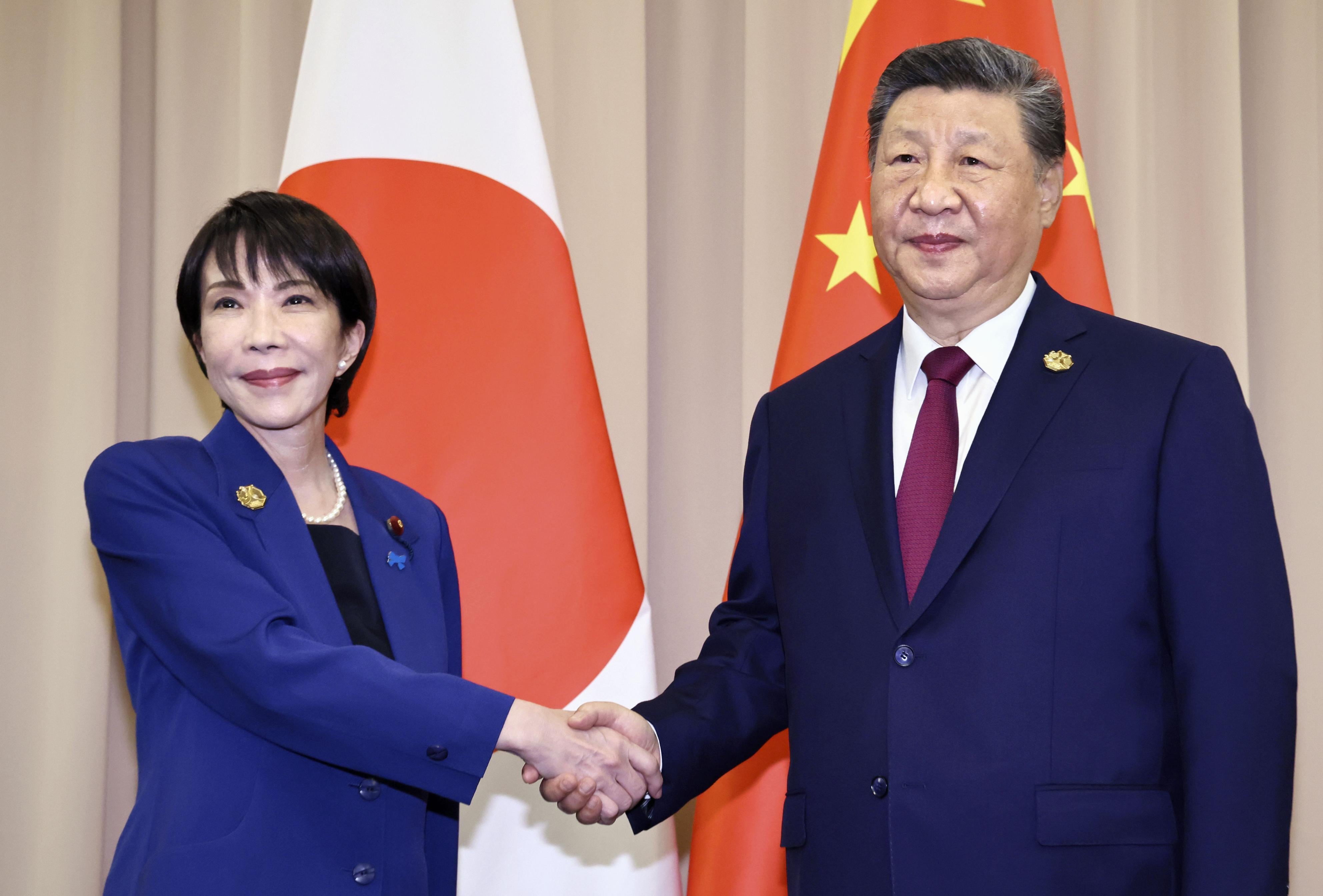
It was revealed on the 8th that Japanese Prime Minister Sanae Takaichi attempted to designate Xue Jian, the Chinese Consul General in Osaka, as a “persona non grata” (diplomatic persona non grata) and expel him after he posted a message on X stating, “That filthy neck that intruded on its own accord must be cut off without hesitation.” However, the move was put on hold after China responded with a threat to retaliate “twofold.”
Prime Minister Takaichi began clashing with China last November when she mentioned the possibility of military intervention in the event of a Taiwan contingency. In response, Consul General Xue Jian posted on his X account, “That filthy neck that intruded on its own accord must be cut off without hesitation.”
According to the Yomiuri Shimbun on the 8th, around that time, Prime Minister Takaichi summoned Chief Cabinet Secretary Kihara and senior Foreign Ministry officials, instructing them, “Please convey that we will designate him as a ‘persona non grata.’” She ordered the Chinese side to be informed that if he was not promptly recalled, he would be expelled.
Masaaki Kanai, Director-General of the Asian and Oceanian Affairs Bureau at the Foreign Ministry, conveyed to Liu Jinsong, then Director-General of the Asian Department at China’s Ministry of Foreign Affairs, during a meeting in Beijing that Japan was considering expulsion. In response, Liu reportedly warned, “If you expel one person, we will expel two,” specifically naming Japanese consuls stationed in China.
While Japan had anticipated a reciprocal expulsion of one person, Prime Minister Takaichi ultimately suspended the expulsion after China threatened retaliation “in kind,” fearing a cycle of retaliation could further deteriorate bilateral relations.
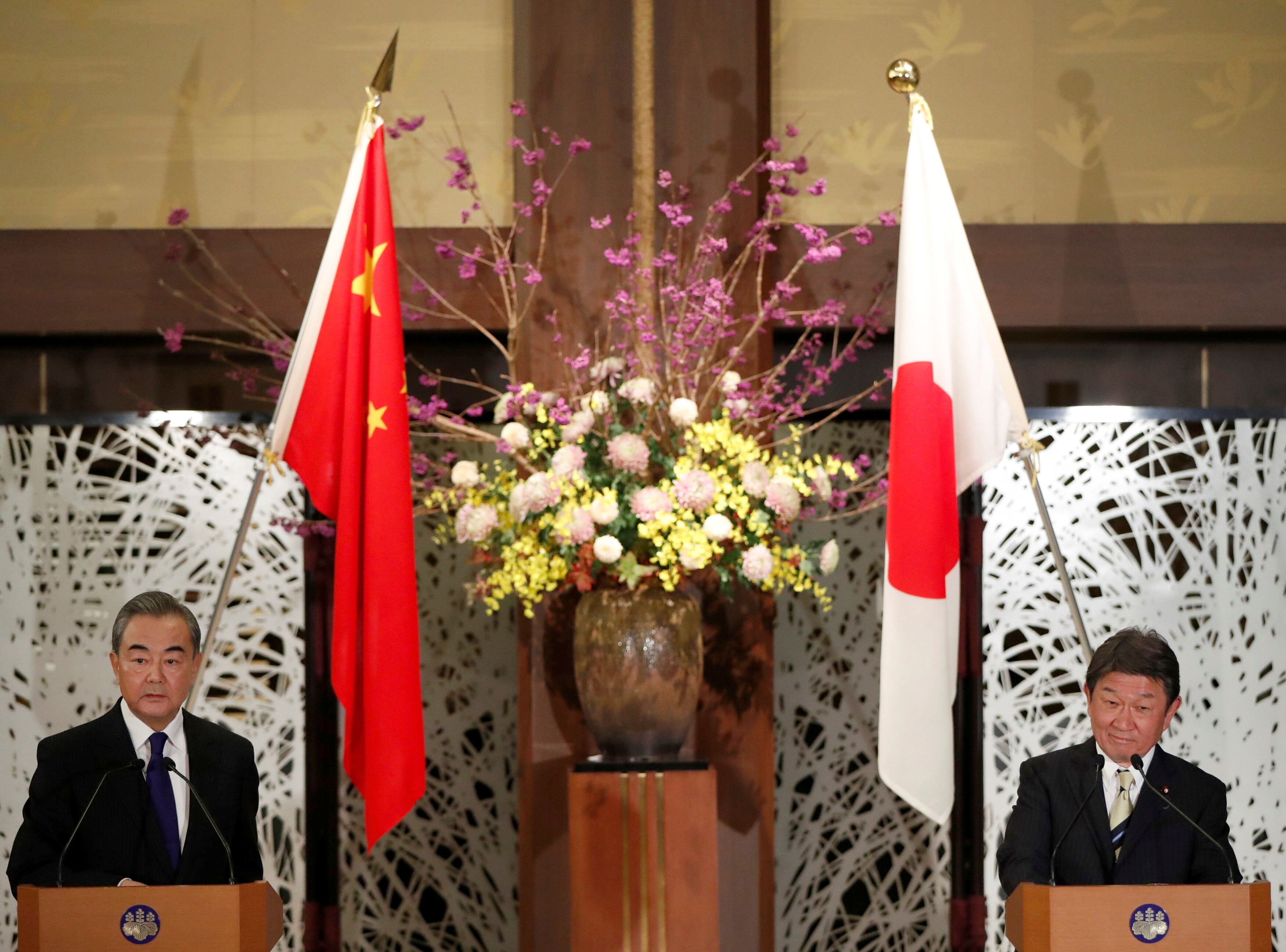
Japan has since persistently attempted to engage in dialogue with China. In late July, Foreign Minister Toshimitsu Motegi reportedly tried to stage a chance encounter with Chinese Foreign Minister Wang Yi during an ASEAN-hosted foreign ministers’ meeting in Manila, Philippines.
In a corridor at a Manila conference venue, Motegi waited for Wang Yi to appear. After thoroughly checking Wang Yi’s schedule, he pretended to coincidentally meet him and sought an opportunity for a brief conversation. When Wang Yi appeared, Motegi greeted him in Japanese, saying, “Long time no see.” Wang Yi, known to be fluent in Japanese due to his prior tenure as ambassador to Japan, did not make eye contact and walked past. Motegi continued to speak while walking alongside him, but Wang Yi remained silent.
At the time, the Japanese side announced, “We had a brief greeting and discussed bilateral relations,” while the Chinese Ministry of Foreign Affairs denied any meeting, stating, “No meeting was scheduled.” This incident symbolized Japan’s efforts to seek dialogue and China’s refusal.
The Japanese side has attempted various methods to maintain communication, but China has maintained its stance of refusing dialogue unless Prime Minister Takaichi retracts her remarks.
In September, China accepted a visit by Takeshi Iwaya, former Foreign Minister and head of the Japan Intertrade Promotion Association, a private organization, and Wang Yi held a meeting with him for over an hour. This was interpreted as a gesture that China could engage with Japanese private groups, aiming to create domestic divisions.
Currently, the only formal dialogue channel between the Japanese and Chinese governments is a monthly meeting between Takehiro Funakoshi, Vice Minister for Foreign Affairs, and Wu Jianghao, Chinese Ambassador to Japan. It is reported that during these meetings, China continues to demand a retraction.
Prime Minister Takaichi is seeking to contact Chinese President Xi Jinping on the sidelines of the APEC (Asia-Pacific Economic Cooperation) Leaders’ Meeting in Shenzhen, Guangdong Province, mid-month. However, expectations for a summit remain low, with hopes pinned on even a handshake serving as a potential catalyst, according to the Yomiuri Shimbun.
Meanwhile, subtle changes are emerging within China. Amid economic difficulties such as severe consumption slumps and high youth unemployment, there are growing expectations for economic exchanges and investments with Japan. In late October, a joint economic symposium was held in Beijing by JETRO (Japan External Trade Organization) and a Chinese policy research institution. A Chinese organizer stated at the event, “China and Japan should strengthen regional trade cooperation.”
The remarks are seen as reflecting China’s underlying desire for Japanese investment and economic cooperation as its economy struggles with sluggish consumer spending and high youth unemployment.
In September, He Lifeng, Chinese Vice Premier, criticized Japan over the Taiwan issue during a meeting with former Foreign Minister Takeshi Iwaya in Beijing but acknowledged, “China and Japan are important economic and trade partners.”


No comments:
Post a Comment