Technology and philosophy

Sunday, November 15, 2026

Bishop Ekechukwu: Why politicians should stop the drum beats of war

Bishop Dr. Herbert Ekechukwu is the Presiding Bishop of The Lord of Glory Ministry as well as a public affairs commentator. Touched by reports of political attacks in parts of the country, he pens down this message to Nigerians at this critical period, urging the political class to check the violent trend which he fears may destroy the nation. A MUST Read:

INTRODUCTORY TEXTS

“Blessed are the peacemakers, for they shall be called sons of God.” — Matthew 5:9

“When the righteous are in authority, the people rejoice; but when a wicked man rules, the people groan.” — Proverbs 29:2

Nigeria At Dangerous Crossroads

Nigeria is standing at a dangerous crossroads. The signs are no longer hidden. They are in our streets, in our motor parks, on our television screens, and in the language of our politicians.

Political thuggery is on the increase. Election campaigns, which should be festivals of ideas, have become battlefields. If we are not careful, we are breeding the very conditions that led us to civil war before.

Warning By A Watchman

This is not a prophecy of doom. It is a warning from a concerned citizen and a watchman. The Bible says in Ezekiel 33:6, “If the watchman sees the sword coming and does not blow the trumpet, and the people are not warned, their blood will be on his hands.” I have seen the sword. I am blowing the trumpet.

Return Of Political Thuggery

In the early years of this democracy, we thought thuggery would fade. We were wrong. It has returned, more organised, more funded, and more brutal. Today, thugs are no longer just street boys hired on election days. They have become a system. They are recruited, armed, clothed in party colours, and protected by powerful men. They snatch ballot boxes, intimidate voters, chase away electoral officials, and attack opposition supporters.

In Lagos, Kano, Rivers, Anambra, and many other states, we have seen the same pattern: genuine voters stay at home out of fear, while thugs decide who wins. That is not democracy. That is gangsterism with ballot papers.

The Scripture warns us: “These six things the Lord hates, yes, seven are an abomination to Him: hands that shed innocent blood, a heart that devises wicked plans, feet that are swift in running to evil.” — Proverbs 6:16-18

Violent Men Destroy Nations

When thugs become the deciders of elections, the best candidates will not emerge. The most violent will emerge. Violent men do not build nations; they destroy them.

Political thuggery also destroys our youth. The young man who is given N5,000 and a weapon to cause trouble today is being trained to become tomorrow’s armed robber, kidnapper, and cultist. Politicians use them in February and abandon them in March.

The boy who tasted power through violence will not go back to farming or learning a trade. He will look for the next politician to hire him. We are creating a generation that believes violence pays more than hard work.

When Words Become Weapons

Elections should be about manifestos. In Nigeria, they are becoming about insults, threats, and ethnic war cries. Instead of telling us how they will fix power, roads, schools, and security, many politicians tell us who to hate. They divide us: Yoruba against Igbo, Hausa against Christian, North against South, old against young. They use social media to spread fake news, doctored videos, and hate speech. A single lie on WhatsApp can burn down a market in one night.

The Bible says, “Death and life are in the power of the tongue.” — Proverbs 18:21

Verbal, Violent Campaigns

Violent campaigns are not just physical. The verbal violence is even more dangerous. When a leader says, “If we lose, we will make the country ungovernable,” he is planting a seed of war. When a supporter says, “They must not vote in our area,” he is declaring war on his own neighbour.

We must remember: In Rwanda, it was not guns that started the genocide. It was words on the radio. In Nigeria in 1966, it was not just soldiers. It was hate speeches and rumours that pushed us into a 30-month civil war that killed over a million people. We have been there before. We cannot afford to go there again.

Today, our campaigns are breeding three dangerous children: Tribal Biased Neighbours who have lived together for 40 years now see each other as enemies because of politics.

Militarising Youth

Young people are being armed with machetes and guns in the name of “defending our votes.”

Institutional Failure

When people believe elections are rigged and courts are bought, they will stop going to court and start going to the streets. That is how civil unrest begins.

Civil War In The Making

Let us be honest. No nation goes to war in one day. Civil war is bred slowly. It is bred when leaders refuse to accept defeat, when security agencies become partisan, when the poor feel they have no hope, when ethnic groups feel marginalised, when guns become easier to buy than food, and when the youth have no jobs, no future, and no fear.

Signs Of Impending Catastrophe

We have banditry in the North-West, insurgency in the North-East, separatist agitations in the South-East, farmer-herder clashes in the Middle Belt, and cult wars in the South-South and South- West. If you add political violence to this already burning fire, you will get an explosion that no one can control.

A civil war in 2026 will not be like 1967. It will be worse. Then, we fought with rifles in the bush. Now, we will fight in our streets, in our markets, in our churches and mosques, with our neighbours. Social media will make it spread in minutes. And there will be nowhere to run to.

Those who are beating the drums of war have houses in Dubai, London, and America. Their children are schooling abroad. When war starts, they will fly out. It is the poor market woman in Mile 12, the okada rider in Kano, the student in Enugu, who will die. Politicians do not die in wars they create. The people die.

“Woe to those who call evil good, and good evil.” — Isaiah 5:20

The Root Causes

To solve a problem, we must be honest about its roots.

Do-or-DiePolitics: Manypoliticiansseeelections as war because politics is the only business they know. For them, losing an election is losing access to contracts and power. So, they will kill to win.

Weaponised Poverty: A hungry youth is a ready weapon. When a graduate has no job for five years, N20,000 to cause trouble looks like a salary.

Nigeria is standing at a dangerous crossroads. The signs are no longer hidden. They are in our streets, in our motor parks, on our television screens, and in the language of our politicians. Political thuggery is on the increase. Election campaigns, which should be festivals of ideas, have become battlefields. And if we are not careful, we are breeding the very conditions that led us to civil war before.

This is not a prophecy of doom. It is a warning from a concerned citizen and a watchman. The Bible says in Ezekiel 33:6, “If the watchman sees the sword coming and does not blow the trumpet, and the people are not warned, their blood will be on his hands.” I have seen the sword. I am blowing the trumpet.

No Election Is Worth The Blood Of A Nigerian

When the Independent National Electoral Commission (INEC) is not seen as independent, when police arrest only the opposition, when judges deliver judgments that look bought, people lose hope in peaceful change.

Tribal, Religious Fanaticism, Manipulations

Our leaders have learnt that it is easier to divide us by tribe than to unite us by development.

Traditional, Cultural Loyalty

Thugs are arrested on camera and released the next day. Politicians who incite violence are never prosecuted. When there is no punishment, violence becomes a campaign strategy.

Coming Out Of These Jigsaws

It is not too late. Nigeria has survived worse. But survival requires action, not prayers alone. Faith without works is dead (James 2:26).

For Government and INEC:

We need special Electoral Offences Tribunals. A thug caught snatching a ballot box must be jailed before the next election, not after 10 years. And the politician who sponsored him must be disqualified for 10 years. Until sponsors fear punishment, thugs will keep working.

INEC’s results must be transmitted electronically from polling units in real-time, with no room for manipulation at collation centres where most rigging happens. Police must protect all parties equally.

For Political Parties, Candidates, they should sign a peace pact with consequences, not just a photo opportunity in Abuja. Any candidate whose supporters engage in violence must face sanctions.

Campaign On Issues, Not Insults

We, the voters, must demand debates. Ask every candidate: How will you create jobs? How will you stop kidnapping? If he cannot answer, do not vote for him, no matter his tribe.

Role Of Traditional, Religious, Community Leaders

Our Pastors, Imams, Obas, Emirs, and Chiefs must become peace builders. The pulpit and the mosque must not become campaign grounds. Preach peace before the election. Open your halls for peace meetings between rival parties. When a politician comes to your church to preach hate, stop him.

“If it is possible, as much as depends on you, live peaceably with all men.” — Romans 12:18

The Role Of The Youth

Young people, you are the target. They want to use you as weapons. Refuse! Do not sell your future for N5,000. That money will finish in one day, but the bullet you fire or the ballot box you snatch will hunt you for life. If a politician wants you to fight, ask him: Where are your children? Why are they not on the streets fighting?

Instead, become election observers, vote protectors, and peace ambassadors. Use your phone to record violence, not to spread fake news. Your vote is more powerful than any thug’s gun.

For the Media, Social Media Users

Journalists must stop being party praise-singers. Report violence, name suspectes sponsors, and fact-check lies. And every citizen: Before you forward that hate message on WhatsApp, ask: Is this true? Will this kill someone? If you cannot verify, do not forward. You may be forwarding a civil war.

New Political Culture Possible

We must build a new political culture. We must vote based on character and competence, not tribe. We must accept defeat gracefully. In a real democracy, you lose today and win tomorrow. The man who loses an election is not your enemy. He is your neighbour.

Conclusion: The Choice Before Us

Nigeria is like a house with petrol in the sitting room and politicians playing with matches. We can either put out the matches, or we will all burn together — Igbo, Yoruba, Hausa, Christian, Muslim, rich, poor.

The warning is clear: Political thuggery is increasing. Election campaigns are becoming violent. Civil war is being bred in small doses every day. But, we still have a choice. We can choose peace over power. We can choose the ballot over the bullet. We can choose Nigeria over party.

History will judge this generation. Shall we be the generation that watched Nigeria burn because we kept quiet, or the generation that saved it because we spoke up and acted? Let us choose peace. Let us choose life. Let us choose Nigeria.

“For God has not given us a spirit of fear, but of power and of love and of a sound mind.” — 2 Timothy 1:7. No election is worth the blood of any Nigerian.

Provided by SyndiGate Media Inc. ( Syndigate.info ).

Saturday, November 14, 2026

Pastoral vultures and their vulnerable congregation

There is a worrisome and eerie wind blowing through the church of Christ, a development in contemporary Christianity that demands the urgent attention of every discerning child of God. The pulpit, which ought to be a sacred platform for preaching salvation, righteousness, holiness and the undiluted Word of God, is increasingly becoming a commercial enterprise in the hands of some self-appointed spiritual entrepreneurs. The unfortunate congregation, hungry for miracles, desperate for breakthroughs and burdened by life’s uncertainties, has become their most dependable marketplace.

Welcome to the age of pastoral vultures! Hear ye! Sound the Alarm! The end of all things is NOW!

A vulture does not create the weakness of its prey. It waits patiently for vulnerability, identifies its opportunity and feeds on the helplessness of another. Unfortunately, some religious merchants have perfected this unfortunate art within the Christian community. They understand the psychology of poverty, sickness, unemployment, marital difficulties and the fear of the unknown. They know that a desperate person is sometimes willing to surrender everything in exchange for a promise of divine intervention over a corresponding miracle.

Consequently, everything appears to have a price. Special prayers, prophetic declarations, deliverance sessions, anointing oil, handkerchiefs, holy water and even access to the supposedly exclusive presence of God have become commercial commodities in certain religious circles. Some pastors attach financial conditions to miracles, announce different categories of blessings according to the size of financial offerings and make vulnerable worshippers believe that their breakthrough is proportional to their financial sacrifice.

Whatever happened to the biblical declaration that we received freely and should give freely?

Jesus Christ did not establish a commercial franchise. He overturned the tables of the money changers in the temple because the sacred house of prayer had become a marketplace. Yet, centuries later, some people have reconstructed those tables, decorated them with modern technology, installed sophisticated sound systems and turned religious gatherings into elaborate fundraising exhibitions.

The tragedy, however, is not entirely on the pulpit. The congregation must also accept responsibility for its spiritual gullibility. Too many Christians have abandoned personal Bible study, spiritual discernment and the responsibility of testing every teaching against Scripture. They would rather chase a popular prophet from one auditorium to another than cultivate an intimate relationship with God. They believe every spectacular testimony, every dramatic prophecy and every extravagant declaration without asking questions.

The Bible warns in 2 Peter 2:3 that some will exploit people with fabricated stories out of greed. Ezekiel 34 rebukes shepherds who feed themselves instead of caring for the flock. These are not historical decorations. They are timeless warnings to the Church.

Research has also begun to interrogate the commercialisation of Christianity in Nigeria, examining how spiritual services, prosperity promises and religious marketing can reproduce the very inequalities and exploitation that Christianity ought to challenge.

Let it be clearly understood that pastors deserve honour, churches require resources and genuine ministers must be supported. Wealth is not evidence of wickedness, neither is poverty proof of righteousness. The issue is the manipulation of faith for personal enrichment, the exploitation of human desperation and the deliberate substitution of Christ’s message with financial transactions.

Dear child of God, wake up! Your pastor is not your saviour. Your offering is not a bribe to heaven. Your financial inability does not disqualify you from God’s mercy. You do not need to purchase what Christ has freely made available through grace.

Respect your spiritual leaders, but never surrender your conscience to them. Attend church, but study your Bible. Give cheerfully, but refuse spiritual extortion. Seek genuine counsel, but do not allow anybody to mortgage your future in the name of prophetic instructions.

The Church must return to Christ, the Gospel must return to the altar, and the shepherd must return to the responsibility of tending the sheep.

For when the shepherd becomes the predator, who will protect the flock?

Provided by SyndiGate Media Inc. ( Syndigate.info ).

How I will tackle farmer-herder crisis, others as Plateau gov – Da Akuns

Da Jonathan Sunday Akuns, Galadima Daffo, is the governorship candidate of the Nigeria Democratic Congress (NDC) in Plateau State. Sunday Akuns, an economist and former staff of the Central Bank of Nigeria (CBN), in this interview with EJIKEME OMENAZU speaks on the shape of his policies and administration, especially how he will handle the indigenes-settlers and farmers-herders crisis, if elected Plateau State governor. Excerpt:

What is your plan for the people of Plateau State if elected governor?

In our first year, we will launch what I call a New Economy at the Rural Level: farm clusters linked by feeder roads to aggregation centres and satellite markets; a state agricultural credit guarantee window to leverage bank lending to smallholders and SMEs; and the return of displaced persons to secured, rebuilt communities. We will also strengthen primary health care centres and rehabilitate schools in every federal electoral ward. For the rest of our four-year tenure, we will focus on agro-storage cum processing in order to eliminate post-harvest losses and improve farm incomes. We will revive the industrial-scale operations of solid-mineral value chains, promote tourism infrastructure on the Plateau, develop a modern land-administration system that enhances property rights, deploy e-governance digital trails of public finance management so that every expenditure can be accounted for.

On financing, I devoted careful attention to public finance during my career, so let me be precise. We will finance our programme through four channels: expanding internally generated revenue by broadening the tax base rather than overburdening the few who already pay; plugging leakages through a Treasury Single Account and e-procurement; blending public money with development finance institutions and private investors in bankable public– private partnerships; and borrowing only for self-liquidating capital projects, within the limits of the Fiscal Responsibility framework. Mariana Mazzucato reminds us that the state must lead with early, patient financing; I agree, but such financing must be disciplined.

We will encourage residents of Plateau State to imbibe the acts of whistle blowing and seek to evaluate the performance of the administration against the objective of every single public policy and its stated measurable indicators: jobs created; school enrolment and completion rates; and maternal and infant health outcomes. We will publish these figures regularly.

How do you understand the indigene–settler problem within a constitutional democracy, and what practical, legally sound measures would you implement to ensure that no citizen is treated as a second-class resident?

I am a son of an autochthonous people, and I am proud of that heritage. Our indigenous communities have legitimate concerns about their land, culture and ancestral identity, and those concerns must be respected. But, I am also a citizen of the Federal Republic of Nigeria, and the Constitution is clear: no citizen shall be discriminated against on the basis of community, ethnic group or place of origin. Both truths must be held together under our vision of “citizenship identity is a rainbow identity under God and under the law”. This will help residents to adjust to effusive ethnoreligious biases.

The problem is not identity; the problem is when identity becomes the sole gateway to public goods such as jobs, scholarships, land and security. That turns every election into a contest for survival. My answer is to separate rights of residence from questions of ancestry. Every person who lives, works and pays taxes in Plateau State will have equal access to public services, security and economic opportunity. At the same time, we will protect, through law, the cultural heritage, traditional institutions and customary land rights of our indigenous communities.

Practically, we will introduce a transparent residency framework for access to public services; publish clear and fair criteria for public appointments and admissions; and strengthen traditional and community mediation bodies to resolve disputes early. And yes, I would support a transparent review of state and local government policies that perpetuate exclusion. It must be conducted by credible persons, with public hearings, and must respect the constitutional and legal distinctions that apply. Exclusion breeds polarisation, and as Professor William Easterly reminds us, polarisation or ethnolinguistic fractionalisation worsens public policy and slows growth.

What is your strategy for preventing attacks, improving intelligence and early warning, prosecuting perpetrators and resettling displaced persons? How would you address land, farming and grazing disputes without collective punishment, and how would you measure whether citizens are genuinely safer?

Condemnation is not a strategy. Security is a system, and it has five parts: prevention, early warning, rapid response, justice and recovery. For prevention and early warning, we will deploy eyes everywhere to build a community-based intelligence network in every federal electoral ward, linking traditional rulers, vigilance groups, women and youth leaders to a 24-hour State Security Coordination Centre. It will be equipped with modern communications and, where feasible, surveillance technology. Every credible alert must receive a documented response within a fixed time. For response, we will work closely with the federal security agencies and properly fund, train and regulate lawful state and community security outfits, under clear rules of engagement and civilian oversight. For justice, we will support the speedy investigation and prosecution of perpetrators, whoever they are. We will strengthen the Ministry of Justice’s capacity, protect witnesses and publish the status of prosecutions. Impunity is the oxygen of violence. For recovery, displaced persons will be returned to rebuilt, secured communities, with seedlings, credit and livelihood support.

On land utilisation cum ownership, crop farming and livestock grazing, my experience in conflict resolution has taught me that most violent conflict over land utilisation is a contest over the factors of production. My approach is to delink and de-escalate: secure and document customary and individual land titles; demarcate and regulate land use with community consent; and create incentives for modern livestock production away from open grazing that is prone to farmland trespass and ravaging of crops. There will be no collective punishment. Guilt is personal, and justice must be impartial. Nor will we allow politics to interfere with security operations or prosecutions. What will be different? Under our administration, security will be data-driven and accountable. We will publish a quarterly security dashboard showing incidents, fatalities, response times, arrests, prosecutions and returns of displaced persons. If those numbers do not improve, we will tell the people and change course.

What is your position on rotating power among the zones, given that you and the incumbent Governor are understood to come from the same zone? How would you balance continuity, competence, equity and the aspirations of other zones?

Zoning is not in the Constitution, but it is part of our political culture, and it exists for a good reason: to give every part of an ethnoreligious diverse peoples a fair opportunity to compete and develop the potential of its manpower in state leadership at the highest level for a sense of belonging. I respect it. Since 1979, the governorship slot is rotated amongst the three senatorial districts of Plateau State from the rousing tenures of Barr Solomon D. Lar and Sir Fidelis N. Tapgun as governors who served one term each. The question for 2027 is not whether Plateau Central should hold the office— the incumbent is from Plateau Central and has served only one term—but who else from Plateau Central can best serve Plateau State for a remainder of another term? The rotation curtain raisers in Barr Lar and Sir Tapgun served one term each from their southern senatorial district but were of different ethnic people. Subsequently, two ethnic folks of Sir Tapgun served as deputy governor, Dame Pauline Tallen, and governor, Barr Simon Lalong, without any qualms. Why now? Who is afraid of democracy?

My candidacy therefore does not disturb zoning; it offers the people a choice within it. I believe electoral competition must remain open and that the people must be free to choose on the basis of competence and character. A rotation principle that guarantees a zone the office but gives its people no choice of quality becomes a cartel, not a compact. My guiding principle is equity through inclusion: every zone, every local government area and every community must see itself in the appointments, projects and opportunities of government, irrespective of where the Governor comes from.

Provided by SyndiGate Media Inc. ( Syndigate.info ).
Friday, November 13, 2026

Access Holdings PLC

Balance Sheet & Subsidiary Strength

®Asset Extensions: Total Assets grew 3.8% yearto-date to N32.65 trillion, supported by continuous deployment of its expanded capital base.

®Liquidity Inflow: Customer deposits rose 8.3% year-to-date to N26.35 trillion.

®Foreign Buffer: International banking subsidiaries (Ghana, UK, Sierra Leone, Gambia, Kenya, and Côte d’Ivoire) generated N166.09 billion in PBT, accounting for a vital portion of the group’s diversified cushion. Non-Nigerian assets sat robustly at N8.50 trillion.

Strategic Drivers behind the Shift 1.The Tax Drag: The primary headwind on after-tax profitability was the Nigeria Tax Act 2025, which significantly inflated corporate tax provisions and clawed back headline net income. 2.Margin Stabilization: Interest income fell by 8.9% due to declining lending rates and investment security yields. Thankfully, a 12.9% plunge in interest expenses protected core interest margins from steeper declines.

3.Credit Risk De-risking: The highlight of the audited results was a massive 81.5% reduction in credit impairment charges, indicating a dramatic improvement in asset quality and legacy loan provisioning.

4.Trading Reversal: High-yielding foreign exchange trading dynamics that spiked profits in 2025 collapsed into a N92.2 billion net trading loss for H1 2026.

Access Holdings Plc

Access Holdings Plc (ACCESSCORP) delivered a strong financial performance for the first half of 2026 (H1/ Q2), driven by a 29.2% surge in Profit Before Tax (PBT) to N414.13 billion.

This bottom-line growth was primarily catalyzed by a massive 70% reduction in credit impairment charges and stellar expansion in fee-based income.

The group released its delayed interim financial statements following regulatory clearances from the Central Bank of Nigeria (CBN). The performance marks a pivotal shift in corporate strategy from aggressive geographical expansion toward disciplined value creation and capital optimization.

Key Financial Highlights (H1/ Q2 2026)

Provided by SyndiGate Media Inc. ( Syndigate.info ).

An insult to his culture: Italian chef loses job after refusing to put pineapple on pizza

In 1962, a Greek restaurant owner by the name of Sam Panopoulos threw caution to the wind. He was running a restaurant with his brothers in Ontario, Canada, and decided to shake the culinary world by adding pineapple to pizza.

Since then, the Hawaiian pizza – not named after the US state but the canned pineapple from Hawaiian Pineapple Company – has become the heated debate that refuses to die, one which divides friend groups when ordering an Italian classic.

Does pineapple belong on pizza?

A quick poll in the Euronews office reveals that the majority of respondents don't mind a cheeky Hawaiian from time to time – whilst acknowledging that they'd never dare ask for one in Italy, where the sweet tropical topping is considered a heresy.

To prove the sacrilegious point, an Italian chef has recently gone viral for refusing to serve ham and pineapple pizza in an Australian restaurant, leading him to be fired from his job.

The Brisbane-based chef, Davide Tamburella, said it was "an insult to his culture" - according to Australia's Fair Work Commission ruling. It was the third time in four years he had refused the request to make a Hawaiian, and he previously requested his boss to "check how important it is for Italians not to put pineapple on a pizza".

His refusal to add the controversial topping led him to be fired from the (now-closed) La Costa Restaurant and Bar in May. Tamburella’s bosses also raised concerns about his alleged use of foul language, “escalation of frustration in the workplace” and his communication style.

The dismissal led Tamburella to Australia’s national workplace tribunal with the claim he was unfairly dismissed from his job.

Now, it has been reported that the disgruntled chef has lost his legal battle, as Australia’s workplace tribunal has dismissed his unfair dismissal claim. The commission threw out his case because it did not meet the criteria and he had lodged a complaint too late.

Tamburella’s former boss, Elliot Ingram, said that while pineapple on pizza wasn’t his “absolute” favourite, he was not "going to turn (his) nose up at it, that's for sure." He also told British outlet Daily Mail that there was “more to this story than a pizza topping.”

La Costa closed in July when its lease expired, with Ingram citing the high cost of doing business in Fortitude Valley. According to his LinkedIn profile, Tamburella is now working as head chef at a restaurant called Don Gino in Brisbane's West End.

In case you were wondering, we checked. There is no pineapple on the pizza menu.

Thursday, November 12, 2026

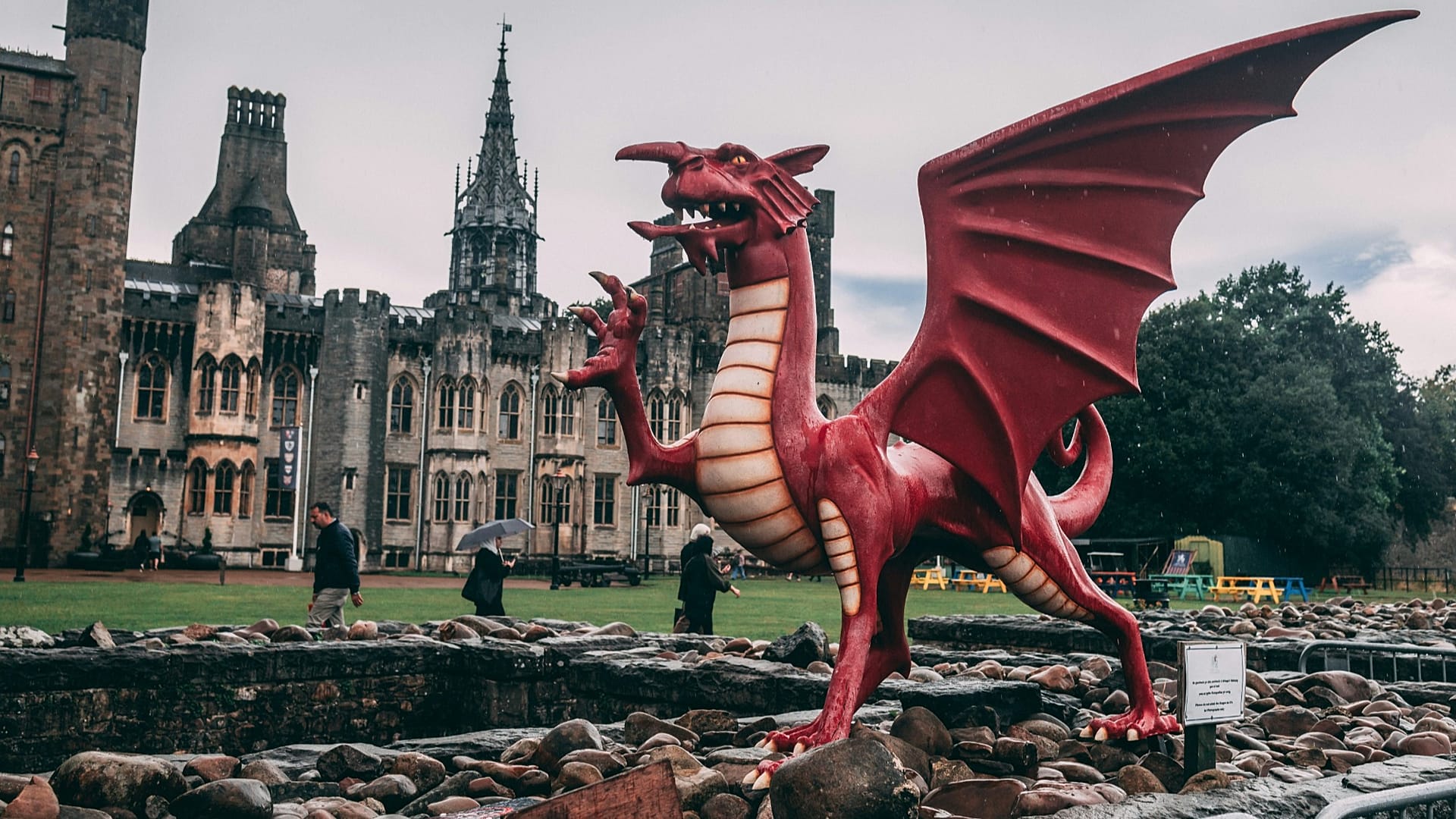
Cycling, castles and outdoor adventures: Wales gears up for a busy 2027

Wales is still something of a “lesser-known destination”, but there's just “so much appeal and an incredible history and diversity that we offer”, says Clare Dwight, Senior Tourism Marketing Manager at Visit Wales.

Speaking to Euronews Travel at World Travel Market in London, she discussed how the country is keen to attract visitors to explore its natural beauty, discover the many things to do, and to enjoy a very warm welcome from locals.

“It offers huge diversity with Cardiff in the south, three national parks, a beautiful, stunning landscape, lots of outdoor adventure activities like walking, cycling and more extreme ones like zipping,” said Dwight.

She also emphasised the fact that both English and Welsh are spoken here , making it a unique destination. “All of the signs are bilingual, and you just get a really strong sense that the tastes, the sounds and the locals that you're in somewhere very, very different.”

As well as a destination for thrill-seekers, Dwight says Wales is a great choice for those who prefer to “slow down a bit, go off the beaten track, and discover somewhere new and different, and really get to know the locals and the communities”.

In 2027, more people will likely discover the country as it plays host to a stage of the Tour de France's Grand Départ, which will run from Welshpool to Cardiff on 4 July. And It’s not just professional cyclists who can get the most out of Wales’ many bike trails.

“We're hugely excited to be able to showcase Wales as a world-class cycling destination, not only for those who love to do the Tour de France climbs,” she said. “We have some beautiful, flat, easy off-road cycling routes that are really perfectly family-friendly.”

In fact, Wales is taking its hosting of the Tour de France so seriously that it’s named 2027 as a “Year of Cycling”.

The year-long programme will see a first-of-its-kind interactive mapping tool which showcases destinations, attractions and detours along Wales’ cycling routes.

Dwight suggests combining a bike ride with a visit to one of the many castles or museums across Wales , or simply taking in stunning views and enjoying local food and drink, including favourites like Welsh rarebit – an elevated hot cheese sandwich – Cawl stew, or Welsh cakes, a sort of hybrid between a biscuit, a pancake, and a scone.

Next year, Wales will also play host to the Senior Open, a professional men’s golf tournament for players aged 50, which will be held at Royal Porthcawl Golf Club.

Meanwhile, Cardiff will be the temporary home of EuroGames, Europe’s largest LGBTQ+ multi-sport event. It will mark the first time the games have been hosted in the UK.

Despite much of Wales’ largest events taking place in the summer months, the tourist board is hoping to attract more visitors throughout the year.

“We have the castles, the museums, the attractions that are available all year round,” said Dwight.

“You can lean into all of the different seasons, from the daffodils in springtime, through to the bluebells in the woodlands in the summer, into the autumn colours and then in the winter, we've got great Christmas fairs and festivals that take place. You can just wrap up warm and enjoy the open fires and pub atmosphere, and things like that.”

For those who like to be a little more active than merely bask in a low-key atmosphere, the Tywi Valley Path in Carmarthenshire, a 21km-long flat route, is a good bet.

Surprisingly, there’s also a significant Hollywood influence in Wrexham, near the English border.

In 2021, actors Ryan Reynolds and Rob McElhenney bought the town’s football club, Wrexham AFC.

The pair’s takeover, three successive promotions and hit documentary series “Welcome to Wrexham” have attracted football fans keen to see the club’s remarkable turnaround for themselves.

There’s a new reason to visit, too. The Football Museum of Wales and Wrexham Museum opened in September, bringing together the story of Welsh football and the city’s industrial and cultural heritage. Highlights include historic memorabilia, interactive displays and tributes to Welsh football legends.

How a game of truth or dare led me to sleep with my girlfriend’s friend

Tola shares how a fun Detty December night out turned into a night of secret passion and betrayal. He never planned to sleep with his girlfriend’s friend, but a wild game of Truth or Dare and the heat of the moment triggered an action he would later regret. What started as an innocent kiss soon escalated into a passionate affair. But when his girlfriend discovered the betrayal, their relationship took a painful turn. Now, she is struggling to trust him again, while Tola is left to face the consequences of his actions.

“I attended a white party organized by my guy who was celebrating his birthday. I didn’t go with my fiancée because she had traveled. At the party, there were plenty of drinks and I think I drank a lot. I was already high when the game began. The first dare was to the celebrant, he was dared to sleep with his girlfriend while we all watched, but they ended up only touching each other. When it was my turn, it was like a set up or the devil’s master plan, I dared to kiss a girl, who happened to be my fiancée’s close friend. I thought at first, it was only a kiss. And we kissed, I think the girl liked it, because she dug deeper into my lips and refused to let go of my lips. Then the next dare was for us to go inside the room and romance each other. I won’t lie, that night, because of the things happening in my friend’s parlor, my body was already on fire, and I needed a woman badly. I think the girl too was ovulating; she was the first to rush into the room, and I followed her sheepishly. Honestly, I wasn’t thinking straight at that moment, we were both high. What started as a little fondling and kissing snowballed into a hot passionate love making. I had never enjoyed making love like that before. The girl was good, she did a lot of crazy things with my body and we even passed the time they gave us to stay in the room. They had to force us out of the room. This was supposed to remain with us and nobody would hear about it, but the story somehow got into my fiancée’s ear. I couldn’t deny it because the person that told her showed her evidence too. I owned up, and I didn’t regret what I did because it was the best day of my life but it pained me that she got to learn about it from a bad news monger. The person did a nasty damage to my relationship. I begged her and she forgave me. But the thing now is she doesn’t trust me again. I see distrust in her words and in her expression. Like she doesn’t even believe in my greetings. And it’s tiring; each time I go out, I have to explain who I went out with, why the phone rang long before I picked it up, and why it took me so long to respond to her messages. Please, what can I do to regain her trust?”

Dear Tola, it may take some time for her to trust you again. It’s clear she once held you in very high regard and never expected such a betrayal from you. But since the mistake has already been made, the best you can do now is to be completely honest and transparent with her. Let your yes be yes and your no be no. With time, she may slowly learn to trust you again. Don’t give her any new reason to doubt you. Make her feel valued and let her know she is the best thing in your life. And never make her feel jealous or insecure.

Hello readers, thanks for reading through. You can inbox your opinions or share your own experiences.

Provided by SyndiGate Media Inc. ( Syndigate.info ).