Technology and philosophy

Monday, November 16, 2026

It'll be brisk! 1950s cafe on secret South Coast beach opens in winter for first time in 70 years

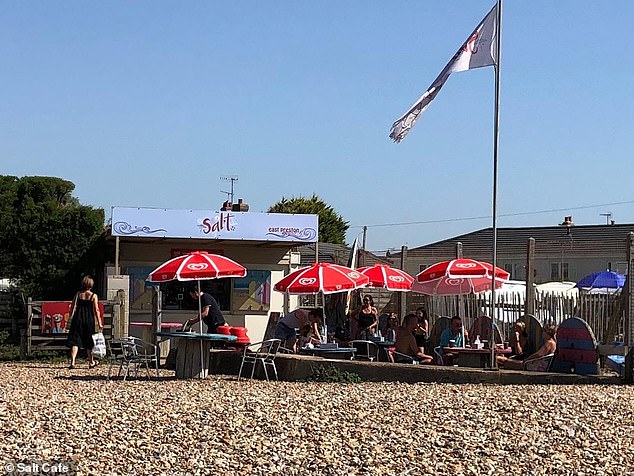
A tiny beach-side cafe that's sat on the same spot of West Sussex coastline since the Fifties and started life selling scoops of vanilla ice-cream and sausages to British tourists is still going strong after 70 years in business – with the same family at the helm.

Imogen Steel's enterprising grandfather first bought Salt Cafe in 1957 alongside some caravan sites and a pub in East Preston, a pretty – but still relatively unknown – stretch of the West Sussex coast.

The right-by-the-sea kiosk has had many different lives but has managed to stay within the Steel family throughout, although Imogen tells the Daily Mail there's been plenty of changes over the past seven decades.

Various different family members have taken on the café through the years – and it's been leased out to others – but now Imogen and her mother Rachael have brought it firmly back into the fold, and are set to stay open all winter for the first time in the business's history.

Sticking to the cafe's original ethos of delicious food and great service has been key to the 'little kiosk' weathering changing times, says the latest family member in the kitchen.

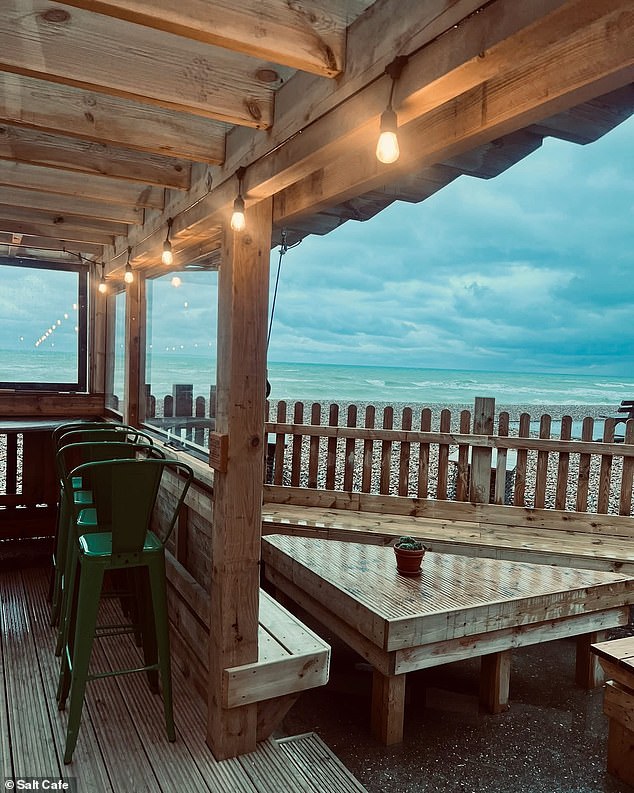
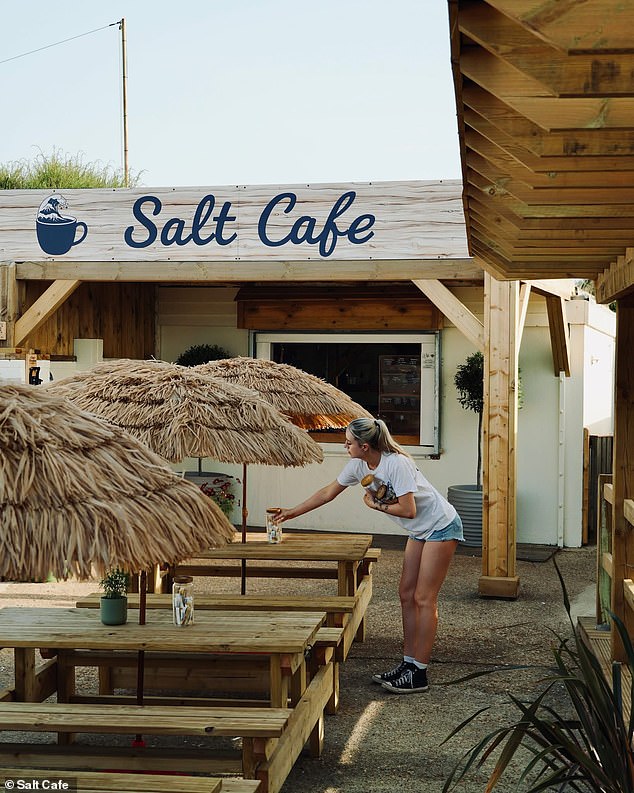
'This is the first year that we've really added more to it,' explains Imogen. 'There's a pergola structure with a shelter and we've added more tables and put tables on the beach as well.'

Nostalgia-filled old photos show how the café began its life – as a simple, white wooden hut with no decorations or visible seating.

Fast-forward to 2026 and more recent shots reveal how Imogen and Rachael have breathed new life into the venue – with chic signage and benches with parasols.

The hard work has paid off too, with the mother-and-daughter saying they've had an influx of customers – both old and new.

Salt Cafe's foodie offerings have expanded from the kiosk's first years; there's a full menu of breakfast and lunch options, including homemade soup and 'beach bites' like cheesy chips and scotch eggs.

It's a far cry from the venue's days of just selling ice cream, and according to Rachael the original planning papers mention the Fifties kiosk may have also cooked up sausages too.

The pair say Salt Cafe's current menu is 'the best' it has ever had. 'It's all fresh ingredients, it's all good suppliers, we're quite proud of it,' Rachael says.

'On the summer menu that we've just finished because we've moved over to our winter one, we did fish and chips which was really popular, we did burgers and they were really popular,' Imogen shares. 'And we always do toasties as well'.

And they're ready to lean into the winter weather and try and make the business a year-round proposition.

'We've got the covered area now, which my husband built, and we've got fairy lights,' says Rachael.

'We tried to make it a really nice, welcoming place that you would want to sit on a horrible day with your dog to have something to eat, or a coffee even.'

The establishment has received plenty of encouragement from locals over the years and Rachael shares it has 'always been well supported'.

'But I think this year, because of how it looks and the food that Imogen's created on the menu, and the chef that we've got who is really good, it has been busy,' she adds.

'I think the locals are really chuffed with it all.'

There are plenty of loyal customers who keep returning, including some who remember visiting 20 years ago.

The café's staff members have stuck by it for years too; some have been around since working there on Saturdays whilst at school.

Given Salt Café's envious location by the sea and decades of experience, the Steels have seen tourism in the area shifting first-hand.

Though East Preston has 'always been such a hidden away sort of place' its close proximity to London has been drawing more visitors in recently, the pair note.

Imogen explains: 'There are a lot more holiday rentals or places for people to stay, and a lot of houses have become that along the beach now.'

Over the summer, they noticed customers would return multiple times over the same weekend suggesting they were staying nearby on holiday.

East Preston's appeal has become so strong that some people are even moving there after enjoying a break by the sea.

'We found that people stumble along it on holiday, and then all of a sudden they're selling their house.

'They're living here because it is a cute place to live. So it's lovely. You never want to leave when you when you come here, really,' says Rachael.

As for whether the Steel family will ever sell Salt Cafe? Rachael says, 'Definitely not.' and admits they have been asked a few times.

Read more

Beyoncé and Jay-Z love dining at this exclusive Paris restaurant, and it’s easy to see why

The City of Light has always been a magnet for celebrities from around the world. During a recent stay in the French capital, power couple Beyoncé and Jay-Z set their sights on a restaurant that is as chic as it is discreet.

Located in Paris's 8th arrondissement , UNI Paris is gradually establishing itself as one of the city's must-visit dining destinations. Nestled in the heart of the prestigious Golden Triangle , the restaurant attracts food lovers and showbiz stars alike. Combining sophistication, discretion and exceptional cuisine, this exclusive address is certainly making a name for itself.

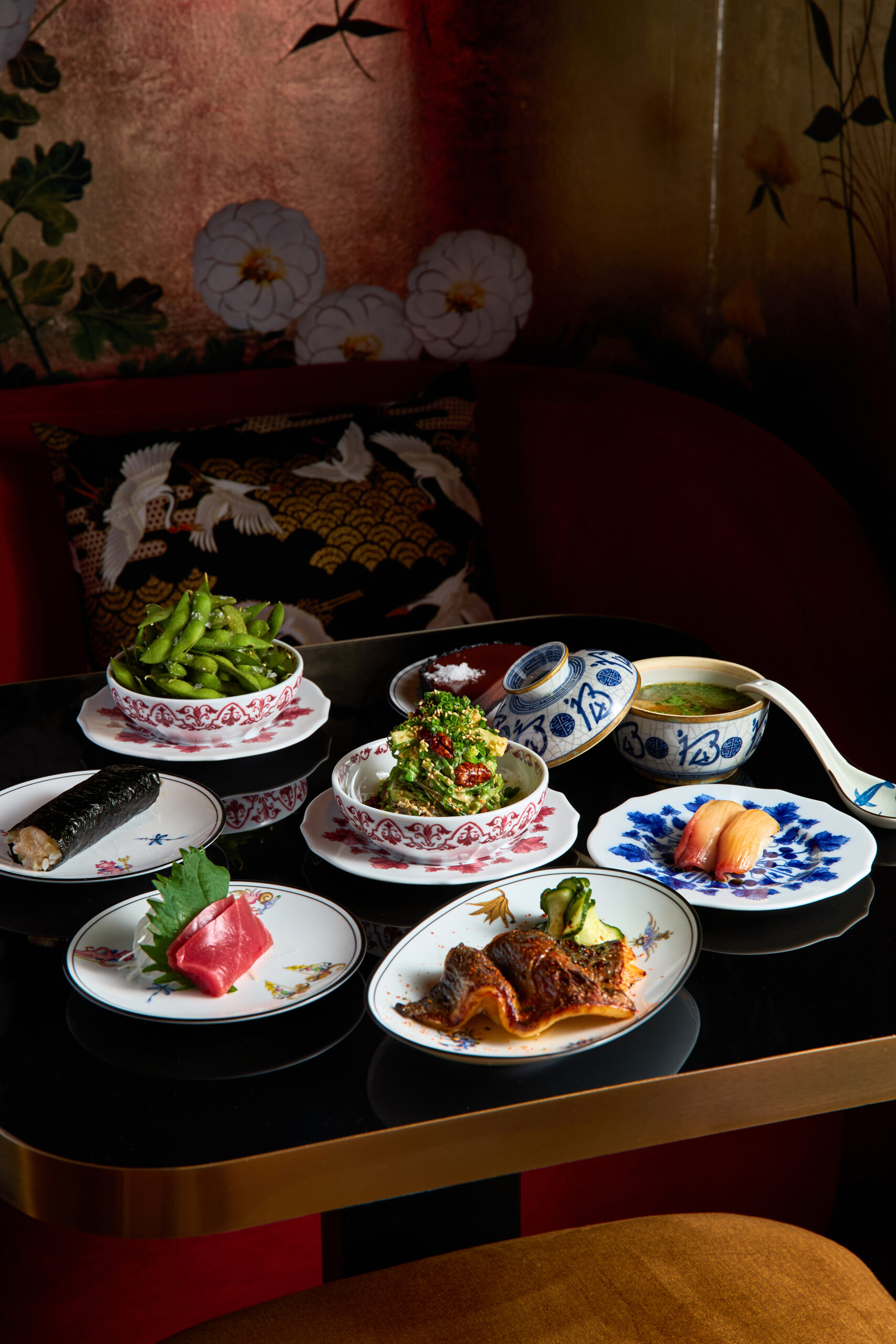
Having opened its doors recently, UNI Paris is part of a new generation of restaurants that blend international gastronomy with an immersive sensory experience. The establishment stands out for its modern take on Japanese cuisine, reimagined with creativity and precision. Understated yet elegant, it has cultivated an exclusive atmosphere that appeals to discerning diners looking for something new.

An exceptional fine-dining experience

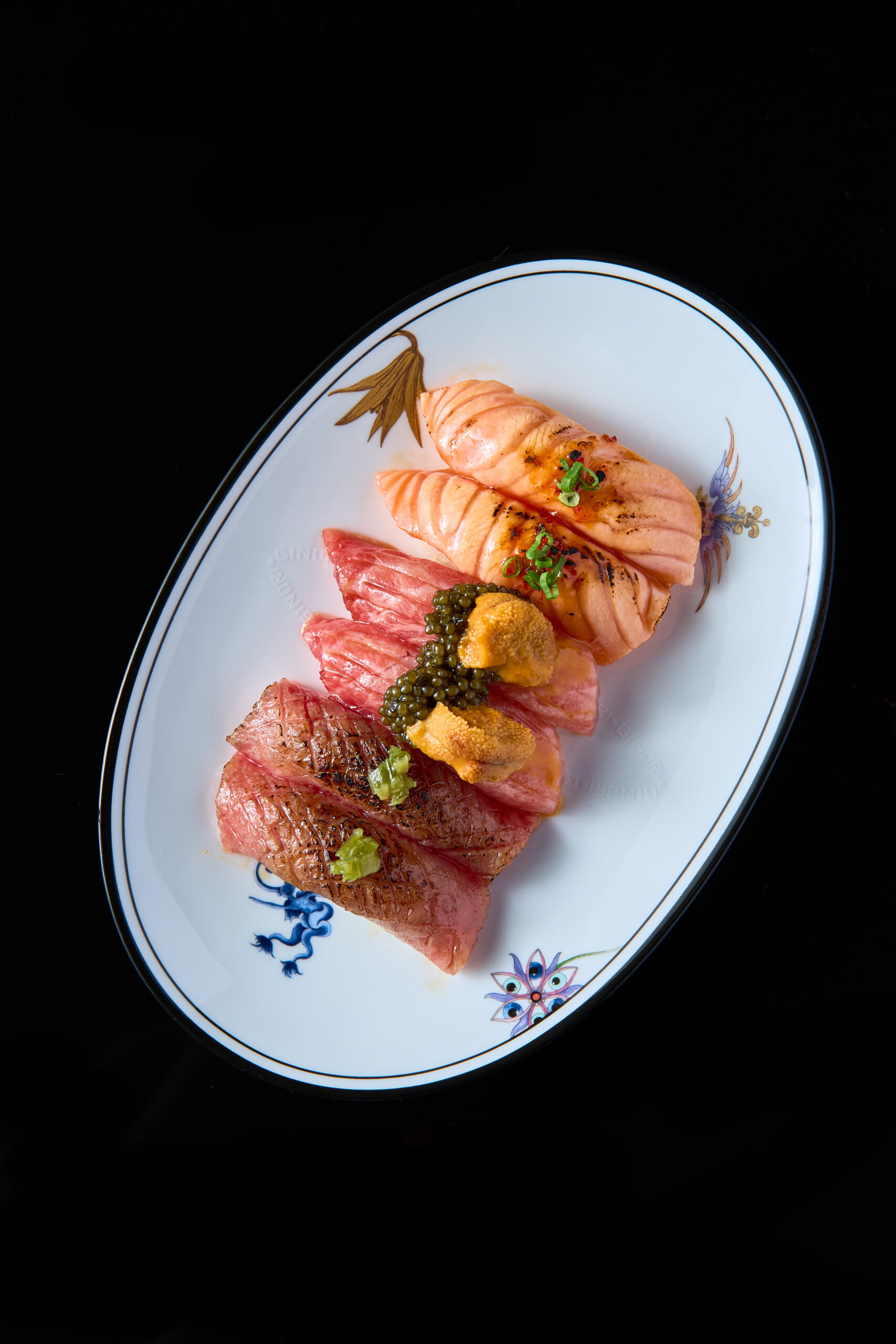
UNI Paris has firmly established itself as a high-end dining destination. Its menu showcases contemporary interpretations of Japanese specialities, combining premium ingredients with modern culinary techniques. From delicate sushi and robata-grilled dishes to inventive fusion creations, every plate reflects exceptional craftsmanship.

At the helm is Singaporean chef Akmal Anuar, a Michelin-starred talent renowned for his inventive cuisine and meticulous attention to detail. Drawing inspiration from a variety of Asian culinary traditions, his distinctive approach gives UNI a unique identity on the Parisian dining scene.

The décor is just as much a part of the experience. Dark wood, subdued lighting and minimalist touches create a sophisticated, immersive atmosphere. More than just a meal, UNI offers a true sensory journey, bringing together gastronomy and Japanese culture in a decidedly contemporary setting.

Beyoncé and Jay-Z's new favourite Parisian restaurant

Known for its intimate atmosphere, UNI Paris has recently attracted attention well beyond the French capital's dining scene. Beyoncé and Jay-Z were spotted at the restaurant twice during their latest visit to Paris. One of these evenings was particularly special, as the couple were celebrating their wedding anniversary.

Their connection to the establishment is no coincidence. DJ Magnum, co-owner of the restaurant and a close collaborator of the couple for more than fifteen years, has maintained a special relationship with the two stars. While in Paris, Beyoncé and Jay-Z naturally wanted to pay him a visit. Impressed by the UNI experience, they decided to return for a second evening.

Accompanied by their children and close friends, the couple enjoyed a discreet dinner in a private dining room, away from prying eyes. Their visits further cement UNI Paris's growing reputation as an exclusive, under-the-radar destination favoured by celebrities seeking privacy and exceptional dining.

Looking for the best restaurants in Paris? These articles might interest you:

UNI Paris

10 Rue Tremoille

75008 Paris

UNI Paris

Bianca’s Commonwealth breakthrough: Nigeria takes a strategic seat at the table of democratic accountability

…The Raining Diplomatic Days Are Here Again. Is The Era Of Emeka Anyaoku Returning?

A t the announcement by President Bola Tinubu of Ambassador Bianca Odumegwu Ojukwu as Nigeria’s Foreign Affairs Minister, I had said that if there was one appointment President Tinubu had made and got right, it was the appointment of the Foreign Affairs Ministry. Everyday this assertion is proved right by the outstanding efforts of her Excellency, Bianca Ojukwu as she proves her mettle. There are moments in the diplomatic history of a nation when an appointment transcends the individual and becomes a statement about the country’s standing, influence and capacity to shape international conversations. Such a moment has arrived for Nigeria at the 28th Commonwealth Heads of Government Meeting (CHOGM 2026) in St. John’s, Antigua and Barbuda, where Nigeria’s Minister of Foreign Affairs, Ambassador Bianca Odumegwu-Ojukwu, has been appointed Vice-Chair of the Commonwealth Ministerial Action Group (CMAG).

This is a bewildering diplomatic recognition. It is a strategic elevation into one of the Commonwealth’s important political oversight mechanisms, a body charged with defending democracy, constitutional governance, human rights and the rule of law among its 56 member countries.

For Nigeria, this is a moment of national pride. For the Nigerian diplomatic establishment, it is a moment to take stock. For the Odumegwu-Ojukwu family, it is another remarkable chapter in a distinguished family history. And for Ambassador Bianca, it is another feather in a cap that continues to gather international recognition.

The raining diplomatic days are here again!

Those of us who have followed Nigeria’s foreign policy trajectory cannot help remembering the remarkable years of Chief Emeka Anyaoku, the distinguished Nigerian diplomat who served as the third Secretary-General of the Commonwealth from 1990 to 2000. Anyaoku was not merely a Nigerian occupying an international office. He was a global statesman whose voice commanded respect in the corridors of international diplomacy.

His tenure demonstrated that Nigeria could produce diplomatic personalities capable of influencing international conversations, mediating difficult political questions and contributing meaningfully to global governance.

Today, as Bianca Odumegwu-Ojukwu assumes this new Commonwealth responsibility, one is tempted to ask whether Nigeria is witnessing the return of an era when its diplomatic personalities once again occupy strategic international positions. An avalanche of diplomacy prophecies coming to pass are dropping in the testimony baskets of our foreign and diplomatic repository. Nigeria is returning to the centre of important Commonwealth conversations.

To appreciate this achievement, we must understand the woman behind the appointment.

Born Bianca Odinaka Onoh, she is the daughter of Chief Christian Chukwuma Onoh, former Governor of old Anambra State, and Lady Caroline Onoh. She subsequently became the wife of Dim Chukwuemeka Odumegwu-Ojukwu, one of the most important personalities in Nigeria’s political history.

Yet her story is not merely that of an illustrious family or a celebrated marriage. It is also the story of a woman who has established her own identity through education, international exposure and public service.

In 1988, she emerged as Most Beautiful Girl in Nigeria. She went on to win Miss Africa and, in 1989, became the first African to win the Miss Intercontinental crown. She also represented Nigeria at international beauty competitions, including Miss World and Miss Universe.

These were not simply personal triumphs. At a time when Nigeria was seeking greater international visibility, she became one of the country’s recognisable ambassadors abroad, demonstrating the capacity of Nigerian women to compete and excel internationally.

But perhaps more unique was her transition from international pageantry into law, diplomacy and governance. An outstanding transition!

She obtained her Bachelor of Laws degree from the University of Nigeria, Nsukka, in 1991 and was called to the Nigerian Bar in 1992. She later obtained a Master’s degree in International Relations and Diplomacy from Universidad Alfonso X El Sabio in Madrid, Spain, in 2008. Her professional development also included studies in human rights, international relations, conflict and cooperation.

This academic preparation is important because diplomacy is not sustained by ceremonial appearances and diplomatic receptions. It requires knowledge of international law, negotiation, geopolitics, conflict resolution and the delicate relationship between national sovereignty and international obligations.

Her public service journey gathered momentum in 2011 when she was appointed Senior Special Assistant to President Goodluck Jonathan on Diaspora Matters. This was a significant responsibility in a country whose citizens are scattered across continents, contributing to foreign economies, investing in businesses and maintaining strong connections with their homeland.

She subsequently served as Nigeria’s Ambassador to Spain from 2012 to 2015, during which she also represented Nigeria at the United Nations World Tourism Organization. Her assignment involved strengthening bilateral relations, promoting tourism diplomacy and advancing Nigeria’s international image.

Her diplomatic work and public service have attracted recognitions, including the Certificate of Merit from El Mundo Diplomatico for promoting constructive engagement between Nigeria and Spain, Africa’s Outstanding Ambassador recognition by The Voice magazine in 2014, and an Ambassador of Excellence Award from the Anambra State Government in 2016. Her international pageantry distinctions remain an important part of her public achievements.

She also served in political and peacebuilding assignments, including the Anambra State Truth, Justice and Peace Commission, where questions of insecurity, dialogue, reconciliation and social stability demanded considerable sensitivity.

In November 2024, she joined President Bola Ahmed Tinubu’s administration as Minister of State for Foreign Affairs. Following Ambassador Yusuf Tuggar’s resignation, she was appointed substantive Minister of Foreign Affairs on April 29, 2026. She formally assumed duty on May 8, 2026, reaffirming the administration’s commitment to the Four-D foreign policy agenda of Democracy, Development, Diaspora and Demography.

Now comes the Commonwealth breakthrough.

Established in 1995 under the Millbrook Commonwealth Action Plan, the Commonwealth Ministerial Action Group was created to protect the fundamental political values of the organisation. Its responsibilities include responding to unconstitutional changes of government, electoral irregularities, restrictions on political participation, interference with judicial independence, human rights violations and threats to democratic institutions.

Its mandate was broadened in 2011 to allow more proactive engagement with member states facing threats to constitutional governance.

The group is chaired by Malta’s Foreign Affairs Minister, Chris Fearne. Bianca’s emergence as Vice-Chair gives Nigeria an opportunity to participate more prominently in shaping the Commonwealth’s responses to democratic challenges.

What does Nigeria stand to gain?

First, diplomatic visibility and influence. Nigeria now occupies a leadership position within an important Commonwealth political mechanism. This creates opportunities to influence discussions on democracy, constitutional order and institutional accountability.

Second, it strengthens Nigeria’s international profile as a country participating in the defence of democratic governance and human rights.

Third, it provides opportunities for strategic networking, coalition-building and stronger relationships with Commonwealth governments.

Fourth, Nigeria can use this platform to advance African interests, particularly at a time when parts of the continent are experiencing military takeovers, political instability and weakening democratic institutions.

But Nigeria must look beyond the political benefits. The 2026 CHOGM theme, “Accelerating Partnerships and Investment for a Prosperous Commonwealth”, provides an opportunity to connect diplomatic influence with economic benefits. Our country must pursue investment, technology transfer, educational partnerships, tourism development and access to international markets.

We have returned from Antigua with not only handshakes but laurels.Nigeria must roll out the drums. The days of the Giant’s roar are here again.

There is also her family dimension to this feat, her husband’s historical stature and her own professional journey combine to give this achievement a distinctive family significance. Her children also have every reason to take pride in a mother whose public career continues to attract international recognition.

However, this achievement is beyond one family. It belongs to Nigeria and every citizen who desires a country respected and taken seriously in international affairs.

The real test of her new responsibility will be the quality of her contribution. CMAG operates in a politically sensitive environment where questions of sovereignty, constitutional legitimacy and human rights can generate difficult diplomatic confrontations. She will require fairness, courage, consistency and considerable diplomatic maturity.

The legacy of Emeka Anyaoku reminds us of what Nigerian diplomacy can achieve when experience, intellectual depth, national purpose and international credibility converge. His era remains a treasured chapter in our diplomatic history.

Perhaps we are witnessing the opening of another promising chapter.

From the international beauty stage to the courtroom, from diaspora engagement to ambassadorial assignments, and from multilateral diplomacy to the leadership of Nigeria’s foreign affairs establishment, Bianca Odumegwu-Ojukwu has travelled a remarkable public-service journey.

Today, we celebrate a Nigerian woman who has reached another significant milestone. We celebrate a family whose name remains woven into the political history of our country. Above all, we celebrate Nigeria’s renewed opportunity to influence important international conversations.

Nigeria is not condemned to the margins of global affairs. We have the people, the intellectual capacity, the diplomatic experience and the historical credentials to command a place at the table.

The raining diplomatic days are here again!

Congratulations, Ambassador Bianca Odumegwu-Ojukwu. Congratulations, Nigeria. May this Commonwealth breakthrough translate into enduring diplomatic dividends for our nation.

Provided by SyndiGate Media Inc. ( Syndigate.info ).

I tell stories about our culture, heritage through food — Vlogger, Samuel

Tosin Samuel, CEO of TSpices Kitchen, speaks with Damola Adedigba about turning her passion for food into a business, rejecting lucrative deals that conflict with her values and her ambition to take Nigerian cuisine to the world.

You studied English Literature at Obafemi Awolowo University, yet built a career around food. Why did you choose this path?

Honestly, I never imagined that my career would revolve around food. Yes! I have always loved food, but I didn’t initially know what to do with that interest. Food blogging allowed me to express my creativity through cooking and explore something I genuinely enjoyed.

Over time, that creative outlet grew into a business, and I discovered that I could build a career around something I was passionate about.

When did you realise you were building a real business?

I realised I was building a real business when brands, businesses and individuals started reaching out to me, eager to pay for my services. It came as a surprise because I initially treated food blogging as a side hustle alongside my nine-to-five job.

However, the demand eventually became more than I could manage while keeping my job. That was when I told myself, “ This is a real business. You have to leave the other job and focus on this.

Tell us about how you started your food business?

I started with very little, probably around N1,000, because I did not have much money at the time. I had to make do with what I could afford, so I began by creating low-budget food content.

That experience taught me that you can start with what you have and where you are. You do not have to wait until everything is in place before taking the first step.

Rather than waiting and wishing for the perfect conditions, you should start with the resources available to you. Sometimes, taking that first step is what opens the door to bigger opportunities.

Your voice-overs have become part of your identity. How did that unique style come about?

My voice-overs are a natural extension of my personality. I did not have to adopt or copy a particular style; they simply reflect who I am.

I am naturally bubbly, playful and full of laughter, and my voice-overs give me the freedom to express that side of myself authentically.

I particularly enjoy receiving feedback from people who say my voice-overs bring recipes to life and give them the confidence to recreate the meals at home.

That is the goal of my brand: to help people become confident home cooks. When someone watches my videos and feels encouraged to try a recipe independently, I know I am achieving what I set out to do.

How do you decide which brands are worth attaching the TSpices Kitchen name to?

I am very selective about the brands I work with. I do not accept a project simply because the money is attractive. I take my time to research the brand and ensure that its values align with mine.

My audience is also a major consideration. I would not recommend a product that I do not use, understand or genuinely believe in.

Representing a brand comes with responsibility because people trust my recommendations. Therefore, its conduct and ethical standards must align with my values. I am not food blogging simply to make money; I want to build a legacy and a brand centred on family, culture and food.

Have you ever rejected a lucrative brand deal because it did not align with your values?

Yes, I have rejected several lucrative deals because they did not align with my values. Betting companies and forex brands are among the categories I have turned down when the products or services did not fit my beliefs.

On one occasion, I accepted an offer from a brand without initially realising that its product was alcoholic. When I received the brief and discovered this, I had to withdraw, even though I had already begun looking forward to the money.

It was a difficult decision because the offer was attractive, but I had to consider how I would explain the recommendation to my audience. Alcohol is not something I personally consume, so promoting it would not have been consistent with my values.

With so many people trusting your recipes, do you ever feel pressure to get things right?

Yes, the pressure is always there. When I started food blogging, I was experimenting and teaching myself how to cook. At that stage, I was mainly interested in trying recipes and enjoying the food.

However, things changed as more people began trusting my content and relying on my recipes. I realised that I had to become more deliberate about accuracy because people were recreating these meals in their own kitchens.

You cannot afford to confuse a tablespoon with a teaspoon when people depend on your instructions. As the brand grows, the responsibility becomes greater.

I want TSpices Kitchen to become a globally recognised brand, not just in Nigeria. That means continually improving my skills and ensuring that people can trust the recipes I share.

What is currently the biggest source of income for TSpices Kitchen?

I generate income from different sources, including brand partnerships, monetisation on social media platforms and selling products directly to my audience.

At the moment, I would say that selling products directly to my audience is my biggest source of income. I also earn from digital products, while brand partnerships and YouTube remain valuable revenue streams.

What makes direct sales particularly attractive is that they can provide a more consistent source of income. Once people know what you offer and trust your brand, they can continue purchasing your products whenever they need them.

Has the rising cost of food changed the kind of content your audience wants from you?

The rising cost of food has changed everything. Nigerians are looking for practical ways to prepare meals, and the simpler and more affordable the recipes are, the better. Before developing a recipe, I ask myself whether an average Nigerian can afford to make it.

If a particular ingredient is expensive, I look for alternatives. For instance, if someone cannot afford cheese, I explore other options they can use. The same applies to cooking cream and other ingredients that may be beyond some people’s budgets.

How do you deal with criticism and trolling?

I have come to understand that people will always have different opinions about cooking because we do not all prepare food the same way.

The way your mother taught you to cook egusi soup may be different from how my grandmother taught me. That does not necessarily mean one person is wrong; sometimes, it simply reflects different traditions and methods.

When criticism comes, I try to see it as feedback, particularly when it is constructive. I also make it clear that I am not forcing anyone to adopt my cooking style. I do not believe in responding to criticism with insults or negativity. If someone offers a useful suggestion, I am willing to learn from it and even try their method in the future.

What has been the hardest part of moving from doing everything yourself to building a team?

One of the biggest challenges has been finding people who genuinely believe in the vision and mission of the brand. Building a team that can deliver the same quality even when I am not present has not been easy, and I am still working towards getting it right.

Another challenge is maintaining the personal connection my audience has with me while expanding the business. Food blogging is a very personal form of content creation. People want to see the creator cooking, using their hands, showing their face and explaining the process.

The challenge is finding that balance between expansion and authenticity. For instance, my voice-overs are a major part of my identity, so having someone else do them might change the experience my audience is accustomed to.

I also need my audience to understand that building a bigger brand requires a team. I am still figuring out how to achieve that growth without losing the personal touch that makes TSpices Kitchen unique.

With so many food creators today, what makes TSpices Kitchen different?

I would describe it in three words: authenticity, personality and simplicity. Those are the qualities that define TSpices Kitchen.

Do you see yourself more as a food creator, a businesswoman or a promoter of Nigerian cuisine?

I see myself as all three. I am a food creator because I develop and share recipes online; I am a businesswoman because I am building a sustainable enterprise; and I am a promoter of Nigerian cuisine because I want our food to gain greater international recognition.

My goal is to put Nigerian food on the global map. I want someone in Switzerland, for instance, to be able to search online for Nigerian food, discover my content and learn how to prepare our meals, regardless of where they live.

At the same time, I understand that creativity alone is not enough to sustain a business. I must also learn how to generate income, develop products and build a brand that can grow beyond social media.

For me, these three identities complement one another.

Do you plan to take TSpices Kitchen beyond food content in the future?

Food content is a broad field, and I still feel there is so much I want to explore within it. However, I can see TSpices Kitchen gradually expanding into lifestyle, travel, family and home-related content.

I enjoy travelling, and I am currently in Rwanda on a food trip. Experiences like this give me opportunities to explore different food cultures and incorporate travel into my content.

As the brand evolves, I want to tell more stories about family culture, traditions and life at home. However, food will remain the central theme connecting everything I do.

Whether I am travelling, exploring lifestyle topics or discussing business, I want there to be a clear connection to food. That is what TSpices Kitchen represents, and it will remain at the heart of the brand.

How different is Tosin Samuel from the personality people see on social media?

I do not think there is much difference between who I am online and who I am in real life. I try to be as authentic as possible because I believe people can recognise when someone is pretending to be who they are not.

The way I laugh and express myself online reflects my personality in real life. Similarly, there are certain things I would not do offline, and I would not want to promote them online either.

For me, authenticity is important. I want people to connect with the real Tosin Samuel, not a character I have created for social media.

As a traveller, what inspired you to take your food content beyond Nigeria?

Food is a universal language, and my biggest motivation is to help the world experience Nigerian cuisine through my content.

I want to tell stories about our culture and heritage through food because meals have a unique ability to bring people together and evoke emotions. Beyond sharing recipes, I want to document and celebrate Nigerian and African cuisine on a global scale.

My dream is for someone in another part of the world to confidently say they know how to prepare Nigerian egusi soup because they learnt from my videos on TikTok, Instagram or YouTube.

That is why I try to remain active across different platforms, even though managing them all can be demanding. I believe the effort is worthwhile because I want Nigerian food to receive the recognition it deserves beyond the shores of this country and continent.

Just as people around the world recognise pizza, pasta and other international dishes, I want Nigerian cuisine to become more familiar and celebrated globally.

Of the countries you have visited to explore food, which recipe or experience surprised you the most?

I have visited only a few countries, and I cannot immediately identify one food experience that surprised me the most. That is because I see every new dish as an opportunity to learn about the culture, history and people behind it.

Food is not just about ingredients; it also reflects how people live, their traditions and the stories they pass down through generations. Therefore, I approach every new food experience with curiosity rather than expecting to be shocked by what I encounter.

I have seen videos online of people eating unusual foods, but I have not personally had an experience that completely surprised me. For me, the most important thing is understanding the cultural context behind what people eat and how they prepare it.

After everything you have achieved, what major goal are you still chasing?

I am grateful for the milestones I have reached, the brands I have worked with and the community I have built over the years. However, I still feel I am only scratching the surface of what is possible.

One of my biggest goals is to build TSpices Kitchen into a global food and lifestyle brand that extends beyond social media. For me, success is no longer just about views, viral videos or the number of followers I have. It is about creating something meaningful that will have a lasting impact.

I want to build a brand that documents and celebrates African cuisine while making our culinary heritage more visible to the rest of the world. I also want to develop a sustainable business that creates opportunities for other people, in addition to providing the life I aspire to have.

Ultimately, I want to build something that will outlive me. I do not believe I am close to achieving that yet, because there is still so much more to explore and accomplish.

If you could meet the Tosin who started with a small amount of money, what would you tell her?

I would tell her, “Tosin, Oluwatosin, keep going. You have no idea how far this little beginning will take you.”

I would remind her to trust God, remain consistent and stay true to herself. The little money she started with might seem insignificant, but it was the beginning of something much bigger than she could have imagined.

I would also encourage her not to give up when results are slow or things do not go according to plan. There will be days when she questions everything she is doing, but every little step counts, including the ones nobody sees.

Most importantly, I would tell her that I am proud of her for starting before she even knew what the journey would become. She did not allow her limited resources to define what was possible, and that decision made a difference.

I would simply tell her to keep going because she has only just begun.

Provided by SyndiGate Media Inc. ( Syndigate.info ).

Sunday, November 15, 2026

NYC's coolest new restaurant is Cracker Barrel style buffet with an oh-so-trendy take on its decor

It's the hottest table in New York right now, but were it anywhere else in America there's a chance the yuppies who can't get enough of Good Time Country Buffet would walk right on past.

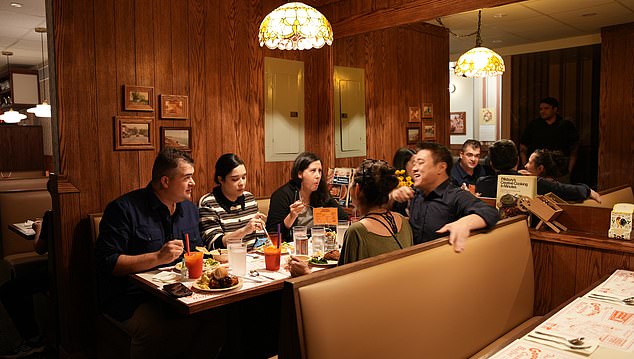
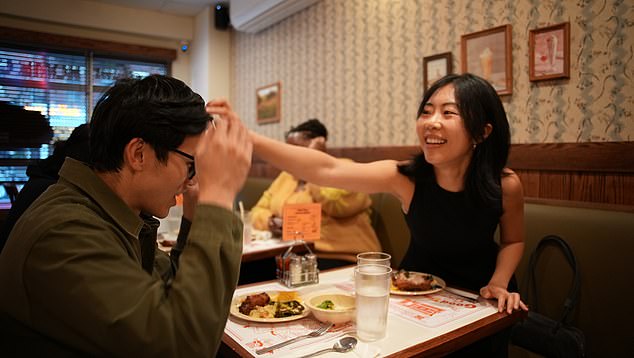
With its old-fashioned stained-glass lamps and gaudy wallpaper, the all-you-can-eat restaurant sits distinctly at odds with its home in the heart of Manhattan's hippest neighborhood.

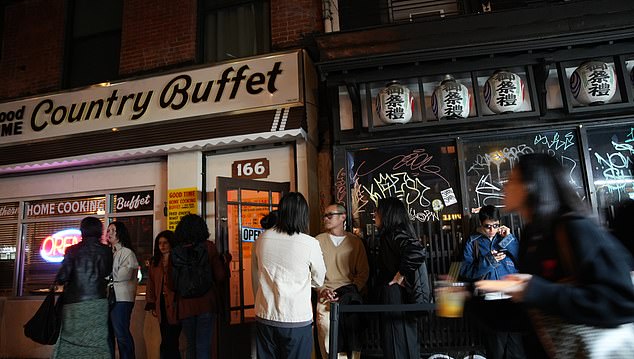
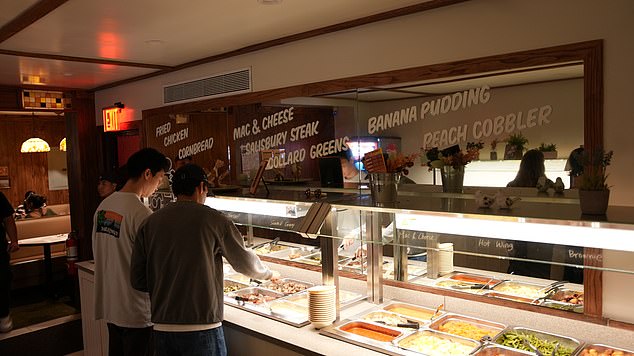
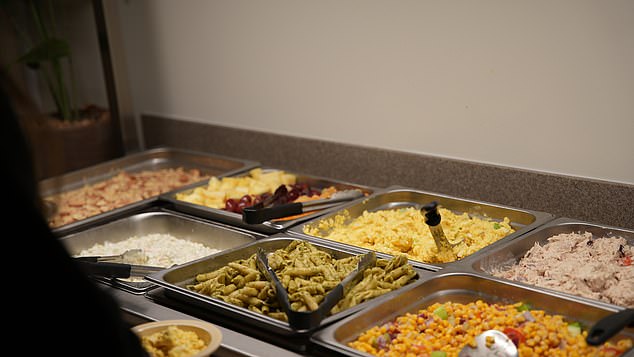
Perhaps that's precisely what has lured the attention of the excited crowds lining up around the block for a chance to load cafeteria-style plates with golden fried chicken, Salisbury steak and braised cabbage.

Good Time, which for $26.99 allows diners on First Avenue in the East Village to stuff themselves with candied yams and sweet corn galore, evokes the Southern spirit its owners fondly remember from growing up in Georgia.

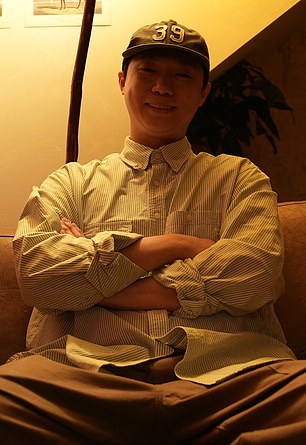
For co-owner Yong Min Kim, 39, the buffet was not intended as a tongue-in-cheek recreation of a bygone America.

'We didn't want fake retro,' he told the Daily Mail. 'We wanted real comfort and affordability.'

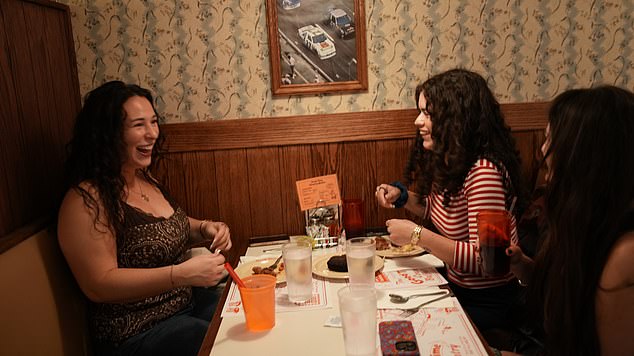
Wooden dividers carve the dining room into cozy intimate pockets while a clutter of framed pictures, figurines and homely curios have been painstakingly assembled to give the impression they've accumulated over the years.

And in a sense they have. Kim says some of the objects adorning the countertops came from he and his co-founders' own homes.

'All of us are from Georgia,' Kim said. 'We were thinking about what we remember about growing up in Georgia and thought we have great memories of Southern country buffet.

'We wanted to bring our experience to New York and show people what we grew up with.'

There is something curious about the result, a restaurant assembled from one group of people's memories appears to be conjuring nostalgia in people who never shared them.

Leo Feng, 36, who was visiting for the second time with Frida Lin, 35, said even the crockery summoned memories of another era.

'I like their retro vibe, feeling of going back in time,' he said. 'Even the plate reminds me of high-school buffet.'

He praised the food, including the collard greens, noting that dishes that easily become tough or difficult to eat had been handled particularly well here.

At another table, Claire, Kristen and Emma had arrived after Good Time kept appearing on TikTok.

Emma lives nearby and had watched the restaurant's popularity unfold on her walks home. 'It's usually been down the block,' she said of the line. 'It's been pretty regular.'

For her, the attraction was as much around the plate as on it. 'I think the interior is very nostalgic,' she said. 'So I appreciate the interior design and kind of the commitment to the bit'

She said the fried chicken was a winner: 'It was a light, crispy and airy... I was pleasantly surprised by it. I didn't know if it was going to be worth its value.'

She would return, she said, though perhaps after the lines subside.

For the friends, there was another attraction to Good Time: in a neighborhood overflowing with loud bars and crowded restaurants, its booths, dividers and unhurried buffet offered a different kind of night out.

The restaurant is the latest venture from Kim and his partners, the team behind Kisa, their Korean-inspired restaurant, and C as in Charlie, a fusion joint a few blocks downtown.

But the idea for Kim's restaurant career began long before any of them opened.

Before moving to New York, he and one of his best friends from high school had talked about one day starting a restaurant together. Neither had the necessary experience, so they decided to acquire it.

Kim crammed his life into a suitcase and headed for New York. 'I had no friends and no plans,' he recalled. 'I wanted to learn all the positions.'

His first job involved selling restaurant supplies, including takeout bags. He later moved into restaurants themselves, where he met the people who would become his partners.

When the pandemic temporarily shuttered the restaurant where he worked, Kim returned to Georgia to stay with his parents. His future partners eventually opened their first restaurant, however, and Kim returned to join them; Kisa followed, and Good Time became their latest project.

'We didn't want people to think we built something that was new and high-end,' Kim said. 'We wanted it to be casual nostalgia for everyone.'

Making that nostalgia affordable in one of the world's most expensive cities was considerably less sentimental.

Buffets are costly to run, there is rent, labor and the inevitable mathematics of allowing customers to return to the fried chicken as many times as they please.

But Kim insists squeezing every possible dollar from the room was never the idea. 'We wanted to share the memories we have,' he said. 'You don't see super affordable restaurants in New York.'

The intimacy of the project extends into the kitchen, where the chef is another of Kim's high school friends and develops his own recipes. The menu shifts throughout the week, meaning what waits beneath the heat lamps one evening may not be there the next.

Even its name refuses to complicate matters. 'We wanted something simple,' Kim said. 'It's all about good food, good people and having a good time.'

Read more

Bishop Ekechukwu: Why politicians should stop the drum beats of war

Bishop Dr. Herbert Ekechukwu is the Presiding Bishop of The Lord of Glory Ministry as well as a public affairs commentator. Touched by reports of political attacks in parts of the country, he pens down this message to Nigerians at this critical period, urging the political class to check the violent trend which he fears may destroy the nation. A MUST Read:

INTRODUCTORY TEXTS

“Blessed are the peacemakers, for they shall be called sons of God.” — Matthew 5:9

“When the righteous are in authority, the people rejoice; but when a wicked man rules, the people groan.” — Proverbs 29:2

Nigeria At Dangerous Crossroads

Nigeria is standing at a dangerous crossroads. The signs are no longer hidden. They are in our streets, in our motor parks, on our television screens, and in the language of our politicians.

Political thuggery is on the increase. Election campaigns, which should be festivals of ideas, have become battlefields. If we are not careful, we are breeding the very conditions that led us to civil war before.

Warning By A Watchman

This is not a prophecy of doom. It is a warning from a concerned citizen and a watchman. The Bible says in Ezekiel 33:6, “If the watchman sees the sword coming and does not blow the trumpet, and the people are not warned, their blood will be on his hands.” I have seen the sword. I am blowing the trumpet.

Return Of Political Thuggery

In the early years of this democracy, we thought thuggery would fade. We were wrong. It has returned, more organised, more funded, and more brutal. Today, thugs are no longer just street boys hired on election days. They have become a system. They are recruited, armed, clothed in party colours, and protected by powerful men. They snatch ballot boxes, intimidate voters, chase away electoral officials, and attack opposition supporters.

In Lagos, Kano, Rivers, Anambra, and many other states, we have seen the same pattern: genuine voters stay at home out of fear, while thugs decide who wins. That is not democracy. That is gangsterism with ballot papers.

The Scripture warns us: “These six things the Lord hates, yes, seven are an abomination to Him: hands that shed innocent blood, a heart that devises wicked plans, feet that are swift in running to evil.” — Proverbs 6:16-18

Violent Men Destroy Nations

When thugs become the deciders of elections, the best candidates will not emerge. The most violent will emerge. Violent men do not build nations; they destroy them.

Political thuggery also destroys our youth. The young man who is given N5,000 and a weapon to cause trouble today is being trained to become tomorrow’s armed robber, kidnapper, and cultist. Politicians use them in February and abandon them in March.

The boy who tasted power through violence will not go back to farming or learning a trade. He will look for the next politician to hire him. We are creating a generation that believes violence pays more than hard work.

When Words Become Weapons

Elections should be about manifestos. In Nigeria, they are becoming about insults, threats, and ethnic war cries. Instead of telling us how they will fix power, roads, schools, and security, many politicians tell us who to hate. They divide us: Yoruba against Igbo, Hausa against Christian, North against South, old against young. They use social media to spread fake news, doctored videos, and hate speech. A single lie on WhatsApp can burn down a market in one night.

The Bible says, “Death and life are in the power of the tongue.” — Proverbs 18:21

Verbal, Violent Campaigns

Violent campaigns are not just physical. The verbal violence is even more dangerous. When a leader says, “If we lose, we will make the country ungovernable,” he is planting a seed of war. When a supporter says, “They must not vote in our area,” he is declaring war on his own neighbour.

We must remember: In Rwanda, it was not guns that started the genocide. It was words on the radio. In Nigeria in 1966, it was not just soldiers. It was hate speeches and rumours that pushed us into a 30-month civil war that killed over a million people. We have been there before. We cannot afford to go there again.

Today, our campaigns are breeding three dangerous children: Tribal Biased Neighbours who have lived together for 40 years now see each other as enemies because of politics.

Militarising Youth

Young people are being armed with machetes and guns in the name of “defending our votes.”

Institutional Failure

When people believe elections are rigged and courts are bought, they will stop going to court and start going to the streets. That is how civil unrest begins.

Civil War In The Making

Let us be honest. No nation goes to war in one day. Civil war is bred slowly. It is bred when leaders refuse to accept defeat, when security agencies become partisan, when the poor feel they have no hope, when ethnic groups feel marginalised, when guns become easier to buy than food, and when the youth have no jobs, no future, and no fear.

Signs Of Impending Catastrophe

We have banditry in the North-West, insurgency in the North-East, separatist agitations in the South-East, farmer-herder clashes in the Middle Belt, and cult wars in the South-South and South- West. If you add political violence to this already burning fire, you will get an explosion that no one can control.

A civil war in 2026 will not be like 1967. It will be worse. Then, we fought with rifles in the bush. Now, we will fight in our streets, in our markets, in our churches and mosques, with our neighbours. Social media will make it spread in minutes. And there will be nowhere to run to.

Those who are beating the drums of war have houses in Dubai, London, and America. Their children are schooling abroad. When war starts, they will fly out. It is the poor market woman in Mile 12, the okada rider in Kano, the student in Enugu, who will die. Politicians do not die in wars they create. The people die.

“Woe to those who call evil good, and good evil.” — Isaiah 5:20

The Root Causes

To solve a problem, we must be honest about its roots.

Do-or-DiePolitics: Manypoliticiansseeelections as war because politics is the only business they know. For them, losing an election is losing access to contracts and power. So, they will kill to win.

Weaponised Poverty: A hungry youth is a ready weapon. When a graduate has no job for five years, N20,000 to cause trouble looks like a salary.

Nigeria is standing at a dangerous crossroads. The signs are no longer hidden. They are in our streets, in our motor parks, on our television screens, and in the language of our politicians. Political thuggery is on the increase. Election campaigns, which should be festivals of ideas, have become battlefields. And if we are not careful, we are breeding the very conditions that led us to civil war before.

This is not a prophecy of doom. It is a warning from a concerned citizen and a watchman. The Bible says in Ezekiel 33:6, “If the watchman sees the sword coming and does not blow the trumpet, and the people are not warned, their blood will be on his hands.” I have seen the sword. I am blowing the trumpet.

No Election Is Worth The Blood Of A Nigerian

When the Independent National Electoral Commission (INEC) is not seen as independent, when police arrest only the opposition, when judges deliver judgments that look bought, people lose hope in peaceful change.

Tribal, Religious Fanaticism, Manipulations

Our leaders have learnt that it is easier to divide us by tribe than to unite us by development.

Traditional, Cultural Loyalty

Thugs are arrested on camera and released the next day. Politicians who incite violence are never prosecuted. When there is no punishment, violence becomes a campaign strategy.

Coming Out Of These Jigsaws

It is not too late. Nigeria has survived worse. But survival requires action, not prayers alone. Faith without works is dead (James 2:26).

For Government and INEC:

We need special Electoral Offences Tribunals. A thug caught snatching a ballot box must be jailed before the next election, not after 10 years. And the politician who sponsored him must be disqualified for 10 years. Until sponsors fear punishment, thugs will keep working.

INEC’s results must be transmitted electronically from polling units in real-time, with no room for manipulation at collation centres where most rigging happens. Police must protect all parties equally.

For Political Parties, Candidates, they should sign a peace pact with consequences, not just a photo opportunity in Abuja. Any candidate whose supporters engage in violence must face sanctions.

Campaign On Issues, Not Insults

We, the voters, must demand debates. Ask every candidate: How will you create jobs? How will you stop kidnapping? If he cannot answer, do not vote for him, no matter his tribe.

Role Of Traditional, Religious, Community Leaders

Our Pastors, Imams, Obas, Emirs, and Chiefs must become peace builders. The pulpit and the mosque must not become campaign grounds. Preach peace before the election. Open your halls for peace meetings between rival parties. When a politician comes to your church to preach hate, stop him.

“If it is possible, as much as depends on you, live peaceably with all men.” — Romans 12:18

The Role Of The Youth

Young people, you are the target. They want to use you as weapons. Refuse! Do not sell your future for N5,000. That money will finish in one day, but the bullet you fire or the ballot box you snatch will hunt you for life. If a politician wants you to fight, ask him: Where are your children? Why are they not on the streets fighting?

Instead, become election observers, vote protectors, and peace ambassadors. Use your phone to record violence, not to spread fake news. Your vote is more powerful than any thug’s gun.

For the Media, Social Media Users

Journalists must stop being party praise-singers. Report violence, name suspectes sponsors, and fact-check lies. And every citizen: Before you forward that hate message on WhatsApp, ask: Is this true? Will this kill someone? If you cannot verify, do not forward. You may be forwarding a civil war.

New Political Culture Possible

We must build a new political culture. We must vote based on character and competence, not tribe. We must accept defeat gracefully. In a real democracy, you lose today and win tomorrow. The man who loses an election is not your enemy. He is your neighbour.

Conclusion: The Choice Before Us

Nigeria is like a house with petrol in the sitting room and politicians playing with matches. We can either put out the matches, or we will all burn together — Igbo, Yoruba, Hausa, Christian, Muslim, rich, poor.

The warning is clear: Political thuggery is increasing. Election campaigns are becoming violent. Civil war is being bred in small doses every day. But, we still have a choice. We can choose peace over power. We can choose the ballot over the bullet. We can choose Nigeria over party.

History will judge this generation. Shall we be the generation that watched Nigeria burn because we kept quiet, or the generation that saved it because we spoke up and acted? Let us choose peace. Let us choose life. Let us choose Nigeria.

“For God has not given us a spirit of fear, but of power and of love and of a sound mind.” — 2 Timothy 1:7. No election is worth the blood of any Nigerian.

Provided by SyndiGate Media Inc. ( Syndigate.info ).
Saturday, November 14, 2026

Pastoral vultures and their vulnerable congregation

There is a worrisome and eerie wind blowing through the church of Christ, a development in contemporary Christianity that demands the urgent attention of every discerning child of God. The pulpit, which ought to be a sacred platform for preaching salvation, righteousness, holiness and the undiluted Word of God, is increasingly becoming a commercial enterprise in the hands of some self-appointed spiritual entrepreneurs. The unfortunate congregation, hungry for miracles, desperate for breakthroughs and burdened by life’s uncertainties, has become their most dependable marketplace.

Welcome to the age of pastoral vultures! Hear ye! Sound the Alarm! The end of all things is NOW!

A vulture does not create the weakness of its prey. It waits patiently for vulnerability, identifies its opportunity and feeds on the helplessness of another. Unfortunately, some religious merchants have perfected this unfortunate art within the Christian community. They understand the psychology of poverty, sickness, unemployment, marital difficulties and the fear of the unknown. They know that a desperate person is sometimes willing to surrender everything in exchange for a promise of divine intervention over a corresponding miracle.

Consequently, everything appears to have a price. Special prayers, prophetic declarations, deliverance sessions, anointing oil, handkerchiefs, holy water and even access to the supposedly exclusive presence of God have become commercial commodities in certain religious circles. Some pastors attach financial conditions to miracles, announce different categories of blessings according to the size of financial offerings and make vulnerable worshippers believe that their breakthrough is proportional to their financial sacrifice.

Whatever happened to the biblical declaration that we received freely and should give freely?

Jesus Christ did not establish a commercial franchise. He overturned the tables of the money changers in the temple because the sacred house of prayer had become a marketplace. Yet, centuries later, some people have reconstructed those tables, decorated them with modern technology, installed sophisticated sound systems and turned religious gatherings into elaborate fundraising exhibitions.

The tragedy, however, is not entirely on the pulpit. The congregation must also accept responsibility for its spiritual gullibility. Too many Christians have abandoned personal Bible study, spiritual discernment and the responsibility of testing every teaching against Scripture. They would rather chase a popular prophet from one auditorium to another than cultivate an intimate relationship with God. They believe every spectacular testimony, every dramatic prophecy and every extravagant declaration without asking questions.

The Bible warns in 2 Peter 2:3 that some will exploit people with fabricated stories out of greed. Ezekiel 34 rebukes shepherds who feed themselves instead of caring for the flock. These are not historical decorations. They are timeless warnings to the Church.

Research has also begun to interrogate the commercialisation of Christianity in Nigeria, examining how spiritual services, prosperity promises and religious marketing can reproduce the very inequalities and exploitation that Christianity ought to challenge.

Let it be clearly understood that pastors deserve honour, churches require resources and genuine ministers must be supported. Wealth is not evidence of wickedness, neither is poverty proof of righteousness. The issue is the manipulation of faith for personal enrichment, the exploitation of human desperation and the deliberate substitution of Christ’s message with financial transactions.

Dear child of God, wake up! Your pastor is not your saviour. Your offering is not a bribe to heaven. Your financial inability does not disqualify you from God’s mercy. You do not need to purchase what Christ has freely made available through grace.

Respect your spiritual leaders, but never surrender your conscience to them. Attend church, but study your Bible. Give cheerfully, but refuse spiritual extortion. Seek genuine counsel, but do not allow anybody to mortgage your future in the name of prophetic instructions.

The Church must return to Christ, the Gospel must return to the altar, and the shepherd must return to the responsibility of tending the sheep.

For when the shepherd becomes the predator, who will protect the flock?

Provided by SyndiGate Media Inc. ( Syndigate.info ).